
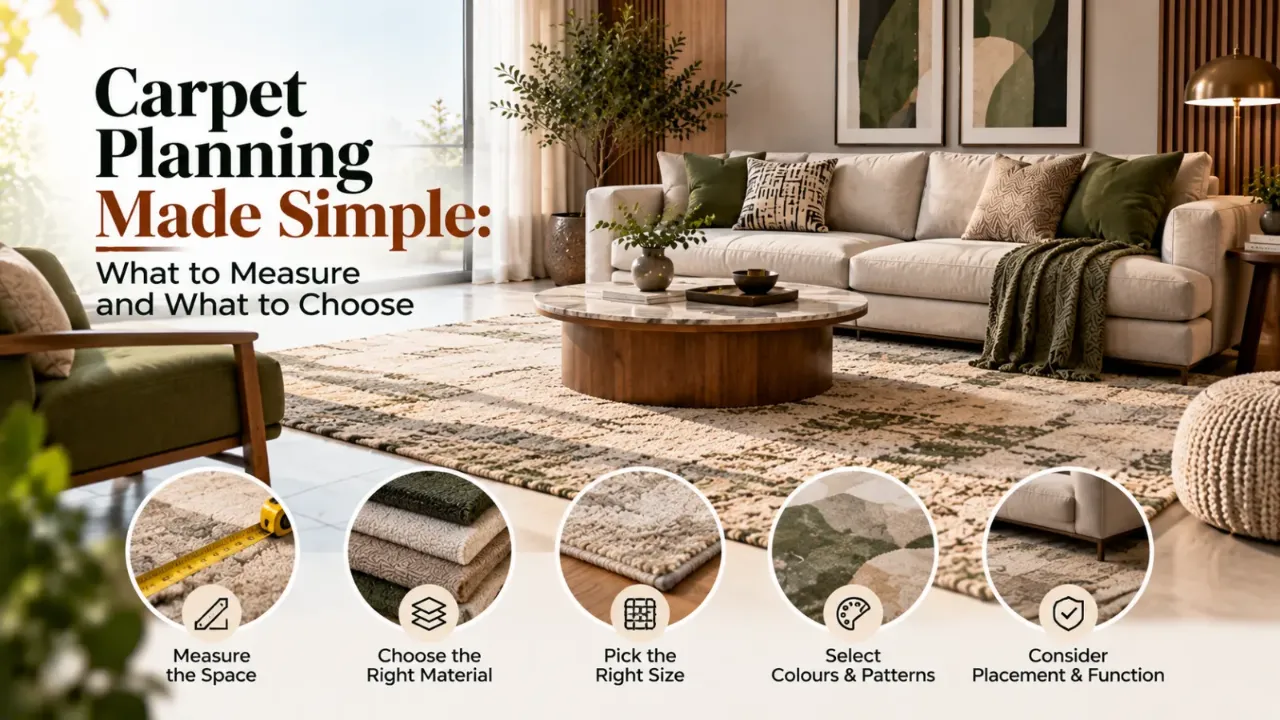
Carpet Planning Made Simple: What to Measure and What to Choose
A carpet can make a room feel warmer, quieter and more complete. It can bring furniture together, introduce colour and texture, and make hard flooring more comfortable underfoot. But choosing one involves more than finding a pattern you like. The material, size, construction, placement and cleaning requirements all affect how well it performs in everyday use.
A carpet that looks beautiful in a showroom may not be the right choice for a busy living room, a bedroom where comfort matters most, or a dining area where spills are likely. Its size also matters: a rug that is too small can make furniture look disconnected, while one that is too large may overwhelm the room.
The best approach is to plan around how the space is used, measure before buying and understand the care each material requires. Here is how to make those decisions with confidence.
1. Start With the Room and Its Everyday Use
Before comparing colours or patterns, consider where the carpet will be placed and what it needs to handle.
- Living room: Choose a material and construction that can handle regular foot traffic, seating movement and frequent cleaning.
- Bedroom: Comfort underfoot may be the priority, making softer textures and plush surfaces worth considering.
- Dining area: Look for a surface that is practical to clean and does not make moving chairs difficult.
- Entryway or passage: Durability, low pile and easy maintenance are generally more useful than a thick, delicate texture.
- Children's room: Consider ease of cleaning, surface comfort and whether the carpet can be secured to reduce slipping.
Also think about household routines. Do people wear outdoor footwear indoors? Are pets likely to lie on the carpet? Is the room used throughout the day? These details should influence the material and construction you choose.
2. Understand the Main Carpet Materials
Carpet material affects its texture, appearance, durability and care requirements. There is no single best option for every home.
Wool
Wool is a natural fibre valued for its soft feel, appearance and resilience. It can be a good choice for living rooms and bedrooms, but it may require more careful cleaning and can be a higher-investment option.
Cotton
Cotton carpets and rugs often feel soft and may suit casual spaces. Some are easier to wash than heavier alternatives, depending on their construction and care label. However, cotton can absorb spills and may need more frequent attention.
Jute and other plant fibres
Jute brings a natural, textured appearance that works well with relaxed, earthy interiors. It is not generally the best choice for areas exposed to frequent moisture or spills because natural plant fibres can be difficult to clean thoroughly.
Synthetic fibres
Polypropylene, polyester and nylon are common synthetic options. Their performance varies by fibre and construction, but many are selected for practical maintenance, colour variety and everyday use. Check the manufacturer's cleaning guidance rather than assuming all synthetic carpets can be treated in the same way.
Blended fibres
Blends combine different fibres to balance appearance, feel, performance and cost. The exact result depends on the fibre proportions and manufacturing method, so check the product specifications before deciding.
3. Check the Carpet Construction and Pile
The fibre tells you what the carpet is made from. Construction tells you how it is put together.
- Loop pile: The yarn forms loops. It can create a structured, textured surface and may suit busy areas, depending on the loop size and construction.
- Cut pile: The yarn loops are cut to create an upright surface. It often feels softer and can give a more traditional or plush appearance.
- Flatweave: The surface is generally flatter and less bulky. This can be useful under dining chairs or in areas where doors and furniture need clearance.
- Shag or high pile: Longer fibres create a soft, deep texture, but they can trap dust and debris and may require more careful maintenance.
Pile height is important. A thick carpet can feel comfortable, but it may make furniture less stable, catch beneath doors or become harder to clean. A low-pile option is often easier to manage in frequently used spaces.
4. Measure the Room Before Choosing the Carpet
One of the most common carpet-buying mistakes is selecting a size based only on how large the rug looks in a photograph.
Measure the available floor area and consider the furniture arrangement. For a living room, mark the intended carpet boundary with masking tape or paper before purchasing. This helps you see how the size will relate to the sofa, chairs and coffee table.
A few placement approaches are common:
- All furniture on the carpet: A larger carpet can sit beneath the entire seating arrangement, creating a unified zone.
- Front legs on the carpet: The front legs of the sofa and chairs rest on the carpet, while the rear legs remain on the floor. This can work well when a larger size is not practical.
- Coffee-table zone: A smaller rug sits beneath the coffee table. It should still relate visually to the seating rather than appearing like an isolated mat.
For bedrooms, consider whether the carpet should extend beyond the sides and foot of the bed, or whether separate bedside rugs would work better. Check wardrobe doors, drawers and walking paths before finalising the size.
There is no universal measurement that suits every room. Furniture dimensions, room proportions and circulation space should guide the final choice.
5. Consider Thickness, Edges and Door Clearance
A carpet's thickness affects more than comfort. It can change how doors open, how furniture sits and how easily people move around the room.
Before buying, check:
- Whether the carpet will obstruct a door or sliding panel.
- Whether dining chairs can move without catching on the edge.
- Whether furniture legs sit securely on the surface.
- Whether the carpet needs an underlay for grip or cushioning.
- Whether the edges are finished securely and are unlikely to curl.
If the carpet is placed on a smooth tile, marble or wooden floor, consider a suitable non-slip underlay. The underlay should be compatible with the flooring and carpet; check the product instructions to avoid discolouration or damage.
6. Choose Colours and Patterns That Work With the Room
A carpet can either blend into the interior or become a focal point. The right approach depends on the visual balance of the room.
- Neutral colours: Beige, taupe, grey and muted earthy shades can complement many furniture and wall finishes.
- Deep colours: Charcoal, navy, forest green and other darker shades can add definition, though dust and lint visibility will depend on the exact colour and surface.
- Patterns: Geometric, striped, floral and abstract designs can introduce character. Choose a scale that suits the room rather than competing with every other pattern.
- Texture: A subtle woven or raised texture can add depth without relying on strong colour.
If the room already has patterned upholstery, textured curtains or decorative flooring, a simpler carpet may create a calmer composition. In a restrained room, a patterned or richly textured carpet can provide visual interest.
7. Plan Carpet Cleaning Before You Buy
Cleaning requirements should be part of the selection process, not an afterthought.
A carpet's care needs depend on its fibre, backing, dye, pile and construction. Always read the care label and manufacturer's instructions. A cleaning method suitable for one carpet may damage another.
A practical routine includes:
- Vacuum regularly: Follow the recommended vacuuming method for the carpet's pile and construction.
- Attend to spills promptly: Blot liquid with a clean, absorbent cloth instead of rubbing it into the fibres.
- Use suitable products: Test a cleaning product on a small, inconspicuous area first, where the manufacturer's instructions allow it.
- Avoid excessive moisture: Too much water can affect the backing, cause odours or create drying problems.
- Arrange deeper cleaning when needed: Use a cleaning method recommended for the carpet type. Some carpets require professional attention.
- Allow proper drying: Do not return furniture or regular foot traffic until the carpet is fully dry.
For valuable, delicate or natural-fibre carpets, professional advice is often the safer choice. Do not assume that steam cleaning, shampooing or a household stain remover is suitable for every carpet.
8. Match the Carpet to the Interior Style
The carpet should relate to the room's furniture, finishes and overall mood.
- Modern minimal interiors: Consider a restrained palette, subtle texture and simple geometric patterns.
- Warm, natural interiors: Jute-inspired textures, wool and earthy shades can complement wood and natural finishes.
- Contemporary luxury: A carefully chosen plush texture, muted pattern or refined border can add depth without making the room feel busy.
- Traditional interiors: Persian-inspired patterns, detailed motifs and deeper colours can work well when balanced with the furniture and other finishes.
Do not match every element exactly. Instead, repeat one or two colours from the room in the carpet, or use contrast to create a deliberate focal point.
9. Avoid These Common Carpet-Buying Mistakes
A few checks can prevent disappointment after installation:
- Buying a carpet before measuring the room and furniture layout.
- Choosing a delicate fibre for a high-traffic area.
- Selecting a thick pile without checking door clearance.
- Ignoring the care label and cleaning requirements.
- Using a small rug that makes the seating arrangement look disconnected.
- Forgetting a suitable underlay on a slippery floor.
- Choosing a strong pattern without considering existing visual elements.
- Assuming a stain-resistant label means the carpet is stain-proof.
Take photographs of the room and bring measurements when comparing options. If possible, view a larger sample in the actual room lighting before making the final decision.
10. Make the Final Choice With a Simple Checklist
Before confirming your purchase, review these details:
- Does the material suit the room's daily use?
- Is the construction appropriate for the level of foot traffic?
- Have you measured the room and furniture arrangement?
- Will doors, drawers and chairs move comfortably?
- Is the colour and pattern compatible with the rest of the interior?
- Do you understand the cleaning instructions?
- Is an underlay required?
- Have you checked the carpet's backing, edges and product specifications?
For broader interior planning, Walls to Wonder's Design My Room can help explore room designs, finishes and furniture combinations. The Whole Home Visualizer can help you consider coordinated concepts across rooms. These tools support visual planning; they do not assess carpet fibre performance, installation suitability or cleaning requirements.
If you are planning a wider interior project, the Interior Design Cost Estimate can help with preliminary budget planning. If you receive a project quotation, the Interior Quotation Checker can help review its scope, materials, charges and exclusions.
Final Thought
A good carpet should look right in the room and work with the way the household lives. Material, construction, measurements and maintenance are all connected: a beautiful choice that is difficult to clean or poorly sized may become inconvenient over time.
Take measurements before shopping, understand the care requirements and consider how the carpet will sit with your furniture. When these decisions are made together, the result is more likely to feel comfortable, balanced and practical for years to come.
Frequently Asked Questions
1. Which carpet material is easiest to maintain?
It depends on the fibre, construction and manufacturer's care instructions. Many synthetic carpets are chosen for practical everyday maintenance, but compare the specific product's cleaning guidance before buying.
2. How do I choose the right carpet size for a living room?
Measure the seating area and decide whether all furniture, only the front legs, or just the coffee-table zone should sit on the carpet. Use masking tape to outline the proposed size before purchasing.
3. Is a high-pile carpet suitable for a busy living room?
It can be used, but it may require more maintenance and can be harder to clean than a lower-pile option. Consider foot traffic, furniture movement and vacuuming needs.
4. How often should a carpet be cleaned?
Vacuuming frequency depends on foot traffic, household conditions and the carpet manufacturer's recommendations. Attend to spills promptly and arrange deeper cleaning when the carpet's condition and care instructions call for it.
5. Can I use the same cleaning product on every carpet?
No. Cleaning products and methods should match the fibre, dye and backing. Check the care label and test a product only as directed by the manufacturer.
6. Do I need an underlay beneath a carpet?
An underlay can improve grip and cushioning, particularly on smooth flooring. Choose one that is compatible with both the carpet and the floor finish.
Turn this idea into a plan for your home
Visualise your space, understand the likely budget, or find a professional who can bring the idea to life.