
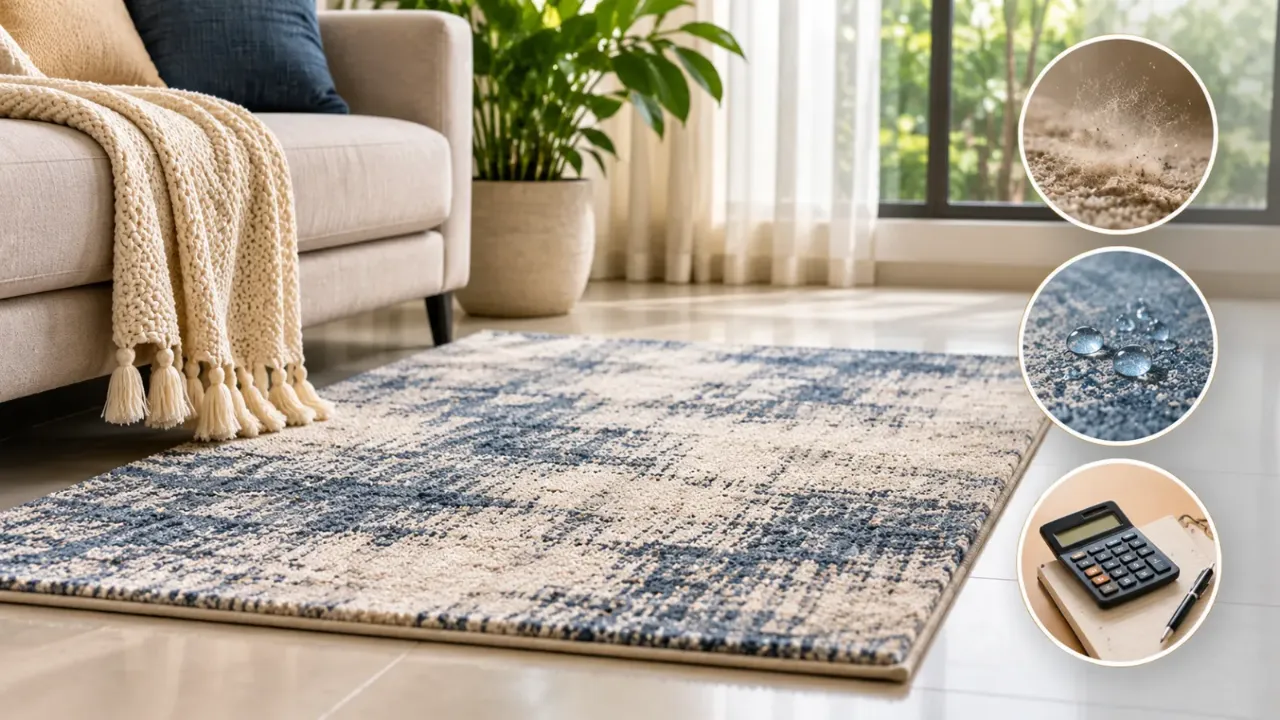
Carpet in an Indian Home: Dust, Humidity and the Honest Maths
A carpet can change the way a room feels almost immediately. It softens a hard floor, adds colour and texture, makes a seating area feel more connected and gives a bedroom a more comfortable finish. In photographs, it can make even a simple room look thoughtfully designed.
But living with a carpet is different from choosing one for a photograph. Indian homes deal with everyday dust, outdoor footwear, occasional spills, monsoon humidity and varying ventilation. A carpet that looks beautiful in a showroom may become difficult to maintain if its material, pile height or placement does not suit the household.
That does not mean carpets are unsuitable for Indian homes. It means the decision should involve more than colour and pattern. You need to consider where the carpet will sit, how frequently it will be cleaned, how quickly it can dry and what it will cost over time.
1. Why carpets need a little more thought in Indian homes
Unlike a hard floor, a carpet has fibres, a backing and sometimes an additional underlay. Dust, hair, crumbs and small particles can settle between those fibres instead of remaining visible on the surface.
- Dust accumulation: Fine dust and grit can settle deep inside the pile, especially near windows, balconies and frequently used entrances.
- Humidity: During the monsoon, a carpet that stays damp for too long can develop a musty smell and become vulnerable to mould.
- Spills: Tea, coffee, food and muddy footprints can leave stains if they are not treated quickly.
- Cleaning effort: A carpet needs regular vacuuming and occasional deeper cleaning. Sweeping the surrounding floor is not enough.
- Drying time: A thick carpet may take considerably longer to dry than a lightweight rug, particularly in a poorly ventilated room.
The important distinction is that a carpet does not automatically make a home dusty or unhealthy. The problem is allowing dirt and moisture to accumulate without a suitable cleaning routine.
2. Dust: What actually happens beneath the surface?
Carpets can hold dust, soil, skin flakes, pet hair and other particles brought into the home. Some of this material remains trapped in the pile until it is removed through vacuuming or professional cleaning.
The challenge is that a carpet can look clean while still holding particles between its fibres.
Choose a pile height you can maintain
Pile height refers to the length of the carpet fibres.
- Low-pile carpets: Have shorter fibres, making them easier to vacuum and generally more practical for frequently used spaces.
- Medium-pile carpets: Offer a balance between softness and maintenance.
- High-pile and shag carpets: Feel plush but can hold more debris and require more effort to clean thoroughly.
For a home where dust enters regularly, a low- or medium-pile carpet is often a more practical starting point than a very thick shag design.
Think about the pattern and colour
A completely plain, very light carpet can make every footprint or stain noticeable. A very dark, uniform surface may make light-coloured dust and lint stand out.
A subtle pattern, mixed tones or a slightly textured surface can make ordinary dust and minor marks less obvious between cleaning sessions. However, camouflage is not cleaning. A patterned carpet still needs regular maintenance.
Use an entrance strategy
A good entrance mat can reduce the amount of dirt brought into the house. Consider placing a durable mat outside the entrance and another washable mat just inside. Removing footwear at the entrance can also reduce the amount of outdoor dust and grit reaching the carpet.
3. Humidity and monsoon conditions: The bigger concern
Dust is visible and can usually be removed through routine cleaning. Moisture is more complicated because it can affect the carpet backing and the floor beneath it.
A carpet that remains damp may develop unpleasant odours, staining or mould. The risk is higher when it is placed in a poorly ventilated room, against a damp wall or directly over a floor that has moisture problems.
What makes a carpet vulnerable?
- A thick pile that retains moisture.
- A backing that does not dry easily.
- A rug placed over a damp or recently washed floor.
- Spills that are left untreated.
- Poor ventilation and limited airflow.
- Storing a carpet before it is completely dry.
How to manage carpet moisture
- Check the floor for seepage or damp patches before placing a carpet.
- Avoid keeping a carpet permanently in areas that frequently become wet.
- Lift and air removable rugs periodically.
- Blot spills immediately rather than rubbing them deeper into the fibres.
- If the carpet becomes wet, dry it thoroughly, including the underside.
- Do not roll or store a damp carpet.
- Follow the manufacturer's cleaning instructions instead of assuming every carpet can be shampooed or steam-cleaned.
If a carpet develops persistent mustiness or visible mould, simply spraying fragrance over it is not a solution. Identify the moisture source and arrange appropriate cleaning or professional assessment.
4. Which carpet materials make sense?
The material affects the feel, appearance, durability, cleaning method and price of a carpet. No single material is best for every Indian home.
| Material | What it offers | What to consider |
|---|---|---|
| Polypropylene | Practical, often budget-friendly and available in many designs | Check pile construction, backing and cleaning instructions |
| Polyester | Soft feel and a wide range of colours | Some constructions can flatten or show wear in busy areas |
| Nylon | Good resilience and useful for higher-traffic spaces | Can cost more; check the finish and stain-care instructions |
| Wool | Natural texture, warmth and a premium feel | Needs careful cleaning and protection from persistent dampness and pests |
| Cotton | Lightweight and comfortable, especially in smaller rugs | May need frequent washing and can take time to dry |
| Jute and other natural plant fibres | Distinctive texture and an earthy appearance | Sensitive to moisture and not ideal for damp or spill-prone locations |
The fibre alone does not tell you everything. Weave, density, pile height, backing, dye quality and finishing treatments also affect performance.
A practical material shortlist
- For a busy living room, consider a low-pile synthetic carpet with a suitable backing.
- For a bedroom, a softer medium-pile option may be comfortable if it can be cleaned properly.
- For a dining area, a small, low-pile and easily movable rug may be more manageable than a large thick carpet.
- For a covered balcony or semi-outdoor space, use only a product specifically rated for that environment.
- For a premium wool or handmade rug, check its care requirements and access to a specialist cleaner before buying.
5. Where should you actually place a carpet?
A carpet does not need to cover every room. In many Indian homes, a smaller, well-positioned rug can provide the same visual benefit with less cleaning effort.
Living room
An area rug can connect the sofa, coffee table and accent chairs into one seating arrangement. Choose a size that allows the front legs of the main seating pieces to sit on or close to the rug, depending on the layout. Avoid placing a thick carpet where people regularly enter with outdoor footwear.
Bedroom
A carpet beside or partly beneath the bed can make the room feel softer underfoot. A removable rug is easier to lift and air than a large fitted carpet.
Dining area
Food crumbs and accidental spills make this a demanding location. If you want a rug here, choose a low-pile, easy-to-clean option that can be moved without difficulty. Otherwise, a hard floor may be more practical.
Entrance and passage
These spaces receive frequent foot traffic. A durable runner or washable mat is generally more suitable than a delicate decorative carpet.
Kitchen and bathroom
Avoid ordinary decorative carpets in areas that are regularly exposed to water, grease or food residue. Use purpose-made, washable and quick-drying mats where needed.
6. The honest maths: What does owning a carpet really cost?
The purchase price is only the first part of the calculation. A carpet also involves cleaning, occasional repairs, underlay or grip pads, replacement and the time spent maintaining it.
Total ownership cost = Purchase price + Cleaning + Repairs + Accessories + Replacement allowance
Consider a hypothetical example. Suppose you purchase a 5 ft × 8 ft carpet.
- Carpet area: 40 sq ft
- Purchase price: ₹8,000
- Annual professional cleaning: ₹1,200
- Cleaning period: 5 years
- Additional grip pad: ₹800
The estimated five-year cost is:
₹8,000 + (₹1,200 × 5) + ₹800 = ₹14,800
This does not include repairs, transport, price increases or replacement. It is an illustration of how to calculate ownership cost, not a market quotation.
You can also compare the cost per year:
₹14,800 ÷ 5 = ₹2,960 per year
The same calculation can help you compare two carpets with different purchase prices and cleaning requirements.
What about professional cleaning charges?
Carpet cleaning providers may quote by square foot, carpet size, material or cleaning method. Rates differ by city, service provider, carpet condition and whether pickup and delivery are included.
Before booking, ask:
- Is the price based on the carpet's actual measured area?
- Does it include stain treatment?
- Is pickup and delivery extra?
- Is the cleaning method suitable for the fibre and backing?
- How will the carpet be dried?
- Are colour-fastness and shrinkage risks checked?
Do not choose a cleaning service based only on the lowest advertised rate. A method that is unsuitable for the material can cause damage.
7. Carpet versus a hard floor: Which is more practical?
A carpet and a hard floor serve different purposes. The right choice depends on how you use the room.
| Factor | Carpet or area rug | Hard flooring |
|---|---|---|
| Underfoot comfort | Softer and warmer | Usually harder and cooler |
| Dust visibility | Dust can settle within the pile | Dust is easier to see and remove |
| Routine cleaning | Requires vacuuming and occasional deeper cleaning | Sweeping, vacuuming and mopping |
| Moisture handling | Needs careful drying | Usually easier to manage, depending on the material and installation |
| Design flexibility | Easy to change without renovation | More permanent finish |
| Replacement | Smaller rugs can be replaced independently | Replacement may involve more work |
A practical home does not have to choose one everywhere. Hard flooring can remain the main surface, while removable rugs add softness to selected areas.
8. A simple carpet maintenance routine
A realistic maintenance routine is better than waiting until the carpet looks visibly dirty.
Weekly
- Vacuum frequently used areas.
- Pay attention to corners and beneath furniture.
- Remove loose crumbs, hair and visible debris.
Whenever a spill happens
- Blot the liquid with a clean absorbent cloth.
- Avoid aggressive rubbing.
- Use only a cleaning solution approved for the carpet.
- Dry the affected area thoroughly.
Every few months
- Rotate a movable rug if its construction and placement allow it.
- Check the underside and floor for moisture.
- Inspect edges, backing and areas beneath furniture.
Periodically
- Arrange deeper cleaning according to the material, usage and manufacturer's guidance.
- Clean more frequently if the home has pets, children or heavy foot traffic.
- Ensure the carpet is completely dry before putting it back in place.
For delicate, handmade, antique or valuable carpets, consult a specialist rather than experimenting with household chemicals or aggressive brushing.
9. Common carpet-buying mistakes to avoid
- Buying a high-pile carpet only because it feels luxurious in the showroom.
- Choosing a size that is too small for the furniture arrangement.
- Ignoring the carpet's backing and assuming the fibre tells the whole story.
- Placing a delicate rug in a high-traffic entrance.
- Buying a natural-fibre carpet for a frequently damp location.
- Assuming every carpet can be washed at home.
- Using excessive water or strong cleaning chemicals.
- Forgetting to budget for a suitable underlay or grip pad.
- Storing a carpet before it has dried completely.
- Ignoring the cleaning and replacement costs while comparing purchase prices.
10. A checklist before buying a carpet
- Measure the area and decide the correct carpet size.
- Identify the fibre and construction.
- Check pile height and density.
- Ask about the backing and whether an underlay is needed.
- Confirm the recommended cleaning method.
- Check whether the carpet is suitable for your room's moisture and traffic conditions.
- Ask about colour fading, shedding and warranty coverage.
- Check whether professional cleaning is available for the material.
- Calculate the purchase price plus expected maintenance costs.
- Confirm the return policy and inspect a sample if possible.
Final thoughts
A carpet can be a worthwhile addition to an Indian home, but it should suit the way the home actually functions. A beautiful, thick rug may be perfect for a low-traffic bedroom, while a compact, low-pile option may make more sense in a frequently used living room.
The best decision is not necessarily the softest, most expensive or most decorative carpet. It is the one that fits the room, handles the household's everyday conditions and remains manageable to clean.
Think beyond the showroom appearance. Measure the space, understand the material, consider humidity and calculate the cost of maintaining it. That is how a carpet becomes a comfortable part of the home rather than another item that is difficult to look after.
Frequently Asked Questions
1. Are carpets suitable for Indian homes?
Yes. Carpets can work well in Indian homes when their material, pile height and placement suit the room. Removable, low- or medium-pile rugs are often easier to maintain than large, thick carpets.
2. Do carpets collect dust?
Carpets can trap dust, grit, hair and other particles within their fibres. Regular vacuuming and periodic deeper cleaning help remove accumulated debris.
3. Are carpets a bad choice during the monsoon?
Not necessarily, but moisture management becomes important. Avoid placing carpets on damp floors, dry spills quickly and ensure rugs are completely dry before storing or replacing them.
4. Which carpet material is easiest to maintain?
Some synthetic carpets, including suitable polypropylene and nylon options, can be practical for everyday use. However, construction, backing and manufacturer care instructions matter as much as fibre type.
5. Is a high-pile carpet difficult to clean?
It can be. Longer fibres may hold more debris and need more effort to vacuum. A low- or medium-pile carpet is often easier to maintain in a dusty or busy household.
6. How often should a home carpet be cleaned?
Vacuuming should be part of the regular household routine, especially in high-traffic areas. Deeper cleaning depends on the carpet material, usage, visible soiling and manufacturer recommendations.
7. Can I wash a carpet at home?
Only if the manufacturer confirms that the material and backing are suitable for home washing. Some carpets can shrink, bleed colour or suffer backing damage if cleaned incorrectly.
8. Is buying a carpet cheaper than installing a different floor finish?
It depends on the carpet, room size and expected lifespan. A removable rug may be a lower-commitment way to add comfort, but its purchase and cleaning costs should be considered over several years.
Plan Your Home with Walls to Wonder
Make more informed interior decisions with Walls to Wonder's AI-powered tools. Explore your room, understand design possibilities and plan your next home improvement with greater clarity.
- Whole Home Visualizer – Explore design ideas across your home.
- Design My Room – Experiment with different room looks and layouts.
- Interior Design Cost Estimate – Get an initial understanding of potential design costs.
- Interior Quotation Checker – Review and understand interior quotations.
- Rate My Room Design – Get feedback on your room design.
- Interior Style Finder – Discover an interior style that suits your preferences.
Discover more at Walls to Wonder.
Turn this idea into a plan for your home
Visualise your space, understand the likely budget, or find a professional who can bring the idea to life.