
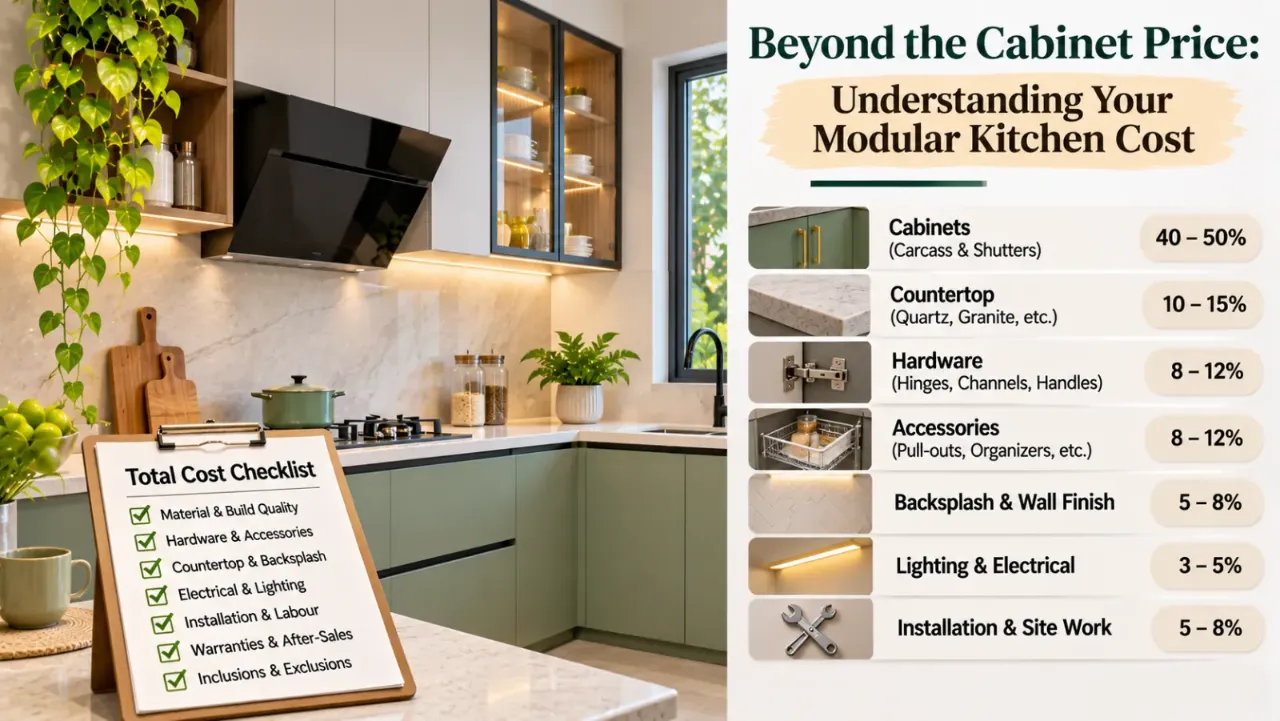
Beyond the Cabinet Price: Understanding Your Modular Kitchen Cost
A modular kitchen is one of the most important investments in a home interior project. It brings together cabinets, shutters, hardware, storage accessories, countertops, fittings and installation. Yet when homeowners receive a quotation, the final amount can be confusing. One vendor may give a single package price, while another lists every component separately.
The difference is not always about the design or the quality of work. It can come down to what each estimate includes, how measurements are calculated, which materials are specified and when payments are due.
For Indian homes, understanding these details before approving a modular kitchen order can help you plan the budget, avoid unexpected additions and know exactly what the vendor has agreed to deliver.
1. Understand What Makes Up the Modular Kitchen Cost
A modular kitchen cost is influenced by the size and layout of the kitchen, the number of cabinets, material selection, hardware, accessories and installation requirements.
The main components usually include:
- Cabinet carcass: The internal box structure of base, wall and tall units.
- Shutters and finishes: The visible cabinet fronts, including laminate, acrylic, membrane, PU or other finishes.
- Hardware: Hinges, drawer channels, handles, lift-up mechanisms and other fittings.
- Internal accessories: Cutlery trays, baskets, pull-outs, corner units and organisers.
- Countertop: Granite, quartz or another selected worktop material.
- Sink and tap: Products and their installation, if included.
- Installation: Transportation, assembly, levelling, fixing and finishing.
- Additional work: Electrical, plumbing, civil modifications, backsplash work and appliances where required.
Not every vendor includes all these components in the headline price. The quotation should make it clear which items are included, which are optional and which will be charged separately.
2. Know How Modular Kitchen Prices Are Measured
Before comparing prices, understand the measurement method used in the estimate. Modular kitchen vendors may quote using different units, and the quoted rate is meaningful only when you know what it covers.
Running-foot pricing: The vendor quotes based on the linear length of cabinet units. Ask whether the rate covers base cabinets, wall cabinets or both. Also confirm the assumed height, depth and material specifications.
Square-foot pricing: The price may be based on the measured cabinet surface, shutter area or another defined area. Ask which surfaces are included and how quantities are calculated.
Module-wise pricing: Each cabinet or storage module is priced separately according to its dimensions, construction and fittings.
Lump-sum pricing: The vendor gives one total amount for the agreed kitchen scope. This can be convenient, but the estimate should still include a detailed component and specification breakdown.
Never compare two rates simply because both are quoted per running foot or square foot. The dimensions, materials, hardware and inclusions may be different.
3. Check the Cabinet Material and Construction
The cabinet carcass is the internal structure that supports the kitchen's storage and daily use. Its material and construction influence both the price and expected performance.
Ask the vendor to specify:
- Board or plywood type and grade.
- Thickness of the carcass and back panels.
- Internal finish and edge treatment.
- Moisture-resistant specifications where relevant.
- Shutter construction and finish.
- Brand or manufacturer, where applicable.
Terms such as "premium board", "waterproof material" or "branded plywood" are not detailed specifications. Request the exact product description and supporting documentation.
Also check whether the same material is being used throughout the kitchen. A vendor may propose different specifications for base units, wall units and areas near the sink. These distinctions should be documented rather than left to verbal discussion.
4. Understand the Cost of Shutters and Finishes
Shutters are a visible part of the kitchen, so their finish can influence the overall estimate.
Common choices include laminate, membrane, acrylic, PU and other decorative finishes. Their appearance, maintenance requirements and price can vary.
When reviewing the estimate, check:
- Shutter material and finish type.
- Brand, shade or finish code.
- Thickness and construction details.
- Edge-banding specification.
- Whether the quoted rate includes handles or profile systems.
- Whether the finish is included in the base price or treated as an upgrade.
Ask for physical samples before approving the final selection. A colour or finish viewed on a screen may look different under your kitchen lighting.
If the quotation includes a material allowance, clarify what happens if you select a finish above or below that allowance.
5. Identify Hardware and Accessories Separately
Hardware can make a significant difference to the usability of a modular kitchen. Hinges, drawer channels and storage mechanisms should not be hidden under a vague line such as "standard fittings".
Ask for a list of:
- Hinges and their closing mechanism.
- Drawer channels and extension type.
- Handles or handleless profiles.
- Lift-up mechanisms, if applicable.
- Pull-out baskets and organisers.
- Corner storage mechanisms.
- Cutlery trays and internal accessories.
The estimate should mention the brand or product range where agreed, along with quantities and relevant warranty terms.
Do not assume that every accessory shown in a 3D design is included in the price. Confirm each one in the written scope.
6. Separate the Countertop, Sink and Appliances
The cabinet price may not cover the full working kitchen. Countertops, sinks, taps and appliances are frequently listed separately or excluded.
Check whether the estimate includes:
- Countertop material, thickness and dimensions.
- Edge profile and finishing.
- Sink make, model and installation.
- Tap and plumbing connections.
- Hob and chimney.
- Appliance provisions and cut-outs.
- Backsplash or dado tiles.
- Water purifier or other appliance provisions.
For appliances, confirm the make, model and quantity rather than accepting a general entry such as "chimney included".
If an item is excluded, include its expected cost in your overall kitchen budget so that the final project amount does not come as a surprise.
7. Understand What Installation Covers
Installation is more than placing cabinets against the wall. It may include transportation, handling, assembly, levelling, fixing, alignment and finishing.
Ask whether the quotation includes:
- Delivery to the property.
- Loading, unloading and floor access.
- Cabinet assembly and installation.
- Wall mounting and fixing.
- Countertop placement and cut-outs.
- Alignment of shutters and drawers.
- Sink and tap installation.
- Final adjustments and cleaning.
Also confirm whether a separate carpenter, plumber, electrician or stone fabricator will be required. If their work is not part of the vendor's scope, ask for an estimate before approving the kitchen order.
8. Read the Exclusions Before Approving the Estimate
Exclusions are just as important as inclusions. They identify work and products that are not covered by the quoted amount.
Depending on the project, exclusions may include:
- Old kitchen dismantling and debris disposal.
- Civil repairs and masonry work.
- Plumbing and electrical point shifting.
- New backsplash tiles.
- Painting and wall repairs.
- Chimney, hob and other appliances.
- Sink, tap and water purifier.
- Additional transportation or difficult site access.
- Applicable taxes, if not included in the stated total.
Ask the vendor to provide a written exclusion list. If you need any excluded item, decide who will arrange it and how much it may add to the overall budget.
9. Understand the Payment Stages
A modular kitchen project often moves through design approval, material procurement, fabrication, delivery and installation. The payment schedule should explain how payments relate to these stages.
A vendor may request an advance at order confirmation, another payment before or during production, a payment at delivery and a final amount after installation. The exact arrangement varies by vendor and contract.
Before paying, check:
- The advance amount and what it confirms.
- Whether drawings and measurements are approved before production.
- When material procurement or fabrication payments are due.
- Whether a payment is linked to dispatch or delivery.
- What amount remains after installation.
- What conditions must be met before final payment.
Do not treat a payment schedule as a universal percentage formula. Agree on milestones that match the actual project, and record the amounts, due dates and conditions in writing.
Keep receipts, invoices, approved drawings and payment confirmations together throughout the project.
10. Confirm the Scope Before Production Begins
Once the design is approved and materials are ordered, changes may affect the cost and timeline. That is why the final scope should be documented before fabrication begins.
Your approved scope should include:
- Final kitchen layout and drawings.
- Cabinet dimensions and module list.
- Material and finish specifications.
- Hardware and accessory schedule.
- Countertop and sink details.
- Appliance provisions.
- Installation responsibilities.
- Inclusions and exclusions.
- Project timeline and payment milestones.
Check that the quotation, drawings and product selections describe the same kitchen. If a detail appears in the design but not in the quotation, ask for it to be added or clearly marked as excluded.
11. Know How Changes Affect the Final Cost
Changes can happen during a kitchen project. You may add a tall unit, change a shutter finish, include extra drawers or modify the appliance layout.
Before approving any change, request a written variation that explains:
- What is being added, removed or replaced.
- The additional cost or credit.
- Any change in material or quantity.
- Whether the delivery or installation date will shift.
- The revised project total.
Avoid approving additional work based only on a verbal conversation. Written confirmation helps both the homeowner and vendor keep track of the agreed scope and revised amount.
12. Compare the Final Estimate With the Budget
Before signing, prepare a simple cost summary. Separate the cabinet package from items that are priced independently.
- Carcass and shutters: Material, thickness, finish and quantity.
- Hardware: Brand, model, type and quantity.
- Accessories: Individual mechanisms and organisers.
- Countertop: Material, dimensions and installation.
- Sink and tap: Product details and connection work.
- Appliances: Make, model and whether supplied.
- Installation: Delivery, assembly and fixing.
- Additional work: Civil, plumbing and electrical work.
- Taxes: Whether included or separately charged.
Compare quotations using the same layout and specifications. A lower total may simply leave out components that another vendor has included.
The goal is not just to find the smallest number. It is to understand the full cost of receiving the kitchen you have approved.
13. Use Walls to Wonder Tools Before Finalising Your Kitchen
Planning the kitchen layout and visualising finishes before approving the estimate can help you make decisions with greater clarity.
Walls to Wonder offers tools that support different stages of interior planning:
- Design My Room: Explore kitchen design ideas, layouts, finishes and storage concepts.
- Whole Home Visualizer: Explore coordinated design concepts across different areas of your home.
- Interior Design Cost Estimate: Get an indicative starting point for interior budget planning.
- Interior Quotation Checker: Review quotation details, scope, materials, charges and exclusions.
These tools support visualisation and preliminary planning. Final kitchen measurements, material specifications, technical requirements and vendor pricing should be confirmed with the relevant professionals.
Final Thought
Understanding modular kitchen cost is not just about knowing the final amount. It is about knowing what that amount covers, how the materials and components are specified, when payments are due and what happens if the scope changes.
Before approving an estimate, make sure the drawings, specifications, inclusions, exclusions and payment terms all match. A clearly documented agreement makes the project easier to manage and helps you move from the first quotation to the finished kitchen with fewer surprises.
Frequently Asked Questions
1. What is included in a modular kitchen cost?
It depends on the vendor's scope. A quotation may include cabinet carcasses, shutters, standard hardware and installation, while accessories, countertops, sinks, appliances, plumbing, electrical and civil work may be separate. Always check the written inclusions.
2. How is modular kitchen cost calculated?
Vendors may use running-foot rates, square-foot rates, module-wise pricing or a lump-sum estimate. Ask what is being measured and which materials, cabinets and services are included in the rate.
3. What is a modular kitchen payment schedule?
It is the agreed sequence of payments linked to project milestones such as order confirmation, design approval, material procurement, fabrication, delivery and installation. The exact schedule should be written into the agreement.
4. Should I pay the full amount before installation?
Payment terms vary by vendor and agreement. Understand what each instalment covers, retain the agreed final payment conditions in writing and keep invoices and receipts. Do not rely on verbal payment promises.
5. Can the modular kitchen cost increase after the quotation is approved?
Yes. Changes in dimensions, materials, finishes, accessories, site conditions or project scope can affect the final amount. Ask for written approval of every variation, including its cost and timeline impact.
6. How do I compare two modular kitchen quotations?
Compare the same layout, cabinet dimensions, carcass material, shutter finish, hardware, accessories, countertop, appliances, installation, taxes, exclusions, payment milestones and warranty terms. A comparison based only on the final total can be misleading.
Get a personalised estimate for your home
Choose your rooms, materials and preferences to understand a practical interior budget before you commit.