
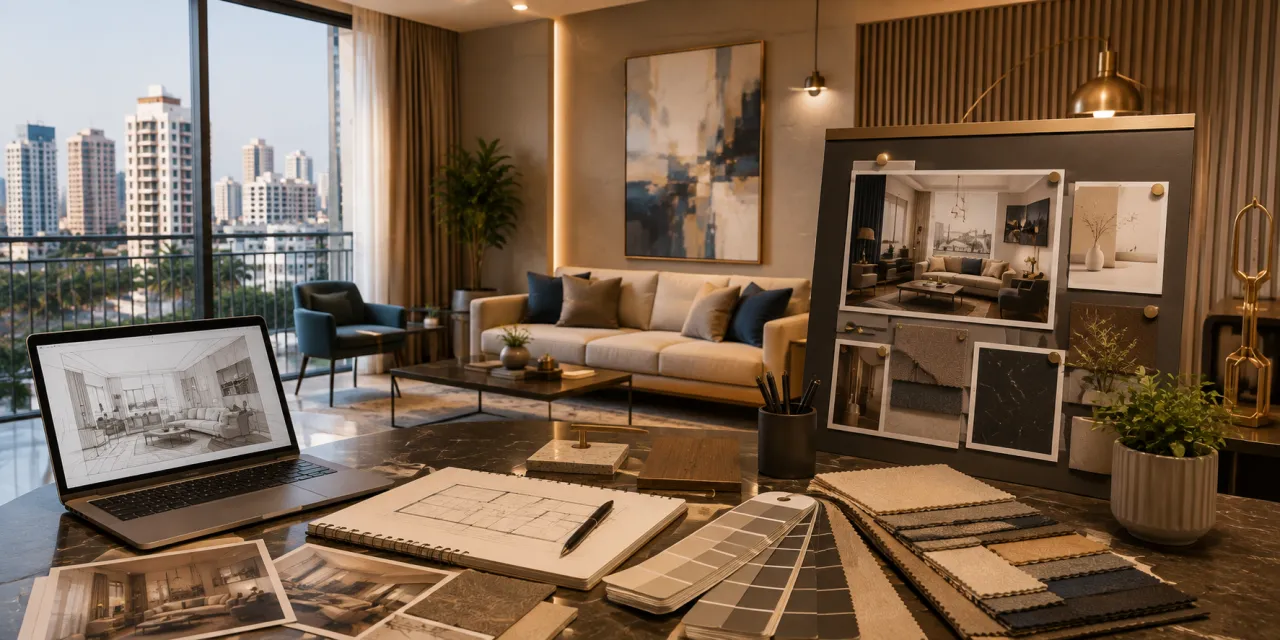
Best Interior Designers in Andheri East, Mumbai
Finding a suitable interior partner is less about choosing the most polished portfolio and more about checking whether a team can handle your home, budget and decision-making style. This guide to the best interior designers in Andheri East Mumbai explains what to compare before you request a proposal.
Start by browsing interior designers and companies serving Andheri East. Use the directory as a starting point, then independently review scope, materials, timelines and contract terms.
Which interior services are available in Andheri East?
Design companies serving the locality may offer a single service or a complete design-and-execution package. Ask exactly what is included rather than assuming that “full home interiors” covers every site requirement.
Planning and design
Space planning, furniture layouts, 3D views, colour schemes, lighting plans and material selection. Some designers also prepare detailed working drawings for carpentry, electrical points and false ceilings.
Modular and fixed furniture
Modular kitchens, wardrobes, TV units, storage, study desks and utility solutions can be combined with site-built carpentry where unusual dimensions or existing finishes require it.
Execution and coordination
Possible inclusions are civil work, plumbing changes, electrical work, painting, ceiling work, glass, curtains, loose furniture and appliance coordination. Confirm who supervises each trade.
Renovation and refreshes
For an occupied home, the brief may be limited to a kitchen upgrade, bedroom storage, a balcony, or a living-room refresh. A smaller scope still needs drawings, measurements and a written schedule.
What kinds of Andheri East homes and projects need different approaches?
Homes around Andheri East can vary from compact apartments and rented flats to larger family residences, newly handed-over properties and renovation projects. The right designer should respond to the actual building and not force a catalogue layout.
- Compact apartments: prioritise circulation, vertical storage, sliding or flexible furniture and a realistic furniture count.
- New homes: coordinate with the possession condition, builder provisions, service shafts, electrical points and society processes before finalising drawings.
- Older homes: inspect dampness, plumbing, wiring, tile levels and wall conditions before pricing surface upgrades.
- Rented or short-term homes: consider reversible storage, lighting and furniture rather than expensive permanent changes.
Ask for a site visit or a measurement process. A proposal prepared without understanding door swings, columns, window positions and existing services is difficult to compare fairly.
How should you compare interior designers?
Use the same brief for each shortlisted company. Share the floor plan, room list, preferred completion window, must-have storage and a working budget. Then compare deliverables, not just the first total shown.
| Compare | What to check | Useful question |
|---|---|---|
| Design process | Measurements, drawings, revisions and approval stages | How many design changes are included? |
| Scope | Room-by-room work, exclusions and site responsibilities | Which items will I need to arrange separately? |
| Materials | Board type, thickness, finish, hardware and brand or grade | Will the final quotation name the specification? |
| Execution | Site supervisor, trade coordination, updates and quality checks | Who is my day-to-day contact? |
| Commercial terms | Taxes, payment stages, variation process and warranty | What happens if the scope changes? |
Portfolio images show design ability, but they do not prove that a company is the right fit for your home. Request relevant examples, such as compact kitchens, wardrobes with internal accessories or renovation work, and ask what the team personally handled.
What affects the cost of interiors?
There is no responsible single price for a home in Andheri East without knowing its size, condition and specification. Cost can change substantially based on the following:
- Number of rooms and the amount of built-in storage.
- Carcass material, surface finish, edge treatment and hardware.
- Kitchen accessories, wardrobe internals, soft-close fittings and lift-up mechanisms.
- Electrical rewiring, plumbing relocation, civil repairs, waterproofing or demolition.
- False ceilings, lighting fixtures, glass, mirrors, curtains and loose furniture.
- Site access, working hours, building permissions, protection of common areas and disposal requirements.
- Design fees, project management charges, taxes, delivery, installation and warranty support.
Ask for costs divided into design, furniture, site work, products and taxes. A lower headline number may simply exclude painting, lights, appliances, transport or repair work. For an initial planning reference, try the interior design cost estimator, then treat its output as a discussion aid rather than a final quote.
What should a material and quotation check include?
A useful quotation lets you understand what you are buying. It should identify quantities or measurement logic where practical, finish names, hardware specifications, installation responsibilities and exclusions.
- Check whether “plywood”, “board” or “laminate” is further specified by type, thickness, grade or finish.
- Look for a room-by-room schedule instead of one lump-sum furniture line.
- Confirm whether appliances, sinks, lights, handles, mirrors, curtains and civil work are included.
- Check the payment schedule against measurable milestones, not only calendar dates.
- Read the process for variations, cancellations, delays, damaged material and snag rectification.
- Make sure drawings and approved finish samples are referenced in the agreement.
You can use WallsToWonder’s quotation checker to organise questions about a proposal. It cannot replace a contract review, material sample or professional technical inspection.

Plan a working budget
Test how room count, storage and finish choices may affect your brief before meeting designers.
Open the cost estimator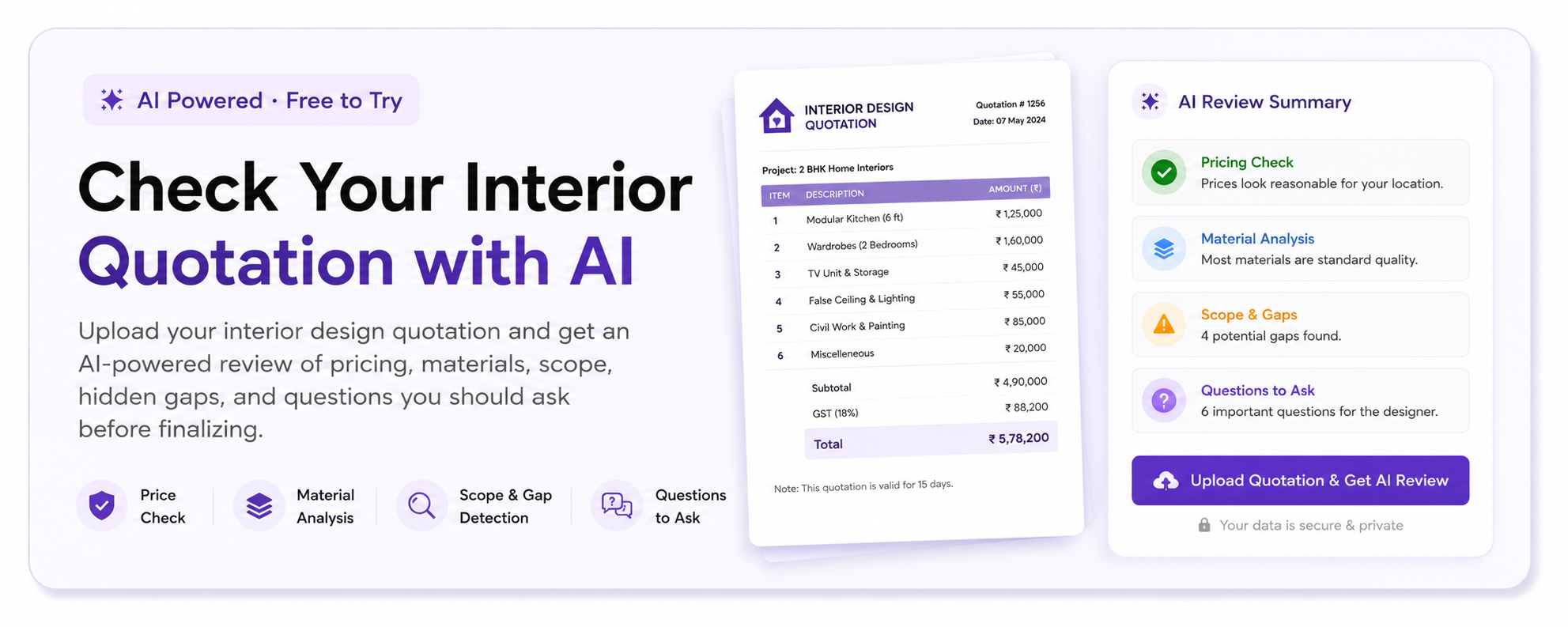
Prepare quotation questions
Use a second pass to spot missing scope items and create a clearer discussion with the company.
Check a quotationWhat should you ask before paying an advance?
- Who signs the agreement, and which entity will invoice and execute the work?
- What exactly is covered in the advance, and when does procurement begin?
- Can I see the final drawings, finish schedule and itemised scope before production?
- How are revisions, substitutions and additional work approved?
- Who is responsible for society coordination, site protection and debris removal?
- What are the handover, snag-list and warranty processes?
- How will delays or unavailable materials be communicated?
Keep approvals in writing. Save the final quotation, drawings, sample references, payment receipts and change requests in one place.
Which red flags deserve caution?
Be careful when a company avoids a site measurement, refuses to itemise materials, promises an unusually precise completion date without seeing the property, or pressures you to pay immediately to “lock” a price. Vague phrases such as “premium quality” are not specifications.
Other warning signs include unexplained cash-only requests, no clear escalation contact, large payments demanded before design approvals, missing exclusions and unwillingness to describe warranty or snag support. One negative signal does not decide the matter, but several together justify slowing down and seeking another proposal.
How can WallsToWonder help you shortlist?
WallsToWonder helps homeowners move from browsing to a more structured comparison. Explore the wider Mumbai interior designer directory, narrow your search through the Andheri East listing, and use the design ideas collection to clarify your preferences before consultations.
Make your shortlist easier to review
Save two or three suitable options, send each the same brief, and compare their written responses. A transparent scope is more useful than a hurried promise.
Browse companies serving Andheri EastFrequently asked questions
1. How many designers should I compare?
Three is a practical starting point: enough to see differences in scope and approach without creating confusingly different briefs.
2. Should I choose a local designer only?
Not necessarily. Consider companies serving the area, then check their site supervision, travel arrangements, relevant experience and communication process.
3. Is a modular interior always cheaper?
Not always. Cost depends on materials, hardware, design complexity, site work, quantity and what the package excludes.
4. When should I pay an advance?
Pay only after confirming the contracting party, scope, specifications, milestone schedule, cancellation terms and written deliverables.
5. Can an online estimate replace a designer’s quotation?
No. An estimate helps frame a budget, while a site-specific quotation must account for measurements, conditions, materials and execution responsibilities.
Turn this idea into a plan for your home
Visualise your space, understand the likely budget, or find a professional who can bring the idea to life.