
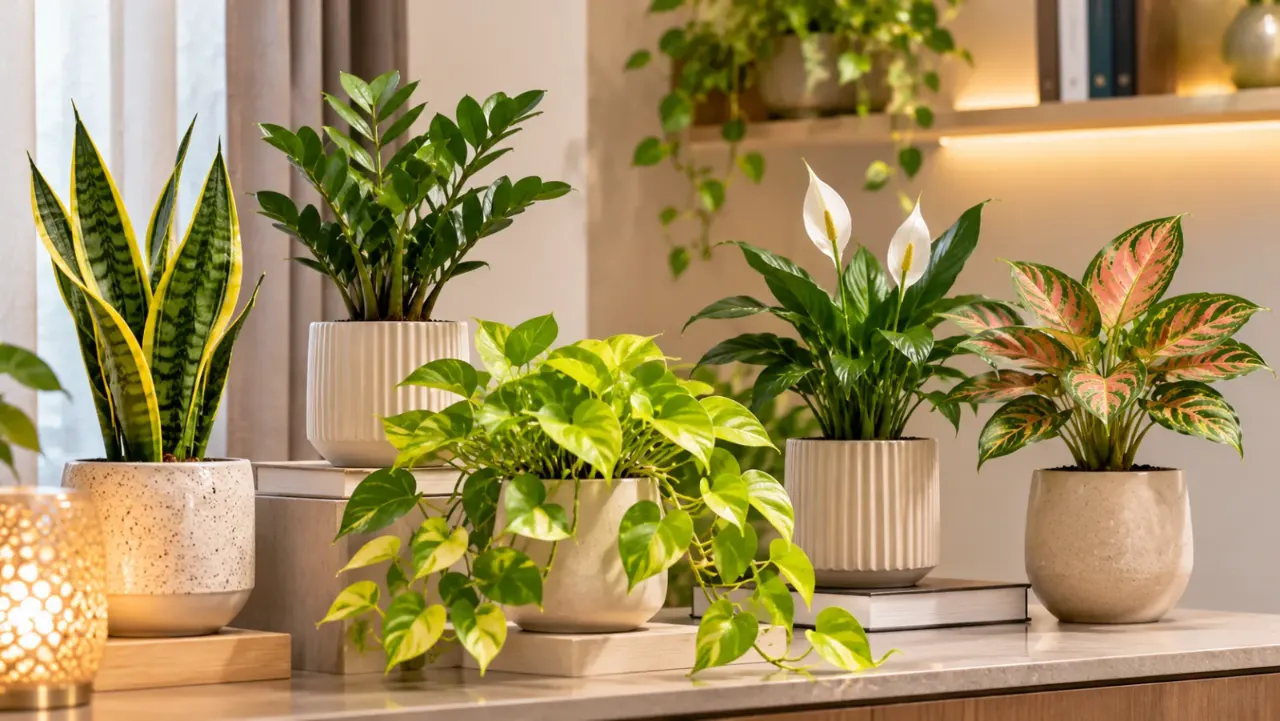
Best Indoor Plants for Homes with Limited Sunlight
Not every home receives generous sunlight throughout the day. In many Indian apartments, neighbouring buildings block daylight, balconies face shaded directions and rooms located away from windows receive very little natural light.
This can make choosing indoor plants difficult. A plant that looks healthy in a bright nursery may struggle when placed in a dim bedroom or a corner far from the window.
The solution is not to choose plants that supposedly need no sunlight. Instead, look for varieties that tolerate lower light conditions and match them to the actual brightness of your rooms.
Here are some indoor plants worth considering, along with practical placement and care tips for Indian flats.
1. Understand What Low Light Actually Means
Low light does not mean complete darkness. Plants need light for photosynthesis, even when they can survive in shaded environments.
In a home, low-light conditions may include:
- A room receiving indirect daylight through a north-facing window.
- A corner several feet away from a window.
- A living room shaded by neighbouring apartment buildings.
- A hallway receiving borrowed daylight from an adjoining room.
- A bedroom with a small window or limited daylight.
A room with no natural daylight is different. Plants placed in such spaces may need suitable grow lights to remain healthy over time.
2. Indoor Plants That Tolerate Lower Light
These plants are commonly recommended for indoor environments with limited natural light. Their tolerance does not mean they will grow equally well in every dark corner.
1. Snake Plant
Botanical name: Dracaena trifasciata
Snake plants have upright, sword-shaped leaves that make them suitable for narrow corners and compact rooms.
Where to place it: Near a bedroom window, beside a TV unit or in a living-room corner receiving some indirect daylight.
Care: Allow the potting mix to dry before watering again. Avoid leaving water in the saucer or using a pot without drainage.
Why consider it: It tolerates lower light and does not require frequent watering.
2. ZZ Plant
Botanical name: Zamioculcas zamiifolia
The ZZ plant has glossy, upright stems and thick leaves that store water. Its structured appearance works well with contemporary interiors.
Where to place it: On a living-room side table, near a shaded window or in a home-office corner with some daylight.
Care: Let the potting mix dry substantially between watering sessions. Overwatering is a common problem.
Why consider it: It tolerates lower light and is suitable for people who prefer relatively infrequent watering.
3. Money Plant
Botanical name: Epipremnum aureum
Money plant, also called pothos, is a familiar choice in Indian homes. Its trailing stems make it useful for shelves, hanging planters and decorative corners.
Where to place it: On a bookshelf, in an open wall niche or on a high shelf near a window.
Care: Water when the upper portion of the potting mix has started to dry. Greener varieties generally cope better with lower light than heavily variegated varieties.
Why consider it: It can be styled in several ways without taking up much floor space.
4. Aglaonema (Chinese Evergreen)
Botanical name: Aglaonema species
Aglaonema is valued for its decorative foliage. Depending on the variety, its leaves may feature green, silver, pink or red patterns.
Where to place it: On a side table, near a window with filtered daylight or in a living-room corner that receives indirect light.
Care: Keep the soil lightly moist but not waterlogged. Allow excess water to drain.
Why consider it: It adds colour and foliage interest without requiring direct sunlight.
5. Peace Lily
Botanical name: Spathiphyllum species
Peace lilies have broad green leaves and distinctive white flower-like structures. They can tolerate lower light, although flowering generally requires brighter indirect light.
Where to place it: Near a window with soft daylight rather than in the darkest corner of the room.
Care: Keep the potting mix evenly moist without allowing the plant to sit in standing water.
Why consider it: It offers a softer, fuller appearance and can introduce flowers into an indoor planting arrangement.
6. Cast-Iron Plant
Botanical name: Aspidistra elatior
The cast-iron plant has broad, dark-green leaves and a simple upright growth habit. It is known for tolerating less favourable indoor conditions.
Where to place it: In a shaded living-room corner or beside furniture where some natural daylight reaches the plant.
Care: Water moderately and allow the soil to dry somewhat between watering sessions.
Why consider it: Its foliage provides a calm, understated look that works with minimal interiors.
7. Parlor Palm
Botanical name: Chamaedorea elegans
The parlor palm has delicate, arching fronds and a compact growth habit compared with many larger indoor palms.
Where to place it: Near a bright but shaded window, beside a sofa or in a bedroom corner receiving indirect daylight.
Care: Keep the soil lightly moist, but avoid waterlogging. Check the plant regularly for dry leaf tips and pests.
Why consider it: It adds a softer, leafy appearance without the scale of a large floor plant.
8. Heartleaf Philodendron
Botanical name: Philodendron hederaceum
This trailing plant has heart-shaped leaves and can be used in hanging pots or on shelves.
Where to place it: On a high shelf, in a hanging planter or near a window where it receives indirect daylight.
Care: Allow the top layer of soil to dry slightly before watering again. Prune long stems if you want a fuller appearance.
Why consider it: It works particularly well in homes where floor space is limited.
3. Which Plant Should You Choose for Each Room?
The best plant depends not only on the amount of light but also on the available space, ventilation and how the room is used.
| Room or Location | Plant Options | Placement Idea |
|---|---|---|
| Living room | ZZ plant, Aglaonema, snake plant | Beside the sofa, TV unit or window |
| Bedroom | Snake plant, ZZ plant, parlor palm | Near a window or on a suitable stand |
| Home office | ZZ plant, money plant, heartleaf philodendron | Desk corner, shelf or bookcase |
| Shaded hallway | Snake plant, cast-iron plant | Along a wall receiving borrowed daylight |
| Bathroom with a window | Money plant, Aglaonema | On a shelf with adequate ventilation |
| Balcony with shade | Aglaonema, parlor palm | In a protected area with indirect daylight |
A bathroom without a window is not automatically suitable for plants just because it has high humidity. Without light, ventilation and suitable growing conditions, plants can decline.
4. How to Place Plants in a Low-Light Flat
Good placement can make a significant difference to plant health and the appearance of your interiors.
Use Window-Side Corners
The brightest part of a low-light room is often close to the window. Place plants that need more indirect light nearer to it.
Use Shelves for Trailing Plants
Money plants and heartleaf philodendrons can be placed on shelves or in hanging planters. This adds greenery without occupying valuable floor space.
Choose Vertical Plant Stands
A narrow plant stand can hold multiple small pots without making a compact room feel crowded. Ensure the plants on lower levels still receive enough light.
Avoid Blocking Natural Light
Do not place tall plants directly in front of small windows where they block daylight from reaching the rest of the room.
Rotate Plants When Necessary
If one side of a plant consistently faces the window, rotate the pot periodically so that growth remains more balanced. Avoid repeatedly moving a plant between very different lighting conditions.
5. Watering Tips for Indian Homes
Watering is one of the most common reasons indoor plants struggle.
In a low-light room, plants generally use water more slowly because their growth and photosynthesis may be reduced. The potting mix can therefore remain wet for longer.
This becomes particularly important during the Indian monsoon.
- Check the soil before watering instead of following a fixed weekly schedule.
- Use pots with drainage holes.
- Empty water collected in the saucer.
- Avoid leaving roots in standing water.
- Reduce watering when the soil takes longer to dry.
- Use a suitable, airy potting mix for the plant species.
- Check for yellowing leaves, soft stems or persistently wet soil.
Snake plants and ZZ plants prefer the soil to dry more thoroughly between watering. Peace lilies and aglaonemas generally prefer more consistent moisture, but should still not sit in waterlogged soil.
6. What to Consider During the Indian Monsoon
The monsoon changes indoor plant-care requirements.
Rooms may remain humid, sunlight can become weaker and soil may take longer to dry. Watering plants according to a summer routine can lead to root problems.
Reduce unnecessary watering: Check the soil before adding water, especially in rooms that receive little daylight.
Improve air circulation: Keep plants away from permanently damp corners and allow sufficient space between pots.
Inspect leaves: Remove dead or damaged leaves and check for signs of fungal problems or pests.
Check drainage: Make sure the pot and outer decorative container are not holding excess water.
Avoid constant repositioning: Do not move plants repeatedly between outdoor rain, bright sun and indoor shade.
7. Do Air Conditioners Affect Indoor Plants?
Yes. Air-conditioned rooms can create conditions that some indoor plants find difficult.
Direct airflow may dry leaves, while sudden changes in temperature can stress plants.
- Avoid placing pots directly below AC vents.
- Keep plants away from strong, continuous cold airflow.
- Avoid placing foliage against cold or damp surfaces.
- Check soil moisture rather than increasing watering automatically.
- Observe leaves for dry edges, drooping or unusual discolouration.
A plant can be placed in an air-conditioned room, but it should not be directly exposed to the AC outlet.
8. Can Plants Survive in Rooms With Almost No Sunlight?
This is where expectations need to be realistic.
Plants described as low-light tolerant can survive and grow in lower levels of indirect light, but they still need enough light to support their growth.
If a room receives almost no natural daylight, consider a suitable LED grow light.
Before choosing one:
- Check that it is designed for plant growth.
- Follow the manufacturer's recommended distance from the foliage.
- Use a consistent daily lighting schedule.
- Choose a fixture suitable for the room and electrical installation.
- Monitor the plant for changes in growth and leaf colour.
Ordinary decorative room lighting should not automatically be treated as a substitute for plant lighting.
9. Safety: Check Plant Toxicity Before Bringing Them Home
Not every attractive indoor plant is suitable for every household.
Some commonly recommended houseplants, including pothos, philodendron, ZZ plant, snake plant, aglaonema and peace lily, can cause problems if chewed or ingested by pets or children.
- Check the exact plant species and its toxicity information.
- Keep potentially harmful plants out of reach.
- Avoid placing them where pets can easily chew the leaves.
- Do not assume that a plant is safe because it is commonly sold as an indoor variety.
If your home has pets or young children, choose plants only after checking reliable safety information for the specific species.
10. Common Mistakes to Avoid
Mistake 1: Expecting Plants to Grow in Complete Darkness
Low-light tolerance is not the same as being able to grow without light.
Mistake 2: Watering Every Sunday
A fixed schedule can leave soil constantly wet in shaded rooms, especially during monsoon.
Mistake 3: Choosing Plants Only for Their Appearance
A plant with colourful foliage may need brighter conditions than a greener variety of the same group.
Mistake 4: Placing Plants Directly Under AC Vents
Continuous cold airflow can damage or dry foliage.
Mistake 5: Using Pots Without Drainage
Water trapped around the roots can cause root damage.
Mistake 6: Buying Too Many Plants at Once
Start with a few suitable varieties. Observe how they respond to your home's light and conditions before expanding your collection.
11. A Simple Checklist Before Buying Indoor Plants
- Check the actual daylight available in the intended location.
- Identify whether the plant tolerates low or medium light.
- Ask the nursery about its watering needs.
- Check the plant's mature size.
- Choose a suitable pot with drainage.
- Consider monsoon and humidity conditions.
- Avoid placing plants directly under AC vents.
- Check toxicity if pets or young children live at home.
- Inspect leaves and stems for pests or damage.
- Start with a manageable number of plants.
Final Thoughts
A low-light Indian flat can still have a beautiful indoor planting arrangement. The key is to choose plants that suit the light your home actually receives rather than expecting every variety to thrive in a shaded corner.
Snake plants, ZZ plants, money plants and aglaonemas are useful starting points, while options such as peace lilies and parlor palms may need a brighter position within the home.
Start small, observe how your plants respond and adjust their placement and watering accordingly. With the right choices, even a compact apartment can feel more inviting with a little greenery.
Frequently Asked Questions
1. Which indoor plant is best for a low-light Indian flat?
Snake plants, ZZ plants, money plants and aglaonemas are commonly recommended for lower-light indoor conditions. The best choice depends on the actual brightness and care conditions in your room.
2. Can indoor plants grow without direct sunlight?
Yes. Many indoor plants can grow with indirect daylight and do not need direct sunlight. However, they still require sufficient light for photosynthesis.
3. Which plants are suitable for a shaded bedroom?
Snake plants and ZZ plants are options to consider. Place them where they receive some natural daylight rather than in a completely dark corner.
4. Can I keep a money plant in a room with little sunlight?
Money plants tolerate lower light, although growth may become slower. Greener varieties are generally better suited to dimmer locations than heavily variegated ones.
5. How often should I water low-light indoor plants?
There is no universal watering schedule. Check the potting mix before watering, because low-light conditions can slow drying. The right frequency also depends on the plant, pot size, soil and season.
6. Are low-light plants suitable for air-conditioned rooms?
They can be, provided they are not placed directly under AC vents. Monitor leaf condition and avoid sudden temperature changes.
7. Which plants are suitable for indoor corners?
Snake plants, ZZ plants and cast-iron plants can work in corners receiving some indirect daylight. A completely dark corner may require suitable grow lighting.
8. Do indoor plants improve air quality?
Plants can influence indoor environments, but ordinary numbers of houseplants should not be relied on as a replacement for ventilation or proper air filtration.
Bring More Greenery into Your Home with Walls to Wonder
Explore design possibilities, plan your rooms and make informed decisions for your home with Walls to Wonder's AI tools.
- Whole Home Visualizer – Visualise design ideas across your home.
- Design My Room – Explore design possibilities for an individual room.
- Interior Design Cost Estimate – Get an initial estimate for your interior project.
- Interior Quotation Checker – Review the details in an interior quotation.
- Rate My Room Design – Get feedback on your room design.
- Interior Style Finder – Explore styles that suit your preferences.
Explore more at Walls to Wonder.
Turn this idea into a plan for your home
Visualise your space, understand the likely budget, or find a professional who can bring the idea to life.