
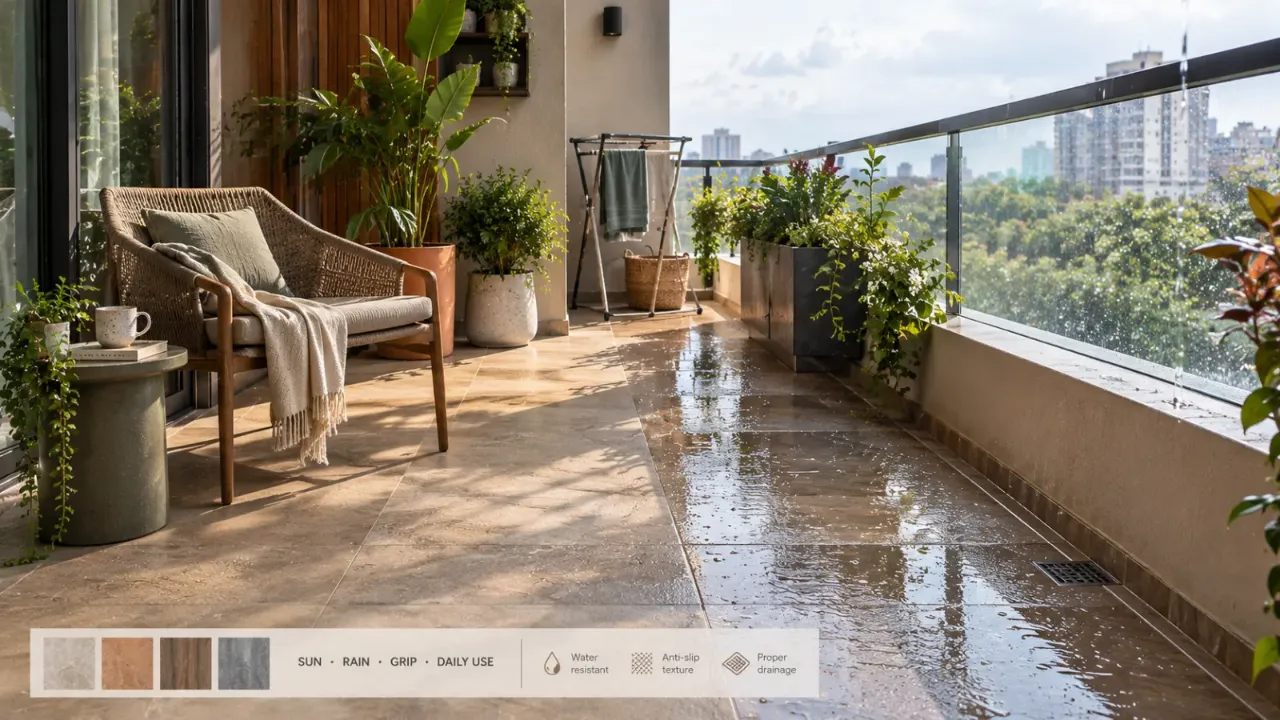
Balcony Flooring That Survives Sun, Rain and Real Life
A balcony floor looks easy to choose. Until the first summer. Then the monsoon. Then the dust. Then the first slippery morning after heavy rain.
An indoor floor can be selected largely around appearance, comfort and maintenance. A balcony has to do more. It has to deal with direct sunlight, moisture, dirt, temperature changes and regular exposure to the outside environment.
Balcony Flooring Lives a Harder Life Than Indoor Flooring
Depending on the design, your flooring may experience strong sunlight, heavy rain, dust and dirt, wet footwear, bird droppings, plant water, occasional standing moisture and repeated temperature changes.
This means durability cannot be judged only by how a flooring sample looks when it is dry and spotless inside a store.
Start With the Balcony, Not the Material
Before choosing the flooring, understand the balcony itself.
- Is it fully open or partially covered?
- Does rain regularly reach the floor?
- How much direct sunlight does it receive?
- Does water drain quickly?
- Are there planters?
- Will furniture remain outside?
- Will children or older family members use it regularly?
These conditions can change the right material choice. A covered balcony and a fully exposed balcony do not have exactly the same flooring requirements.
The Most Important Question: Where Does the Rainwater Go?
A beautiful outdoor floor can still fail as a balcony solution if drainage is poor.
Before changing the flooring, understand where the drain is, how the floor falls toward it, whether water gets trapped near walls, whether planters can overflow and whether furniture blocks drainage points.
Standing moisture can create cleaning problems, staining and long-term deterioration of surrounding finishes. The flooring material cannot compensate for poor drainage design.
Porcelain Tiles Are One of the Strongest Starting Points
For many balconies, outdoor-rated porcelain tiles can offer a useful combination of durability, relatively easy maintenance and design flexibility.
They can be made to resemble stone, concrete, wood, natural textures and plain finishes.
Ceramic Can Work Too — With the Right Specification
Ceramic tiles can also be used in outdoor applications, but suitability depends on the specific product, construction and exposure conditions.
Do not assume that a ceramic tile that works in a bathroom or kitchen is automatically suitable for an exposed balcony.
Natural Stone Has Character, But It Needs More Thought
Natural stone can be beautiful on a balcony. It brings variation, texture and a more architectural appearance.
But stone is not one material. Different stones behave differently. Some are more porous, some may require sealing and some finishes can become difficult to maintain.
You need to know the actual stone, surface finish, expected exposure and maintenance requirements.
What About Kota, Slate or Other Indian Stones?
Indian homes often use familiar natural stones such as Kota stone or slate because of their visual character and practical history.
They can be useful options in appropriate applications, but the exact surface finish matters.
A textured or naturally cleft surface behaves differently underfoot from a highly polished one.
Anti-Slip Is Not an Optional Extra
A balcony floor can become wet quickly. That makes slip resistance important.
When comparing flooring, do not ask only, “Does this tile look matte?”
Ask: “Is this surface actually intended for wet exterior use?”
A visually matte tile is not automatically slip-resistant enough for your particular application.
Texture Can Help — But More Texture Is Not Always Better
Deep texture can provide traction. It can also trap dust, mud, plant debris, leaves and cleaning residue.
Good flooring balances grip and cleanability.
Light Colours Have an Advantage
A balcony exposed to strong sunlight can become visually harsh and may feel hotter depending on the material and colour.
Lighter flooring can help create a visually cooler, brighter atmosphere.
Very pale flooring can, however, show stains, plant soil and bird droppings more easily.
Dark Floors Can Look Beautiful — and Show Everything
Charcoal, deep grey and dark stone-look surfaces can make a balcony feel sophisticated.
But dust, water marks and dried rain residue can become highly visible.
A mid-tone finish may be easier to maintain than a very dark one when the balcony is exposed to heavy dust or rain.
Wood-Look Tiles Can Give You the Warmth Without Real Timber
Many homeowners love the idea of a wooden balcony. But exposed natural timber generally requires more care than an indoor wood surface.
Wood-look porcelain tiles can offer the visual warmth of timber while behaving more like a tile system.
What About WPC and Decking Systems?
Composite decking and modular outdoor flooring systems can be useful where their installation method, drainage and maintenance requirements suit the site.
They are not maintenance-free. Dust accumulates, drainage underneath matters, expansion and installation details matter, and some products can become quite warm in direct sunlight.
Marble Is Not Automatically a Luxury Upgrade
Marble can look beautiful, but that does not automatically make it the smartest balcony flooring.
Natural marble can have maintenance, staining, slipperiness and weather-exposure considerations depending on the stone and finish.
If you choose marble, the specific stone, finish and application need to be appropriate for the environment.
Avoid Highly Polished Outdoor Surfaces
A polished surface may look premium when dry. Rain changes the equation.
For a balcony, select the surface with actual wet-use conditions in mind rather than purely for visual shine.
Grout Matters More Than You Think
The installation joints are part of the finished floor. Grout colour affects how dirt appears, and joint detailing affects cleaning and long-term maintenance.
In wet and exterior applications, the complete tile-and-joint system matters.
Don't Ignore Expansion and Movement
Outdoor surfaces experience temperature changes. Materials expand and contract, so larger areas need to be detailed appropriately for movement and installation conditions.
Balcony flooring should not be treated as simply “stick these tiles over the existing floor.” The substrate, tile system, joints and movement requirements all matter.
Plan Around Planters
Balconies and plants are a natural combination. They are also a flooring challenge.
Water from pots, wet soil, fertiliser residue, leaves and moving planters can all affect the floor and grout over time.
Create defined plant zones where possible, use trays or suitable bases beneath planters, avoid allowing pots to sit permanently in water and keep drainage accessible.
Outdoor Furniture Changes the Flooring Too
Heavy planters and furniture should have suitable protective feet or bases. Metal legs can leave marks, and unsuitable materials can stain certain surfaces.
Furniture should not obstruct drainage points.
Think About Heat Before Choosing the Colour
Sun-facing balconies can become uncomfortable underfoot. Surface colour and material both affect how the floor feels in direct sunlight.
This is especially important if the balcony is used barefoot.
Monsoon Changes the Rules
For Indian homes, monsoon conditions deserve specific attention. Rain may arrive sideways, wind may push water toward walls, balconies may stay damp longer and dust and organic debris can accumulate quickly.
That makes drainage, slope, slip resistance, cleaning access and edge detailing particularly important.
What Should You Look for on the Product Specification?
You do not need to understand every technical term. But you should be able to identify whether the product is intended for the application.
- Exterior use
- Wet-area suitability
- Slip resistance
- Surface finish
- Expected maintenance
- Water absorption or other relevant performance information
- Installation recommendations
- Manufacturer limitations
Three Practical Flooring Directions
Outdoor Porcelain
A strong all-round direction when you want durability, relatively easy cleaning and a wide range of visual finishes.
Natural Stone
Useful when you want genuine variation and a more architectural or earthy character, provided the specific stone and finish suit the exposure.
Exterior Decking
Useful when you want a warmer, deck-like feel and the balcony conditions allow the system to be installed and drained properly.
The Rule
Choose the flooring system around the actual balcony conditions, not just the material's appearance.
What About the Cheapest Tile?
A tile can be inexpensive to purchase and still create more costs later through replacement, staining, cracking, slipperiness, poor drainage integration, cleaning difficulty or installation issues.
Look at the complete system:
Five Questions to Ask Before Buying
2. How does it perform when wet?
3. How much direct sunlight will it receive?
4. How will water drain away?
5. How difficult will it be to clean and maintain?
And one more: “Will I still like this choice after the first monsoon?”
The Best Balcony Floor Is Not the Most Decorative
A balcony should still look good. But outdoor flooring has to earn its place through performance.
The right surface should:
- Handle its exposure
- Remain practical when wet
- Work with the drainage
- Be comfortable enough for everyday use
- Stand up to the way you clean
- Work with your plants and furniture
- Still look good several years later
That usually means choosing the material only after understanding the conditions.
The Bottom Line
Balcony flooring is one of those decisions that looks simple until weather becomes part of the design brief.
Sun changes surfaces. Rain changes slip conditions. Dust changes maintenance. Plants change staining. Furniture changes drainage and wear. And installation quality affects everything.
Final Thought
The best balcony is not the one that looks perfect only on a sunny afternoon.
It is the one that still feels good after rain, dust, heat, muddy footwear, plant watering and months of everyday use.
Choose for the real balcony. Not the showroom balcony.
Because flooring that survives the weather is much more valuable than flooring that only photographs well.
Ready to Visualise Your Balcony?
Walls to Wonder's Design My Room tool can help you explore different flooring colours, textures and balcony styling directions around your existing space.
When you want to take the idea into a practical design plan, you can also explore interior professionals through the Walls to Wonder designer directory.
Frequently Asked Questions
1. What is the best flooring for an open balcony?
Outdoor-rated porcelain is often a strong option because it can combine durability, relatively easy maintenance and a wide range of appearances. The exact product still needs to be suitable for exterior and wet conditions.
2. Are glossy tiles suitable for balconies?
A highly polished surface is generally not the first choice for a balcony exposed to rain because wet conditions can make smooth surfaces more difficult underfoot. Look for a finish intended for outdoor wet use.
3. Is natural stone good for balcony flooring?
It can be, but the specific stone and finish matter. Some stones can require sealing or more maintenance, so suitability should be evaluated for the actual exposure and cleaning conditions.
4. What colour is best for a sunny balcony?
Lighter and mid-tone surfaces can be easier to live with visually and may feel more comfortable than very dark surfaces under strong sun. The choice should also consider dust, staining and the balcony's overall design.
5. Can I use wood-look tiles on a balcony?
Yes, provided the product is designed for exterior conditions. Wood-look porcelain can provide the appearance of timber while offering a more tile-like maintenance routine.
6. Do balcony tiles need special installation?
Exterior balcony flooring needs to be installed with the actual exposure, drainage, substrate, joints and movement conditions in mind. A suitable tile can still perform poorly if the installation does not address those factors.
7. How can I make a balcony floor easier to maintain?
Choose a surface with a practical balance between grip and cleanability, plan plant zones carefully, keep drainage accessible and avoid finishes or textures that trap excessive dirt.
8. Should I replace balcony flooring if the existing floor looks fine?
Not necessarily. If the existing floor is durable, properly drained, safe when wet and in good condition, keeping it can be a smarter choice than replacing it purely for appearance.
Turn this idea into a plan for your home
Visualise your space, understand the likely budget, or find a professional who can bring the idea to life.