
Artificial Flower Decoration for Home: Three Arrangements That Are Easy to Maintain
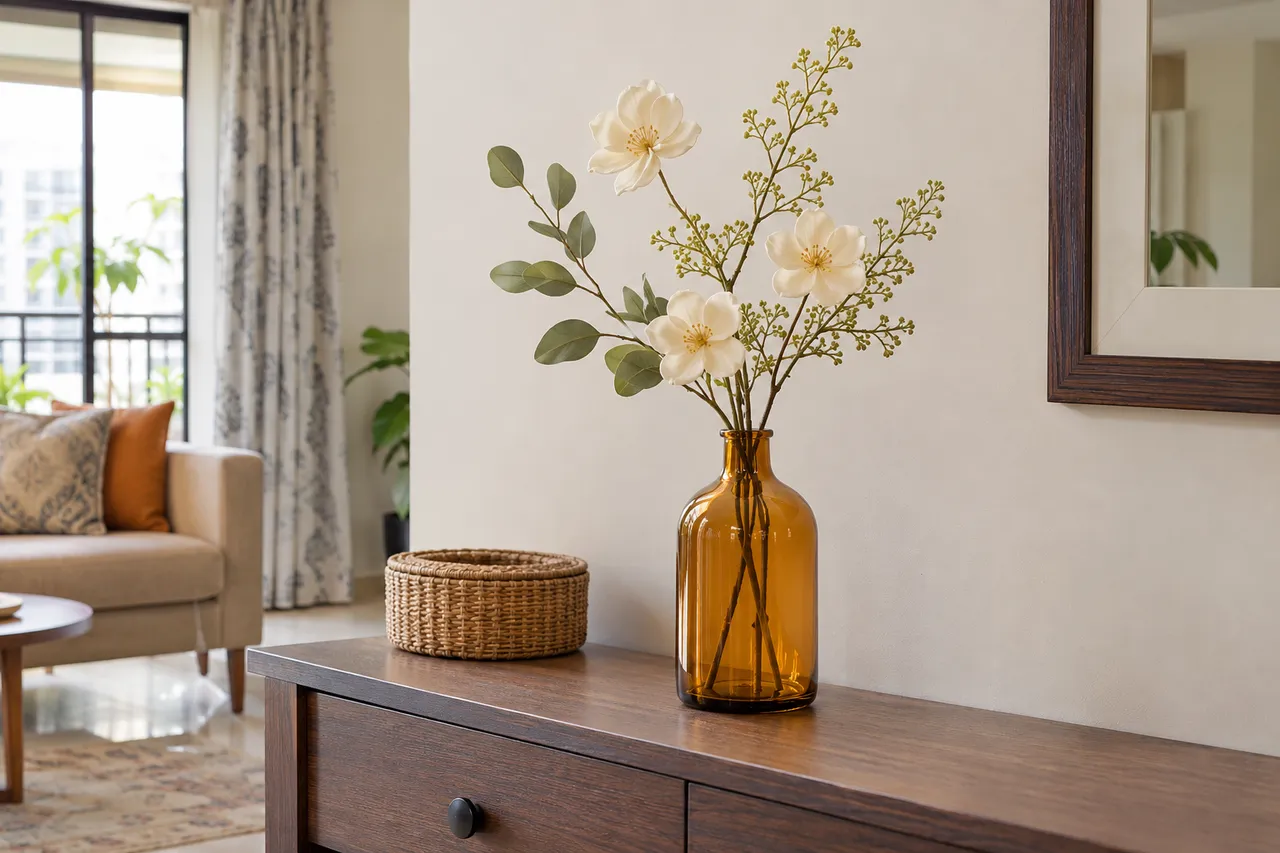
For artificial flower decoration at home, choose a small number of stems that suit the vase and the available surface. Try a narrow-neck arrangement on a console, a low cluster on a table or one branch on a shelf. Keep the base stable and every part reachable for routine dusting.
Before you start
- Time: 30–45 minutes to sort stems and test one arrangement.
- Planning budget: Reuse a suitable vase and existing stems first. If buying, set a total for the finished arrangement rather than judging each stem price separately.
- Materials: Clean dry vase, artificial stems, soft brush or cloth appropriate to the product, and a tape measure.
Choose the location before the flowers
Measure the surface, the space above it and any door or window that opens nearby. Check the view while seated as well as standing. An arrangement can fit a console yet block a light switch, artwork or conversation across a table.
Choose artificial flowers when they suit your routine, but allow for cleaning. They do not need watering, yet dust still collects on leaves and petals. A complicated arrangement behind furniture may be difficult to maintain even if it looks attractive on the first day.
Arrangement one: a narrow-neck console vase
Start with one stem type and a vase that holds it securely. Add a second stem only if the arrangement needs width or balance. Vary the direction gently where the product allows it; forcing a rigid stem can damage its finish. Keep branches clear of faces and walking routes.
Look at the arrangement from the entrance. A few well-spaced stems can show their shapes more clearly than a tightly packed bouquet. Check that the vase remains steady without relying on the wall to support it.
Arrangement two: a low table cluster
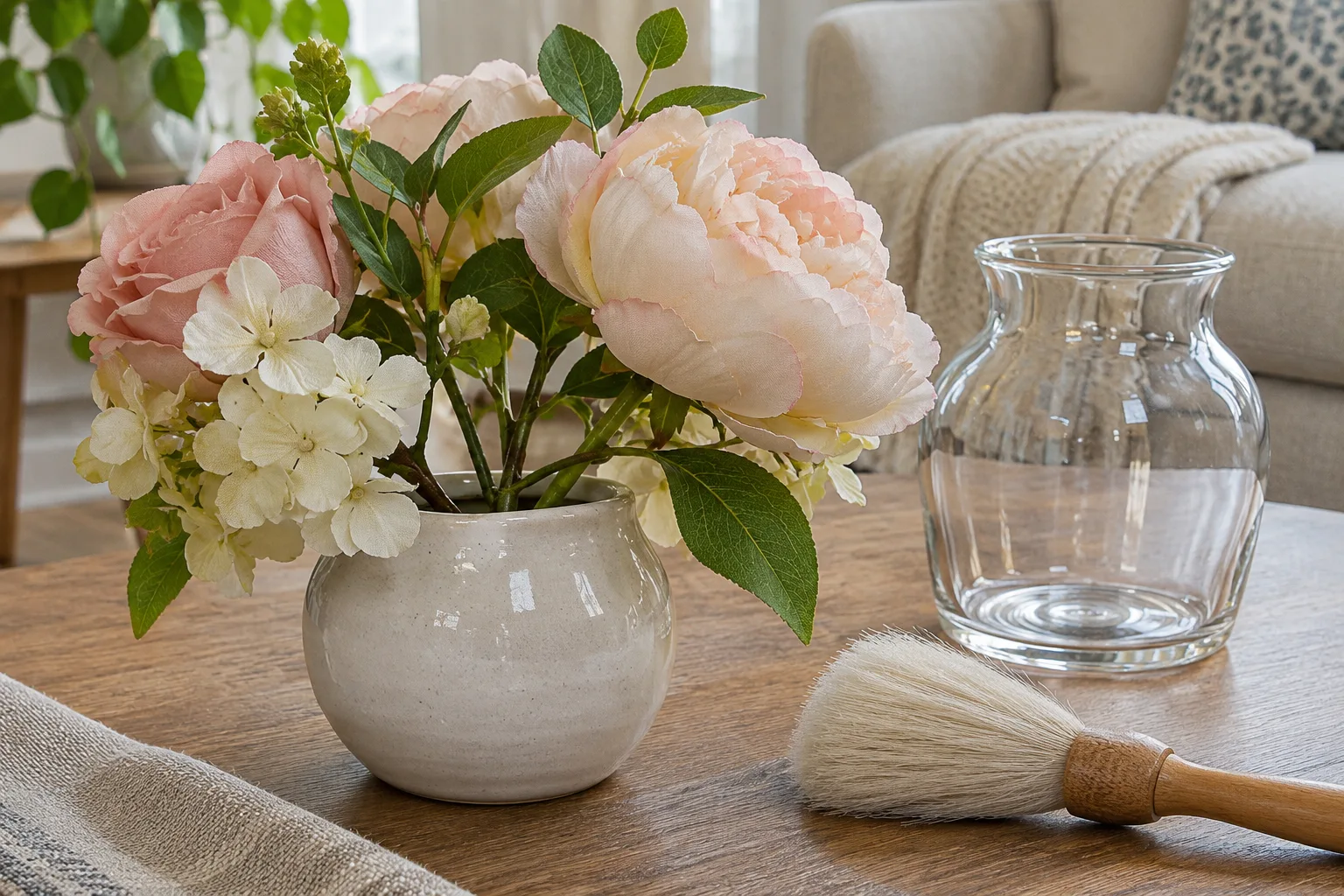
Use a low, stable vessel and short stems to keep views across the table open. Set out your usual plates or coffee cups before finalising the size. Group the arrangement on a shallow tray only if the tray remains easy to lift away.
Avoid adding water to artificial stems unless the maker explicitly supports it. A dry arrangement keeps the maintenance straightforward. If you use a transparent vase, arrange the visible stems neatly rather than hiding an unstable base with extra filler.
Arrangement three: one branch on a shelf
A single branch can bring shape to a shelf without occupying the whole display. Check the complete width, including side shoots, and keep it clear of hot lamps or moving doors. The vase and branch should fit fully within the shelf’s supported area and permitted load.
- Test the empty vessel first.
- Add the branch and check balance.
- View the result at the shelf’s normal height.
- Remove nearby objects that make cleaning awkward.
Keep the display easy to clean
Use the maker’s instructions for the actual stem material. Start with gentle dry dusting if appropriate; do not assume fabric petals, paper flowers and plastic leaves can all be washed. Remove stems carefully and clean the empty vase separately when its care guidance permits.
IKEA’s styling and maintenance guide also highlights dust as part of maintaining artificial arrangements. Keep the bouquet small enough that you can reach the inner leaves. Store spare stems dry and protected from crushing, following any product-specific storage advice.
Plan your space with WallsToWonder
Compare console and shelf arrangements using WallsToWonder Design My Room. Use the concept to explore shape and colour, then check real stem dimensions and care.
Frequently asked questions
Are artificial flowers maintenance-free?
No. They avoid watering but still collect dust. Choose an arrangement you can reach and follow the material-specific cleaning instructions.
Can I put artificial stems in water?
Only if the manufacturer says that use is suitable. Keep a decorative arrangement dry when the product guidance is unclear.
How many stems do I need?
Start with one or a few and test the shape in the actual vase. The stem width, branching and vase opening matter more than a fixed count.
Where should a large artificial arrangement go?
Choose a stable surface with enough clearance from walking routes, openings and heat sources. Measure the complete branch spread before purchasing.
Related practical guides
- Ceramic Vase Decor: Choosing Between Fresh Flowers, Dry Stems and an Empty Vessel
- Home Decor Rotation: Refresh One Display Using Accessories You Already Own
Sources and product guidance
Turn this idea into a plan for your home
Visualise your space, understand the likely budget, or find a professional who can bring the idea to life.