
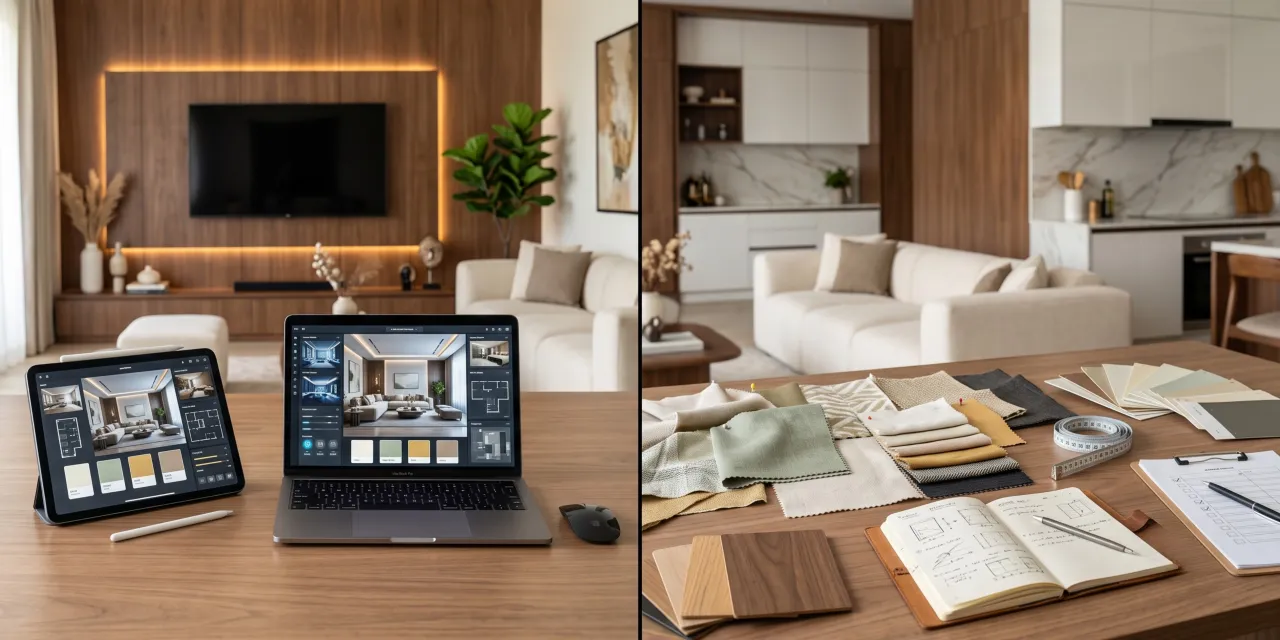
AI Interior Design vs Traditional Interior Design: Which Is Better for Your Home?
Interior design is changing fast. Earlier, homeowners mostly depended on interior designers, contractors, catalogues, showroom visits, and reference photos to plan their homes. Today, AI interior design tools are making it easier to visualise rooms, explore styles, compare ideas, estimate budgets, and understand design possibilities before meeting a designer.
But does AI replace traditional interior design? Not completely. AI can help with quick ideas, visualisation, planning, and decision-making. Traditional interior designers bring experience, technical knowledge, site understanding, material expertise, vendor coordination, and execution support. For most homeowners, the smartest approach is not AI vs designer — it is AI plus designer.
In this guide, let’s understand the difference between AI interior design and traditional interior design, their benefits, limitations, costs, and how homeowners can use both to plan better interiors.
What Is AI Interior Design?
AI interior design uses artificial intelligence to help homeowners generate room ideas, style suggestions, colour palettes, layout options, furniture inspiration, material combinations, and design visualisations. Instead of starting with a blank mind, users can upload a room photo, select a style, enter preferences, and instantly explore multiple design directions.
For example, if you have a plain living room, AI can help you visualise how it may look in modern, contemporary, luxury, minimalist, Scandinavian, Indian contemporary, or warm wooden themes. It can also help you understand what type of furniture, wall colour, lighting, decor, and storage may suit the room.
What Is Traditional Interior Design?
Traditional interior design is the complete professional process where an interior designer or design firm understands your requirements, visits the site, takes measurements, prepares layouts, creates design concepts, selects materials, shares quotations, coordinates vendors, and manages execution.
A traditional designer looks beyond visual beauty. They consider storage needs, electrical points, plumbing, false ceiling levels, kitchen workflow, wardrobe depth, material durability, site conditions, budget, timeline, carpenter work, factory finish, and long-term maintenance.
AI Interior Design vs Traditional Interior Design: Quick Comparison
| Factor | AI Interior Design | Traditional Interior Design |
|---|---|---|
| Speed | Very fast, ideas can be generated quickly | Takes time due to consultation, measurements, drawings, and revisions |
| Cost | Usually low-cost or free to try | Professional charges depend on scope and service type |
| Visualisation | Good for exploring multiple looks and styles | More accurate when supported by measurements and 3D design |
| Personalisation | Based on inputs, room photos, and selected preferences | Deeply personalised after detailed discussions and site study |
| Execution | Does not manage actual work on-site | Can manage vendors, materials, labour, timelines, and installation |
| Accuracy | Useful for ideas but may not always match exact site conditions | More practical because it considers measurements and technical details |
| Best For | Idea generation, style discovery, early planning, budget awareness | Final design, technical drawings, material selection, and execution |
Benefits of AI Interior Design
1. Helps You Start Quickly
Many homeowners know they want a beautiful home, but they are not sure what style, colour, or layout will work. AI interior design helps remove this confusion by giving instant ideas. You can explore different looks before spending money on detailed design work.
2. Easy Room Visualisation
AI can help you imagine how your existing room may look after renovation. This is useful for living rooms, bedrooms, kitchens, wardrobes, balconies, study corners, and compact apartments where space planning matters.
3. Better Style Discovery
Homeowners often save random photos from Instagram, Pinterest, or design websites, but those ideas may not follow one consistent theme. AI can help identify whether your taste is modern minimalist, contemporary luxe, warm wooden, classic, boho, Scandinavian, industrial, or Indian modern.
4. Budget-Friendly Planning
AI tools can help you understand possible cost factors before meeting a designer. For example, you can get a basic idea of how wardrobes, modular kitchens, TV units, false ceilings, wall panels, lighting, furniture, and materials affect the final budget.
5. Saves Time Before Consultation
When you meet an interior designer with clear preferences, sample visuals, and a basic idea of your needs, the consultation becomes more productive. AI helps homeowners prepare better before discussing the project.
Limitations of AI Interior Design
AI interior design is powerful, but it has limitations. It may generate beautiful room visuals, but those designs may not always consider real measurements, civil constraints, exact electrical points, plumbing lines, structural walls, carpenter feasibility, material availability, or installation challenges.
For example, AI may show a large wardrobe or island kitchen in a small room, but a designer will check whether the size, movement space, shutter opening, appliance placement, and working triangle are actually practical.
Benefits of Traditional Interior Design
1. Site-Based Practical Planning
A professional interior designer studies the actual site. They measure the room, check windows, doors, beams, columns, wall thickness, floor level, electrical points, plumbing lines, and ventilation. This makes the final design more practical and buildable.
2. Material and Finish Expertise
Choosing between plywood, MDF, HDHMR, laminate, acrylic, PU, veneer, membrane, quartz, granite, tiles, wallpapers, fabrics, and hardware can be confusing. A designer helps you select materials based on budget, durability, maintenance, and look.
3. Better Space Utilisation
In Indian homes, storage is one of the biggest requirements. Traditional designers can plan wardrobes, lofts, kitchen cabinets, crockery units, shoe racks, puja units, study tables, utility storage, and hidden storage based on family lifestyle.
4. Vendor and Execution Support
Good interiors are not only about design. Execution quality matters. Designers coordinate with carpenters, modular teams, electricians, painters, polishers, stone vendors, lighting suppliers, and installation teams to bring the design to life.
5. Long-Term Value
A well-designed home should look beautiful and remain functional for years. Traditional design helps reduce mistakes related to poor material selection, wrong measurements, weak hardware, impractical layouts, and rushed execution.
Limitations of Traditional Interior Design
Traditional interior design can take more time and may involve higher costs. Homeowners may also feel confused if they do not have clear style preferences before starting. Multiple meetings, revisions, quotation discussions, showroom visits, and execution timelines can make the process feel lengthy.
This is where AI can support the process by helping homeowners prepare better, explore ideas faster, and communicate their preferences more clearly.
Cost Difference: AI Interior Design vs Traditional Interior Design
| Service Type | Typical Use | Cost Nature |
|---|---|---|
| AI Room Visualisation | Explore looks, colours, furniture ideas, and design themes | Usually free, low-cost, or tool-based |
| AI Cost Estimate | Understand approximate home interior budget | Quick planning estimate |
| Design Consultation | Discuss requirements with a professional designer | Paid consultation or included in project scope |
| Design-Only Service | Layouts, 2D drawings, 3D views, and design concepts | Charged per room, per sq. ft., or package |
| Turnkey Interior Design | Complete design, material, execution, and handover | Higher cost because execution is included |
When Should You Use AI Interior Design?
AI interior design is useful in the early stage of home planning. Use it when you want to explore ideas, compare styles, check colour combinations, understand room possibilities, estimate budget, or prepare before meeting designers.
- You are confused about your interior style.
- You want quick room design ideas.
- You want to visualise your living room, bedroom, or kitchen.
- You want to compare modern, luxury, minimalist, or traditional themes.
- You want a basic cost estimate before contacting designers.
- You want to shortlist ideas before final consultation.
When Should You Hire a Traditional Interior Designer?
You should hire a professional interior designer when you are ready for actual design development, site measurement, technical planning, material finalisation, quotation review, and execution.
- You want accurate measurements and layouts.
- You are planning a full home interior project.
- You need modular kitchen, wardrobe, TV unit, false ceiling, and furniture execution.
- You want help with materials and finishes.
- You want professional project management.
- You want fewer execution mistakes and better long-term durability.
The Best Approach: Use AI Before Meeting an Interior Designer
The best way to plan home interiors today is to use AI for early-stage clarity and then work with a professional designer for final planning and execution. AI helps you become a better-prepared homeowner. A designer helps convert your ideas into a practical, buildable, and durable home.
For example, you can use AI to explore whether you prefer a warm wooden living room, a modern white kitchen, a luxury bedroom, or a compact functional study corner. After that, a designer can check your actual room size, budget, materials, and execution feasibility.
How WallsToWonder Helps Homeowners
WallsToWonder helps homeowners plan interiors smarter by combining AI-powered tools with access to interior designers and design companies. You can explore design ideas, understand your style, estimate interior costs, check room possibilities, and connect with designers for your project.
- AI Room Design: Visualise room ideas before finalising a design.
- Find Your Style: Discover the interior style that matches your taste.
- Interior Cost Estimate: Understand your approximate home interior budget.
- Designer Discovery: Find interior designers and companies near you.
- Real Design Ideas: Explore projects and photos added by designers.
- Quotation Understanding: Plan smarter before approving interior quotations.
AI Interior Design vs Traditional Interior Design: Which One Is Better?
AI interior design is better for quick ideas, inspiration, visualisation, and early planning. Traditional interior design is better for final design, technical accuracy, material selection, execution, and project completion.
If you are just starting your home interior journey, AI can help you explore possibilities. If you are ready to execute your home interiors, a professional designer is important. Together, they can save time, reduce confusion, improve communication, and help you make better decisions.
Final Thoughts
AI interior design is not here to replace interior designers. It is here to make interior planning easier, faster, and more accessible for homeowners. Traditional designers continue to play a critical role in creating practical, beautiful, and long-lasting homes.
The future of home interiors is not only digital or only traditional. It is a smart combination of AI-powered planning and professional design expertise. With the right approach, homeowners can visualise better, plan smarter, compare options clearly, and create homes that match their lifestyle and budget.
Plan Your Interiors Smarter with WallsToWonder
Explore AI interior design tools, discover your home style, estimate interior costs, and connect with interior designers for your home project.
Visit WallsToWonder.com and start planning your dream home today.
FAQs on AI Interior Design vs Traditional Interior Design
Is AI interior design better than hiring an interior designer?
AI interior design is useful for ideas and visualisation, but hiring an interior designer is better for accurate planning, technical drawings, material selection, and execution.
Can AI design my complete home interior?
AI can help you generate ideas for your home, but complete home interior execution still needs professional planning, measurements, materials, labour, and site coordination.
Is AI interior design useful before meeting a designer?
Yes. AI helps you understand your style, prepare references, compare ideas, and discuss your requirements more clearly with the designer.
Can AI help estimate interior design cost?
AI can provide approximate cost guidance based on room type, design scope, materials, and requirements. Final pricing should be confirmed through a detailed quotation from an interior designer or contractor.
Will AI replace interior designers?
AI may support the design process, but it cannot fully replace professional designers because real homes need measurement accuracy, technical planning, execution knowledge, and site coordination.
Turn this idea into a plan for your home
Visualise your space, understand the likely budget, or find a professional who can bring the idea to life.