
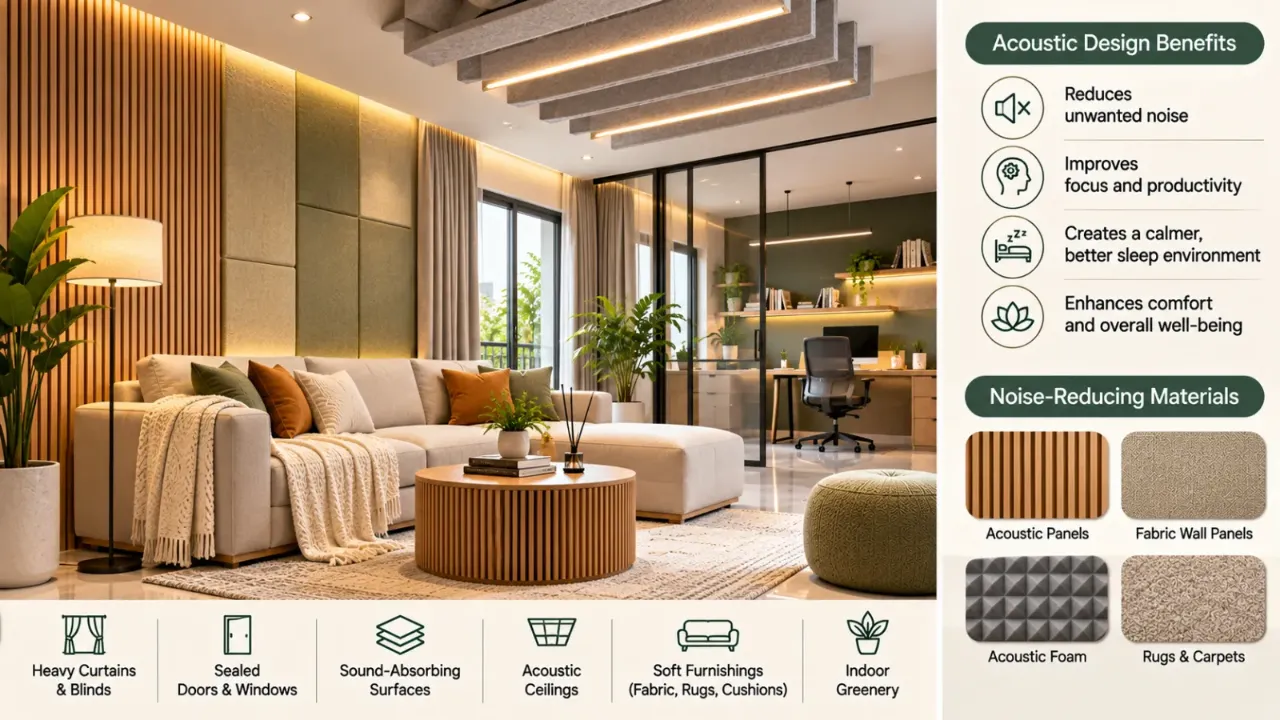
Acoustic Interior Design: Reduce Noise in Homes and Workspaces
A room can look beautiful, have comfortable furniture and receive plenty of natural light, yet still feel uncomfortable because of noise. Traffic outside the windows, conversations from adjoining rooms, echo from hard surfaces, appliances and constant office activity can all affect how a space feels and functions.
This is where acoustic interior design becomes important.
Acoustic design is the process of planning a space to manage how sound travels, reflects and is heard. It considers the room's layout, surfaces, furniture, partitions, openings and materials to improve sound comfort.
However, reducing noise is not simply a matter of installing decorative acoustic panels. Different noise problems require different solutions. A room with excessive echo needs a different treatment from a bedroom affected by traffic noise or a meeting room where conversations can be heard outside.
Here is how to approach acoustic interior design in homes and workspaces.
1. Understand the Difference Between Sound Absorption and Sound Insulation
Before selecting acoustic materials, understand two important concepts: sound absorption and sound insulation.
Although they are often used interchangeably, they address different problems.
Sound Absorption
Sound absorption reduces the amount of sound reflected within a room. It helps control echo and reverberation, making conversations, calls and other activities easier to hear.
Common sound-absorbing elements include:
- Acoustic wall panels.
- Fabric-covered surfaces.
- Heavy curtains.
- Upholstered furniture.
- Rugs and carpets.
- Acoustic ceiling treatments.
Sound Insulation
Sound insulation aims to reduce the amount of sound passing from one space to another. It is important when noise travels through walls, floors, ceilings, doors, windows or gaps around openings.
Solutions may involve:
- Properly designed wall and ceiling assemblies.
- Sealed gaps around doors and windows.
- Suitable acoustic glazing.
- Insulated partitions.
- Carefully detailed doors and frames.
- Attention to service penetrations and structural connections.
2. Identify Where the Noise Is Coming From
An effective acoustic plan begins with identifying the source of the problem.
Noise can enter a room from outside, travel from adjoining spaces or develop inside the room itself.
Common sources include:
- Road traffic, construction and outdoor activity.
- Conversations from neighbouring rooms or floors.
- Televisions, music systems and household appliances.
- Footsteps and movement above the ceiling.
- Office conversations, calls and equipment.
- Reverberation caused by large, hard and reflective surfaces.
Observe when the noise is most noticeable and where it appears to be coming from.
For example, if a bedroom is disturbed by traffic, improving the window assembly and sealing gaps may be more useful than installing acoustic panels on an interior wall. If a living room sounds echoey during conversations, adding sound-absorbing surfaces may make a noticeable difference.
3. Use Rugs and Carpets to Reduce Reflected Sound
Flooring is one of the largest surfaces in a room. Hard materials such as tiles, stone and polished concrete can reflect sound, particularly when combined with bare walls and ceilings.
Rugs and carpets introduce softer surfaces that absorb some sound and reduce reflections.
They are especially useful in:
- Living rooms with large tiled floors.
- Bedrooms with hard flooring.
- Open-plan spaces with limited soft furnishings.
- Work areas where chair movement and everyday activity create noise.
A larger rug can help define a seating or work zone while improving the room's acoustic comfort.
However, rugs mainly help with sound within the room. They should not be treated as a complete solution for airborne noise coming from another apartment or floor.
4. Choose Curtains That Support Acoustic Comfort
Curtains can contribute to sound absorption, particularly when they are made from heavier fabrics and cover a substantial area.
They can help reduce reflections from large glass surfaces and make a room feel acoustically softer.
Consider the following:
- Choose fuller curtains rather than thin, loosely hanging fabric.
- Extend curtains beyond the window opening where practical.
- Use suitable lining where additional fabric mass is desired.
- Ensure that the curtain length and arrangement suit the room.
- Combine curtains with other acoustic treatments when noise reduction is a priority.
It is important to understand their limitations. Ordinary curtains do not provide the same sound insulation as a properly designed window assembly. They may soften the room's acoustics, but they will not reliably block significant traffic or construction noise.
5. Install Acoustic Panels Where They Can Make a Difference
Acoustic panels are designed to absorb sound reflections and can be useful in rooms where echo affects communication or concentration.
They are available in different materials, shapes, sizes and finishes.
Common options include:
- Fabric-wrapped acoustic panels.
- PET felt panels.
- Perforated acoustic panels with appropriate backing.
- Acoustic ceiling panels.
- Decorative wall-mounted absorbers.
They can be used in:
- Home offices.
- Conference rooms.
- Study rooms.
- Media rooms.
- Open-plan living spaces.
- Meeting and collaboration areas.
The effectiveness of a panel depends on its material, thickness, backing, mounting arrangement, frequency range and the amount of coverage provided.
Avoid selecting panels based only on their appearance. Check the manufacturer's acoustic performance information and choose products suited to the actual problem.
6. Consider Acoustic Ceilings for Larger Spaces
Ceilings can play a significant role in how sound behaves, especially in rooms with hard floors, large windows and limited soft furnishings.
Acoustic ceiling solutions may include:
- Suspended acoustic ceiling tiles.
- Fabric-wrapped ceiling panels.
- Acoustic baffles.
- Suspended acoustic rafts.
- Perforated ceiling systems with suitable backing.
These systems are commonly used in offices, conference rooms, classrooms and larger residential spaces.
A suspended ceiling may also help accommodate lighting, services and ventilation, but it needs coordination with the available ceiling height, access requirements and building systems.
The choice should depend on the room's dimensions, intended use and acoustic requirements rather than appearance alone.
7. Use Furniture and Layout to Support Noise Control
Furniture does not replace dedicated acoustic treatment, but it can contribute to a more comfortable sound environment.
Large upholstered sofas, fabric chairs, bookcases, cushions and other soft furnishings can help reduce sound reflections.
The arrangement also matters.
- Place bookcases along selected walls where they support the layout.
- Use upholstered seating in rooms with many hard surfaces.
- Avoid leaving large rooms completely empty.
- Position workstations away from noisy circulation areas where possible.
- Create separate activity zones in open-plan spaces.
Bookcases can scatter sound and help break up large reflective surfaces, but they should not be mistaken for soundproof barriers.
8. Plan Partitions and Doors for Better Sound Separation
Partitions are important when different activities need to happen in adjacent spaces.
A home office may require separation from a busy living room, while a conference room may need to provide privacy during discussions.
Possible solutions include:
- Properly constructed insulated partitions.
- Acoustic-rated doors with suitable seals.
- Double-glazed or specialised acoustic glazing.
- Sealed junctions between walls, floors and ceilings.
- Carefully detailed sliding or operable partition systems.
Glass partitions can provide visual separation, but ordinary glass alone may not provide the acoustic privacy needed for confidential meetings.
The door, frame, seals, glazing, wall construction and installation details all influence the final performance.
9. Improve Acoustics in Different Areas of the Home
Every room has a different acoustic requirement. A solution that works in a living room may not be suitable for a bedroom or home office.
Living Room
Large windows, tiled flooring and open layouts can create noticeable reflections. Consider rugs, curtains, upholstered furniture and strategically placed acoustic panels.
Bedroom
A bedroom should support rest and privacy. Identify whether the main issue is outdoor noise, adjoining-room noise or internal echo. Depending on the source, consider window upgrades, sealed gaps, suitable door details, curtains and soft furnishings.
Home Office
Calls and online meetings require clear speech and manageable background noise. Use a rug, curtains, suitable acoustic wall treatment and thoughtful desk placement. If noise travels between rooms, consider the wall and door construction separately.
Home Theatre or Media Room
Sound quality and sound isolation are different requirements. Absorbers can help manage reflections, while specialised room construction may be needed to limit sound transmission to adjoining spaces.
Plan speaker placement, wall and ceiling treatments, doors and ventilation together.
10. Plan Acoustic Comfort in Offices and Workspaces
In workplaces, excessive noise can make concentration and communication difficult. Open-plan offices are particularly challenging because multiple conversations and activities happen within the same space.
A practical acoustic plan should consider different work requirements.
- Focus areas: Provide quieter zones for tasks that require concentration.
- Meeting rooms: Use suitable partitions, doors and acoustic treatments for conversations.
- Collaboration areas: Position group activities away from quiet workstations.
- Reception areas: Use appropriate soft surfaces to manage sound reflections.
- Shared spaces: Consider acoustic ceiling treatments and furniture that reduce excessive reverberation.
The aim is not to make every office completely silent. It is to provide a suitable sound environment for each activity.
11. Avoid Common Acoustic Design Mistakes
Acoustic treatments often disappoint when they are selected without understanding the actual noise problem.
Watch out for these mistakes:
- Confusing absorption with soundproofing: Panels may reduce echo but will not automatically block noise from adjoining rooms.
- Covering only a small area: A few decorative panels may not provide enough absorption for a large or highly reflective room.
- Ignoring windows and doors: Gaps and poorly performing openings can allow significant sound transmission.
- Choosing products only for appearance: Check acoustic performance data rather than relying on product descriptions alone.
- Ignoring ceiling and floor surfaces: Treating only the walls may leave other major reflective surfaces unchanged.
- Forgetting ventilation and services: Sound can travel through ducts, openings and poorly sealed service routes.
- Expecting complete silence: Everyday acoustic design aims to improve comfort and manage sound, not necessarily eliminate every noise source.
12. Acoustic Interior Design Checklist
Before finalising an acoustic plan, review these points:
- Have the main noise sources been identified?
- Is the problem internal echo or sound entering from another space?
- Are the floors, walls and ceilings highly reflective?
- Would rugs, curtains or upholstered furniture help?
- Are acoustic panels suitable for the room's actual requirements?
- Have doors, windows and gaps been checked?
- Are partitions designed for the required level of privacy?
- Have ventilation ducts and service openings been considered?
- Are acoustic materials suitable for the intended use and maintenance needs?
- Has specialist acoustic advice been considered for demanding projects?
Explore Interior Design Ideas With Walls to Wonder
Creating a comfortable space involves more than selecting furniture and finishes. Understanding your room, its requirements and the right design approach can help you make better decisions.
Use the Walls to Wonder Design My Room tool to explore different design directions for your space. The Whole Home Visualizer can help you coordinate the room with the rest of your home.
If you are planning a complete room transformation, the Interior Design Cost Estimator can help you explore possible costs. You can also use the Interior Quotation Checker to review quotation details, the Rate My Room Design tool to assess a design concept, and the Interior Style Finder to discover a suitable design direction.
Explore more ideas and interior design resources at Walls to Wonder.
Final Thoughts
Good acoustic interior design is not about adding panels to every wall or making a room completely silent. It is about understanding where sound comes from, how it behaves in a space and which design decisions can improve comfort.
Start by identifying the noise problem. Then choose suitable materials, furniture, partitions and building details to address it. Rugs, curtains and upholstered furniture can help soften a room, while dedicated acoustic systems and properly designed construction may be needed for more demanding sound-control requirements.
A comfortable interior should not only look good. It should also sound right for the way people live, work and communicate.
Frequently Asked Questions
1. What is acoustic interior design?
Acoustic interior design involves planning materials, surfaces, furniture and room layouts to manage sound. It can reduce echo, improve speech clarity and support a more comfortable sound environment.
2. Do acoustic panels soundproof a room?
No. Most acoustic panels are designed primarily to absorb sound reflections within a room. They do not automatically prevent sound from passing through walls, doors or windows.
3. Which materials help reduce echo at home?
Rugs, carpets, heavy curtains, upholstered furniture, fabric-covered panels and suitable acoustic ceiling products can help absorb sound and reduce reflections.
4. How can I reduce noise in a home office?
Start by identifying whether the noise comes from inside the room or from adjoining spaces. Rugs, curtains, acoustic panels and thoughtful desk placement can help with internal reflections, while better doors, seals and wall construction may be needed to reduce sound transmission.
5. Are acoustic curtains effective?
They can help soften sound reflections, particularly when they are heavy and cover a large area. However, ordinary curtains should not be considered a replacement for properly designed sound-insulating windows.
6. What is the difference between acoustic treatment and soundproofing?
Acoustic treatment improves how sound behaves within a room, often by reducing echo and reverberation. Soundproofing aims to reduce sound transmission between spaces and usually requires attention to construction, mass, airtightness and structural connections.
Turn this idea into a plan for your home
Visualise your space, understand the likely budget, or find a professional who can bring the idea to life.