
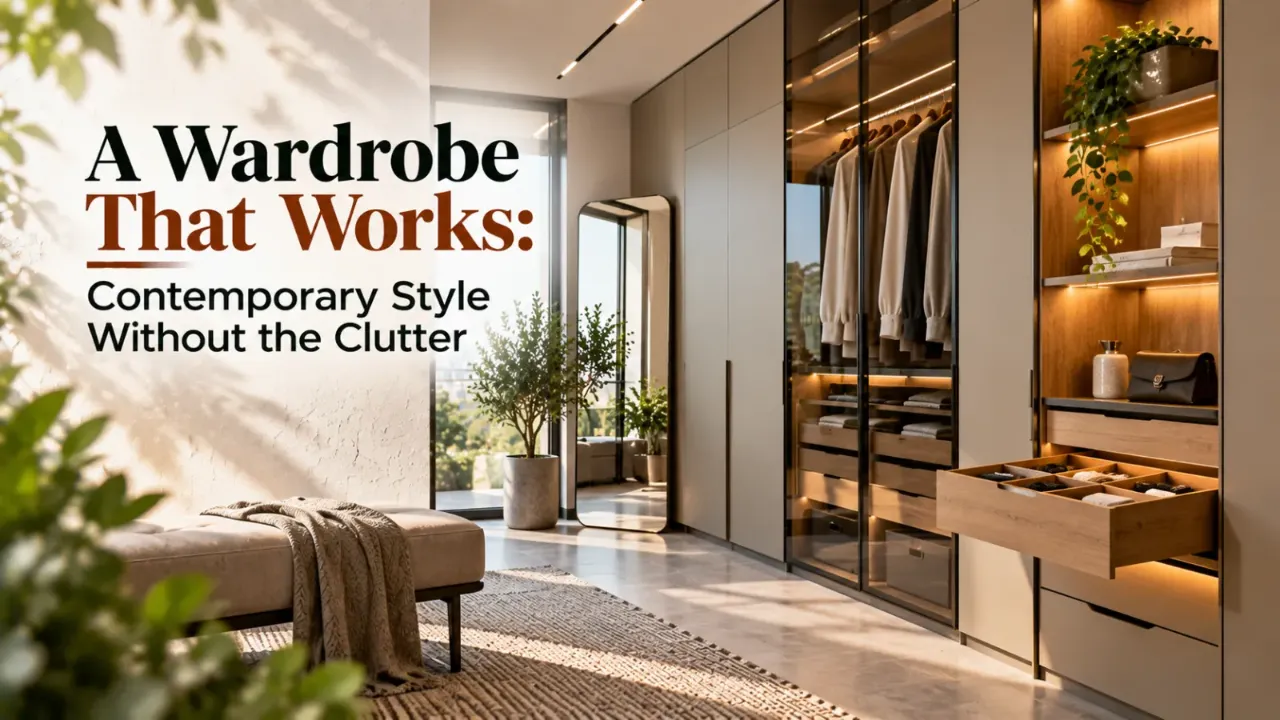
A Wardrobe That Works: Contemporary Style Without the Clutter
A contemporary wardrobe should do more than give a bedroom a modern appearance. It should organise clothing, make everyday items easy to reach and fit naturally into the room without making the space feel crowded. Clean lines, simple finishes and handle-less shutters may define the look, but the real success of a wardrobe lies in how well its interior works.
One common mistake is to choose the exterior design first and think about storage later. This can leave you with attractive doors but poorly planned shelves, insufficient hanging space or drawers that are difficult to access.
A better approach is to begin with the room and the items you need to store. From there, you can decide what to keep, what to avoid and which details deserve attention.
1. Begin With the Room, Not the Wardrobe Finish
Before choosing colours, handles or shutter patterns, understand the space available. Measure the wall length, floor-to-ceiling height and depth you can accommodate. Also note the position of windows, switches, doors, beds and bedside tables.
A full-height wardrobe can make good use of vertical space and create a continuous built-in appearance. However, the top section should be planned for items that are used occasionally, such as suitcases, spare bedding and seasonal clothing.
In a compact bedroom, the wardrobe depth and door movement are especially important. Check how much room remains between the wardrobe and the bed, and whether the doors can open without hitting furniture.
Start with these questions:
- How many people will use the wardrobe?
- What types of clothing need hanging space?
- How much storage is required for folded clothes?
- Do you need space for shoes, bags, accessories or bedding?
- Is there room for hinged doors to open comfortably?
- Would a sliding system make movement easier?
These answers will help determine the wardrobe's layout before its appearance is finalised.
2. Choose a Door Style That Suits the Bedroom
The door system affects the wardrobe's appearance, access and space requirements. Hinged and sliding shutters are both suitable for contemporary designs, but they solve different problems.
Hinged shutters open outwards and provide access to the full wardrobe section. They are generally straightforward to maintain and can work well when there is enough clear floor space in front.
Sliding shutters move along tracks rather than swinging into the room. They can be useful when the bed is close to the wardrobe, although only part of the storage is accessible at a time. Track and roller quality deserves particular attention.
Foldable shutters can open wider than some sliding systems while reducing the swing area compared with multiple conventional doors. Their hardware and folding clearance should be checked carefully.
Choose the door type after measuring the room. A sliding wardrobe is not automatically better for every compact bedroom, and hinged doors are not always the more convenient option.
3. Keep the Exterior Simple and Well-Proportioned
Contemporary wardrobe design usually benefits from a restrained exterior. Large uninterrupted panels, consistent lines and a limited number of finishes can make a wardrobe feel integrated with the bedroom.
Some practical choices include:
- Matte finishes: Create a soft, understated appearance and can suit neutral or earthy interiors.
- Wood-look finishes: Add warmth and texture without requiring every panel to use natural timber.
- Mirrored panels: Can reflect light and provide a full-length viewing surface, but need regular cleaning.
- Glass or fluted-glass details: Add visual interest, though transparent sections may reveal stored items and require more organisation.
- Two-tone combinations: Pairing wood with a neutral solid colour can break up a large wardrobe without making it visually busy.
Avoid using too many contrasting colours, patterns or decorative strips on one façade. The wardrobe is often a large visual element in the bedroom, so a calmer exterior can help the entire room feel more balanced.
4. Plan the Interior Around What You Actually Own
A wardrobe's internal layout should reflect the clothes and belongings of the people using it. A standard arrangement may look neat in a design drawing but still waste space if it does not match your storage habits.
Divide the interior into practical zones:
- Long-hanging section: For dresses, coats, long kurtas and sarees that are stored on hangers.
- Short-hanging section: For shirts, jackets and other shorter garments.
- Shelves: For folded clothes, towels, bags and storage boxes.
- Drawers: For innerwear, accessories and smaller everyday items.
- Shoe storage: For footwear that needs to remain separate from clothing.
- Loft storage: For suitcases, seasonal items and spare bedding.
In Indian homes, remember to account for sarees, festive clothing, heavier garments and accessories if these are part of the household's routine.
Do not divide every section equally by default. One person may need more hanging space, while another may use more shelves and drawers. The interior should reflect those differences.
5. Choose Materials and Finishes With Maintenance in Mind
The wardrobe carcass, shutters, internal surfaces and hardware all contribute to its durability. The right specification depends on the room's moisture conditions, expected use and budget.
Common shutter finishes include laminates, veneers, acrylic, lacquered finishes and glass. Laminates are available in many colours and textures and are often chosen for their practical maintenance. Veneer offers a natural wood appearance but may need more careful upkeep. Glossy acrylic or lacquered finishes can create a polished look, though fingerprints and surface marks may be more noticeable.
For the internal structure, ask your designer or contractor to specify the board type and grade rather than accepting a general description such as "premium board". Confirm thickness, edge sealing and suitability for the location.
If the wardrobe is placed against a wall that may be exposed to dampness, discuss moisture protection and suitable construction details before installation.
6. Keep Hardware Practical and Reliable
Handles, hinges, drawer channels and sliding tracks may appear to be small details, but they affect how the wardrobe feels every day.
For hinged doors, check the hinge quality, number of hinges required for the shutter size and whether soft-close hardware is included. For sliding doors, ask about the track system, rollers, load capacity and ease of adjustment.
Internal fittings should be selected according to actual use. Useful options can include:
- Drawer dividers for smaller accessories.
- Pull-out trouser or belt racks.
- Jewellery organisers.
- Shoe shelves or pull-out shoe racks.
- Adjustable shelves.
- Pull-down hanging rails for high sections.
Avoid adding every available accessory simply because it is offered. Each fitting should solve a real storage problem and should not make the wardrobe unnecessarily expensive or complicated.
7. Use Lighting Where It Improves Visibility
Integrated lighting can make a wardrobe easier to use, especially in deep shelves, hanging sections and darker corners. LED strips or sensor-operated lights can illuminate the interior when a shutter opens.
Plan the wiring and power supply before the wardrobe is installed. Concealed wiring, suitable fittings and accessible components make future maintenance easier.
Lighting should be functional rather than decorative alone. Avoid bright strips that cause glare when the doors open, and ensure that shelves and hanging sections receive enough light to identify clothes clearly.
If the bedroom already has good general lighting, the wardrobe may need only a few targeted lights rather than an elaborate lighting system.
8. Know What to Avoid
A contemporary wardrobe can lose its usefulness when design details are chosen without considering daily routines. Some common mistakes are easy to prevent:
- Choosing the exterior before the internal layout: This can leave insufficient hanging or drawer space.
- Using too many open shelves: Clothes and accessories can collect dust and make the bedroom look untidy.
- Selecting sliding doors without checking access: Only part of the wardrobe may be accessible at one time.
- Ignoring door clearance: Hinged shutters may clash with beds, side tables or room doors.
- Adding unnecessary accessories: Extra fittings increase cost without necessarily improving storage.
- Using finishes without checking maintenance: Gloss, glass and dark surfaces may show fingerprints, dust or marks more clearly.
- Ignoring wall conditions: Moisture behind a wardrobe can affect its panels and internal contents.
- Leaving the top unfinished: A gap above the wardrobe can collect dust and make the installation look incomplete.
A good design is not the one with the most features. It is the one that avoids daily inconvenience.
9. Finalise the Wardrobe Plan Before Fabrication
Before approving the design, review the room measurements, exterior elevations and internal layout together. Ask for drawings that show shelf positions, hanging heights, drawer dimensions, door movement and hardware details.
Confirm the board specifications, shutter finish, edge treatment, handles, hinges, tracks, lighting and installation scope. Check whether mirrors, internal accessories, electrical work and loft storage are included in the quotation.
You can use Design My Room to explore wardrobe finishes and bedroom looks, and the Whole Home Visualizer to consider how the wardrobe fits into the wider bedroom interior. For preliminary interior budget planning, try the Interior Design Cost Estimate. When reviewing the proposed interior work and charges, the Interior Quotation Checker can help you examine the quotation. These tools support interior planning; they do not replace site measurements, material specifications or professional installation checks.
Final Thought
A contemporary wardrobe does not need complicated shutters, decorative patterns or expensive accessories to look well-designed. Its appeal comes from good proportions, a considered finish and an interior that supports the way the household lives.
Begin with what needs to be stored, choose the door system according to the room and invest in the details that will be used every day. When the inside and outside are planned together, the wardrobe becomes a natural part of the bedroom rather than just another large piece of furniture.
Frequently Asked Questions
1. What defines a contemporary wardrobe design?
Contemporary wardrobes typically use clean lines, simple panel designs, restrained colours, practical storage and modern hardware. The focus is on combining a neat appearance with everyday usability.
2. Are sliding wardrobes better than hinged wardrobes?
Sliding wardrobes can save floor space because their doors do not swing out. Hinged wardrobes provide access to the full interior at once. The better choice depends on bedroom clearance and how you use the storage.
3. What finish is suitable for a contemporary wardrobe?
Laminate, veneer, acrylic and lacquered finishes can all work. Choose according to the desired appearance, budget, maintenance expectations and room conditions.
4. Should a wardrobe extend to the ceiling?
A full-height wardrobe can use vertical space efficiently and reduce the dust-collecting gap above. The top section is best reserved for items that are not needed every day.
5. What should I plan inside a wardrobe?
Consider long and short hanging sections, shelves, drawers, shoe storage, accessory organisers and loft space. The proportions should be based on the belongings and routines of the people using it.
Turn this idea into a plan for your home
Visualise your space, understand the likely budget, or find a professional who can bring the idea to life.