
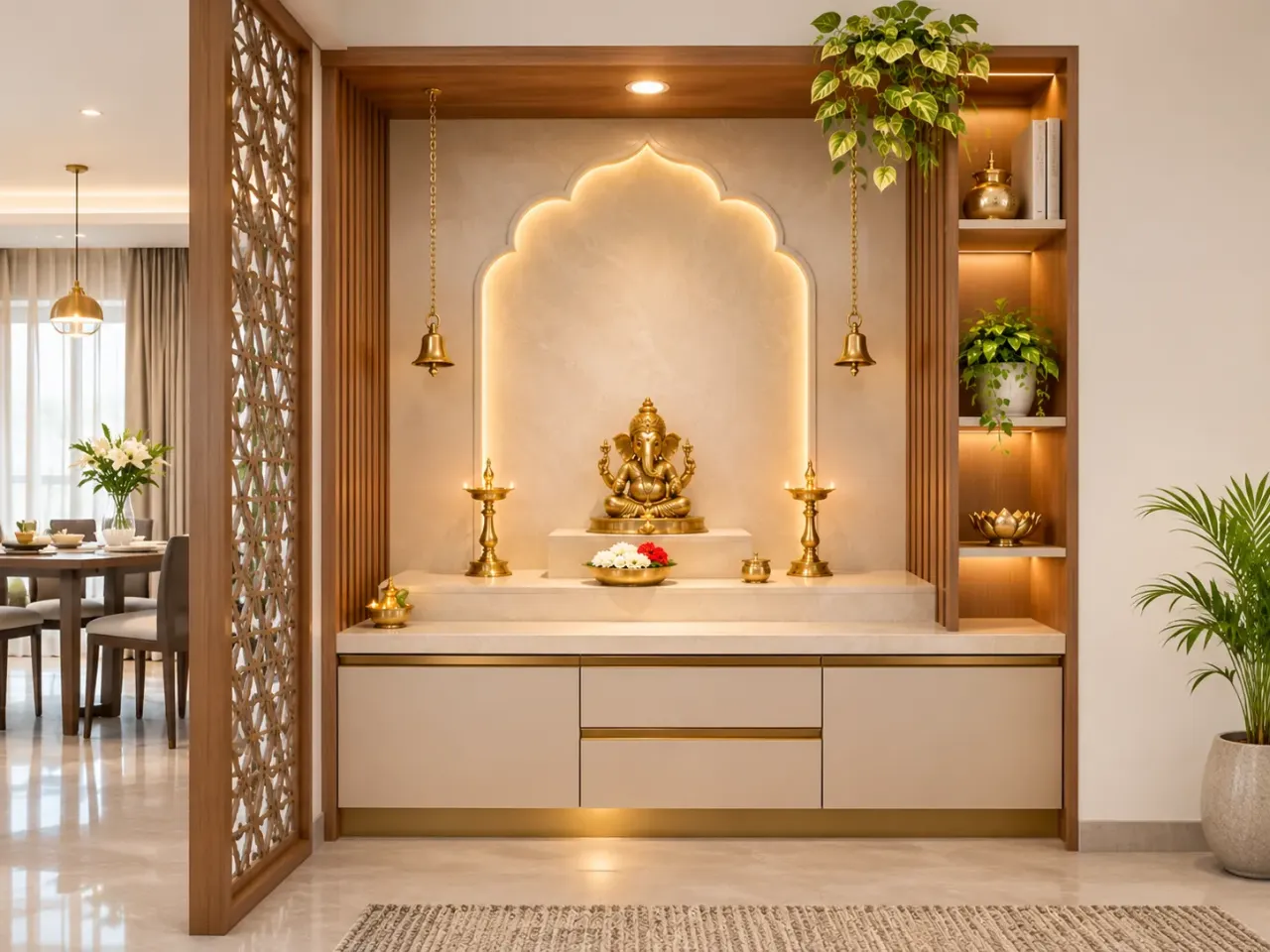
A Sacred Corner, Beautifully Planned: Getting Your Devghar Design Right
A Devghar is more than a decorative feature in a home. It is a dedicated space for prayer, reflection and quiet moments. Whether it occupies a small wall niche, a compact cabinet or a separate corner, its design should support a sense of calm while fitting naturally into the home's overall interiors.
The challenge is finding the right balance. Too many decorative elements can make the space feel crowded, while an overly plain design may not reflect the atmosphere the homeowner wants to create. A thoughtfully planned Devghar brings together proportion, materials, lighting, storage and personal details without allowing any one element to dominate.
Quick answer: A cohesive Devghar design starts with the available space, a consistent material and colour palette, comfortable lighting and practical storage. Keep decoration selective so the prayer area remains peaceful, functional and easy to maintain.
In This Article
- Start With the Space You Actually Have
- Choose a Design Language That Connects With Your Home
- Be Selective With Materials and Finishes
- Use Colour to Establish a Calm Atmosphere
- Plan Lighting for Both Atmosphere and Visibility
- Keep Storage Practical and Out of Sight
- Add Decorative Details With Restraint
- Consider Maintenance Before Finalising the Design
- Avoid These Common Devghar Design Mistakes
- A Simple Checklist Before Execution
1. Start With the Space You Actually Have
Before choosing a design, understand where the Devghar will be placed and how much room is available.
In a compact apartment, a wall-mounted unit or a recessed niche may be more practical than a freestanding structure. In a larger home, a dedicated alcove or a more substantial temple unit may be possible.
Consider the available wall width, ceiling height, depth and surrounding furniture. Leave enough room to access the prayer area comfortably and keep everyday movement unobstructed.
The design should feel proportionate to its surroundings rather than looking like an oversized feature added to the room.
2. Choose a Design Language That Connects With Your Home
A Devghar does not need to copy every detail of the surrounding interiors, but it should feel as though it belongs there.
For a modern home, clean lines, simple profiles and restrained detailing can create a cohesive look. Traditional interiors may work well with carved wood, decorative frames or more elaborate craftsmanship. A transitional approach can combine a simple structure with a few traditional details.
The important thing is consistency. If the rest of the home uses understated finishes, an extremely ornate Devghar may feel disconnected. Similarly, a very contemporary unit may look out of place in a home filled with traditional furniture and detailing.
Design tip: Choose one dominant design language for the Devghar and repeat only a few details from the surrounding interiors. This creates visual continuity without making everything look identical.
3. Be Selective With Materials and Finishes
Materials have a strong influence on how the Devghar looks and feels. Wood, stone, marble, laminates and metal accents can all work, depending on the design and maintenance requirements.
Wood can bring warmth and a familiar traditional character. Marble and other stone finishes can create a refined appearance, while laminates offer a wider range of colours and patterns with relatively straightforward maintenance. Metal details can be used as subtle accents rather than covering every surface.
Try limiting the main palette to two or three complementary finishes. For example, a warm wood finish with a light stone surface can look balanced without requiring additional decorative materials.
Also consider how easily the surfaces can be cleaned. A prayer space is used regularly, so finishes should be practical as well as attractive.
4. Use Colour to Establish a Calm Atmosphere
Colour choices should support the overall mood instead of competing for attention.
Ivory, cream, beige and soft wood tones can make a Devghar feel light and understated. Deeper wood shades can create a more traditional appearance, while muted greens or earthy neutrals may work as supporting colours in selected details.
A useful approach is to select one dominant finish, one supporting colour and, if needed, a small accent. Avoid combining several strong colours, glossy finishes and elaborate patterns in a limited space.
The goal is not to make the Devghar visually separate from the rest of the home, but to give it a distinct identity within a cohesive interior.
5. Plan Lighting for Both Atmosphere and Visibility
Lighting can make a small Devghar feel more inviting, but it needs to be planned carefully.
A soft, warm light can highlight the prayer area and create a gentle atmosphere. Concealed LED strips may be integrated into a niche or shelf, while a small focused light can help illuminate the main surface.
Avoid placing lights where they create glare or make reflective surfaces uncomfortable to look at. Exposed wiring should also be planned for during execution rather than hidden through last-minute adjustments.
If diyas or other open flames are part of regular use, keep combustible materials, fabrics and electrical fittings at a safe distance. The lighting arrangement should never interfere with safe everyday use.
6. Keep Storage Practical and Out of Sight
A beautiful Devghar can quickly become cluttered if everyday prayer essentials do not have a designated place.
Plan storage for items such as prayer books, incense, matchboxes, bells, small containers and cleaning supplies. A drawer below the main platform or a discreet cabinet can keep these items organised.
Keep frequently used objects easy to reach. Less frequently used items can be stored separately so the main prayer surface remains clear.
Avoid adding shelves simply to fill empty wall space. Every shelf should have a clear purpose and enough room to be used comfortably.
7. Add Decorative Details With Restraint
Decorative elements can make the Devghar feel personal, but they do not all need to be included at once.
Choose a few meaningful details, such as a traditional frame, a subtle carved border, a bell or a carefully selected decorative backdrop. Allow the main structure and the prayer objects to remain the focus.
If the backdrop already has a strong pattern or detailed carving, keep the surrounding surfaces simpler. If the unit itself is minimal, a small decorative accent may be enough to give it character.
A useful rule is to step back and check whether each additional detail contributes something. If it does not improve the appearance or use of the space, it may not be necessary.
8. Consider Maintenance Before Finalising the Design
The Devghar is a regularly used part of the home, so its surfaces should be easy to maintain.
Open shelves may collect dust, while intricate carvings can require more careful cleaning. Highly reflective finishes may show fingerprints and marks more easily. Choose materials and details according to the amount of maintenance you are comfortable with.
Keep the floor and surrounding area easy to clean. Make sure drawers open fully, shelves are accessible and decorative elements do not obstruct routine cleaning.
A design that looks attractive only when freshly styled may become difficult to manage over time. Practicality should be considered from the beginning.
9. Avoid These Common Devghar Design Mistakes
A few decisions can make the space feel unnecessarily busy or difficult to use:
- Mixing too many finishes: Multiple wood tones, stones and metallic details can make a compact unit look fragmented.
- Choosing an oversized structure: A large unit may dominate a small room or obstruct movement.
- Ignoring storage: Without designated storage, everyday prayer essentials can accumulate on the main surface.
- Overusing decorative lighting: Too many visible light sources can distract from the space.
- Prioritising appearance over maintenance: Intricate details and difficult-to-clean surfaces can become inconvenient.
- Adding decoration without a plan: Every decorative element should have a reason to be there.
10. A Simple Checklist Before Execution
Before finalising the Devghar, review these points:
- Does the unit fit the available space?
- Does its style complement the rest of the home?
- Are the materials and finishes practical to maintain?
- Is the lighting comfortable and safely positioned?
- Is there enough storage for everyday essentials?
- Can the prayer area be accessed and cleaned easily?
- Are decorative details balanced rather than excessive?
Explore Your Interior Design Ideas With Walls to Wonder
Planning a home interior involves bringing several design decisions together. Walls to Wonder offers digital tools that can help you explore room concepts, visualise spaces and review interior budgets.
- Design My Room – Explore room concepts, finishes and furniture combinations.
- Whole Home Visualizer – Explore how design ideas can work across your home.
- Interior Design Cost Estimate – Get an indicative starting point for interior budget planning.
- Interior Quotation Checker – Review quotation scope, materials, charges and exclusions.
Final Thought
A thoughtfully designed Devghar does not need an elaborate structure or a large number of decorative features to feel special. Its character comes from the way its proportions, materials, lighting and personal details work together.
Start with the space, choose a consistent design language and give every element a clear purpose. When the essentials are planned well, the result can feel peaceful, personal and naturally connected to the rest of your home.
Frequently Asked Questions
1. Which materials work well for a Devghar?
Wood, marble, stone and laminates can all work. The choice depends on the preferred appearance, budget, usage and maintenance requirements.
2. Can a Devghar be designed in a small apartment?
Yes. A wall-mounted unit, compact cabinet or recessed niche can make efficient use of limited space, provided it remains accessible and practical.
3. How can I make a modern Devghar feel traditional?
A contemporary structure can be paired with selected traditional details, such as a carved frame, a simple decorative motif or a warm wood finish.
4. What lighting is suitable for a Devghar?
Soft, warm lighting can create a comfortable atmosphere. Concealed lights or focused illumination can work well when glare, wiring and safe distances from open flames are considered.
5. How do I prevent my Devghar from looking cluttered?
Limit the number of finishes, provide dedicated storage and keep only regularly used or meaningful objects on the main prayer surface.
Turn this idea into a plan for your home
Visualise your space, understand the likely budget, or find a professional who can bring the idea to life.