
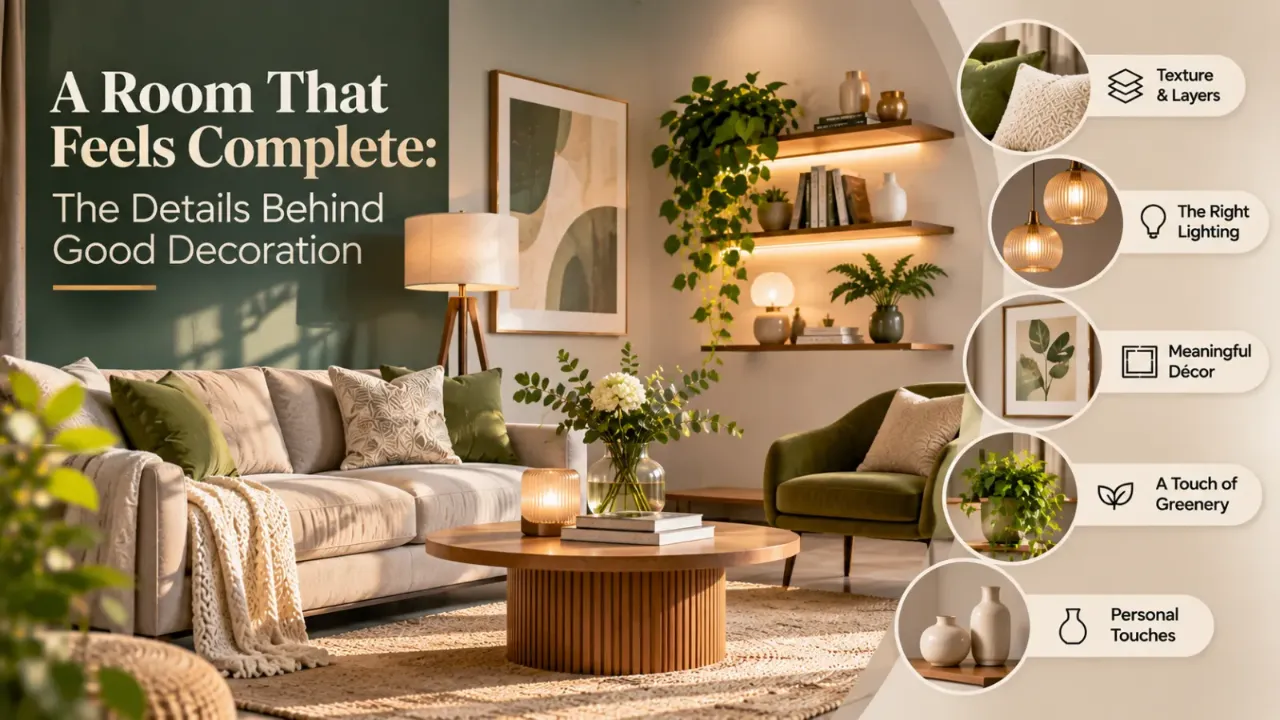
A Room That Feels Complete: The Details Behind Good Decoration
A room can have beautiful furniture, an attractive colour scheme and carefully selected accessories, yet still feel unfinished. Often, the difference between a room that simply looks furnished and one that feels thoughtfully decorated lies in how its elements work together.
Room interior decoration is not about adding more objects or following every design trend. It is about creating a visual connection between colours, textures, materials, lighting and personal details.
A well-decorated room should also support the way people use it. A living room needs to feel welcoming, a bedroom should feel restful, and a study should support concentration. The decorative choices should respond to the room's purpose rather than exist only for appearance.
Here is how to bring these elements together to create a balanced and cohesive interior.
1. Begin With the Mood You Want to Create
Before selecting paint colours or decorative accessories, decide how you want the room to feel.
Do you want it to feel calm and understated, warm and inviting, elegant and formal, or lively and expressive?
This decision gives direction to the rest of the decoration.
For example:
- A calm room can use soft neutrals, natural textures and limited visual contrast.
- A warm and inviting room can combine wood, earthy colours and layered lighting.
- A contemporary room can use clean lines, restrained finishes and a controlled colour palette.
- A more expressive room can introduce stronger colours, artwork and contrasting materials.
The objective is not to fit the room into a fixed style category. It is to establish a clear mood so that individual choices feel connected.
2. Build a Colour Palette That Works Together
Colour is one of the most noticeable elements in room decoration. It influences how furniture, walls, flooring and accessories relate to one another.
Instead of selecting every colour independently, begin with a small palette.
A useful approach is to identify:
- Base colour: The main colour used across larger surfaces such as walls.
- Supporting colours: Shades introduced through furniture, curtains, rugs or upholstery.
- Accent colours: Smaller areas of stronger colour used in cushions, artwork or decorative objects.
For example, an ivory and beige palette can be supported with muted olive, natural wood and a small amount of aged brass. A cooler palette might combine soft grey, off-white, muted blue and darker wood.
Do not assume that every surface needs a different colour. Repeating a few shades across the room usually creates a more connected appearance.
Also consider natural light. A colour may look different in a room with strong daylight compared with one that receives limited sunlight. Test paint and fabric samples in the actual space before making final decisions.
3. Use Texture to Add Depth
A room decorated entirely with smooth surfaces can sometimes feel flat. Texture adds depth and creates visual interest without requiring more colours.
Consider combining different materials:
- Linen or cotton upholstery for a softer appearance.
- Wood for natural warmth and visible grain.
- Stone or textured tiles for a more substantial finish.
- Woven rugs and baskets for tactile variation.
- Metal details for contrast.
- Glass for a lighter, reflective element.
The key is to balance the textures rather than use too many at once.
For instance, a living room with a smooth wall finish can feel more layered with a textured rug, a fabric sofa, wooden furniture and a few ceramic accessories.
Texture should be visible and, where appropriate, felt. It does not need to be dramatic to make a difference.
4. Give the Walls a Clear Design Direction
Walls provide a large visual surface, so their treatment can influence the entire room.
A simple painted wall may be the right choice when furniture and accessories already provide enough detail. In other rooms, a feature wall, wallpaper, panelling or textured finish can create a stronger focal point.
Some options include:
- A restrained accent colour behind the bed or sofa.
- Wooden or fluted panels for added depth.
- Wallpaper with a pattern that suits the room's scale.
- Framed artwork arranged with consistent spacing.
- Decorative mirrors that reflect light and selected views.
Avoid treating every wall as a separate design opportunity. If one wall already has a strong finish, the surrounding walls can remain simpler.
The aim is to create a focal point without making the room visually busy.
5. Choose Furniture That Supports the Overall Look
Furniture is often the largest visual element in a room. Its proportions, shape, material and finish should relate to the overall decoration.
A room with soft, curved furniture may feel more relaxed, while furniture with clean geometric lines can create a sharper contemporary appearance.
Think about:
- Whether the furniture is proportionate to the room.
- How its finish relates to the flooring and wall colours.
- Whether different furniture pieces share a visual connection.
- Whether the arrangement leaves enough space for movement.
- Whether the material is suitable for everyday use.
A beautiful furniture piece does not automatically belong in every room. It should contribute to the overall composition and serve a practical purpose.
6. Layer Lighting for Different Moments
Lighting is not just a functional requirement. It also changes how colours, textures and finishes appear.
A single ceiling light may provide general illumination, but it rarely creates the most comfortable atmosphere on its own.
Consider three layers:
Ambient lighting: Provides overall illumination through ceiling lights, recessed fixtures or other general sources.
Task lighting: Supports specific activities such as reading, working or getting ready.
Accent lighting: Highlights artwork, wall textures, shelves or selected architectural details.
For example, a bedroom can combine general ceiling lighting with bedside lamps and subtle wardrobe or headboard lighting.
The colour temperature and brightness should suit the room's purpose. Warm lighting can create a relaxed atmosphere, while more neutral lighting may be useful where accurate visibility is important.
Plan the lighting before finalising false ceilings, electrical points and furniture placement.
7. Use Curtains and Rugs to Complete the Layers
Soft furnishings can connect the room's colour palette and introduce another layer of texture.
Curtains influence the way windows look and how daylight enters the room. Their fabric, lining, length and colour should suit both the window and the room's intended atmosphere.
Rugs can help define a seating area, add softness and introduce pattern or texture. Their dimensions should be proportionate to the furniture arrangement.
When selecting these elements, consider:
- Whether the fabric complements the main palette.
- How easily it can be cleaned.
- Whether it suits the room's daily use.
- Whether the pattern competes with other visual details.
- Whether its size feels proportionate to the space.
A rug that is too small or curtains that feel disconnected from the rest of the room can make an otherwise well-planned interior look incomplete.
8. Add Decorative Details With Intention
Accessories give a room its personality, but they should not become clutter.
Artwork, vases, cushions, books, plants and decorative objects can make a space feel more personal when they are selected with care.
Rather than filling every empty surface, choose a few items that contribute something meaningful.
For example:
- A large artwork can establish the colour direction of a living room.
- A ceramic vase can introduce a different texture.
- A plant can add a natural element.
- Cushions can connect the sofa upholstery with the rug or curtains.
- A carefully styled shelf can display books and personal objects.
Pay attention to scale and grouping. A few objects arranged with space around them often look more considered than many small objects spread across the room.
9. Pay Attention to Finishes and Small Details
Small finishing decisions can influence how polished a room feels.
Door handles, cabinet hardware, switch plates, curtain rods, furniture legs and visible joints may appear minor individually, but together they contribute to the overall look.
Try to maintain some consistency in finishes.
For example, brushed metal details can be repeated across cabinet handles, lighting fixtures and selected accessories. Wood tones can be coordinated across furniture and shelving without requiring every piece to match exactly.
This does not mean every finish must be identical. Contrast can work well when it feels deliberate.
Also consider durability and maintenance. A finish that looks attractive in a sample may require more cleaning or care than expected once used across a larger surface.
10. Balance Empty Space With Decorative Elements
A well-decorated room does not need to be filled from wall to wall.
Empty space gives the eye a place to rest and allows important furniture or decorative pieces to stand out.
If every wall has artwork, every table has accessories and every corner has furniture, the room can feel crowded even when the individual items are attractive.
Leave some surfaces simple. Maintain clear movement routes and avoid placing decorative objects where they interfere with daily activities.
This is particularly important in compact Indian homes where rooms may need to support several functions.
A little restraint can make the details that remain feel more intentional.
11. Adapt the Decoration to the Room's Purpose
The same decorative approach will not work equally well in every room.
Living room: Focus on comfortable seating, balanced lighting, a coordinated colour palette and a clear focal point.
Bedroom: Prioritise restful colours, comfortable fabrics, layered lighting and limited visual clutter.
Dining area: Use lighting to define the table, choose practical finishes and keep the tabletop arrangement simple.
Study or home office: Prioritise task lighting, comfortable furniture, organised storage and a background that supports concentration.
Guest room: Aim for a welcoming and flexible arrangement, with comfortable bedding, accessible storage and simple decorative details.
The room's function should guide the decoration. A design that looks impressive but makes everyday use difficult is not a successful result.
12. A Checklist Before You Finalise the Look
Before considering the room complete, review the overall composition:
- Does the colour palette feel connected?
- Are there enough differences in texture?
- Do the furniture proportions suit the room?
- Is the wall treatment balanced?
- Does the lighting support different activities?
- Do curtains and rugs complement the other finishes?
- Are decorative accessories adding value rather than clutter?
- Do hardware and small details feel coordinated?
- Is there enough clear space for movement?
- Can the materials be maintained comfortably?
Looking at the room as a whole is more useful than judging each item separately.
Styling tip: Before buying accessories, take a photograph of the room and review its colour balance, empty areas and focal points. This can help identify what the room actually needs instead of adding objects simply to fill space.
Explore Your Room Design Possibilities
Visualising different combinations can make decoration decisions easier. Try Design My Room to explore colours, furniture and finishes in a room, or use the Whole Home Visualizer to consider how individual rooms can feel connected across the home.
If you are planning a larger interior update, the Interior Design Cost Estimate can help you explore an indicative budget. You can also use the Interior Quotation Checker to review quotation details, materials, charges and exclusions.
Final Thought
Good room interior decoration is created through thoughtful relationships between elements. Colour establishes the mood, texture adds depth, furniture provides structure, lighting creates atmosphere and decorative details bring personality.
You do not need to use expensive materials or fill every corner to create a beautiful room. What matters is choosing elements that work together and suit the way the space is used.
When each decision supports the overall direction, the room feels more complete, comfortable and personal.
With Walls to Wonder, you can explore room design possibilities and visualise different combinations before making changes to your home.
Frequently Asked Questions
1. What are the main elements of room interior decoration?
The main elements include colour, texture, furniture, lighting, wall finishes, soft furnishings and decorative accessories. Their proportions and relationships help create a cohesive room.
2. How do I choose colours for room decoration?
Begin with a base colour, add supporting shades through furniture and fabrics, and introduce a few accent colours. Consider natural light and test samples in the actual room.
3. Why is texture important in interior decoration?
Texture adds depth and visual interest. Combining materials such as wood, fabric, stone, metal and glass can make a room feel more layered and complete.
4. How can I decorate a room without making it look cluttered?
Use a controlled colour palette, select accessories with intention, leave some surfaces simple and maintain clear movement routes. Not every empty corner needs decoration.
5. What type of lighting works best for a decorated room?
A combination of ambient, task and accent lighting is useful. The choice of fixtures, brightness and colour temperature should respond to the room's activities and atmosphere.
6. How do I make different rooms in a home feel connected?
Repeat selected colours, materials or finishes across rooms while adapting the furniture and decoration to each room's purpose. This creates continuity without making every room look identical.
Turn this idea into a plan for your home
Visualise your space, understand the likely budget, or find a professional who can bring the idea to life.