
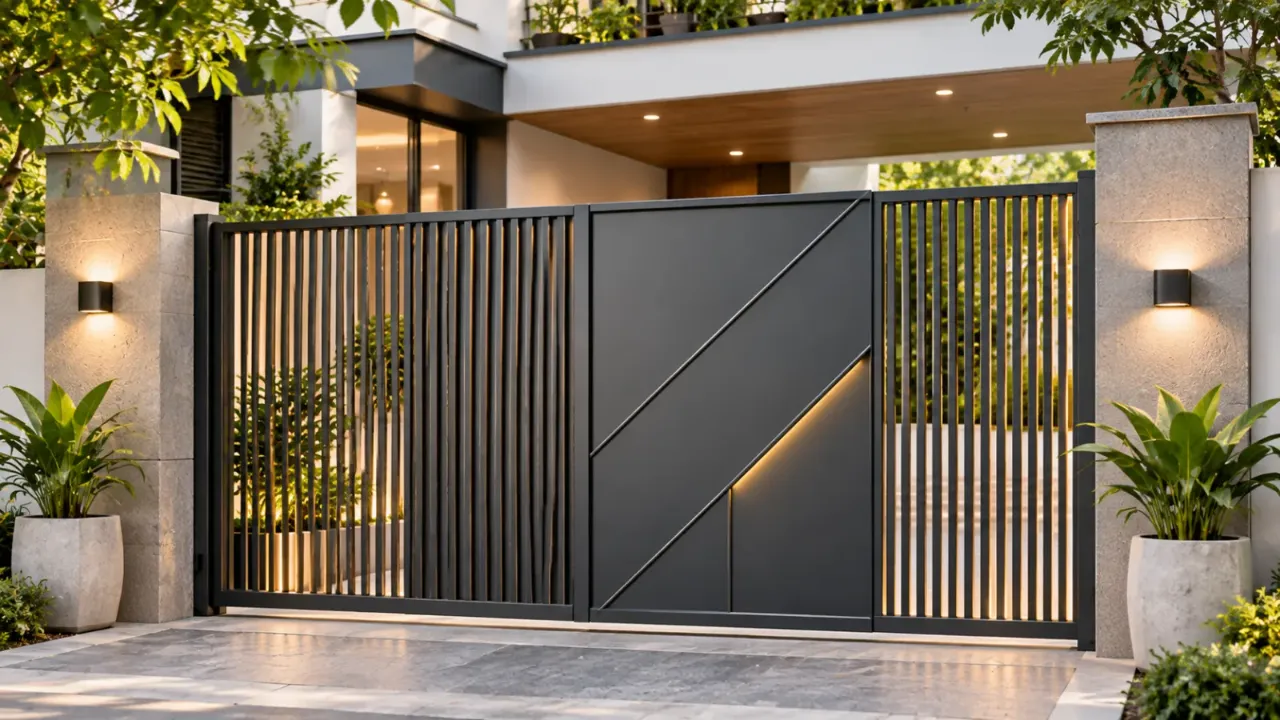
A Gate That Gets the Details Right: Planning a Modern Steel Design
A main gate does more than mark the entrance to a home. It establishes the first impression, provides a layer of security and influences how the entire exterior looks. Steel is a popular choice because it can be shaped into clean, contemporary forms while offering a strong framework for everyday use.
But a modern steel gate is not simply a matter of choosing an attractive pattern. Its proportions, opening mechanism, material specification, finish, hardware and relationship with the boundary wall all affect the final result. The best approach is to begin with practical requirements, then develop a design around them. Here is what to keep, what to avoid and how to make the first decisions with confidence.
1. Begin With the Purpose of the Gate
Before browsing patterns, decide what the gate needs to do. A pedestrian entrance, a vehicle gate and a combined main entrance have different requirements.
- Access: Will the gate be used mainly by pedestrians, vehicles or both?
- Privacy: Should it provide a clear view through the entrance, partial screening or a more enclosed appearance?
- Security: What level of access control and locking is appropriate for the property?
- Frequency of use: Will it be opened several times a day, or only occasionally?
- Available space: Is there enough room for a swing gate, or would a sliding mechanism be more practical?
These answers establish the design brief. They also help prevent an attractive concept from becoming inconvenient once installed.
2. Keep the Design in Proportion
A gate should look like part of the house, not an unrelated feature added to the boundary wall. Its height, width, visual weight and pattern should work with the entrance, pillars and overall elevation.
For a contemporary home, simple horizontal or vertical lines can create a neat appearance. Larger properties may accommodate broader panels or stronger geometric patterns, while compact entrances often benefit from a lighter visual treatment.
- Match the visual scale of the gate to the boundary wall and entrance.
- Align prominent horizontal or vertical lines with nearby architectural features where practical.
- Avoid overly dense patterns that make the entrance feel visually heavy.
- Check the gate's proportions from both the street and inside the property.
A well-proportioned design often looks more refined than one with too many decorative elements.
3. Choose Steel and Construction Details Carefully
The appearance of a steel gate depends on what lies behind the finish. The frame, sections, joints, reinforcement and fabrication quality all contribute to its performance.
Ask the fabricator to clarify:
- The type and grade of steel being proposed.
- The section sizes and thicknesses used for the frame and infill.
- How the gate will be reinforced, particularly around hinges, tracks and locking points.
- How joints and welds will be finished.
- What surface preparation and protective coating system will be used.
Do not compare quotations only by the overall dimensions or design image. Two gates that look similar may differ significantly in their construction and protective treatment. The specification should be clear enough for you to understand what is actually being supplied.
4. Keep the Pattern Simple and Intentional
Modern steel gates can use vertical bars, horizontal slats, geometric grids, perforated panels or combinations of solid and open sections. The right pattern depends on the home's architecture and the amount of privacy required.
- Vertical slats: Create a structured, understated look and can visually emphasise height.
- Horizontal lines: Give the entrance a wider, more contemporary appearance.
- Geometric grids: Add character while keeping the design organised.
- Perforated panels: Offer patterned screening, with the degree of visibility depending on the opening design.
- Mixed materials: Steel paired with a suitable wood-look or other accent can soften an otherwise industrial appearance.
Choose one dominant design language. If the gate already has a strong pattern, keep the surrounding pillars, wall finishes and lighting relatively restrained.
5. Do Not Overlook the Opening Mechanism
A gate can look impressive in a drawing and still be difficult to use if its opening arrangement has not been planned properly.
Swing gates need sufficient clearance for the leaves to open without hitting vehicles, steps, walls or landscaping. The ground should also be considered so the gate does not scrape as it moves.
Sliding gates need a suitable side run and a properly planned track or cantilever system. Check whether the available space, ground condition and entrance layout can accommodate the mechanism.
Before finalising the design, confirm:
- The direction in which the gate will open.
- The clear width needed for vehicles and people.
- The space required for the moving gate.
- The position of hinges, rollers, stops and guides.
- How the gate will be operated during a power failure if automation is installed.
The mechanism should be selected according to the site, not just because one option looks more modern.
6. Prioritise Security and Hardware
Security should be integrated into the design rather than added as an afterthought. Review the locking arrangement, hinge strength, frame construction and the way the gate connects to its supporting pillars. The design should not create unnecessary weak points around the latch or access area.
Useful details to consider include:
- A suitable lock and latch arrangement.
- Strong, correctly specified hinges or sliding hardware.
- Secure fixing points and adequate support.
- A practical pedestrian access arrangement where needed.
- An intercom, access-control or automation system if it suits the property.
Automation can improve convenience, but it does not replace sound fabrication, secure locking or safe installation. Ask the installer to explain manual operation and emergency access before approving a motorised system.
7. Select a Finish That Suits the Environment
A gate is exposed to weather, dust, moisture and regular handling. Its finish should therefore be selected for both appearance and protection.
Common choices include matte black, charcoal, graphite, muted grey and other understated shades. A contrasting accent can work well, but the overall palette should relate to the home's exterior.
Ask about the complete finishing process, including surface preparation, primer and the specified topcoat or coating system. Powder coating may be suitable for many applications, but the result depends on preparation, application quality and the product specification.
For coastal, humid or otherwise demanding environments, discuss corrosion protection with the fabricator rather than assuming that a particular colour or coating alone guarantees durability. Also establish how scratches, chips and damaged areas should be repaired.
8. Use Lighting and Surrounding Details Thoughtfully
The gate is only one part of the entrance. Pillars, boundary walls, pathway lighting, house numbers and planting all influence how it is experienced.
A few carefully placed lights can make the entrance easier to navigate and highlight the gate's form. Keep fixtures positioned so they do not obstruct movement, create uncomfortable glare or interfere with the opening mechanism.
Planting can soften a strong metal surface, but it should not block the gate's movement, conceal access points or create maintenance problems. The aim is to make the entire entrance feel considered without competing with the gate itself.
9. Avoid These Common Design Mistakes
Some choices can make a modern steel gate look dated or become difficult to maintain.
- Too many patterns: Mixing unrelated cut-outs, curves and grids can make the gate feel busy.
- Choosing only by appearance: A design image does not tell you about steel specification, reinforcement or hardware.
- Ignoring the opening clearance: A gate that clashes with a vehicle, wall or pathway will become frustrating.
- Overlooking drainage and ground levels: Poor site planning can affect movement and lead to scraping or water-related deterioration.
- Using unsuitable finishes: A coating that is not appropriate for the exposure conditions may require early repair.
- Forgetting maintenance access: Tracks, hinges, locks and moving parts need to remain accessible for inspection and servicing.
- Adding automation too late: Motors, power supply, safety devices and manual release arrangements should be considered during planning.
A simpler design with sound construction is usually a better long-term decision than an elaborate design with unresolved practical details.
10. What to Confirm Before Placing the Order
Before approving a drawing or quotation, ask for the details in writing.
- Final opening width and height, verified at the site.
- Gate type and direction of movement.
- Steel specification, section sizes and thicknesses.
- Frame, infill and reinforcement details.
- Finish and corrosion-protection specification.
- Lock, hinge, roller and other hardware details.
- Automation components, if applicable.
- Installation scope, including supports and civil work.
- Warranty coverage and maintenance responsibilities.
- Final price, taxes, delivery timeline and exclusions.
If the quotation uses broad descriptions such as "heavy-duty steel" or "premium finish", ask for the exact specification. Clear documentation makes it easier to compare proposals fairly.
Plan the entrance before finalising the gate
Use Design My Room and the Whole Home Visualizer to explore interior concepts and coordinate the home's overall design direction. For a gate project, use the visual concepts as inspiration and confirm exterior dimensions, fabrication and structural details with the relevant professionals.
Final Thought
A modern steel gate should balance appearance, strength, security and everyday convenience. Begin with the site's measurements and access requirements, choose a suitable opening mechanism, understand the material and finish specification, and then refine the pattern and colour.
The goal is not to add the most details. It is to make every detail serve a purpose, so the entrance feels cohesive and remains practical long after installation.
Plan the Budget and Review the Quotation
Before committing to the work, make sure the proposed scope and cost are clear. The Interior Design Cost Estimate can help with indicative interior budget planning, while the Interior Quotation Checker can help review quotation scope, materials, charges and exclusions. These tools support interior planning and do not replace a gate fabricator's detailed outdoor-gate specification or site assessment.
Frequently Asked Questions
1. Which steel gate design looks modern?
Clean vertical or horizontal slats, restrained geometric patterns and well-proportioned solid-and-open panels are common contemporary choices. The best option depends on the home's architecture and privacy needs.
2. Is a sliding or swing steel gate better?
Neither is automatically better. A swing gate needs enough opening clearance, while a sliding gate needs suitable side space and a correctly designed track or cantilever system. Choose according to the site layout.
3. What finish is suitable for an outdoor steel gate?
The finish should include appropriate surface preparation and a protective coating system suited to the local exposure conditions. Ask the fabricator to specify the complete process rather than relying on colour alone.
4. Can a steel gate be automated?
Yes, if the gate structure, movement, power supply and available space are suitable for automation. The design should also include safety provisions and a practical manual-release method.
5. What should I check in a steel gate quotation?
Check the steel specification, section sizes, fabrication, finish, hardware, opening mechanism, installation scope, automation, warranty, taxes and exclusions. Make sure the quoted design matches the approved drawing.
Turn this idea into a plan for your home
Visualise your space, understand the likely budget, or find a professional who can bring the idea to life.