
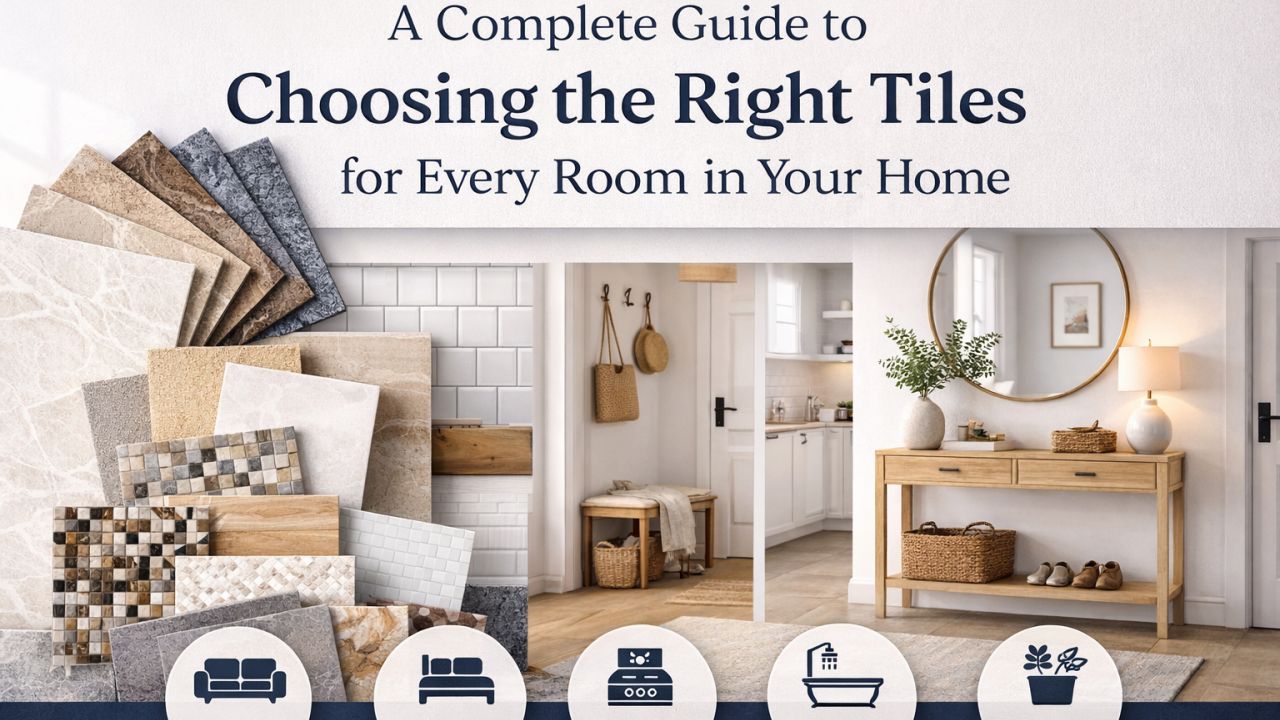
A Complete Guide to Choosing the Right Tiles for Every Room in Your Home
Tiles are one of the most important surface choices in a home. They affect not only how a space looks, but also how it functions every day. The right tile can make a room feel brighter, warmer, easier to clean, safer to walk on, and more visually complete. The wrong tile, on the other hand, can create maintenance issues, feel slippery, or simply not suit the way the space is used.
That is why choosing tiles should never be only about color or pattern. It should also be about durability, finish, water resistance, maintenance, comfort, and the specific needs of each part of the home.
Today, homeowners have a wide variety of tiles to choose from, from ceramic and vitrified tiles to porcelain, natural stone, mosaic, wooden-look tiles, and more. Each type has its own strengths, and each works better in certain areas than others.
This guide explains the different types of tiles that can be used at home and which spaces they are best suited for.
Why Tile Selection Matters in Home Design
Tiles cover a large visual area, so they strongly influence the mood and style of a room. But their role is also practical. Good tiles can help with:
- easy cleaning and maintenance
- water and stain resistance
- durability in high-use areas
- slip resistance in wet spaces
- visual continuity across rooms
- improved comfort and function
A tile that works beautifully in a living room may not be suitable for a bathroom. A tile that looks elegant on a wall may not be strong enough for a floor. This is why tile selection should always depend on both design and usage.
1. Ceramic Tiles
Ceramic tiles are one of the most common and budget-friendly tile options for homes. They are made from natural clay and are available in many colors, designs, and finishes.
Best suited for:
- bathroom walls
- kitchen walls
- light-use bedroom floors
- utility areas
Why they work:
Ceramic tiles are affordable, easy to maintain, and widely available. They work especially well on walls and in areas where heavy impact or traffic is not a major concern.
Keep in mind:
They are generally less dense and less durable than porcelain or vitrified tiles, so they may not be the best option for high-traffic flooring in busy homes.
2. Vitrified Tiles
Vitrified tiles are one of the most popular flooring choices in modern homes. They are made by combining clay with silica and other minerals, which makes them strong, dense, and less porous.
Best suited for:
- living rooms
- bedrooms
- dining areas
- hallways
- general flooring across the home
Why they work:
Vitrified tiles are durable, stain-resistant, and available in many finishes such as glossy, matte, double-charge, and full-body. They are especially useful for homeowners who want a practical and low-maintenance floor option.
Keep in mind:
Glossy vitrified tiles can become slippery when wet, so matte or textured finishes are often better for bathrooms and balconies.
3. Porcelain Tiles
Porcelain tiles are a denser and stronger type of ceramic tile. They are highly durable, less porous, and suitable for both floors and walls.
Best suited for:
- living room floors
- bathroom floors and walls
- kitchen floors
- balconies
- outdoor semi-covered areas
Why they work:
Porcelain tiles are highly durable and moisture-resistant, making them a strong choice for areas with regular use and exposure to water. They are available in finishes that mimic stone, wood, concrete, and marble.
Keep in mind:
They are usually more premium than basic ceramic tiles, but they offer better performance and longevity.
4. Marble-Look Tiles
Marble-look tiles are made to recreate the appearance of natural marble while offering easier maintenance and lower cost.
Best suited for:
- living rooms
- dining areas
- bedrooms
- feature walls
- luxury-looking interiors
Why they work:
These tiles give the home a refined and elegant feel without the maintenance demands of real marble. They are a popular choice for homeowners who want a premium look with better durability and easier cleaning.
Keep in mind:
Glossy marble-look tiles can show smudges more easily and may feel slippery in wet areas.
5. Wooden-Look Tiles
Wooden-look tiles recreate the warmth and texture of wood while offering the durability of tile. They are especially popular in modern and cozy interiors.
Best suited for:
- bedrooms
- living rooms
- balconies
- study areas
- accent walls
Why they work:
They bring warmth and softness to the visual design of a room while being much easier to maintain than real wood in many conditions. They are also useful in areas where real wood may not be practical.
Keep in mind:
They should be laid carefully so the pattern alignment feels natural and not artificial.
6. Natural Stone Tiles
Natural stone tiles include materials such as marble, granite, slate, travertine, and sandstone. These offer a rich and authentic surface look.
Best suited for:
- feature walls
- living areas
- patios
- balconies
- outdoor spaces
- premium bathrooms
Why they work:
Natural stone brings depth, texture, and a timeless feel to interiors and exteriors. It creates a more organic and luxurious finish than many man-made materials.
Keep in mind:
Natural stone often needs sealing and more maintenance than ceramic or vitrified tiles. Some stones are also more porous and stain-sensitive.
7. Mosaic Tiles
Mosaic tiles are made up of small pieces of tile, stone, glass, or ceramic arranged in sheets or patterns. They are usually more decorative than large-format tiles.
Best suited for:
- bathroom feature walls
- kitchen backsplashes
- shower niches
- decorative borders
- powder bathrooms
Why they work:
Mosaic tiles add texture, detail, and visual interest. They are useful when you want to create a feature without covering the entire room in bold material.
Keep in mind:
Because of the extra grout lines, they can require more cleaning than larger tiles.
8. Subway Tiles
Subway tiles are rectangular tiles, usually simple and clean in appearance, and are especially popular for walls.
Best suited for:
- kitchen backsplashes
- bathroom walls
- utility room walls
- laundry areas
Why they work:
They offer a timeless, clean, and versatile look. They suit both modern and classic homes depending on color, grout, and layout pattern.
Keep in mind:
They are more of a wall tile choice than a flooring choice in most homes.
9. Textured or Anti-Skid Tiles
These tiles are designed to offer better grip and reduce the risk of slipping.
Best suited for:
- bathroom floors
- balconies
- terraces
- utility areas
- entrance steps
- outdoor walkways
Why they work:
Safety is especially important in wet zones, and anti-skid tiles help make movement more secure. They are practical for homes with children, elderly family members, or frequent water exposure.
Keep in mind:
Some highly textured tiles may hold more dirt, so choose a finish that balances grip and ease of cleaning.
10. Large-Format Tiles
Large-format tiles are becoming increasingly popular in modern homes because they create a seamless and spacious look.
Best suited for:
- living rooms
- open-plan homes
- bedrooms
- premium bathrooms
- feature walls
Why they work:
They reduce grout lines, make spaces feel visually cleaner, and often create a more luxurious finish. They are especially effective in homes that want a modern, minimal look.
Keep in mind:
They need skilled installation and may not be ideal for every small or irregularly shaped area.
Which Tiles Suit Which Area of the Home?
Living Room
The living room usually needs tiles that are durable, easy to maintain, and visually elegant.
Best choices:
- vitrified tiles
- porcelain tiles
- marble-look tiles
- large-format tiles
These options work well because they balance durability with style.
Bedroom
Bedrooms can take slightly softer visual finishes since they usually have less water exposure and lower wear than common areas.
Best choices:
- wooden-look tiles
- vitrified tiles
- porcelain tiles
- matte finish tiles
These help create a calm and comfortable atmosphere.
Kitchen Floor
Kitchen flooring needs to be durable, stain-resistant, and easy to clean.
Best choices:
- vitrified tiles
- porcelain tiles
- matte finish tiles
Avoid very slippery finishes in this area.
Kitchen Wall and Backsplash
Wall tiles in the kitchen should be easy to wipe clean and resistant to stains and splashes.
Best choices:
- ceramic tiles
- subway tiles
- mosaic tiles
- glossy wall tiles
These are practical and visually neat.
Bathroom Floor
Bathroom flooring must focus strongly on safety and water resistance.
Best choices:
- anti-skid tiles
- textured porcelain tiles
- matte finish tiles
Avoid glossy floor tiles in wet bathrooms.
Bathroom Walls
Bathroom wall tiles should be moisture-resistant and easy to clean.
Best choices:
- ceramic wall tiles
- porcelain tiles
- marble-look wall tiles
- mosaic feature tiles
These help create both function and style.
Balcony
Balconies need tiles that can handle dust, moisture, and weather variation.
Best choices:
- anti-skid tiles
- textured porcelain tiles
- natural stone tiles
- wooden-look outdoor tiles
Grip and durability matter more here than shine.
Utility Area
The utility area needs hard-wearing, practical, easy-clean surfaces.
Best choices:
- ceramic tiles
- vitrified tiles
- anti-skid tiles
Outdoor Areas
Outdoor spaces need strong, weather-friendly tiles with good grip.
Best choices:
- textured porcelain tiles
- natural stone tiles
- outdoor anti-skid tiles
Glossy vs Matte Tiles
This is another important decision.
Glossy tiles
Best for:
- walls
- formal interiors
- spaces where you want more reflection and brightness
Advantages:
- bright appearance
- easy surface cleaning
- polished look
Matte tiles
Best for:
- floors
- bathrooms
- kitchens
- balconies
- daily-use spaces
Advantages:
- better grip
- softer visual look
- hides marks better in many cases
In most homes, matte tiles are often more practical for floors, while glossy tiles work well on walls and feature areas.
Things to Consider Before Choosing Home Tiles
Before finalizing tiles, think about:
- where they will be used
- how much foot traffic the area receives
- whether the surface will get wet often
- how much maintenance you want
- whether the room is small or large
- how much natural light the room gets
- whether you want the tile to stand out or blend quietly
A tile should suit both the room and the way the room is lived in.
Common Mistakes to Avoid
Some common tile selection mistakes include:
- choosing only based on appearance
- using slippery glossy tiles in bathrooms
- selecting high-maintenance finishes for busy family homes
- using too many different tile styles in one house
- ignoring grout color and finish
- choosing wall tiles for floors without checking durability
- not considering cleaning and long-term upkeep
The best tile choice is one that stays beautiful and practical over time.
Final Thoughts
There is no single tile that works best everywhere in a home. The right choice depends on the space, the level of use, the style of the home, and the kind of maintenance you are comfortable with. Ceramic tiles work well for walls, vitrified and porcelain tiles are excellent for most floors, anti-skid tiles are essential in wet areas, and decorative tiles like mosaic or subway tiles add character where needed.
Choosing home tiles well is about matching the material to the purpose. When that balance is right, the home not only looks better but also functions more comfortably every day.
FAQs
1. Which tile is best for home flooring?
Vitrified and porcelain tiles are among the best choices for home flooring because they are durable, easy to maintain, and suitable for daily use in living rooms, bedrooms, and dining areas.
2. Which tiles are best for bathrooms?
For bathroom floors, anti-skid or matte-finish tiles are the safest choice. For bathroom walls, ceramic, porcelain, and marble-look tiles work well because they are moisture-resistant and easy to clean.
3. Are glossy tiles good for floors?
Glossy tiles can work for living rooms and some low-risk interior spaces, but they are usually not the best choice for wet areas like bathrooms, balconies, or utility spaces because they can become slippery.
4. What is the difference between ceramic and porcelain tiles?
Ceramic tiles are generally more affordable and commonly used for walls and light-use areas. Porcelain tiles are denser, stronger, and more durable, which makes them better suited for high-use floors and moisture-prone spaces.
5. Which tiles are best for kitchen floors?
Porcelain, vitrified, and matte-finish tiles are good choices for kitchen floors because they are durable, stain-resistant, and easier to maintain in a busy cooking space.
6. Which tiles are best for living rooms?
Large-format tiles, vitrified tiles, porcelain tiles, and marble-look tiles are all popular choices for living rooms because they offer a clean, elegant appearance and good durability.
7. Are wooden-look tiles a good option for homes?
Yes, wooden-look tiles are a great option for homes if you want the warmth of wood with the durability and easier maintenance of tile. They work especially well in bedrooms, living rooms, and study areas.
8. Which tiles are easiest to maintain?
Vitrified and porcelain tiles are usually among the easiest to maintain because they are less porous, durable, and simple to clean. Smooth ceramic wall tiles are also easy to maintain in kitchens and bathrooms.
9. Can the same tiles be used throughout the house?
Yes, the same tile can be used across many areas of the home for visual continuity, especially in living rooms, bedrooms, and dining areas. However, wet zones like bathrooms and balconies often need more slip-resistant options.
10. Which tiles are best for small homes?
Light-colored vitrified, porcelain, or large-format tiles often work well in small homes because they help spaces feel brighter, cleaner, and more open.
11. Are natural stone tiles better than regular tiles?
Natural stone tiles offer a rich and timeless look, but they usually require more maintenance than ceramic, porcelain, or vitrified tiles. They are better suited for homeowners who want a premium finish and are comfortable with extra care.
12. What should I consider before choosing tiles for my home?
Before choosing tiles, consider the room type, foot traffic, exposure to water, slip resistance, maintenance needs, finish, and how the tile will fit with the overall design style of your home.