
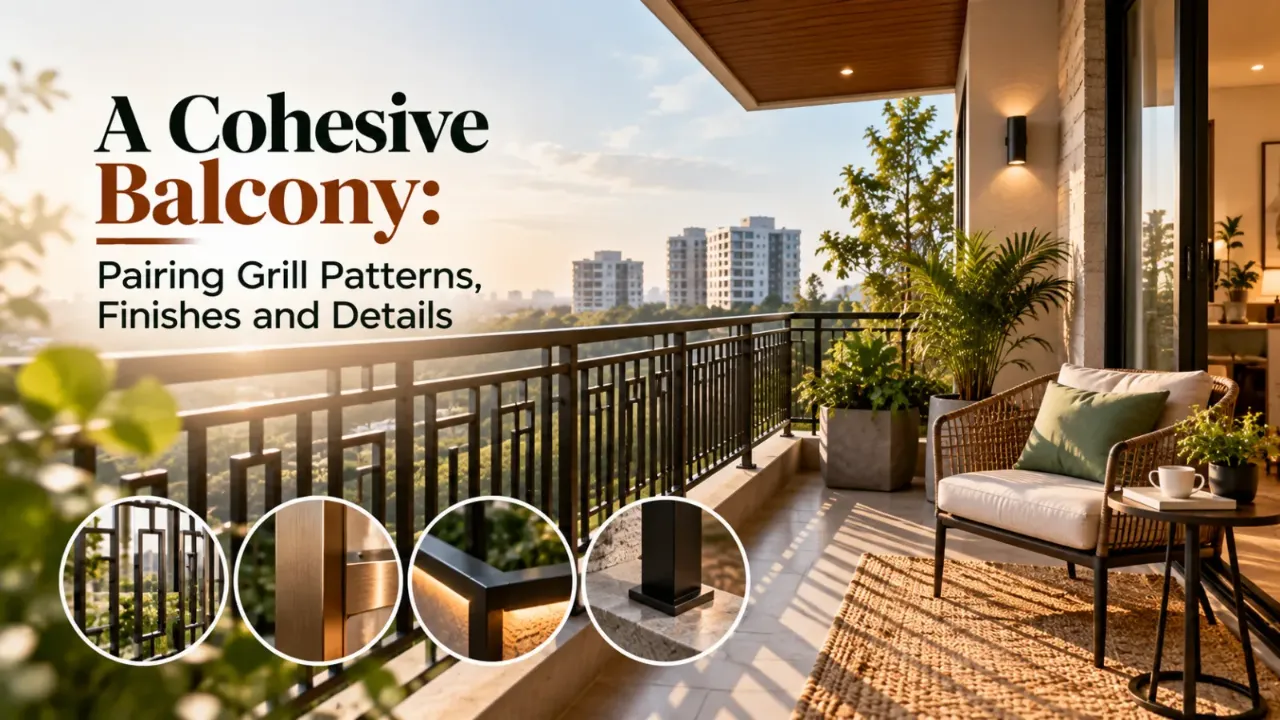
A Cohesive Balcony: Pairing Grill Patterns, Finishes and Details
A balcony grill is one of the most visible details on a home's exterior. It frames the view, influences the building's elevation and helps create a more secure outdoor space. But choosing a design based only on its appearance can lead to a result that feels disconnected from the rest of the home.
A modern balcony grill design should bring together several elements: the pattern, material, finish, proportions, safety requirements and the overall architecture. The balcony's flooring, lighting, planters and furniture also contribute to how the finished space looks.
The goal is to create a grill that feels like a natural part of the home rather than an element added at the last minute. Here are the key choices to consider.
1. Start With the Architecture of the Home
Before selecting a grill pattern, look at the building's overall design. A contemporary home with clean lines may suit slim vertical bars or a simple geometric panel. A more traditional façade may work better with subtle ornamental details or a restrained decorative motif.
Look at the following elements:
- The shape and proportions of the balcony opening.
- The colours and materials used on the exterior walls.
- The style of nearby windows, doors and other railings.
- Whether the balcony is recessed, projecting or part of a larger façade.
- How much of the grill will be visible from the street.
The grill should complement these features without competing with them. Repeating a similar metal finish or design language across balcony railings, window grills and gates can help create a more unified exterior.
2. Choose a Pattern That Suits the Space
The pattern determines much of the grill's visual character. A simple design can look elegant when its spacing and proportions are carefully considered, while an elaborate pattern may become visually heavy on a compact balcony.
Some options worth exploring include:
- Vertical bars: A clean, timeless option that works well with contemporary façades. The spacing and detailing should be designed around safety requirements.
- Geometric patterns: Repeating squares, rectangles or intersecting lines add character without necessarily making the design too ornate.
- Laser-cut panels: These can introduce a more distinctive pattern, including abstract or nature-inspired motifs, while also offering some visual screening.
- Minimal horizontal details: A restrained linear treatment can complement modern architecture, but the design must avoid creating climbable footholds where children may use the balcony.
- Decorative ironwork: Curves and traditional motifs can suit classic or heritage-inspired homes when used in proportion to the façade.
- Mixed-material designs: Metal frames combined with appropriately specified glass or other finishes can create a lighter appearance.
Choose one dominant pattern and use additional details sparingly. Too many shapes, borders and decorative elements can make the balcony look busy.
3. Select the Right Material for the Exposure
The material affects the grill's appearance, durability, maintenance and cost. The right choice depends on the local climate, exposure to rain and humidity, fabrication quality and the finish applied.
Common options include:
- Mild steel: Flexible to fabricate into different patterns and often economical. It needs suitable corrosion protection, sound weld finishing and periodic inspection.
- Stainless steel: Offers a clean, contemporary appearance and corrosion resistance that depends on the grade and exposure conditions. It may have a higher initial cost.
- Wrought iron: Useful for decorative and traditional patterns. It requires appropriate protective finishing and maintenance.
- Aluminium: Lightweight and available in contemporary profiles. Its suitability depends on the system, section strength and design.
- Glass with a metal frame: Can preserve outward views and make a balcony feel more open. The glass type, support system, edge protection and fixing details must be specified for the application.
Do not choose a material from a photograph alone. Ask for its grade or specification, protective treatment, warranty conditions and recommended maintenance.
4. Coordinate the Colour and Finish
The grill colour should relate to the exterior palette. It can blend into the background or create a deliberate contrast, but the choice should feel connected to the rest of the elevation.
Matte black and charcoal can give a crisp contemporary appearance. White or lighter shades may feel softer against pale façades, while bronze and muted metallic finishes can complement natural stone or warmer exterior materials.
Before finalising the colour, compare a physical sample against the exterior wall, window frames and other metal elements. Check it in daylight because the appearance of a finish can change with the surrounding light.
For metal grills, confirm the surface preparation and protective coating system. A good-looking topcoat cannot compensate for poor preparation or unfinished welds and cut edges.
5. Get the Proportions, Height and Spacing Right
A grill should look balanced within the balcony opening. Very thick bars can make a small balcony feel enclosed, while overly delicate sections may not be suitable for the required structural performance.
Review the overall width, height, frame thickness, bar profile and spacing together. The pattern should be scaled to the opening rather than enlarged or compressed without checking how it looks.
Safety is more important than visual preference. Balcony barriers must be designed to meet the applicable local building regulations and project requirements. Height, openings, climbability, structural strength, anchoring and the type of infill all need professional review. Requirements can vary by location and building type, so do not treat a generic online measurement as approval for construction.
If children or pets use the balcony, discuss suitable infill and opening restrictions with the architect or fabricator. Avoid details that could create footholds or allow a child to pass through.
6. Make Privacy and Views Work Together
A balcony grill can provide a sense of enclosure, but a solid or densely patterned design may block daylight and the outward view. The right balance depends on the balcony's location and how it is used.
For a balcony facing a busy street or neighbouring building, a partial privacy panel or carefully positioned screen may help. For a balcony with an open view, a simpler design may preserve the feeling of space.
Consider how the pattern looks from both sides. A grill should not only look attractive from the street; it should also feel comfortable from inside the balcony.
Any privacy screen or additional panel must be compatible with the railing's structural design and should not interfere with drainage, ventilation or emergency access.
7. Bring the Grill Together With Balcony Styling
The grill is only one part of the balcony. Flooring, wall finishes, planters, lighting and furniture should support the same overall design direction.
A few practical combinations can help:
- A slim charcoal grill can work with neutral flooring, simple planters and understated outdoor furniture.
- A geometric metal panel can be paired with plain walls and restrained accessories so the pattern remains the focal point.
- A glass-and-metal system can suit a lighter balcony scheme with compact furniture and unobstructed views.
- A traditional iron pattern can be balanced with natural textures, warm lighting and a limited number of decorative elements.
Keep furniture and planters from obstructing access or creating climbing points near the barrier. Do not attach heavy items to the grill unless the fixing and load have been assessed for that purpose.
8. Check Fabrication, Installation and Maintenance
Even a well-designed grill can disappoint if its fabrication and installation are poorly executed. Ask the fabricator to provide a measured drawing showing the frame, profiles, pattern, joints, finish and fixing details before production begins.
Check that:
- Site measurements are taken after confirming the finished floor and surrounding construction.
- The material and section specifications are written down.
- Welds, joints and cut edges are properly finished.
- The fixing method is suitable for the supporting structure.
- The coating or finish is appropriate for the exposure.
- Any glass or panel system uses specified components and compatible fittings.
- Inspection and maintenance requirements are explained.
After installation, inspect the grill for loose connections, damaged coatings, sharp edges and signs of corrosion. Address damage early, especially around welds and exposed edges.
9. Review the Complete Balcony Design Before Finalising
Before approving the grill, look at the balcony as a complete composition. Review the exterior elevation, grill pattern, colour sample, flooring, lighting and furniture arrangement together.
For the interior-facing side of the balcony or adjoining room, Walls to Wonder's Design My Room and Whole Home Visualizer can help explore interior design directions. The Interior Design Cost Estimate can support preliminary interior budget planning, while the Interior Quotation Checker can help review an interior quotation's scope, materials, charges and exclusions.
These tools are for interior visualisation and preliminary interior planning. Balcony grill engineering, material specifications, safety compliance, fabrication and installation must be confirmed with qualified professionals.
Final Thought
A successful modern balcony grill design is not about choosing the most elaborate pattern or the most expensive material. It is about combining a suitable design, dependable material, balanced proportions, appropriate safety details and a finish that complements the home.
When these decisions are made together, the grill becomes part of the architecture. It frames the balcony, supports its everyday use and gives the exterior a more considered appearance.
Frequently Asked Questions
1. Which balcony grill design suits a modern home?
Slim vertical bars, restrained geometric patterns and simple metal-and-glass combinations can suit modern homes. The best option depends on the building's architecture, balcony size, view and safety requirements.
2. Which material is suitable for a balcony grill?
Mild steel, stainless steel, aluminium, wrought iron and glass-and-metal systems are common options. Compare their specifications, corrosion protection, structural suitability, maintenance and cost before choosing.
3. How can I make a balcony grill look less bulky?
Use a pattern with balanced proportions, avoid unnecessary decorative layers and coordinate the grill colour with the façade. The frame and bar sizes must still meet the design's structural and safety requirements.
4. Should balcony grill design prioritise privacy or an open view?
That depends on the balcony's surroundings. A denser or partially screened design may provide more privacy, while a simpler or glass-based system can preserve views. Safety and ventilation must remain part of the decision.
5. What should I check before installing a balcony grill?
Confirm site measurements, material specifications, protective finish, fabrication drawings, anchoring details and applicable building requirements. Have the design and installation reviewed by qualified professionals.
Turn this idea into a plan for your home
Visualise your space, understand the likely budget, or find a professional who can bring the idea to life.