
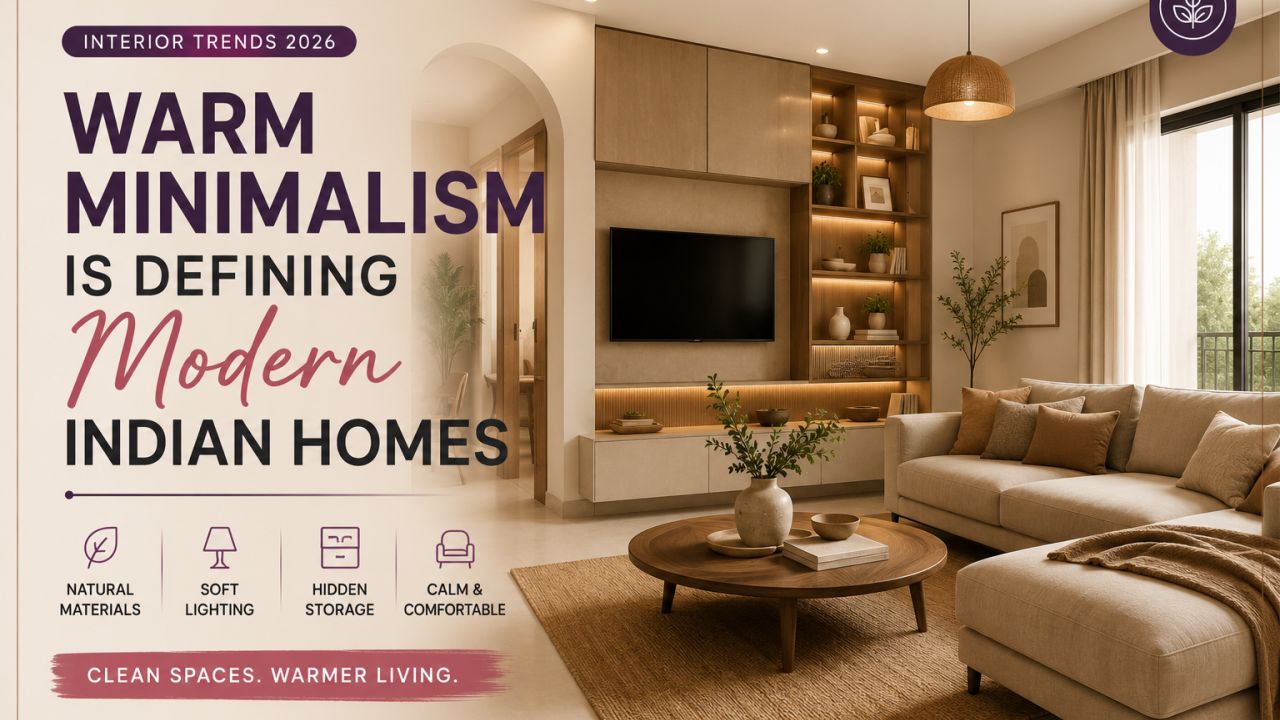
Warm Minimalism Is Defining Modern Indian Homes
Indian homeowners are choosing interiors that feel peaceful, practical, and timeless. The shift is clear: homes no longer need heavy furniture, glossy finishes, or too many decorative items to look premium.
Warm minimalism combines the clean look of minimal design with the comfort of natural, lived-in interiors. It is not empty design. It is thoughtful design.
A modern home does not need more things. It needs better decisions.
What Warm Minimalism Means
Warm minimalism is a design approach where every element has a purpose. The home feels open, calm, and uncluttered, but still warm enough for everyday family life.
- Clean layouts without unnecessary furniture
- Warm neutral colours instead of cold whites and greys
- Natural materials like wood, stone, cane, linen, and jute
- Soft lighting that creates a relaxed mood
- Hidden storage that keeps clutter away
- Simple decor that feels intentional
Key Elements of a Warm Minimal Home
Warm Neutral Colours
Beige, cream, greige, taupe, clay, sand, soft brown, and muted olive create a calm and premium base.
Natural Materials
Wood, stone, cane, jute, linen, cotton, and matte finishes add depth without visual clutter.
Soft Lighting
Warm lights, cove lights, pendant lights, lamps, and indirect lighting make rooms feel inviting.
Hidden Storage
Closed cabinets, storage beds, full-height wardrobes, and clean TV units keep the home organised.
Room-Wise Decision Table
Warm minimalism works best when each room is planned according to its purpose.
| Room | Best Decision | What It Improves |
|---|---|---|
| Living Room | Neutral sofa, wooden TV unit, soft curtains, indoor plants, warm lighting | Comfort, openness, and visual warmth |
| Bedroom | Calm wall colours, soft headboard, warm bedside lights, clean wardrobes | Rest, calmness, and better daily use |
| Kitchen | Handleless cabinets, matte finishes, drawer storage, clean counters | Functionality and easy maintenance |
| Dining Area | Wooden table, pendant light, textured wall, minimal crockery unit | Warmth and family connection |
| Bathroom | Stone-look tiles, mirror lighting, niches, matte fixtures | Clean and spa-like experience |
| Entryway | Shoe cabinet, mirror, small bench, wall light | Better first impression and daily convenience |
Why Homeowners Are Choosing This Style
- It makes small homes feel bigger: Light colours and simple layouts create more visual space.
- It is easier to maintain: Closed storage and clean surfaces reduce visible clutter.
- It looks premium without excess: Natural textures and warm lighting create quiet luxury.
- It supports family life: The home feels calm but not too delicate or showroom-like.
- It ages better: Warm neutrals and natural finishes stay relevant longer than loud trends.
Material Decisions Matter More Than Decoration
In warm minimalism, the material itself becomes the design. A wooden cabinet, textured wall, stone counter, linen curtain, woven basket, or clay planter can add character without adding too many objects.
| Material Choice | Best Use | Design Impact |
|---|---|---|
| Wood Finish | TV units, wardrobes, kitchens, wall panels | Adds warmth and natural depth |
| Linen / Cotton | Curtains, cushions, bedding | Creates softness and comfort |
| Stone Texture | Bathrooms, counters, feature walls | Adds premium and timeless character |
| Cane / Jute | Chairs, baskets, rugs, decor | Brings natural Indian warmth |
| Matte Finish | Cabinets, tiles, wardrobes, walls | Looks calm and refined |
Decisions to Take Before Finalising the Design
- Fix the colour palette: Decide whether the home will use beige, greige, cream, clay, taupe, or warm white.
- Plan storage first: Minimal homes need strong hidden storage to stay clean.
- Limit visible finishes: Too many laminates, tiles, and textures can break the calm look.
- Plan lighting early: Warm lighting should be part of electrical planning, not an afterthought.
- Choose comfort-first furniture: Minimal furniture should still feel usable and comfortable.
- Use texture instead of clutter: Add interest through materials, not too many decor pieces.
- Check maintenance: Select finishes that suit dust, cooking, children, pets, and daily Indian home use.
Common Mistakes to Avoid
- Using too much white and grey without warmth
- Adding too many decorative items
- Ignoring storage while trying to create a clean look
- Using open shelves everywhere
- Mixing too many colours and finishes
- Using harsh white lights in living rooms and bedrooms
- Choosing furniture only for looks, not comfort
- Making the home feel like a showroom instead of a lived-in space
Quotation Comparison Checklist
When comparing interior designers or companies, homeowners should check more than the final price.
| Check Point | What to Ask |
|---|---|
| Storage Coverage | Are wardrobes, kitchen units, TV units, and hidden storage clearly included? |
| Material Quality | Are the laminates, boards, hardware, and finishes durable for daily use? |
| Lighting Plan | Is warm lighting planned room-wise before electrical work? |
| Colour Consistency | Will the full home feel connected or like separate random rooms? |
| Maintenance | Are the finishes practical for Indian homes, dust, cooking, and regular cleaning? |
| Long-Term Value | Will the design remain useful and beautiful after everyday living starts? |
Warm Minimalism Is Not Less Design. It Is Better Design.
A warm minimal home feels calm, spacious, premium, and practical because every decision has a purpose. It removes visual noise, keeps comfort, and creates interiors that are easier to live with every day.
FAQs About Warm Minimalism in Indian Homes
What is warm minimalism in home interiors?
Warm minimalism is an interior style that combines clean layouts with warm colours, natural materials, soft lighting, hidden storage, and comfortable textures.
Is warm minimalism good for Indian homes?
Yes. It works well for Indian homes because it keeps spaces clean, open, practical, and comfortable for everyday family life.
Which colours work best for warm minimal interiors?
Beige, cream, greige, taupe, clay, sand, soft brown, muted olive, and warm white work well for this style.
Does warm minimalism need expensive materials?
Not always. The style depends more on smart material selection, proper lighting, hidden storage, and balanced colours than on expensive items.
Why is storage important in warm minimal homes?
Storage keeps daily clutter hidden. Without proper storage, a minimal home quickly starts looking messy and incomplete.
What should homeowners check before choosing this style?
Homeowners should check colour palette, storage, material quality, lighting plan, furniture comfort, maintenance, and long-term usability.