
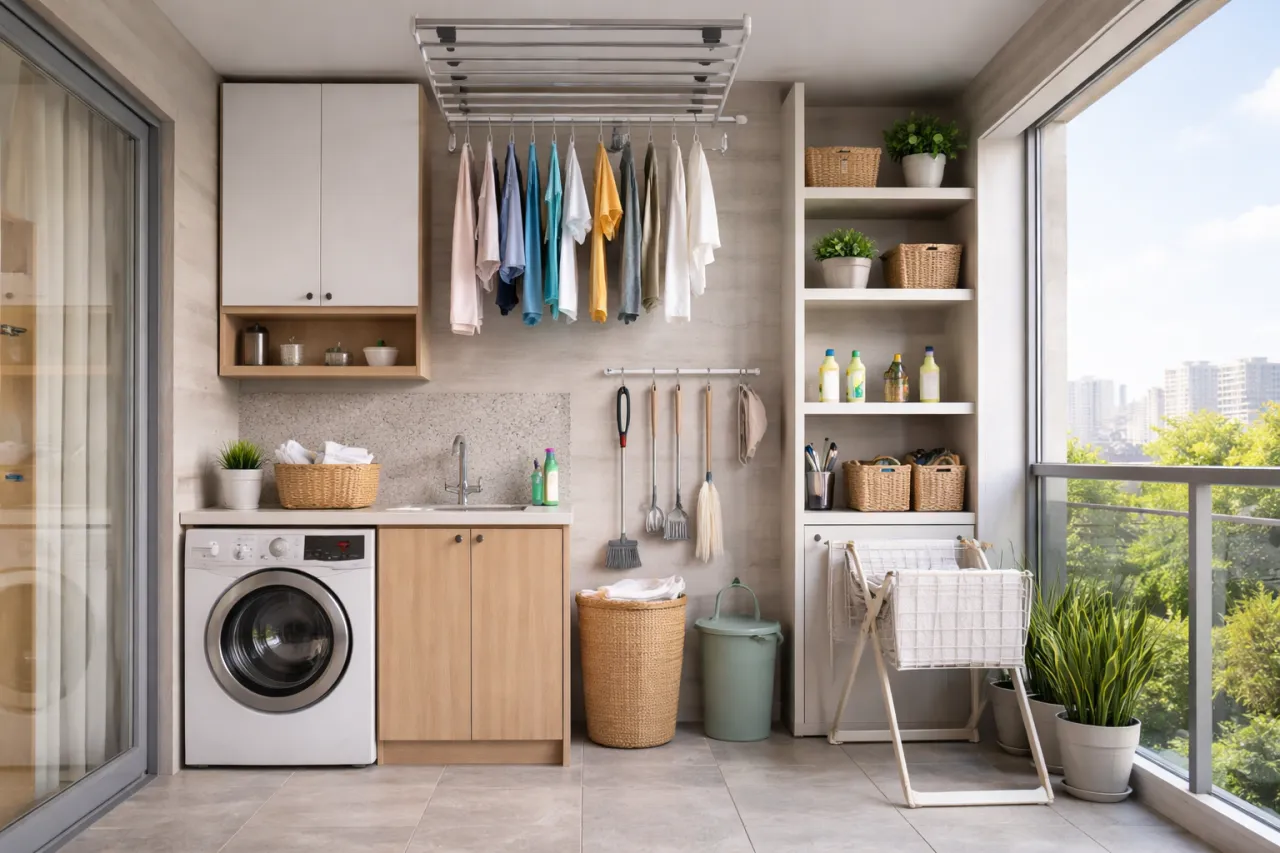
Transform Your Dry Balcony into a Functional and Organized Utility Zone
A dry balcony may not be the first space that comes to mind when planning home interiors, but it is one of the hardest-working corners of the house. It supports everyday tasks like laundry, cleaning, drying clothes, storing essentials, and managing household utility work. When designed well, this compact area can make daily life easier, reduce clutter inside the home, and add real functional value to the overall layout.
In many homes, the dry balcony is treated as an afterthought and ends up becoming a crowded space filled with detergent bottles, buckets, cleaning tools, and drying stands. But with thoughtful planning, it can be transformed into an organized, efficient, and visually neat utility zone. A well-designed dry balcony is not only practical but also helps the kitchen and service areas feel cleaner and better managed.
This guide explores how to design a functional dry balcony with smart utility ideas, better storage, efficient laundry planning, and space-saving solutions that work beautifully in modern homes.
What Is a Dry Balcony in a Home?
A dry balcony is usually a utility space attached to the kitchen or service side of the house. In apartments and modern homes, it is commonly used for washing clothes, drying laundry, storing cleaning supplies, placing the washing machine, and handling daily household chores away from the main living spaces.
Because this area is used so often, it deserves proper design attention. A functional dry balcony should support movement, storage, ventilation, maintenance, and daily work without feeling crowded or messy.
Why a Functional Dry Balcony Matters
A well-planned dry balcony improves much more than just utility. It creates better organization, makes household chores easier, and prevents daily-use items from spreading into the kitchen or other parts of the house.
A smart dry balcony design can help with:
- Better laundry management
- Cleaner kitchen and service areas
- Efficient storage of utility items
- Easier drying of clothes
- Improved ventilation and hygiene
- A more organized everyday routine
In smaller homes especially, every square foot matters. That is why turning the dry balcony into a functional utility space can make a big difference in daily living.
Start by Defining the Purpose of the Dry Balcony
Before designing the space, it is important to understand how the dry balcony will be used. Some homes need it mainly for laundry, while others need a combination of washing, drying, utility storage, and cleaning support.
Ask practical questions such as:
- Will this area be used mostly for washing clothes?
- Do you need space for a dryer or only a washing machine?
- Will you store mops, buckets, detergents, and cleaning products here?
- Do you need a small sink for utility washing?
- Will clothes be dried here every day?
Once the main needs are clear, the layout can be planned much more effectively.
Plan the Washing Machine Area Carefully
The washing machine is often the most important element in a dry balcony. Its position should be practical, easy to access, and close to the water inlet and drainage point. It should not interrupt movement or make the space feel blocked.
In compact dry balconies, a front-load washing machine often works well because the top can be used as a counter for folding clothes or keeping laundry baskets. In some homes, stacking the washer and dryer can save floor space and create more room for storage.
A small working counter beside or above the machine can also make daily chores much easier. This space can be used for sorting clothes, folding laundry, or keeping detergents within reach.
Add Smart Storage for Daily Utility Needs
Storage is one of the most important features in a functional dry balcony. Without proper storage, the space can quickly become cluttered and difficult to use.
Good dry balcony storage ideas include:
- Wall-mounted cabinets for detergents and cleaning supplies
- Open shelves for frequently used items
- Overhead storage units to use upper wall space
- Pull-out organizers for narrow gaps
- Hooks for mops, brooms, and dustpans
- Slim baskets for laundry accessories
Closed cabinets are especially useful because they hide visual clutter and make the area look cleaner. Open shelves can still work well when arranged neatly and used only for everyday essentials.
Use Vertical Space to Save Floor Area
Most dry balconies are compact, which makes vertical storage extremely useful. Instead of filling the floor with buckets, stands, and baskets, it is better to use the walls and ceiling intelligently.
Wall-mounted shelves, hanging rods, foldable racks, and tall cabinets can help increase storage without reducing walking space. Ceiling-mounted drying systems are also a great option for homes where floor area is limited.
Using vertical space helps the dry balcony feel more open, efficient, and easy to maintain.
Choose the Right Clothes Drying System
Since drying clothes is one of the main functions of a dry balcony, the drying setup should be carefully chosen. Traditional floor drying stands can occupy too much space and make the balcony feel crowded.
More efficient options include:
- Foldable wall-mounted drying racks
- Ceiling-mounted pulley systems
- Retractable rods
- Slim hanging bars for smaller loads
- Fixed overhead drying units for daily use
The best solution depends on the size of the balcony, the family’s laundry volume, and the available ventilation. A smart drying setup can make the area much more user-friendly and organized.
Add a Utility Sink if Space Allows
A small utility sink can add a lot of function to a dry balcony. It can be used for washing delicate clothes, rinsing mops, cleaning buckets, soaking garments, or handling quick cleaning tasks.
Even a compact sink can make the utility area more versatile. It becomes especially helpful in larger households where the dry balcony is used actively every day. If included, it should be planned with good drainage and practical counter space nearby.
Choose Easy-to-Maintain Materials
Since the dry balcony deals with water, detergent, dirt, and regular utility work, the materials used here should be chosen for durability and easy maintenance.
Good material choices include:
- Anti-skid floor tiles
- Moisture-resistant wall finishes
- Waterproof laminates for storage units
- Durable stone or compact countertops
- Rust-resistant hardware and fittings
Avoid materials that can get damaged easily by moisture or require too much upkeep. The goal is to make the space functional, hygienic, and easy to clean.
Focus on Ventilation and Airflow
Ventilation is one of the most important aspects of dry balcony design. Since this space often handles wet clothes, laundry work, and water use, it needs proper airflow to stay fresh and hygienic.
A well-ventilated dry balcony helps:
- Clothes dry faster
- Moisture reduce naturally
- Bad smells stay under control
- Mold and mildew risks decrease
- The area feel cleaner and healthier
If the balcony is enclosed, windows, sliding vents, or exhaust systems may be needed. In semi-open balconies, natural ventilation usually works well if the layout is not overcrowded.
Keep the Design Simple and Neat
Even though the dry balcony is a utility area, it should still feel visually organized. A neat utility space creates a better daily experience and prevents the house from feeling cluttered.
Use light and neutral shades where possible, especially in smaller balconies. Matching cabinets, simple finishes, concealed storage, and a clutter-free layout can make the area feel more polished.
The goal is not to make the dry balcony decorative in a luxury sense, but to make it look clean, well-planned, and easy to use.
Lighting Matters More Than You Think
Many dry balconies do not receive strong natural light throughout the day, especially in apartments. That is why proper artificial lighting is important.
Good utility lighting helps with:
- Sorting laundry
- Using the washing machine
- Cleaning the area properly
- Finding stored items easily
- Making evening chores more comfortable
A bright ceiling light or focused wall-mounted light usually works well. In larger utility zones, under-cabinet or shelf lighting can add extra convenience.
Safety Should Always Be Part of the Design
A dry balcony is a work zone, so safety should not be ignored. Since water and electricity may be used close together, careful planning is essential.
Important safety points include:
- Anti-skid flooring
- Proper drainage slope
- Safe electrical points for machines
- Water-resistant finishes
- Secure fittings for shelves and drying systems
- Enough walking space to avoid accidents
A functional dry balcony should be practical, but it should also feel safe and reliable for daily use.
Functional Dry Balcony Ideas for Small Homes
Small dry balconies can still work beautifully with the right approach. The key is to avoid overfilling the area and focus only on what is truly needed.
For compact dry balconies:
- Use wall-mounted drying racks instead of floor stands
- Install cabinets above the washing machine
- Choose foldable or retractable utility elements
- Keep the color palette light
- Use slim storage solutions
- Avoid storing extra unused household items
A small utility space feels much better when every item has a purpose.
How to Make a Dry Balcony Look More Organized
If you want the dry balcony to feel clean and well-designed, small details matter. You do not need expensive décor, but you do need order.
A more organized dry balcony usually includes:
- Hidden storage for supplies
- A designated place for each item
- Proper cable and pipe management
- Minimal open clutter
- Easy-to-clean finishes
- Consistent materials and colors
When the layout is tidy, even daily chores feel lighter and more manageable.
Final Thoughts
Designing a functional dry balcony is about turning a service area into a smart and efficient part of the home. It may not be the most glamorous space, but it plays a major role in everyday life. When planned properly, it can support laundry, storage, cleaning, and drying needs without feeling cramped or chaotic.
A good dry balcony design combines smart storage, easy maintenance, proper ventilation, safe planning, and practical utility solutions. Whether your home has a small apartment utility balcony or a larger service zone, thoughtful design can make the space cleaner, more useful, and far more comfortable to use every day.
A well-designed home is not just about the rooms people see first. It is also about the spaces that quietly make daily life work better.
Turn this idea into a plan for your home
Visualise your space, understand the likely budget, or find a professional who can bring the idea to life.