
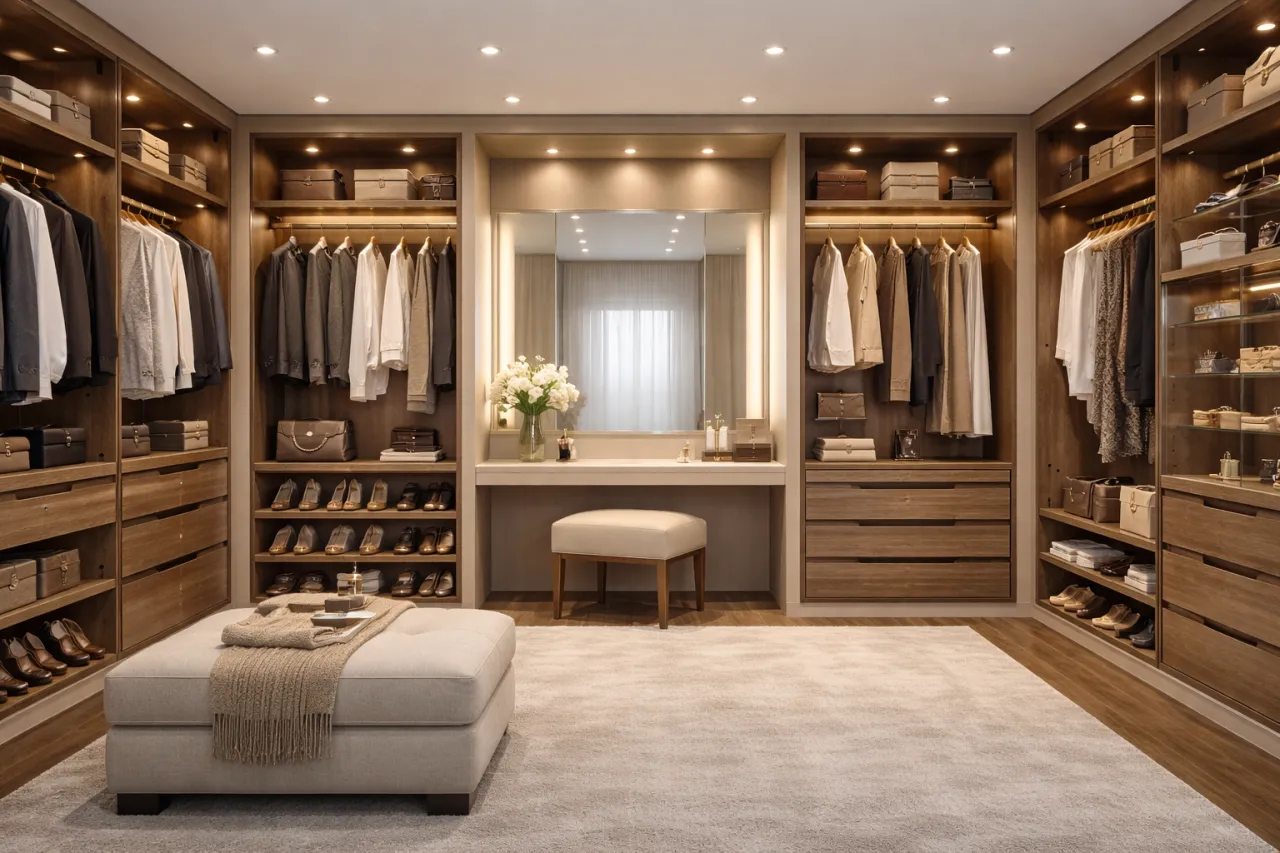
The Ultimate Guide to Designing a Functional Walk-In Wardrobe
A walk-in wardrobe should do more than look luxurious. At its best, it makes everyday life easier. It helps keep clothing, shoes, and accessories organized, reduces bedroom clutter, and creates a calmer, more efficient routine. When designed well, a walk-in wardrobe feels less like extra storage and more like a thoughtfully planned personal space.
The key is to balance style with function. A beautiful wardrobe that lacks proper lighting, circulation, or practical storage will quickly feel inconvenient. A well-designed one, on the other hand, makes dressing easier, keeps essentials within reach, and uses space intelligently. Whether your wardrobe is compact or spacious, smart planning can make it highly functional and visually refined.
Start with What You Actually Need to Store
Before thinking about finishes or layouts, begin with your real storage needs. A wardrobe works best when it is designed around daily habits, not generic storage ideas.
Think about:
- how many clothes need hanging space
- how many items are better folded
- whether you need more drawers for smaller items
- how many shoes, bags, and accessories need dedicated sections
- whether luggage or seasonal clothing should also be stored here
This step helps create a wardrobe that feels personal and practical.
Choose the Right Layout
The layout depends on the size and shape of the available space. The goal is to create enough storage while still allowing comfortable movement.
Single-Wall Layout
Storage runs along one wall with open space in front.
Best for: compact homes and narrow dressing spaces
Parallel Layout
Storage is placed on two opposite sides with a passage in between.
Best for: medium-sized walk-in wardrobes and balanced storage planning
L-Shaped Layout
Two connected walls are used for storage.
Best for: corner wardrobe areas and smaller but efficient layouts
U-Shaped Layout
Three sides are used for storage.
Best for: larger wardrobe rooms and maximum storage capacity
A good layout should never feel cramped. Easy circulation matters just as much as storage.
Balance Hanging, Shelves, and Drawers
One of the most important parts of wardrobe design is getting the storage mix right. Too many shelves or too little hanging space can make the wardrobe harder to use.
Hanging Space
Plan separate hanging sections for:
- short garments like shirts, trousers, and jackets
- long garments like dresses, sarees, coats, and gowns
Shelves
Shelves are useful for folded clothes, handbags, boxes, and neatly arranged essentials.
Drawers
Drawers work best for smaller items such as:
- innerwear
- nightwear
- accessories
- watches or jewelry
A functional wardrobe is rarely about having more storage. It is about having the right kind of storage.
Keep Everyday Items Easy to Reach
The most frequently used items should always be placed at the most accessible height. Occasion wear, luggage, and seasonal clothing can go in higher or less prominent sections.
This simple planning makes a big difference in daily comfort. A wardrobe should save time, not create extra effort.
Include Proper Shoe and Accessory Storage
Shoes and accessories often create the most clutter when they do not have a dedicated place. Good wardrobe design should include organized solutions for:
- shoes
- belts
- scarves
- ties
- handbags
- jewelry
- sunglasses
Useful options include:
- pull-out shoe trays
- open shoe racks
- divided drawers
- accessory hooks
- bag shelves
- velvet-lined organizers for delicate items
These smaller storage details make the wardrobe feel complete and highly usable.
Plan Lighting Carefully
Lighting is essential in a walk-in wardrobe. It should be bright enough for choosing clothes and dressing comfortably, while also making the space feel polished.
A practical lighting plan may include:
- ceiling lighting for overall brightness
- LED strip lights inside shelves
- lighting under hanging sections
- mirror lighting if there is a dressing area
Good lighting improves both function and atmosphere.
Add a Mirror in the Right Place
A walk-in wardrobe should ideally include a full-length mirror or a well-placed dressing mirror. It improves usability and also helps the space feel more open.
In smaller wardrobes, a mirror can visually expand the space. In larger ones, it becomes an important part of the dressing experience.
Choose Materials That Are Durable and Easy to Maintain
Wardrobe finishes should look good, but they also need to handle daily use. Laminates, veneer finishes, matte panels, and textured surfaces are often practical choices.
When choosing materials, focus on:
- durability
- ease of cleaning
- resistance to daily wear
- consistency with the bedroom design
A wardrobe should remain easy to maintain over time, not just look attractive at first.
Decide Between Open and Closed Storage
Some walk-in wardrobes use open shelving for a boutique-like look, while others use shutters or partial closures for a cleaner feel.
Open Storage
Works well for visible, curated storage and a more luxurious display style.
Closed or Semi-Closed Storage
Helps reduce visual clutter and protect items from dust.
A combination of both often works best. Open sections can display selected items, while closed sections keep the overall space tidy.
Do Not Ignore Ventilation
A wardrobe stores fabrics, leather, and daily-use essentials, so airflow matters. A closed space without ventilation can start to feel heavy or musty.
If possible, allow for:
- air circulation
- breathing space between sections
- ventilated panels in selected areas
This is especially useful in humid climates.
Add Seating If Space Allows
In a larger walk-in wardrobe, a small bench or ottoman can improve comfort. It is useful for:
- wearing shoes
- placing selected outfits
- adding a more complete dressing-room feel
It is not essential in every wardrobe, but it is a valuable addition where space permits.
Keep the Design Calm and Well Organized
A walk-in wardrobe should feel visually clean. Since it is used at the start and end of the day, the space should support a calm routine rather than feel busy or overcrowded.
A more polished wardrobe usually includes:
- simple finishes
- balanced storage sections
- good lighting
- minimal clutter
- clear organization
The more thoughtful the structure, the more luxurious the wardrobe will feel.
Common Mistakes to Avoid
Some common design mistakes include:
- planning only for looks and not daily use
- ignoring actual clothing volume
- creating poor circulation
- forgetting shoe and accessory storage
- using too many open shelves without organization
- not adding enough lighting
- placing everyday items too high or too low
A walk-in wardrobe should be built around routine, not just visual inspiration.
Final Thoughts
A walk-in wardrobe is most successful when it feels effortless to use. Good design is not only about elegant finishes or large storage walls. It is about making everyday dressing, organizing, and storing feel easy and intuitive.
Whether your walk-in wardrobe is compact or spacious, the right mix of layout, storage planning, lighting, accessibility, and material selection can turn it into one of the most functional spaces in your home. When style and practicality come together well, a walk-in wardrobe becomes more than a luxury feature. It becomes a daily convenience.
Turn this idea into a plan for your home
Visualise your space, understand the likely budget, or find a professional who can bring the idea to life.