
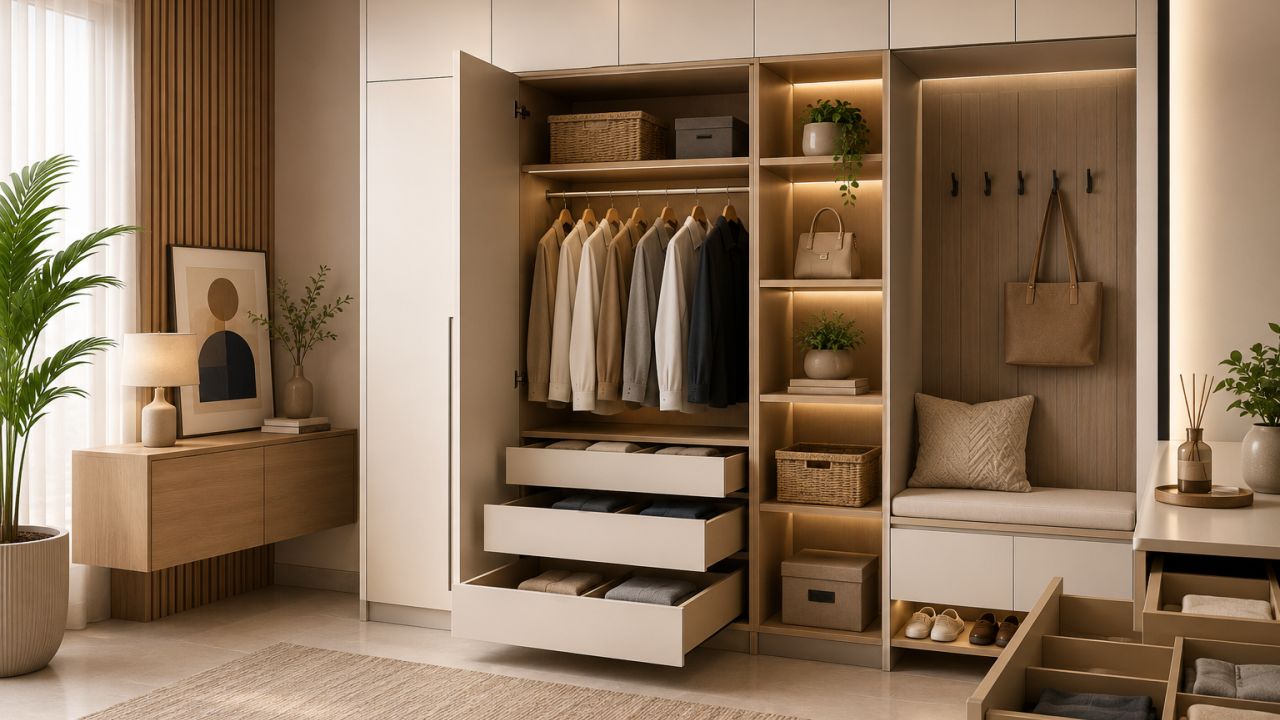
Storage Is the Real Luxury in Indian Homes
In Indian homes, luxury is not only about premium flooring, designer furniture, imported lights, or expensive finishes. Real luxury is having a home that stays organised, comfortable, and easy to use every day.
A beautiful home can start looking crowded very quickly when storage is not planned properly. Bags move to corners, shoes collect near the entrance, kitchen counters get filled, wardrobes overflow, and daily-use items remain visible everywhere.
This is why storage should not be treated as a small add-on at the end of an interior project. It should be one of the first decisions homeowners make before finalising layout, furniture, carpentry, and budget.
Furniture makes a home look designed. Storage makes a home work every day.
Storage Decides How Comfortable a Home Feels
Every home collects more things over time: clothes, shoes, bags, utensils, groceries, documents, appliances, toys, cleaning items, festival decor, extra bedding, and daily essentials.
When these items do not have a fixed place, the home begins to feel smaller than it actually is. Surfaces get occupied, corners become dumping areas, and even a newly designed room starts losing its clean look.
Good storage protects the design. It keeps visible spaces clean while making sure important items remain easy to access.
Storage Helps Homeowners Make Better Interior Decisions
Storage planning gives clarity before money is spent. It helps homeowners understand what needs to be built, what can be avoided, and where the budget should go.
It Defines the Layout
Wardrobes, kitchen cabinets, TV units, shoe racks, lofts, and utility cabinets decide how the home will be used every day.
It Saves Floor Space
Built-in, wall-mounted, vertical, and hidden storage keeps rooms open without adding too many loose furniture pieces.
It Controls the Budget
Storage-heavy interiors usually cost more, but planning them early prevents random additions and rework later.
It Reduces Daily Stress
A home feels calmer when things are easy to find, easy to keep back, and not constantly visible on counters and furniture.
Every Room Needs a Different Storage Plan
Storage should match the purpose of each room. A kitchen needs quick access. A bedroom needs capacity. A living room needs hidden organisation. An entryway needs storage for fast daily use.
TV units, drawers, closed cabinets, display shelves, and concealed storage help manage remotes, wires, books, documents, decor, and daily-use items.
Wardrobes, lofts, bedside storage, hydraulic beds, dresser units, and internal organisers decide how clean and comfortable the bedroom remains after daily use.
Tall units, corner units, pull-outs, pantry cabinets, drawer organisers, bottle pull-outs, and appliance storage make the kitchen more functional.
Shoe racks, key holders, bag hooks, seating benches, and slim cabinets keep the entrance cleaner and more welcoming.
Toy storage, study cabinets, open shelves, wardrobes, and under-bed storage help the room stay flexible as children grow.
Cleaning supplies, detergents, buckets, laundry baskets, ironing boards, and extra household items need dedicated storage to avoid clutter.
Storage Decisions to Make Before Interior Work Starts
The best storage is planned before carpentry, electrical points, furniture placement, and quotation finalisation. These decisions reduce confusion during design discussions.
- Open vs closed storage: Open shelves look light, but closed cabinets are better for hiding everyday clutter.
- Wardrobe size: Plan for clothes, accessories, luggage, bedding, bags, and seasonal items.
- Loft requirement: Lofts work well for suitcases, festival items, extra bedding, and rarely used objects.
- Kitchen storage type: Drawers, pull-outs, tall units, pantry units, and corner solutions improve daily kitchen use.
- Internal organisers: Shelves, partitions, baskets, drawers, trays, and channels decide the actual usability of a cabinet.
- Hidden storage: Beds, benches, window seating, study tables, and TV units can add storage without making the room look heavy.
- Future needs: Growing families need flexible storage that can handle more items over time.
Small Homes Need Smarter Storage, Not More Furniture
In 1BHK, 2BHK, and compact 3BHK homes, every inch matters. Adding more cupboards and loose furniture can make the home feel crowded. Smart storage uses height, wall depth, corners, and hidden areas without blocking movement.
Full-height wardrobes, wall-mounted TV units, storage beds, foldable study units, slim shoe racks, mirror cabinets, and overhead cabinets can increase storage without reducing openness.
The goal is not to cover every wall with cabinets. The goal is to place storage where it supports daily life without making the home feel heavy.
Good Storage Keeps Interiors Premium for Longer
New interiors look beautiful on the first day. The real test begins after people start living in the home. Bags come near the door, utensils crowd the counter, clothes pile up on chairs, toys spread across the floor, and documents land on the dining table.
Good storage prevents this slow visual damage. It protects the original design by giving every object a proper place.
A premium home is not the one that looks beautiful only in photos. A premium home is the one that remains beautiful during everyday life.
Storage Mistakes That Make Homes Feel Smaller
- Planning wardrobes only for hanging clothes and ignoring bags, bedding, and luggage.
- Using too many open shelves in areas where clutter builds quickly.
- Depending only on basic kitchen cabinets without enough drawers or pull-outs.
- Forgetting shoe storage near the entrance.
- Ignoring utility storage for cleaning and laundry items.
- Adding bulky furniture instead of built-in or wall-mounted storage.
- Not planning storage according to family size and future needs.
- Choosing only looks and ignoring daily usability.
Storage Makes Quotation Comparison Easier
Interior quotations often look confusing because every designer or company may include different units, materials, finishes, and accessories. A clear storage plan helps homeowners compare quotations more confidently.
- Compare total storage area: Check how many wardrobes, cabinets, drawers, lofts, and units are included.
- Compare internal details: Shelves, drawers, baskets, channels, hinges, and organisers change both cost and usability.
- Compare material quality: Storage units are used daily, so board quality, hardware, and finish matter.
- Compare room-wise coverage: Make sure kitchen, bedrooms, living room, entryway, and utility storage are clearly mentioned.
- Compare long-term value: Cheaper storage may save money initially but can become inconvenient if it lacks capacity or durability.
Storage Does Not Just Organise a Home. It Improves Daily Living.
A well-planned home gives every item a place, every room more breathing space, and every family member more comfort. That is why storage is not a background detail. It is one of the most important interior decisions for Indian homes.
FAQs About Storage in Indian Home Interiors
Why is storage important in Indian home interiors?
Storage keeps daily-use items organised, reduces clutter, improves comfort, and helps the home remain clean and beautiful after regular use.
Which rooms need the most storage?
Kitchens, bedrooms, living rooms, entryways, kids’ rooms, and utility areas usually need the most storage because they handle daily-use items, clothes, utensils, shoes, toys, and household supplies.
Is closed storage better than open storage?
Closed storage is usually better for everyday Indian homes because it hides clutter and keeps rooms looking cleaner. Open storage works best for selected decor, books, plants, and styled display areas.
How can a small home get more storage?
Small homes can use full-height wardrobes, wall-mounted units, storage beds, lofts, slim shoe racks, mirror cabinets, corner units, and multi-purpose furniture to increase storage without crowding the space.
Should storage be planned before interior work starts?
Yes. Storage should be planned before carpentry, electrical work, false ceiling work, and furniture placement. Early planning gives better layouts, cleaner execution, and more accurate quotations.
Does storage affect interior cost?
Yes. Storage affects interior cost because wardrobes, kitchen cabinets, drawers, lofts, hardware, and internal organisers are major parts of the budget. A clear storage plan helps control cost better.
What should be checked in storage quotations?
Homeowners should check the number of units, total storage area, materials, hardware, internal partitions, drawers, baskets, finishes, and room-wise coverage before comparing quotations.