
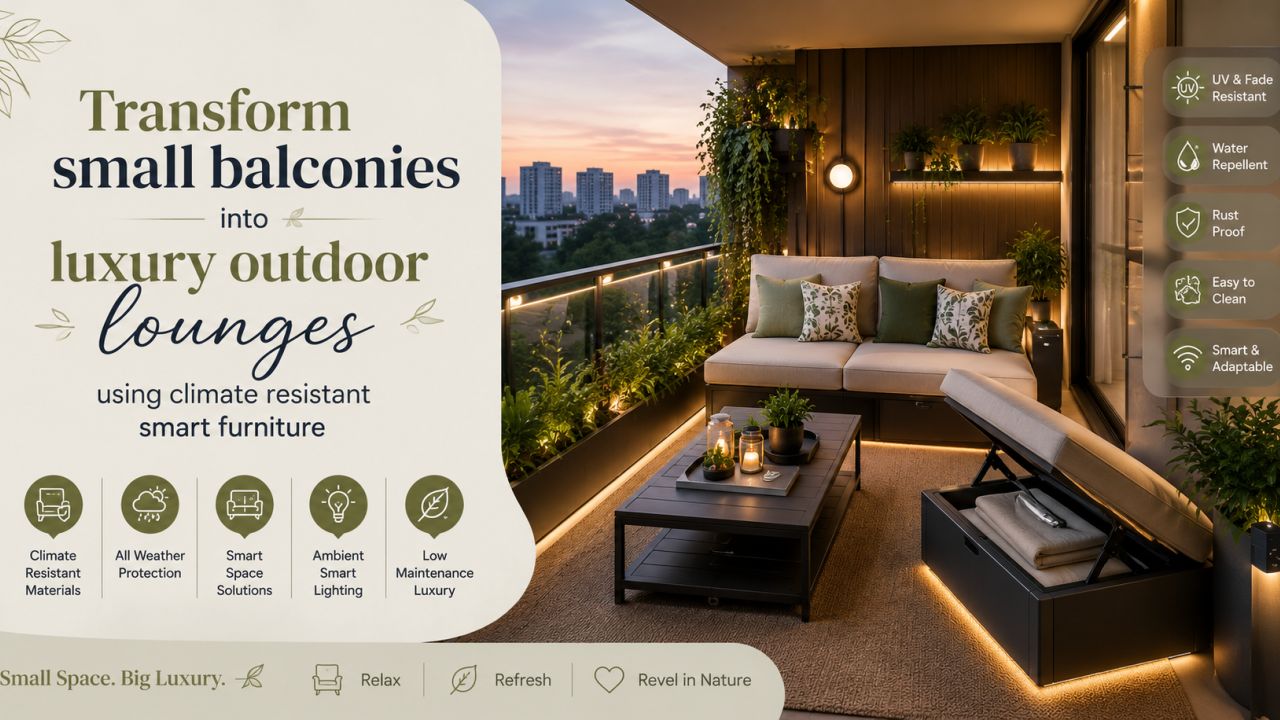
Small Balcony, Big Lounge: Climate-Ready Smart Furniture for Indian Homes
A practical planning guide for Indian homes
At 6.30 pm, the balcony often looks like the one unfinished room in an otherwise considered home: two plastic chairs, a drying rack pushed to one side and a narrow ledge collecting dust. The same few square metres can become a proper outdoor lounge, but only if the furniture is chosen for sun, rain, dust and daily family use—not just for a showroom photograph.
The idea behind transforming small balconies into luxury outdoor lounges using climate resistant smart furniture is simple: use fewer, better-coordinated pieces that work harder. A compact sofa with hidden storage, a nesting side table and a foldable dining surface may deliver more comfort than a crowded set of oversized outdoor chairs. Before buying anything, homeowners comparing designers and companies serving their area should understand what the balcony can realistically support.
Start with the balcony you actually have
Indian homes present several versions of the small balcony. A high-rise apartment may have a shallow projecting balcony with a strict railing line. A builder-floor home may offer a longer sit-out but less protection from monsoon rain. An independent house can have more freedom for planters and electrical work, while a rented apartment usually needs reversible changes. Each condition affects furniture depth, fixing methods, drainage and the amount of custom work worth paying for.
Apartment balconies
Measure the clear walking strip after accounting for the door swing, railing and any external air-conditioning unit. Prioritise lightweight modular pieces that can be moved for cleaning and that do not obstruct emergency access or the balcony drain.
Family sit-outs
If children or older family members use the space, replace sharp-edged occasional furniture with stable seating, a clear passage and a table that does not wobble. A designer should show how the layout works at peak use, not only when styled.
Rented homes
Freestanding planters, clip-on lighting and furniture with adjustable feet reduce dependency on drilling. Keep a record of what is removable and confirm the landlord’s position before adding screens, flooring or fixed shades.
Work-from-home corners
A weather-resistant lounge chair and compact work ledge can make the balcony useful during the day. Protect charging points from splash zones and avoid placing electronics directly beneath a planter or exposed drip line.
What makes outdoor furniture genuinely climate-ready?
“Outdoor” is not a material specification. A quotation should identify the frame, surface finish, cushion construction, hardware and maintenance expectation. The right combination depends on whether the balcony is fully exposed, partially covered or protected by an overhang.
- Frames: Powder-coated aluminium is often considered where low weight and resistance to moisture matter. Proper coating preparation, sealed joints and suitable fasteners are just as important as the frame label. Treated timber can bring warmth, but it needs a clear maintenance plan.
- Seating surfaces: Look for upholstery and cushion covers intended for outdoor or semi-outdoor use. Ask how quickly covers dry, whether they can be removed for washing and how replacement foam or fabric will be handled.
- Woven details: Synthetic outdoor weave can be easier to maintain than untreated natural fibre in an exposed balcony. Check the weave edges and underside; these areas often reveal whether the piece is built for regular use.
- Hardware: Hinges, screws, castors and table mechanisms should be selected for the balcony’s moisture exposure. A beautiful folding table is not smart if its mechanism corrodes or becomes unsafe after repeated use.
- Planters and flooring: Use saucers or controlled drainage, keep outlets away from watering paths and avoid covering the existing drain. Interlocking deck tiles can be useful only when they allow inspection and cleaning beneath them.
For a luxury feel, consistency matters more than ornament. One frame colour, two related textures and a restrained textile palette usually make a narrow balcony feel intentional. Add warmth with a washable runner, a lantern or a plant stand rather than filling every edge with decor.
Smart furniture is about flexibility, not gadgets
On a small balcony, smart furniture earns its place by changing function. A bench with a lift-up seat can store cushions. A nesting table can separate for guests and stack when the family needs a clear floor. A wall-mounted drop-leaf table can support breakfast without permanently consuming the passage. A slim trolley can move plants away from the wall before cleaning.
Integrated USB charging, low-voltage lighting and motorised shades may be useful, but they need careful site coordination. Outdoor electrical points should be protected, positioned away from direct splash and installed by an appropriately qualified professional. Do not allow a designer or installer to conceal a cable without showing how it can be inspected later.
For evening use
Choose layered, warm-toned lighting: a protected wall or ceiling fitting where available, supplemented by portable lights. Keep brightness comfortable for conversation and preserve a clear view rather than turning the balcony into a brightly lit display.
For morning use
A compact table, easy-clean top and movable shade can support tea or breakfast. Check whether morning sun reaches the seating and whether the selected finish becomes uncomfortably hot in direct exposure.
Compare designers by process, not by rendered image
Commercial investigation is easier when every designer is asked to respond to the same brief. Share a plan or measured dimensions, photographs taken from each corner, the number of users, exposure to rain and sun, storage needs, and whether the home is owned or rented. Then compare the response across these practical points:
- Measurement and diagnosis: Does the proposal record door clearances, railing height, drain position, AC ledge, wall condition and electrical access?
- Material clarity: Are frame finishes, fabric grades, hardware, cushion filling and care instructions named, or does the specification only say “premium outdoor furniture”?
- Execution responsibility: Who measures, orders, assembles, protects the interior during installation and removes packaging? Ask whether balcony and facade permissions are your responsibility.
- Revision limits: Find out how many layout or material revisions are included and when design changes become chargeable.
- Aftercare: Confirm what happens if a cushion cover, finish, hinge or light fails. A warranty should state exclusions and the route for raising a service request.
Browse relevant interior design posts and planning ideas before shortlisting. They can help you describe the look and functions you want, but the final decision should rest on drawings, specifications and communication quality.
Use a budget that separates furniture from site work
There is no responsible single price for a small luxury balcony. The budget changes with the number and construction of furniture pieces, custom dimensions, fabric choice, planters, flooring, lighting, privacy screens, delivery access and the amount of repair needed before installation. A high-floor apartment may also require different handling and carrying arrangements than a ground-level home.
| Budget line | What to check | Why it changes the total |
|---|---|---|
| Design and measurement | Site visit, measured drawing, layout options and revisions | More coordination is needed when the balcony connects to living, utility or electrical work. |
| Furniture | Ready-made or custom, frame material, finish, cushions, mechanisms and storage | Custom sizing and outdoor-rated components can cost more than indoor equivalents. |
| Surface and privacy | Deck tiles, screens, blinds, planter dividers and fixing method | Exposed locations, removable solutions and access around drains affect both labour and materials. |
| Lighting and power | Fixture type, cable route, protection, switches and installation | Existing points may be adequate, or the work may require additional coordination and safety checks. |
| Logistics and aftercare | Delivery, assembly, protection, cleaning and replacement terms | Restricted access, upper floors and specialist items can alter handling requirements. |
Request two totals in the proposal: the balcony package itself and optional items such as a screen, custom planter or lighting upgrade. This makes comparison fair and prevents an attractive base quote from hiding essential site work.
Test the budget before meetings
Use the interior design cost estimator to organise an initial scope. Treat the result as a planning aid, then confirm materials, quantities and site conditions with the designer.

Review the quotation line by line
Run a draft through the quotation checker to spot missing descriptions or unclear inclusions. It should support, not replace, your own questions to the designer.
Read the quotation before paying an advance
A usable quotation should let someone who did not attend the design meeting understand what will arrive, where it will go and what is excluded. For each item, look for dimensions, quantity, material, finish, colour, hardware, installation and tax treatment where applicable. “Balcony lounge set” is not enough; the document should distinguish the frame, cushions, covers, table top and storage mechanism.
- Check whether measurement, design fees, delivery, assembly, drilling, debris removal and touch-up work are included.
- Ask who owns the responsibility for waterproofing, damaged tiles, cracked plaster or an existing drain problem.
- Confirm the expected lead time, installation sequence, payment milestones and process for approving substitutions.
- Ask for care instructions and the warranty terms for furniture, fabric, finishes, lighting and electrical accessories separately.
- Use the quotation review tool or a written checklist to compare competing proposals on identical scope, not just the final number.
Red flags that deserve a pause
A designer need not have the lowest price or the largest portfolio to be a good fit. The warning signs are usually found in the process.
- A proposal uses indoor MDF, untreated fabric or ordinary steel without explaining how the material will perform in the balcony’s exposure.
- The layout places furniture over the drain, blocks the door swing or relies on heavy fixed pieces without discussing access.
- The designer promises that every finish is maintenance-free, waterproof or permanently fade-proof.
- There is pressure to pay a large advance before the scope, drawings, cancellation terms and material specifications are documented.
- Changes are discussed only on calls, with no updated quotation or approval trail.
- The quotation excludes installation, delivery or electrical work but presents the package as complete.
How WallsToWonder can support the decision
WallsToWonder is useful before and during the comparison stage. Start with Design my room to explore how a compact lounge might be arranged around your preferred seating, storage and lighting needs. If you are unsure whether your taste is contemporary, earthy, minimal or more colour-led, Find my style can help you put a clearer brief together.
Once the brief is more specific, use the design ideas collection for references and browse the designer and company directory to identify businesses serving your area. Contact shortlisted professionals with the same measurements and questions. That gives you a more meaningful basis for comparing communication, scope, material knowledge and execution planning.
The best result may be a complete custom installation, a carefully selected furniture package or a phased upgrade. A designer should be able to explain all three paths, including what you can safely purchase later and what must be coordinated before work begins.
Make the balcony feel luxurious every day
Luxury shows up in small decisions: the chair remains comfortable after a long evening, cushions have somewhere dry to go, the table does not crowd the door, and cleaning does not require dismantling the entire room. Leave enough breathing space around the furniture. Select planters that can be moved. Keep the palette disciplined and make the maintenance routine realistic for your household.
For more research, revisit the WallsToWonder posts and use the directory again when you are ready to compare designers and companies serving your area. A strong brief, a transparent quotation and a climate-aware material plan will do more for the finished balcony than an expensive accessory added at the last minute.
Frequently Asked Questions
What is the best furniture for a small balcony in India?
Choose compact modular furniture with corrosion-conscious frames, washable outdoor or semi-outdoor fabrics, stable hardware and easy movement for cleaning. The right option depends on sun, rain, wind and available storage.
How can I make a small balcony look luxurious without overcrowding it?
Use one coordinated seating group, a narrow or nesting table, layered lighting and one or two purposeful planters. Keep a clear route from the door to the railing and avoid filling every corner.
Is aluminium or wood better for an outdoor balcony lounge?
Aluminium can offer lower weight and simpler moisture management, while properly treated wood brings warmth but usually needs more maintenance. Compare the complete finish and care plan rather than the material name alone.
What should an outdoor balcony furniture quotation include?
It should list dimensions, quantities, frame and fabric specifications, finishes, hardware, installation, delivery, electrical or flooring work, exclusions, timeline, payment stages and warranty terms.
What should I ask an interior designer before paying an advance?
Ask who is responsible for measurement, permissions, drain and waterproofing issues, sourcing, substitutions, installation, damage protection, aftercare and changes. Have the agreed scope and payment schedule documented.