
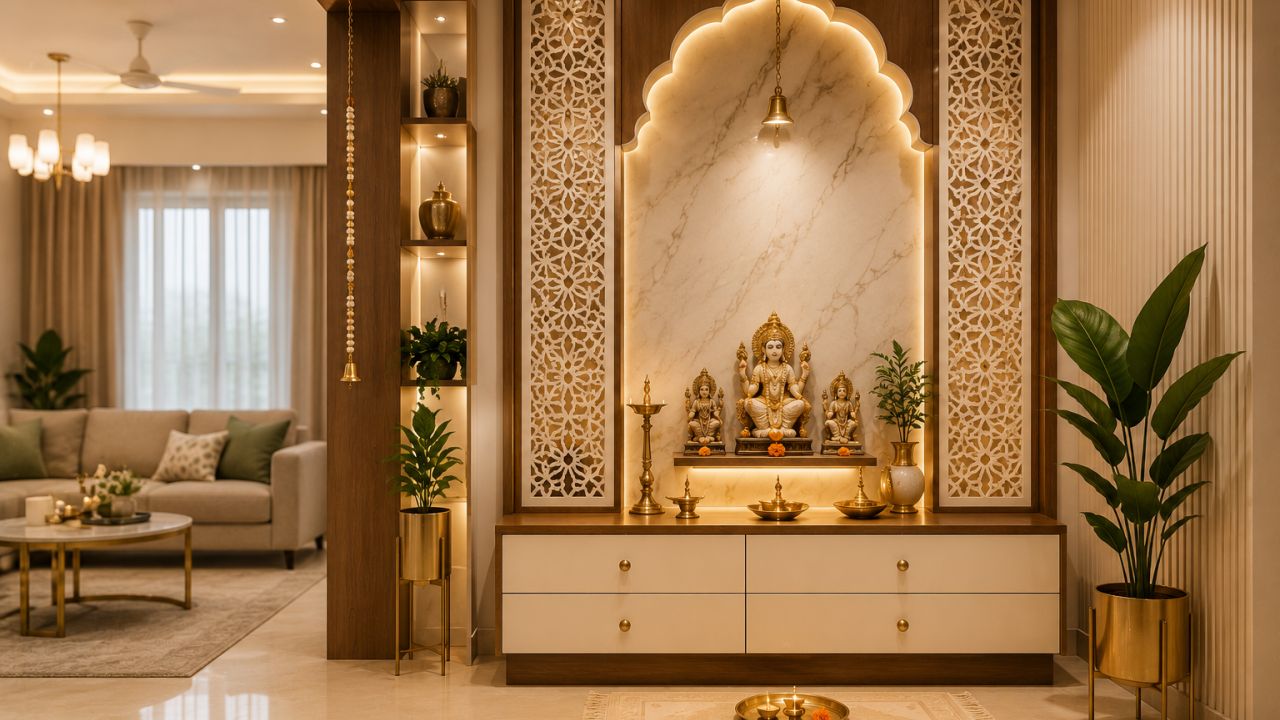
Pooja Room Design Ideas
A pooja room is one of the most peaceful and meaningful corners of an Indian home. Whether you live in a compact apartment, 2 BHK, 3 BHK, duplex, villa, or independent house, a well-designed pooja space can bring warmth, calmness, and a spiritual focal point to your interiors.
Modern pooja room design is no longer limited to a separate room. Homeowners now choose wall-mounted mandirs, compact pooja units, living room mandir designs, jaali partitions, marble-look back panels, wooden mandirs, concealed storage, warm lighting, and space-saving temple corners.
This guide covers practical pooja room design ideas, materials, lighting, storage, Vastu-friendly planning, cost ranges, and mistakes to avoid before finalising your mandir design.
Quick Pooja Room Design Ideas
The best pooja room design is the one that fits your daily prayer routine, available space, storage needs, cleaning habits, and overall home interior style.
Planning Home Interiors?
Use the WallsToWonder Interior Design Cost Estimator to understand your budget for pooja unit, modular kitchen, wardrobes, living room, bedrooms, and full home interiors.
Get Free Interior Cost Estimate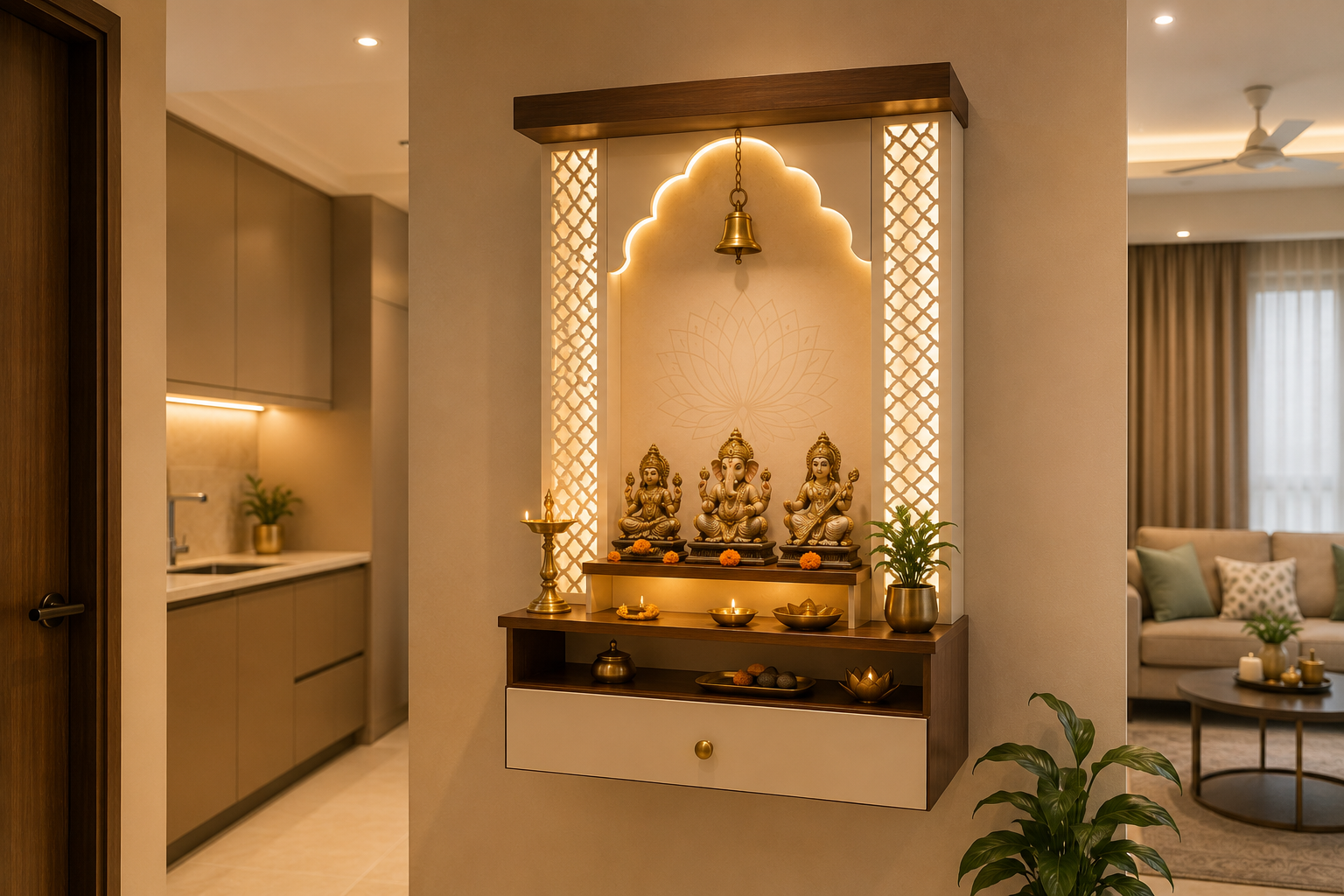
1. Wall-mounted Pooja Unit Design
A wall-mounted pooja unit is ideal for compact apartments and small homes. It saves floor space and can be placed in the living room, dining area, passage, foyer, or a quiet corner.
- Best for 1 BHK and compact 2 BHK homes
- Can include small drawers for diya, incense sticks, matchbox, and prayer books
- Looks clean with a simple back panel and warm light
- Easy to maintain if the design is minimal
Design Tip: Keep wall-mounted pooja units lightweight and practical. Avoid very heavy stone cladding or oversized shelves if the wall strength is limited.
2. Compact Pooja Cabinet for Apartments
A compact pooja cabinet is one of the most practical options for modern Indian apartments. It can be designed as a small floor-standing unit with shutters, drawers, shelves, jaali, and backlighting.
| Feature | Why It Helps |
|---|---|
| Base Drawer | Stores pooja items, cotton, diya, incense sticks, and books |
| Open Shelf | Useful for idols, lamps, bells, and small decor |
| Jaali Shutter | Adds traditional look while keeping the unit semi-private |
| Back Panel | Creates a finished premium look |
| Warm LED Light | Adds soft spiritual ambience |
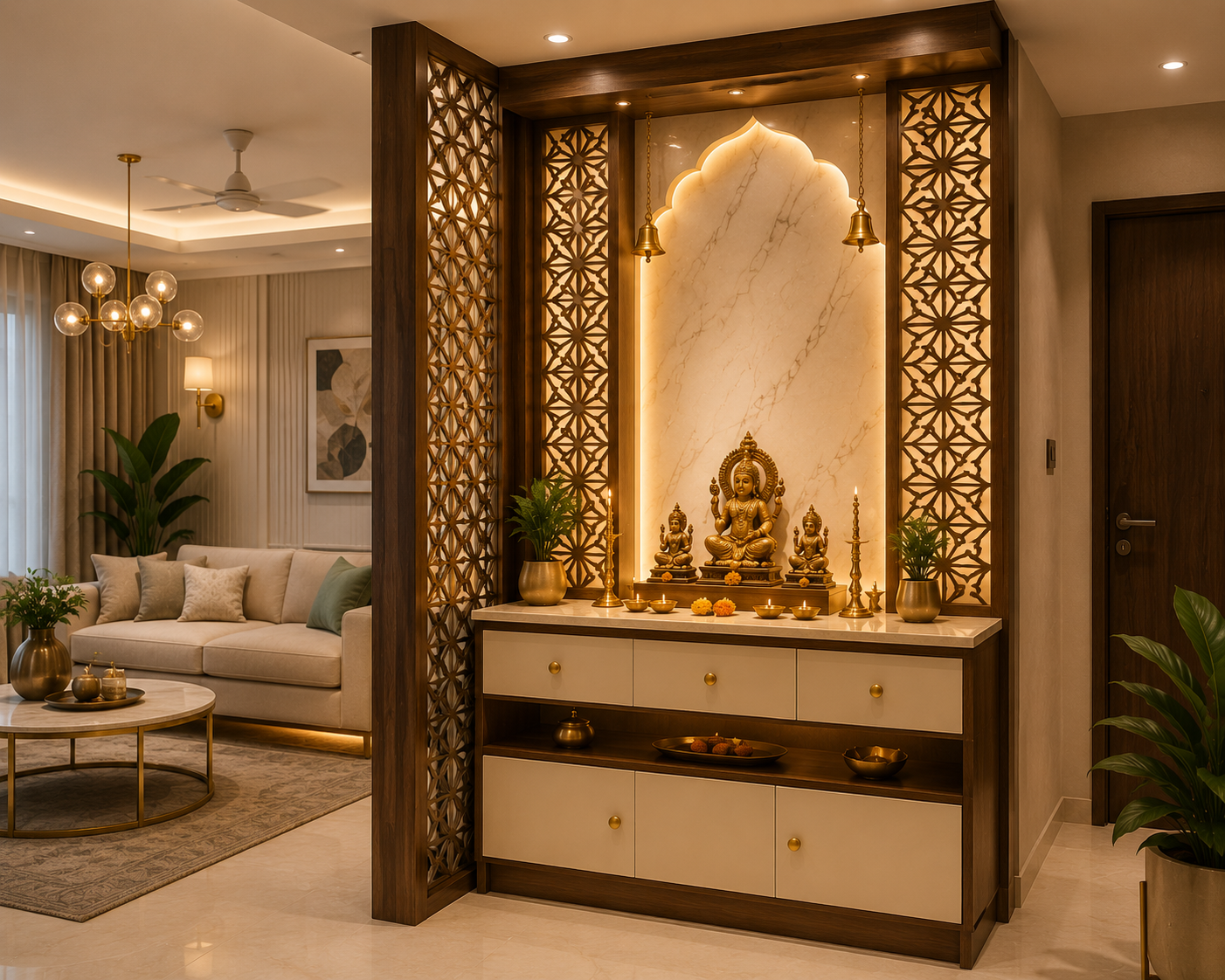
3. Pooja Room with Jaali Partition
Jaali partitions are popular in Indian pooja room interiors because they create separation without making the space feel closed. A wooden, MDF, metal, or CNC-cut jaali can be used between the living room and pooja space.
Jaali designs work beautifully with traditional, modern Indian, and contemporary interiors. You can choose floral patterns, geometric patterns, temple-style motifs, arch shapes, or simple vertical designs depending on your home style.
- Creates a semi-private prayer area
- Adds an Indian traditional touch
- Allows light and air movement
- Works well near living room, dining, and foyer areas
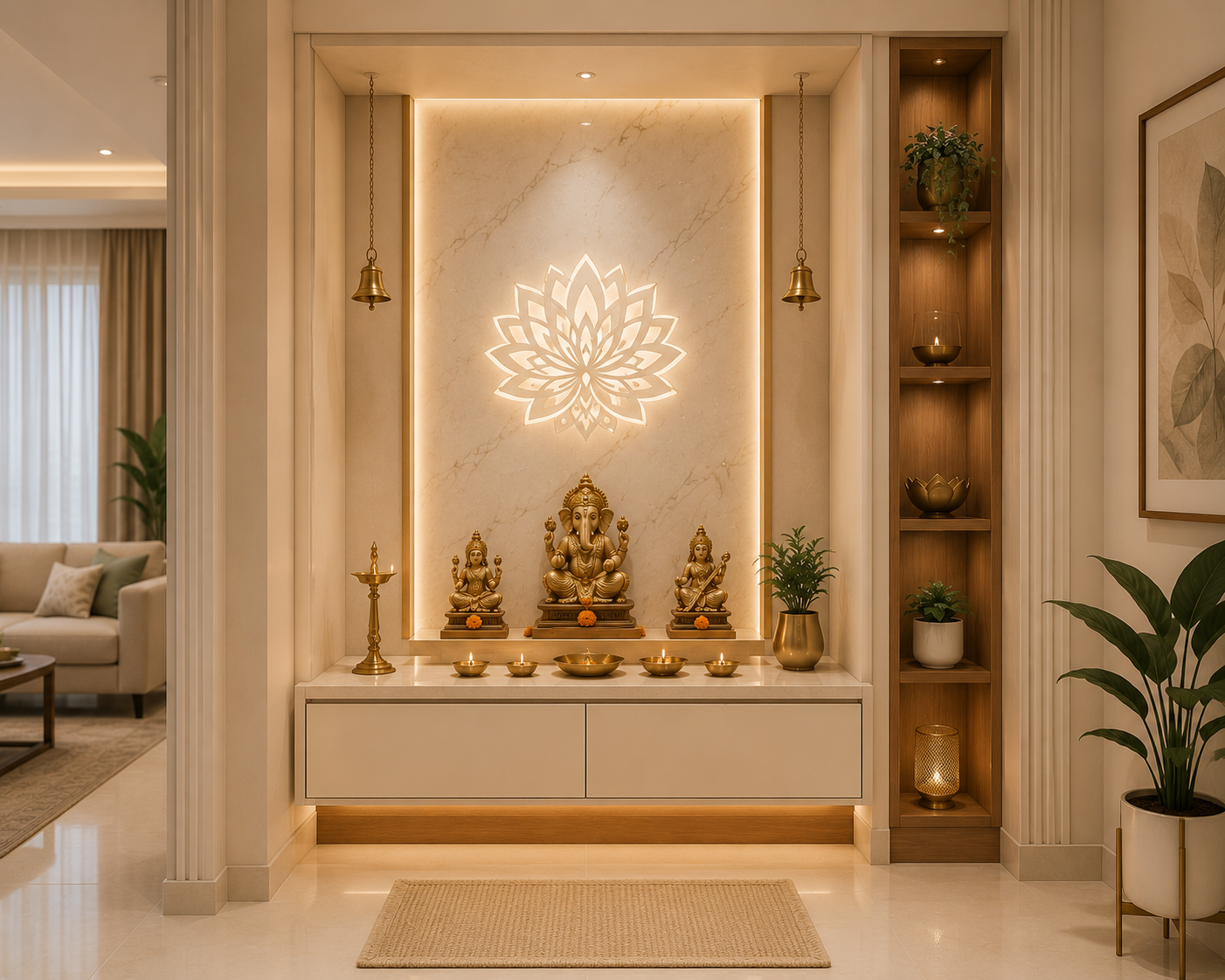
4. Modern Minimal Pooja Room Design
Modern minimal pooja room design is perfect for homeowners who prefer a clean, calm, and clutter-free look. This style uses simple lines, neutral colours, concealed storage, and soft lighting.
Keep the design simple and avoid too many decorative elements. A clean mandir unit with one highlight wall, drawer storage, and warm lighting can look premium without feeling heavy.
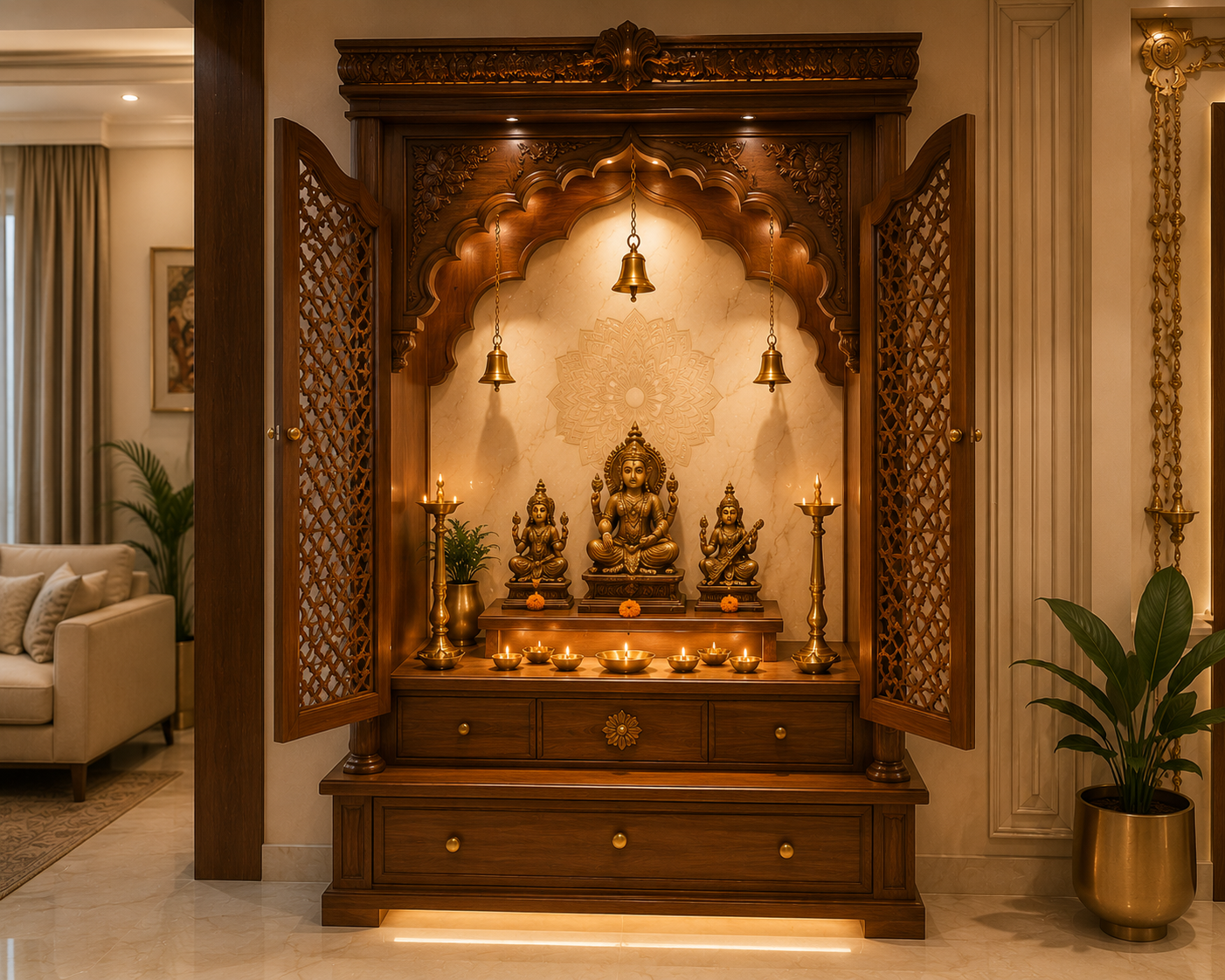
5. Traditional Wooden Mandir Design
Traditional wooden mandir designs are timeless and work well for Indian homes that prefer a warm, devotional look. Walnut wood, teak finish, carved panels, temple-style domes, bells, brass details, and arch designs can create a rich traditional feel.
You can use a fully traditional mandir for villas and larger homes or combine wooden elements with modern finishes for apartments.
| Design Element | Best Use |
|---|---|
| Wooden Arch | Adds temple-like identity |
| Carved Panel | Creates a traditional premium look |
| Brass Bells | Adds devotional charm |
| Jaali Doors | Keeps the mandir elegant and semi-closed |
| Warm Lighting | Enhances wood texture and spiritual mood |
6. Marble-look Pooja Room Design
Marble-look pooja room design gives a clean, premium, and peaceful appearance. It works well for modern apartments, luxury homes, and villas. Instead of using heavy natural marble everywhere, you can use marble-look tiles, quartz, solid surface, or laminate panels for easier maintenance.
- Best for premium modern interiors
- Looks bright and peaceful
- Pairs well with brass, gold, wood, and warm lighting
- Easy to combine with jaali, arch, and backlit panels
Maintenance Tip: Use easy-to-clean surfaces near diya and incense areas. Natural marble may stain if oil, kumkum, haldi, or smoke is not cleaned regularly.
7. Pooja Unit in Living Room
Many apartments do not have a separate pooja room, so the living room becomes the most common location for a pooja unit. The key is to design the mandir as a peaceful corner without disturbing the main seating or TV wall.
| Placement Option | Best Design Idea |
|---|---|
| Living Room Corner | Compact floor-standing mandir with drawer storage |
| Near TV Unit | Separate vertical niche with soft lighting |
| Foyer Area | Small mandir with jaali and console storage |
| Dining Side Wall | Wall-mounted or cabinet-style pooja unit |
| Passage Niche | Backlit mandir niche with compact storage |
Avoid placing the mandir too close to heavy shoe storage, cluttered corners, or noisy appliances. Keep the surrounding area calm and clean.
8. Pooja Room Design with Storage
Storage is very important in pooja room design. Even a small mandir needs space for diyas, incense sticks, matchbox, cotton, oil, prayer books, flowers, cloth, bells, plates, and seasonal items.
- Use drawers below the mandir platform.
- Add concealed cabinets for extra pooja items.
- Use small shelves for bells, diyas, and decor.
- Keep open shelves limited to avoid dust collection.
- Use easy-clean surfaces around diya placement.
A well-planned pooja unit should look beautiful and remain easy to use every day.
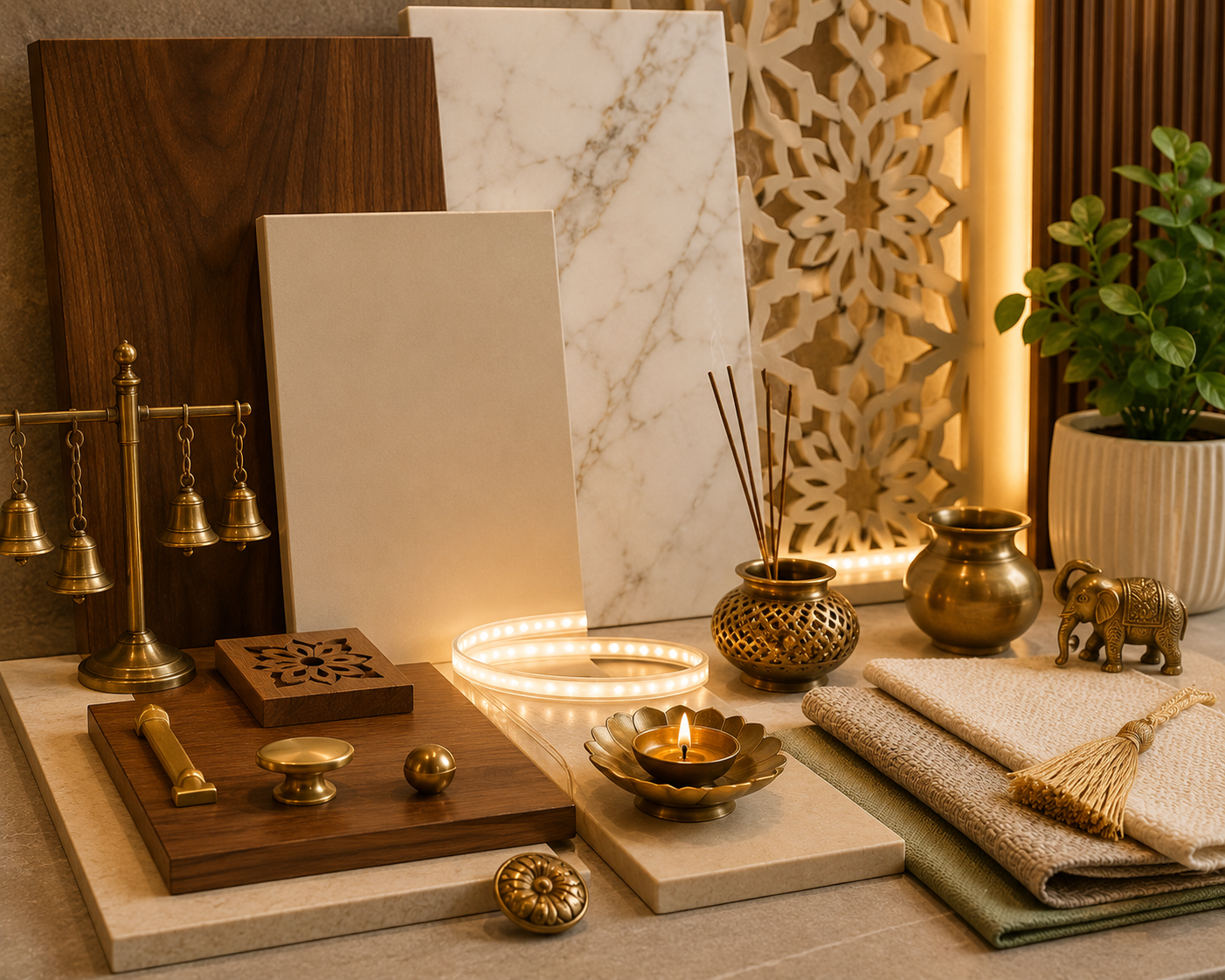
Best Materials for Pooja Room Design
Pooja room materials should be selected based on look, maintenance, fire safety, cleaning, and budget. Since diya, incense, oil, flowers, and smoke are part of daily use, avoid delicate surfaces where cleaning becomes difficult.
| Material | Best Use | Budget Level |
|---|---|---|
| Plywood with Laminate | Mandir cabinet, drawers, shelves, storage | Budget to Standard |
| MDF with CNC Jaali | Decorative jaali, shutters, back panel | Budget to Standard |
| Veneer Finish | Premium wooden mandir look | Premium |
| Marble-look Tile | Back panel, wall cladding, platform | Standard to Premium |
| Solid Surface / Quartz | Premium platform and back panel | Premium |
| Brass / Metal Accents | Bells, handles, borders, decorative details | Standard to Premium |
| Glass Shutter | Modern mandir doors and display style | Premium |
Lighting Ideas for Pooja Room
Lighting can completely change the mood of a pooja room. Warm, soft, and focused lighting works better than harsh white light.
| Lighting Type | Best Use |
|---|---|
| Warm LED Strip | Back panel, shelves, jaali, and platform glow |
| Small Spotlights | Highlight idols and back panel |
| Backlit Jaali | Creates a premium spiritual ambience |
| Pendant Light | Works well in separate pooja rooms |
| Profile Lighting | Modern mandir wall and niche designs |
Use warm white lighting for a peaceful effect. Avoid very bright or colourful lighting that may make the mandir look less calm.
Pooja Room Design Cost in India
Pooja room design cost depends on size, material, storage, jaali work, back panel, lighting, stone, brass details, and whether it is a compact unit or a full room.
| Pooja Design Type | Approx Cost Range | Best For |
|---|---|---|
| Wall-mounted Mandir | ₹15,000 – ₹50,000 | Small homes and compact apartments |
| Compact Floor-standing Unit | ₹35,000 – ₹1.2L | 2 BHK and 3 BHK apartments |
| Pooja Unit with Jaali | ₹60,000 – ₹2L | Living room or dining-side mandir |
| Premium Marble-look Mandir | ₹1L – ₹3.5L+ | Premium apartments and villas |
| Separate Pooja Room | ₹2L – ₹6L+ | Villas, bungalows, large homes |
These are planning ranges. Final cost depends on city, material, size, finish, lighting, storage, labour, design complexity, and site condition.
Estimate Your Pooja Room and Home Interior Budget
Planning a pooja room, modular kitchen, wardrobes, TV unit, or full home interiors? Get a quick budget idea before finalising your designer.
Calculate Interior CostVastu-friendly Pooja Room Planning Tips
Many Indian homeowners prefer following Vastu-friendly planning for pooja rooms. While exact rules may vary by family belief and home layout, these general points are commonly followed.
- Choose a calm and clean area for the mandir.
- North-east is commonly preferred for pooja space where possible.
- Keep the pooja area away from toilets and heavy clutter.
- Avoid placing the mandir directly under a staircase if possible.
- Keep the idols and platform at a comfortable height.
- Ensure enough light and ventilation.
- Keep storage organised and hidden where possible.
Important: Vastu preferences can differ from family to family. If Vastu is important to you, discuss it with your family, designer, and Vastu consultant before finalising placement.
Common Mistakes to Avoid in Pooja Room Design
- Designing a mandir without enough storage.
- Using materials that are difficult to clean.
- Placing the mandir too close to cluttered storage or shoe racks.
- Using harsh lighting instead of soft warm lighting.
- Making the pooja unit too large for a compact room.
- Ignoring ventilation for diya and incense smoke.
- Using too many decorative elements in a small space.
- Not planning electrical points for lights.
- Using delicate surfaces near oil, smoke, haldi, kumkum, or flowers.
How WallsToWonder Helps You Plan Pooja Room Interiors
WallsToWonder helps homeowners explore interior design ideas, estimate cost, compare designers, and plan different areas of the home including pooja rooms, living rooms, kitchens, wardrobes, and bedrooms.
- Explore pooja room and home interior design ideas
- Estimate pooja unit and full home interior budget
- Compare interior designers and companies
- Understand material, lighting, storage, and layout options
- Plan your home interiors before finalising quotations
Useful Internal Links
FAQs on Pooja Room Design Ideas
Which pooja room design is best for small apartments?
A wall-mounted mandir, compact floor-standing pooja cabinet, or corner pooja unit is best for small apartments. Choose a design with storage, warm lighting, and easy-clean surfaces.
Can I place a pooja unit in the living room?
Yes. Many modern apartments have pooja units in the living room, foyer, dining side wall, or passage niche. Keep the area calm, clean, and visually separate from clutter.
What is the cost of pooja room design in India?
A simple wall-mounted mandir may start from around ₹15,000 to ₹50,000. Compact pooja units can range from ₹35,000 to ₹1.2 lakh, while premium pooja rooms can go above ₹2 lakh depending on material and design.
Which material is best for pooja room design?
Plywood with laminate is practical for budget and standard pooja units. Veneer, marble-look tiles, quartz, brass accents, and glass can be used for premium pooja room designs.
What lighting is best for pooja room?
Warm LED strip lighting, backlit jaali, small spotlights, and soft pendant lights work well for pooja rooms. Avoid harsh white lighting or overly colourful lights.
Should pooja room have storage?
Yes. Storage is very useful for diyas, incense sticks, prayer books, cotton, oil, bells, cloth, and seasonal pooja items. A drawer or concealed cabinet keeps the mandir neat.
Can I design a modern pooja room without making it too traditional?
Yes. Use a minimal mandir cabinet, clean back panel, soft lighting, neutral colours, simple brass accents, and limited decor for a modern pooja room look.
Final Thoughts
A pooja room should feel peaceful, clean, and easy to use every day. Whether you choose a compact wall-mounted mandir, a modular pooja cabinet, a jaali partition, a marble-look mandir, or a separate pooja room, the design should match your home layout and family routine.
Focus on the right placement, practical storage, easy-clean materials, warm lighting, and a calm colour palette. A thoughtfully designed pooja room can become one of the most beautiful and meaningful parts of your Indian home.