
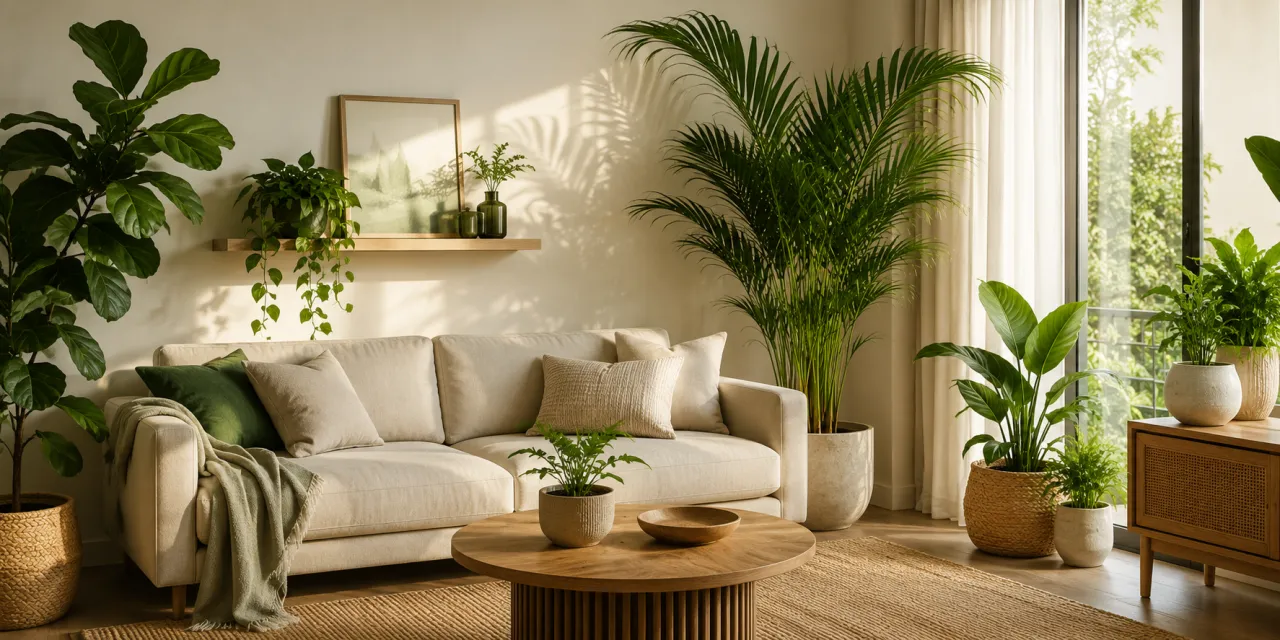
Plants Don’t Just Decorate — They Transform Your Home Interiors
A beautifully designed room can still feel incomplete. The furniture may be right, the colour palette may work, and the lighting may feel warm — yet the space can still miss a sense of life.
Very often, that missing layer is a plant.
Plants bring something into interiors that furniture, paint, cushions, artwork, and lighting cannot fully replace. They bring freshness, movement, softness, and a quiet natural balance. A single well-placed plant can change how a room feels without changing the room itself.
The Core Truth: Plants Make a Room Feel Lived In
Furniture creates structure. Walls carry personality. Lighting sets the mood. But plants bring energy — the kind that makes a home feel genuinely occupied, cared for, and complete.
They soften what is rigid, warm what feels too cool, and add a natural calm that no decorative object can fully recreate. This is why interior designers often use plants as the final styling layer in living rooms, bedrooms, kitchens, entryways, and balconies.
“Green is the easiest colour to bring into a home. It works with every palette, every style, and every room — without overpowering the space.”
Whether your home is modern, minimal, traditional, bohemian, luxury, or contemporary, plants blend in naturally while still making the space feel more alive.
What Plants Actually Do in Home Interiors
Most homes face the same styling challenges: empty corners, sharp lines, flat surfaces, unused vertical space, and rooms that feel too formal or unfinished. Plants solve these problems beautifully without adding heavy furniture or unnecessary clutter.
🌿 They Soften Clean Lines
Modern interiors often include straight furniture edges, smooth walls, glass, metal, marble, laminates, and clean geometry. While these elements look stylish, they can sometimes feel too sharp. Plants add soft organic shapes through leaves, stems, and natural movement.
🏡 They Fill Empty Corners
Empty corners can make even a furnished room feel incomplete. A tall plant fills vertical space without making the room feel crowded. It anchors the corner naturally and often works better than adding another chair, shelf, or side table.
🎨 They Add Colour Naturally
Green works with almost every interior palette. It complements whites, beiges, greys, browns, blacks, pastels, wood tones, and metallic finishes. Unlike bold decor accents, plants add colour in a refreshing way without dominating the room.
🧘 They Create Calm
Plants create a visual connection with nature. Even in compact city apartments, they make a room feel more breathable and less artificial. This natural presence adds calmness to bedrooms, living rooms, balconies, and work-from-home corners.
Every Room. Every Style. One Simple Solution.
Plants are not limited to one design trend. They work across almost every home interior style because they do not fight with the design language of the room. Instead, they complete it.
In minimal homes, plants add warmth. In modern homes, they soften clean geometry. In bohemian interiors, they deepen the layered look. In luxury spaces, they add living sophistication. In compact apartments, they bring freshness without taking up too much space.
Where Plants Belong in Your Home
- Living room corners
- Bedroom side tables
- Kitchen counters
- Bathroom shelves
- Entryway consoles
- Balcony edges
- Reading nooks
- Work-from-home desks
- Open shelves and bookcases
- Window-side spaces
Styling With Intention: Placement Matters More Than Quantity
The secret to styling with plants is not filling every corner with greenery. It is placing the right plant in the right place.
One tall plant can anchor an entire corner. Two smaller plants can frame a console or TV unit. A trailing plant above eye level can bring movement to vertical space. A small plant on a bedside table can make the bedroom feel softer and more personal.
Think of each plant as a design decision, not an afterthought. The placement should support the layout, balance the furniture, and improve how the room feels.
The Planter Is Part of the Interior Design
A beautiful plant in the wrong pot can feel disconnected from the room. The planter should match the material language, colour palette, and overall mood of your home.
- Terracotta planters work well in earthy, warm, Indian, rustic, and natural interiors.
- White ceramic planters suit minimal, Scandinavian, modern, and clean interiors.
- Woven baskets are ideal for bohemian, tropical, coastal, and relaxed homes.
- Black or metallic planters look good in modern, luxury, industrial, and contemporary interiors.
- Stone-finish planters work beautifully in premium and textured spaces.
The plant adds life, but the planter connects it to the design.
Choosing the Right Plant for Your Home
The right plant should match three things: the light available, the scale of the space, and the care you can realistically provide.
Large statement plants are perfect for open corners, living rooms, balconies, and spaces near windows. Medium plants work well beside sofas, consoles, beds, and dining areas. Small plants are best for shelves, desks, bedside tables, bathroom ledges, and kitchen counters.
For busy homes, easy-care plants are always a smart choice. A thriving low-maintenance plant will always look better than a high-maintenance plant that struggles.
Popular Indoor Plants for Indian Homes
- Areca Palm
- Snake Plant
- Money Plant
- Peace Lily
- ZZ Plant
- Rubber Plant
- Monstera
- Fiddle Leaf Fig
- Jade Plant
- Spider Plant
Best Plant Styling Ideas for Different Rooms
Living Room
Use a tall plant near the sofa, TV unit, balcony door, or empty corner. It adds height and makes the room feel complete.
Bedroom
Choose calm, low-maintenance plants for bedside tables, window ledges, or corners. Keep the look soft and uncluttered.
Kitchen
Small plants or herbs on the counter, window, or open shelf can make the kitchen feel fresh and welcoming.
Bathroom
Moisture-friendly plants can make bathrooms feel spa-like, especially when placed on shelves, ledges, or near natural light.
Balcony
A balcony becomes more usable and relaxing when plants are placed along the edges, corners, railing, or seating area.
Work Desk
A small plant on your desk can soften the work setup and make long working hours feel less mechanical.
Common Mistakes to Avoid While Decorating With Plants
- Using too many plants in a small room
- Choosing plants without checking natural light
- Ignoring the size of the planter
- Placing large plants where they block movement
- Using mismatched pots that clash with the room design
- Forgetting plant maintenance
- Keeping unhealthy or dry plants in visible areas
Plants should make a room feel fresh, balanced, and intentional — not crowded or neglected.
Final Thought
Plants do more than decorate a home. They soften interiors, bring colour, fill empty spaces, create calm, and make rooms feel alive.
A finished home should not feel like a showroom. It should feel warm, personal, breathable, and lived in. Plants help create exactly that feeling.
Plants don’t just finish a room. They make it feel like home.
FAQs About Using Plants in Home Interiors
Are indoor plants good for home interiors?
Yes. Indoor plants improve the visual balance of a room, add natural colour, soften hard finishes, and make the space feel warmer and more complete.
Which indoor plants are best for Indian homes?
Snake Plant, Money Plant, Areca Palm, Peace Lily, ZZ Plant, Rubber Plant, Jade Plant, and Spider Plant are popular choices for Indian homes because they are attractive and relatively easy to maintain.
Where should I place plants in my living room?
Plants can be placed in empty corners, beside the sofa, near the TV unit, close to windows, on console tables, or near balcony doors. Choose the location based on light, room size, and movement space.
Can plants make a small room look better?
Yes. A small or medium-sized plant can make a compact room feel fresher and more inviting. For small rooms, avoid overcrowding and choose slim, vertical, or tabletop plants.
How many plants should I keep in one room?
There is no fixed number. One well-placed plant can be enough for a small room, while larger rooms can handle two or three plants. Placement and scale matter more than quantity.
Do planters matter in interior design?
Yes. The planter is part of the design. A planter should match the room’s colours, materials, and style so the plant feels connected to the overall interior.
Are plants suitable for luxury interiors?
Absolutely. Plants add living sophistication to luxury interiors. Large statement plants, sculptural leaves, and premium planters can make luxury spaces feel warmer and more natural.
Turn this idea into a plan for your home
Visualise your space, understand the likely budget, or find a professional who can bring the idea to life.