
Peel-and-Stick Kitchen Backsplash Ideas for Rented Indian Homes
Peel and stick kitchen backsplash ideas: the practical answer
A peel-and-stick backsplash can change a suitable rented kitchen surface without replacing the underlying tile. Check landlord consent, the exact product’s approved surfaces and appliance clearances, then test adhesion and removal. Removable does not mean every existing paint or tile finish will remain undamaged.
Best suited to: Dry, sound and product-approved backsplash areas in rented homes. It is unsuitable where moisture, failing coatings or appliance heat exceeds the selected product’s specifications.
Begin with permission and a surface test
Photograph the original surface and agree the scope with the landlord before installation. Identify whether the backing is tile, painted plaster or another coating. Check that the selected adhesive product explicitly approves the surface, and test a small inconspicuous area using the prescribed preparation.
Do not hide dampness, loose grout or flaking paint under a decorative covering. Adhesion can fail when the surface below is unstable. A product that removes from glazed tile may behave differently on old paint or a textured coating.
Use pattern scale to simplify the existing kitchen
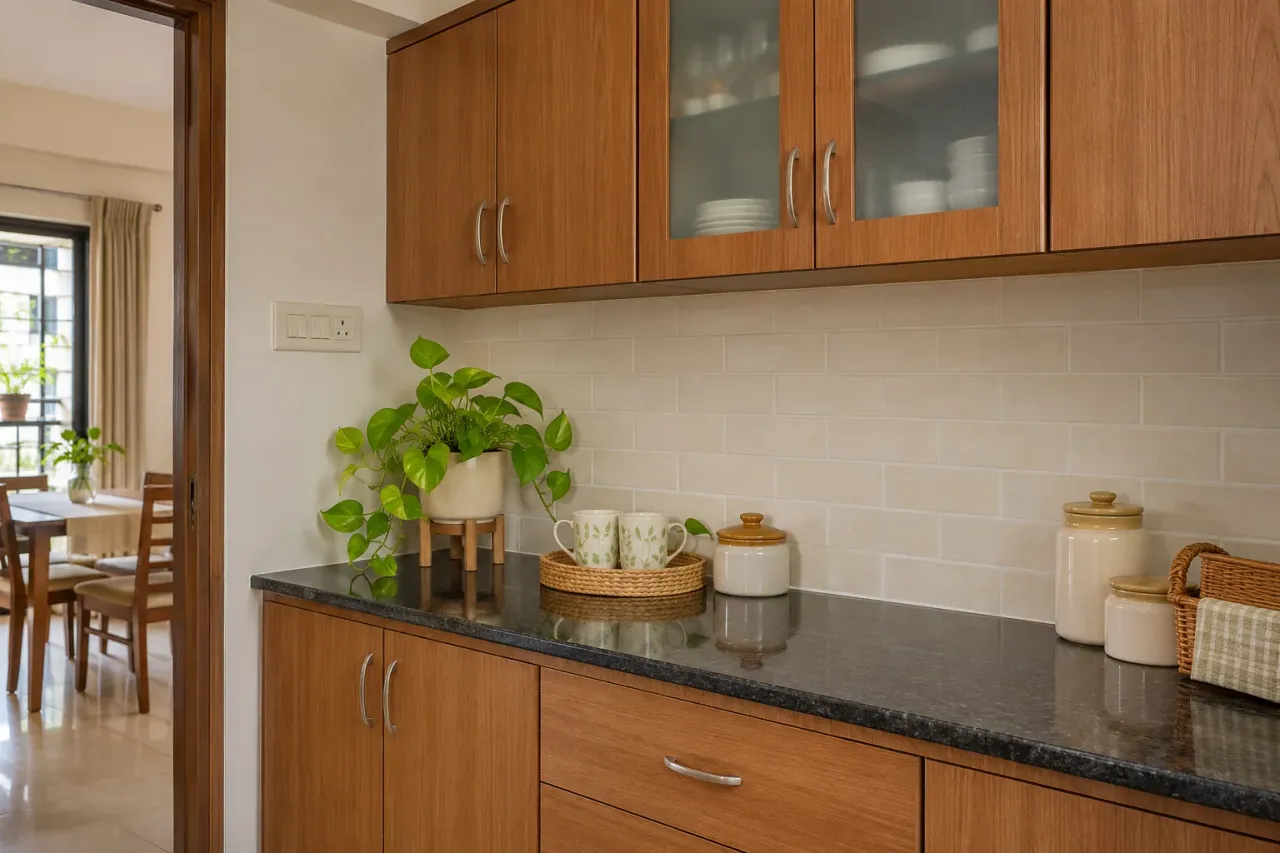
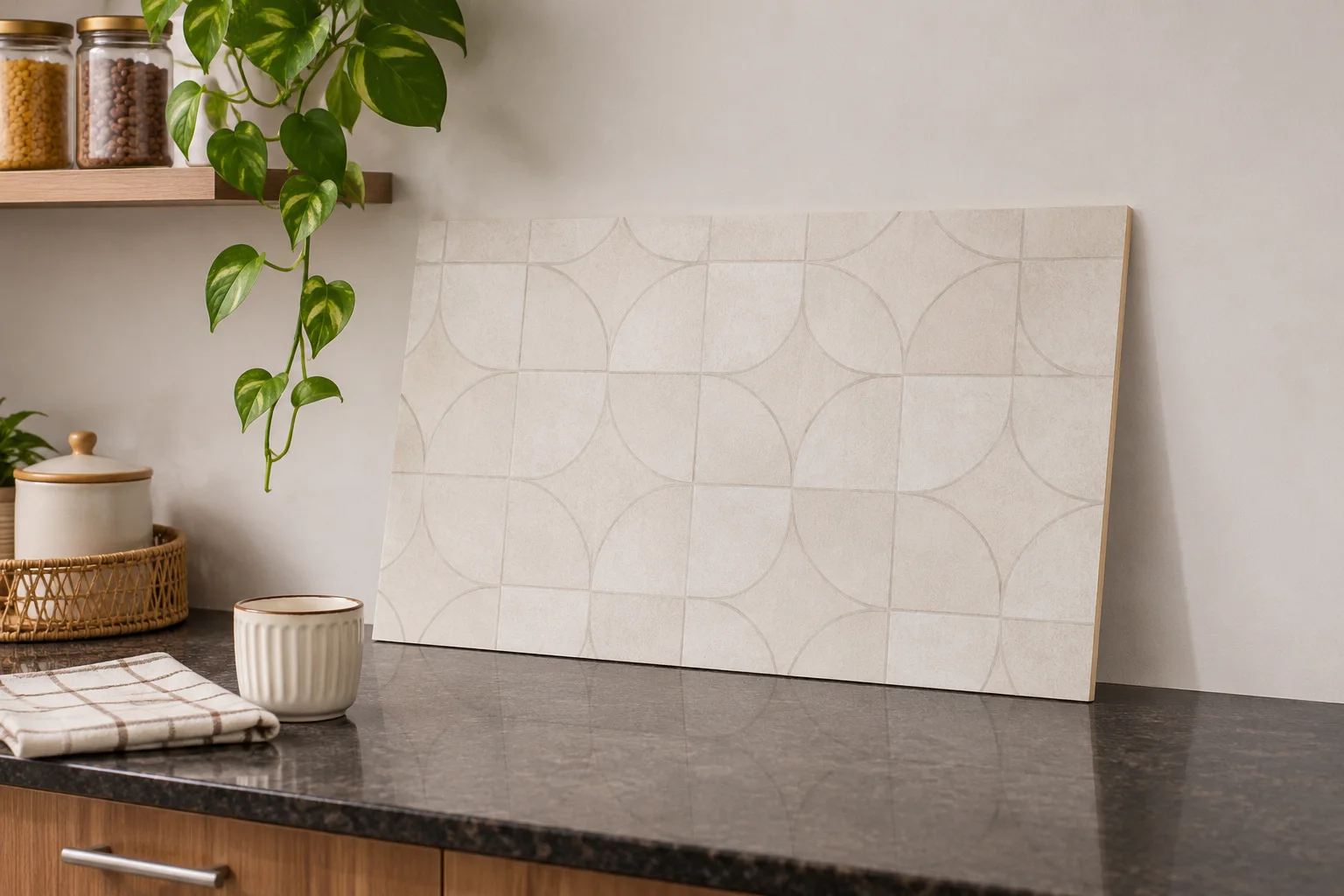
A small warm-white tile pattern can be quiet beside busy granite; a larger graphic pattern may suit very plain cabinets. Look at the repeat across the whole backsplash, including corners and outlet cut-outs, before ordering. A sample square may hide how obvious repeated joints become.
If the kitchen already has strong cabinet colour and a patterned floor, keep the new pattern restrained. Introduce contrast through one limited backsplash section rather than covering every wall and cabinet front with unrelated motifs.
Respect product-specific heat and moisture limits
A generic label such as peel-and-stick does not establish suitability behind a hob. Follow the exact covering and appliance manufacturers’ requirements, and do not infer fire or heat performance from appearance. Keep unapproved decorative coverings away from hot areas. The Smart Tiles manufacturer FAQ is an example of product-specific installation guidance; do not apply one brand’s requirements to a different covering.
Seams, sink splashes and regular cleaning need separate consideration. Ask for the approved cleaning method and whether the product is suitable for the actual exposure. Do not treat a decorative overlay as waterproofing for a wall with an unresolved moisture problem.
Plan the removal before enjoying the makeover
Keep the instructions and a record of the product. Test removal according to the manufacturer’s method rather than inventing a heat or solvent treatment that could damage the substrate. Budget time to restore the agreed condition when moving out.
For a wider rental plan, read the renter’s spending guide. The low-maintenance materials guide can help compare the appearance you want with the care you can maintain.
Which option suits your space?
| Option | Useful for | Check before choosing |
|---|---|---|
| Quiet tile-look pattern | Busy existing worktops | Repeat, joints and colour match |
| Limited accent panel | A plain kitchen needing one feature | Edges and nearby fittings |
| Keep existing tile | Unsuitable substrate or uncertain permission | Cleaning and removable styling alternatives |
Before you approve the design
- Get agreement on the alteration and move-out condition.
- Read the exact product’s substrate and appliance limits.
- Test installation and removal in an inconspicuous spot.
- Keep instructions, product details and original-condition photos.
Frequently asked questions
Are peel-and-stick tiles always damage-free?
No. Removal depends on the adhesive, substrate condition, installation and removal method. Obtain permission and test the selected product on the actual surface.
Can I put peel-and-stick material behind a gas hob?
Only where both the covering and appliance specifications permit the installation and required clearances are met. Do not assume a decorative panel is heat-safe.
Can I cover damp or loose tiles?
Do not use an overlay to conceal an unresolved defect. Investigate and repair the underlying problem before considering a decorative finish.
Turn this idea into a plan for your home
Visualise your space, understand the likely budget, or find a professional who can bring the idea to life.