
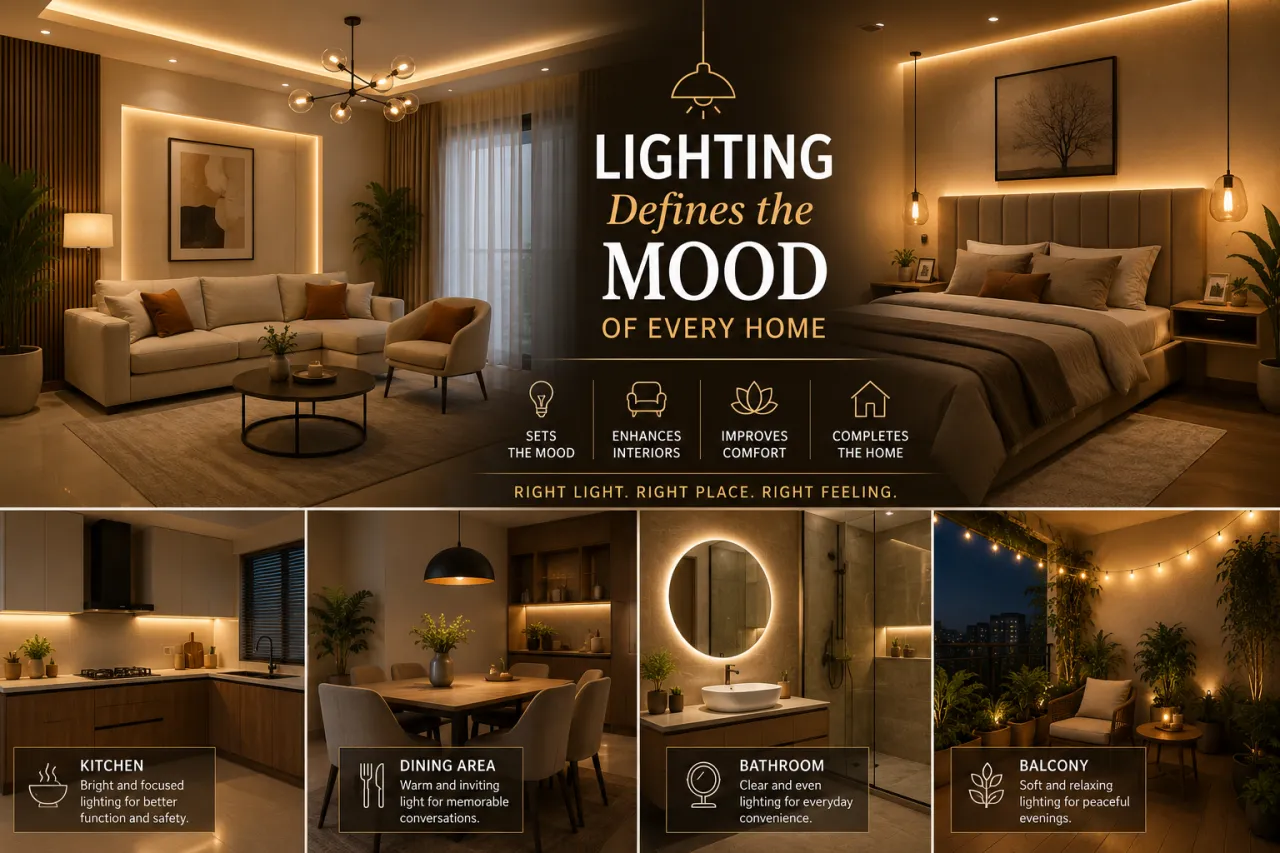
Lighting Defines the Mood of Every Home
Furniture gives a room structure. Colours give it personality. Lighting gives it mood.
Light Changes How Interiors Are Seen
Every material responds to light. Wood looks warmer, marble looks richer, textured walls look deeper, fabrics look softer, and metal accents look more refined when the lighting is planned properly.
This is why two homes with similar materials can feel completely different. The difference is often not the material itself — it is how the material is lit.
A wall panel without accent lighting can look flat. A false ceiling without soft glow can feel heavy. A dining table without focused light can lose its presence. Lighting gives design elements the attention they deserve.
The Four Lighting Layers That Complete a Home
A complete home does not depend on one ceiling light. It uses layers. Each layer has a role, and together they create a balanced interior.
Ambient Lighting
This is the main light of the room. It gives overall brightness and makes the space usable. Ceiling lights, recessed lights, chandeliers, and panel lights usually form this layer.
Task Lighting
This light supports daily activities. Reading, cooking, dressing, studying, and working become easier with focused lighting in the right place.
Accent Lighting
This layer highlights what matters — wall textures, artwork, plants, shelves, niches, headboards, TV units, and statement decor.
Natural Lighting
Daylight makes a home feel open, fresh, and breathable. Sheer curtains, smart furniture placement, and reflective surfaces help natural light work better.
Every Room Needs Its Own Lighting Mood
A home feels well-designed when each room has lighting that supports its purpose. The living room should not feel like a kitchen. The bedroom should not feel like an office. The dining area should not feel like a passage.
The living room needs warmth, flexibility, and visual depth. Ceiling lights, lamps, wall lights, cove lighting, and accent lights together create a welcoming space for family and guests.
The bedroom needs calm lighting. Warm light, bedside lamps, soft cove lighting, wardrobe lights, and dimmable fixtures make the space restful and comfortable.
The kitchen needs clarity and function. Bright ceiling lights and under-cabinet task lights improve cooking, cleaning, safety, and everyday convenience.
The dining area becomes more intimate with a pendant light, chandelier, or focused warm light above the table. It creates a natural centre for conversations and meals.
Bathrooms need practical mirror lighting and soft general light. Proper vanity lighting reduces shadows and gives the bathroom a cleaner, more premium feel.
Balconies feel more usable in the evening with warm wall lights, soft outdoor fixtures, lantern-style lights, or string lights. Lighting turns a balcony into a relaxed corner.
Warm, Neutral, and White Light Create Different Emotions
The colour of light strongly affects the mood of a home. Warm light feels cozy. Neutral light feels balanced. Cool white light feels active and functional. A well-designed home uses the right tone in the right room.
Warm Light
Best for living rooms, bedrooms, dining spaces, balconies, lounges, and areas meant for comfort.
Neutral Light
Best for bathrooms, dressing areas, study corners, wardrobes, and balanced modern interiors.
Cool White Light
Best for kitchens, utility areas, storage zones, work areas, and task-focused spaces.
False Ceiling Lights Add Depth and Character
False ceiling lighting has become an important part of modern Indian home interiors. Cove lights, spotlights, profile lights, and recessed fixtures can change the entire appearance of a room.
A false ceiling with the right lighting can make a room feel taller, softer, warmer, and more luxurious. It also helps divide open spaces visually, highlight seating areas, and create a premium evening mood.
The best false ceiling lighting does not look overdone. It feels clean, balanced, and connected to the room’s layout.
Lighting Helps Homeowners Make Better Interior Decisions
Lighting affects several interior choices, from material selection to furniture placement. A homeowner who understands lighting can make clearer decisions during planning, quotation comparison, and final execution.
- Material selection: Lighting decides how laminates, veneers, marble, tiles, paint, and fabric finishes appear in the final room.
- Furniture placement: Sofa units, dining tables, beds, consoles, and work desks need lighting support to feel properly placed.
- False ceiling planning: Light positions should match the furniture layout, not just the ceiling design.
- Budget planning: Good lighting deserves a proper budget because it directly changes the final interior experience.
- Designer discussion: Lighting clarity helps homeowners ask better questions before finalising an interior designer or company.
Common Lighting Mistakes Make Homes Feel Unfinished
Many homes look incomplete because lighting is treated as an afterthought. The most common mistake is relying only on one central ceiling light. This gives brightness but not depth.
Harsh white lights in bedrooms can disturb the calm mood. Poor kitchen lighting makes daily work uncomfortable. Missing mirror lights affects dressing and bathroom usability. No accent lighting makes premium walls, artwork, and decor disappear into the background.
Lighting should be planned before electrical work, false ceiling work, and furniture installation. When planned early, the final home looks cleaner, more intentional, and more comfortable.
Lighting Does Not Just Show a Home. It Shapes the Home.
A well-lit home feels warm, finished, practical, and premium. The right lighting brings out the beauty of materials, supports daily routines, and gives every room its own mood.
FAQs About Lighting in Home Interiors
Why is lighting important in home interior design?
Lighting defines the mood, comfort, functionality, and visual depth of a home. It helps rooms feel warm, premium, practical, and complete.
Which lighting is best for living rooms?
Living rooms work best with layered lighting, including ceiling lights, lamps, cove lighting, wall lights, and accent lights for TV units, decor, plants, or textured walls.
Which light is best for bedrooms?
Warm and soft lighting is best for bedrooms. Bedside lamps, cove lights, wardrobe lights, and dimmable fixtures help create a calm and restful mood.
Is warm light better than white light for homes?
Warm light is better for relaxing areas such as bedrooms, living rooms, dining spaces, and balconies. White or neutral light works better in kitchens, bathrooms, wardrobes, and work areas.
What is layered lighting in interiors?
Layered lighting means combining ambient, task, accent, and natural lighting to create brightness, depth, comfort, and visual interest in a room.
Does false ceiling lighting improve home interiors?
Yes. False ceiling lighting can add softness, depth, warmth, and premium character to a room when planned according to the furniture layout and room purpose.
When should lighting be planned during interior work?
Lighting should be planned before electrical work, false ceiling work, and furniture installation. Early planning gives cleaner wiring, better placement, and a more professional finish.
Turn this idea into a plan for your home
Visualise your space, understand the likely budget, or find a professional who can bring the idea to life.