
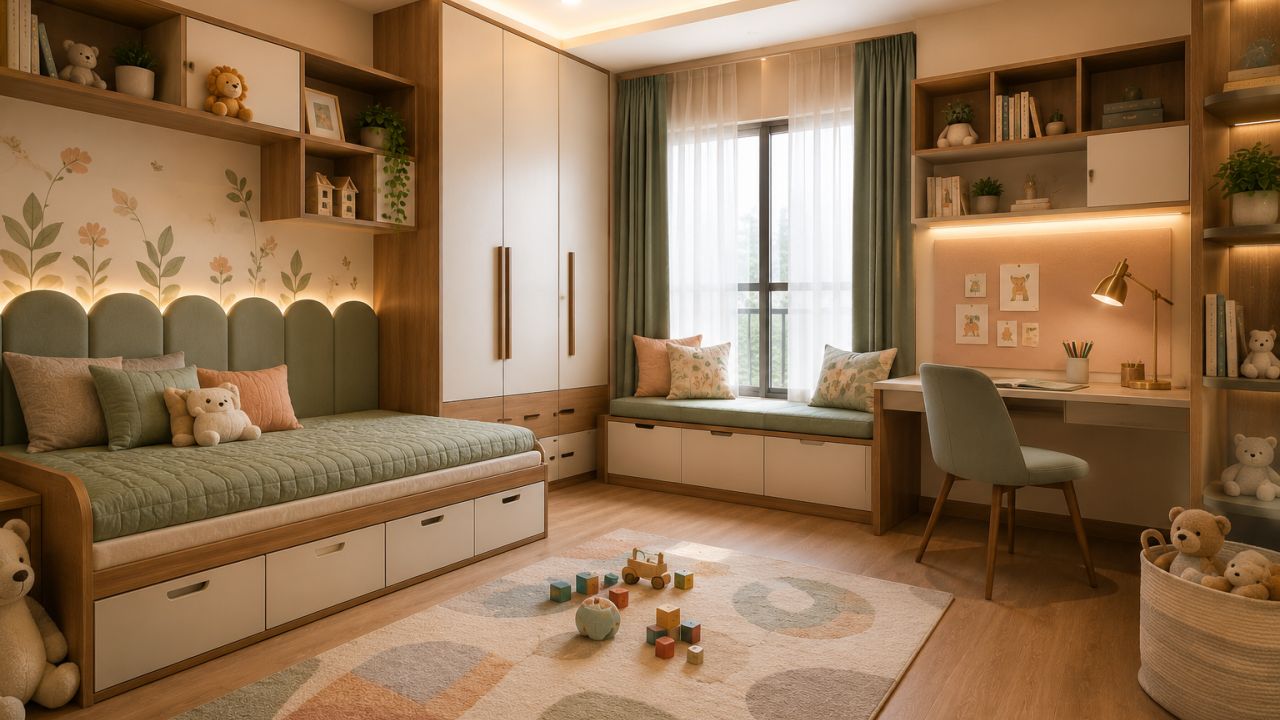
Kids Room Interior Ideas for Indian Homes: Smart, Safe & Beautiful Children’s Room Designs
A kids room is not just a bedroom. It is a space where children sleep, study, play, store toys, read books, attend online classes, and slowly develop their personal habits. A well-designed kids room should be safe, cheerful, practical, easy to clean, and flexible enough to change as the child grows.
In Indian homes, kids rooms often need smart space planning because the room may have to include a bed, wardrobe, study table, toy storage, bookshelf, play area, and sometimes even a second bed for siblings. The right interior design can make even a compact kids room feel organised and comfortable.
This guide covers practical kids room interior ideas, age-wise planning, bed designs, study units, wardrobes, storage ideas, colour themes, safety tips, materials, lighting, cost ranges, and mistakes to avoid before finalising your children’s room design.
Quick Kids Room Interior Ideas
The best kids room design is one that balances fun, safety, storage, study comfort, sleep quality, and long-term usability.
Planning Kids Room Interiors?
Use the WallsToWonder Interior Design Cost Estimator to understand your budget for kids room, study unit, wardrobes, beds, modular kitchen, living room, and full home interiors.
Get Free Interior Cost Estimate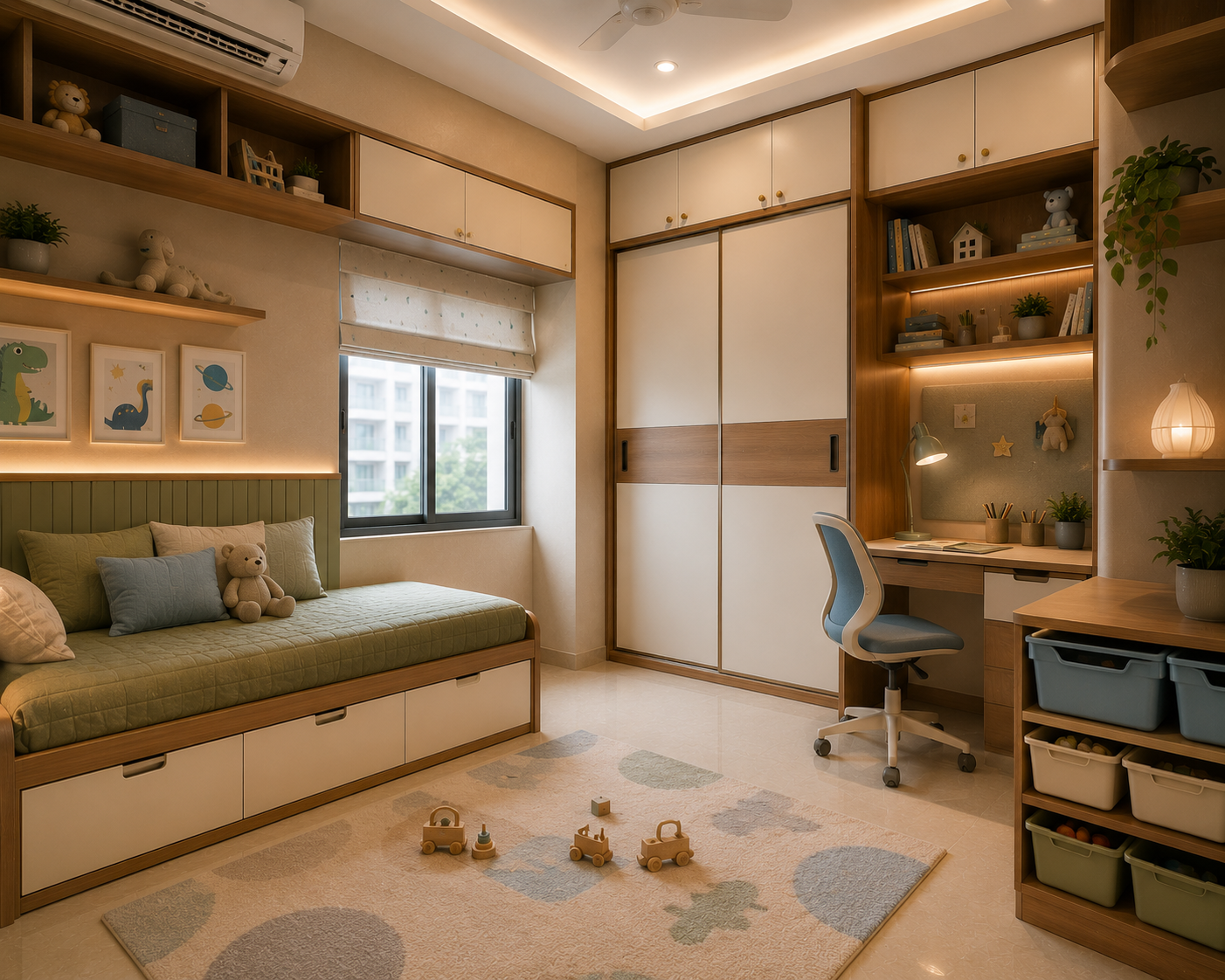
1. Space-saving Kids Room Design
Space-saving design is very useful for compact apartments and smaller bedrooms. Instead of filling the room with loose furniture, plan built-in storage, a compact study desk, and a bed with storage.
- Use a bed with drawers or hydraulic storage.
- Add overhead cabinets only where they are safe and accessible.
- Use wall shelves for books and decor.
- Choose a sliding wardrobe if swing shutters reduce movement space.
- Keep the centre of the room open for play and movement.
Design Tip: In a small kids room, avoid oversized beds and heavy furniture. Keep the layout simple so the child has enough open floor space.
2. Kids Room with Study Unit
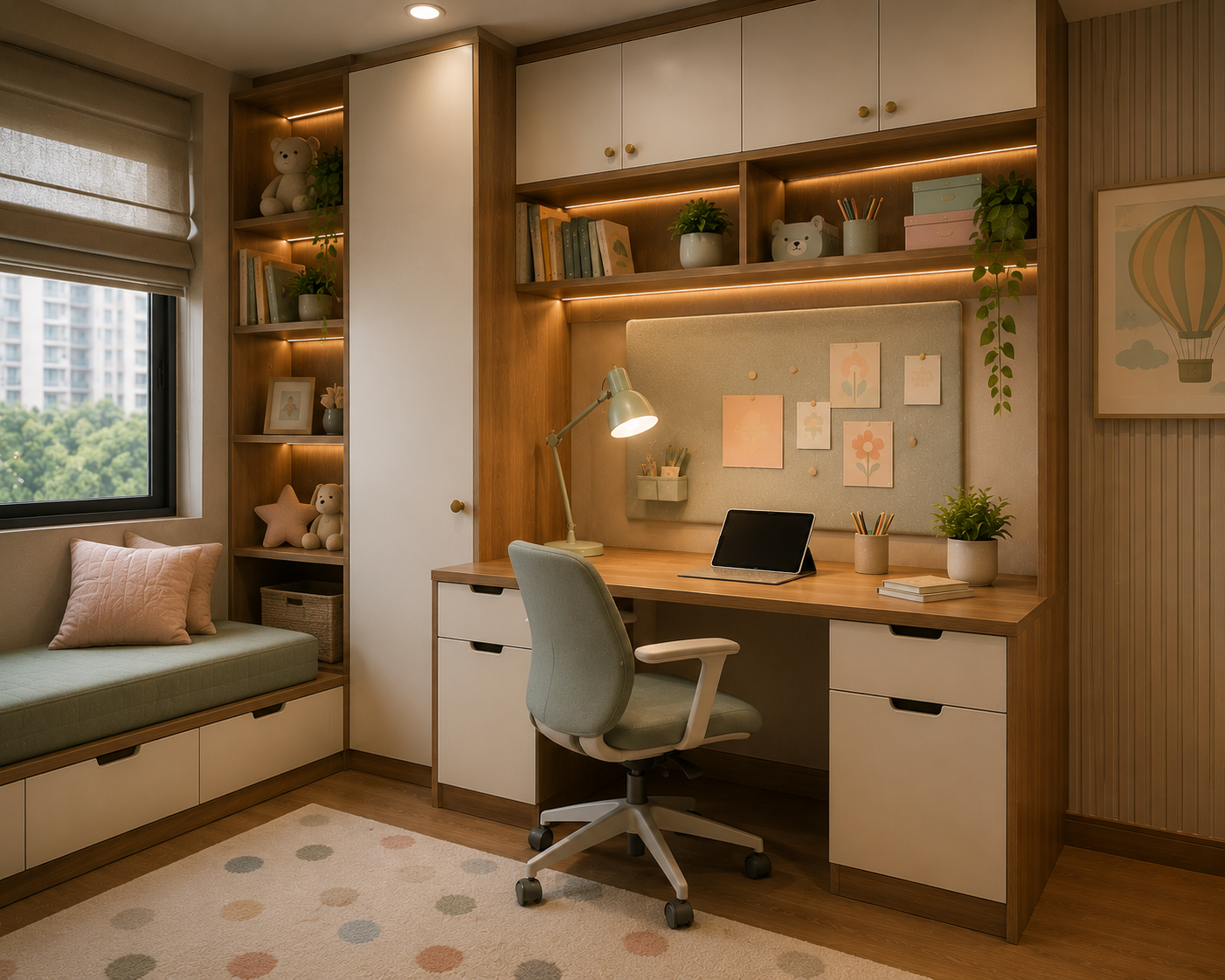
A study unit is one of the most important parts of a kids room. It should be comfortable, well-lit, and planned at the right height. A good study area helps children focus on homework, reading, online classes, drawing, and creative activities.
| Study Unit Element | Why It Matters |
|---|---|
| Comfortable Desk Size | Supports books, laptop, notebook, stationery, and writing space |
| Task Lighting | Reduces eye strain during study and reading |
| Drawer Storage | Keeps stationery, notebooks, and school items organised |
| Open Shelves | Useful for books, toys, awards, and display items |
| Pin-up Board | Helpful for timetable, notes, drawings, and reminders |
| Comfortable Chair | Improves posture and study comfort |
Place the study table where there is enough natural light, but avoid direct glare on laptop or book surfaces. Add a dedicated plug point if the child uses a laptop or tablet.
3. Bunk Bed Design for Two Kids
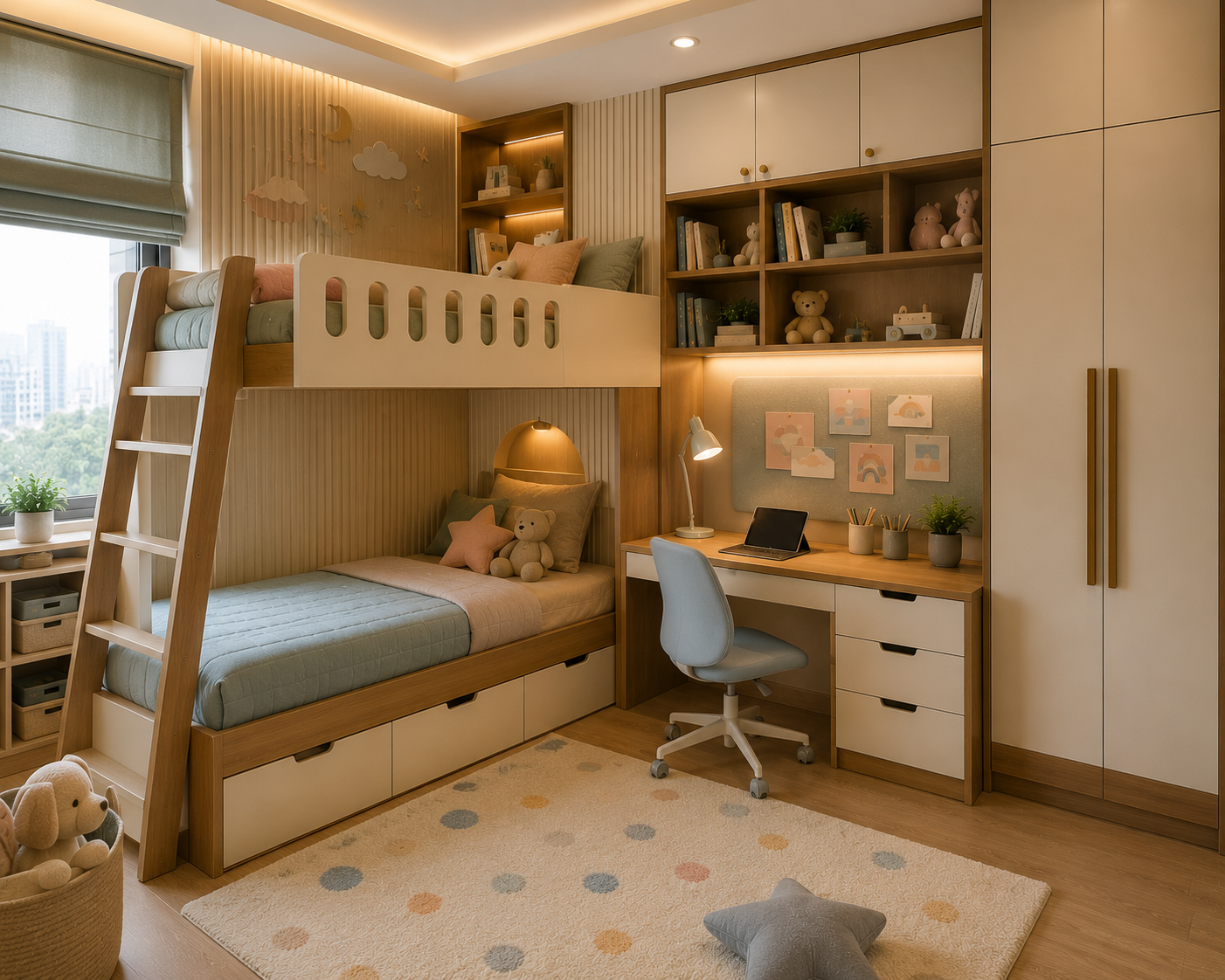
Bunk beds are practical when two children share one room or when you want to save floor space. A good bunk bed should be strong, safe, and comfortable for both children.
- Use strong railings for the upper bed.
- Keep ladder steps wide and safe.
- Add storage drawers below the lower bed.
- Use soft night lighting for safety.
- Avoid very high bunk beds in low-ceiling rooms.
Safety Tip: Bunk beds should be designed carefully with proper railing height, ladder grip, mattress fit, and ceiling clearance.
4. Kids Wardrobe Design Ideas
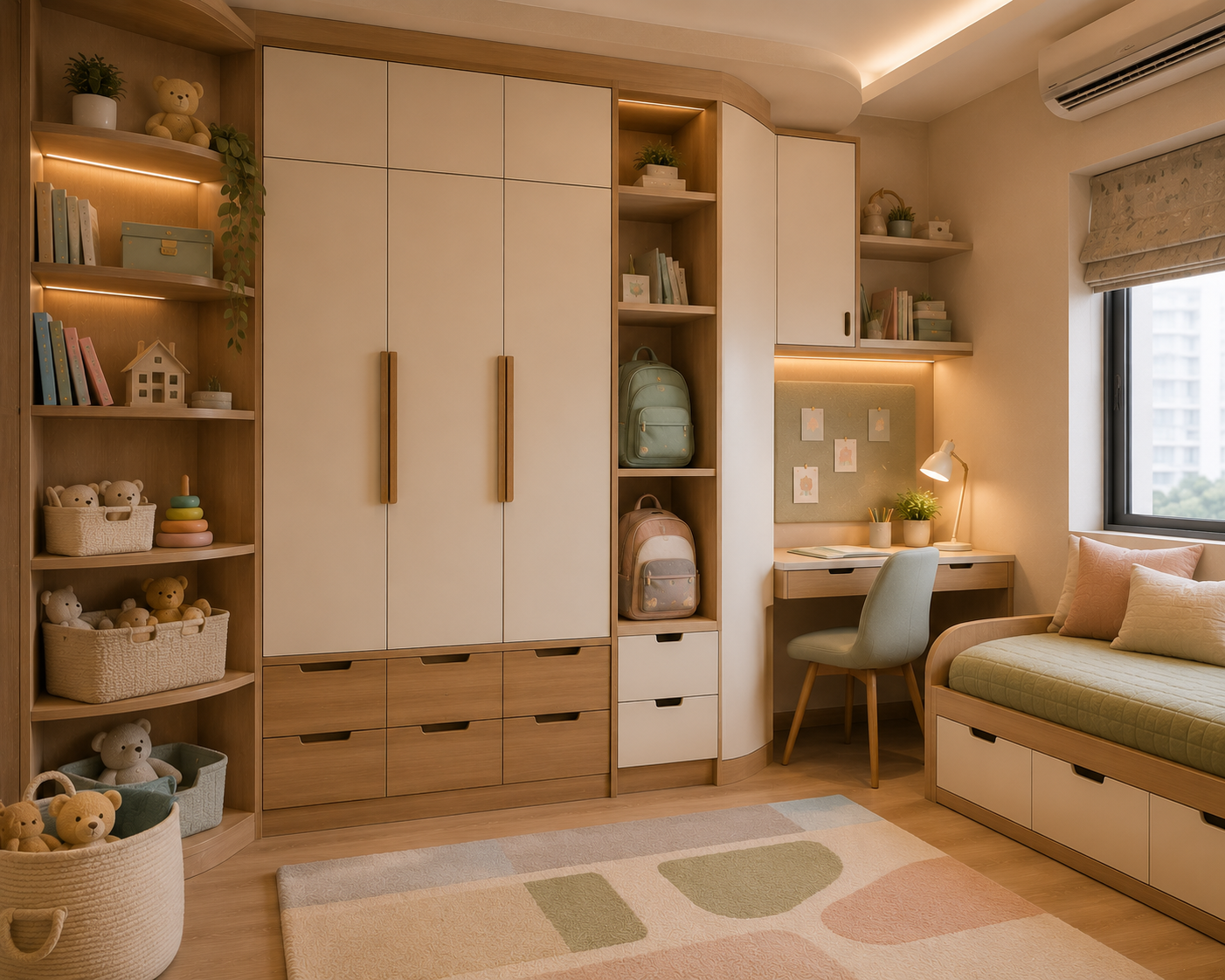
Kids wardrobes should be easy to access and simple to organise. Avoid designing only adult-style wardrobes. Children need space for clothes, uniforms, bags, toys, sports items, books, and hobby materials.
| Wardrobe Feature | Best Use |
|---|---|
| Lower Drawers | Easy access for socks, accessories, toys, and daily items |
| Hanging Space | School uniforms, jackets, dresses, and daily clothes |
| Open Shelf | School bag, books, or display items |
| Loft Storage | Seasonal clothes, extra bedding, rarely used toys |
| Mirror Shutter | Useful for older children and teenagers |
| Soft-close Hardware | Improves safety and reduces finger injuries |
Use a mix of open and closed storage. Too much open storage can look cluttered, while too much closed storage can make the room feel heavy.
5. Toy Storage and Bookshelf Ideas
Toy storage is one of the biggest challenges in kids rooms. If storage is not planned properly, the room becomes messy very quickly.
- Use low-height drawers for toys.
- Add baskets or pull-out boxes for easy access.
- Use labelled storage if the child is old enough to organise items.
- Keep books at child-friendly height.
- Add closed cabinets for board games and craft items.
- Use display shelves only for selected toys and decor.
The goal is to make cleaning easy for parents and organisation simple for children.
6. Colour Themes for Kids Room
Kids room colours should feel cheerful but not too overwhelming. Very bright colours may look exciting initially, but they can become tiring over time. A balanced colour palette works better for long-term use.
| Colour Theme | Look & Feel | Best For |
|---|---|---|
| Ivory + Sage Green | Calm, fresh, natural | Growing kids and study-focused rooms |
| Beige + Pastel Blue | Soft, peaceful, bright | Compact rooms and younger children |
| White + Light Wood | Minimal, clean, flexible | Small apartments and long-term use |
| Muted Pink + Ivory | Soft, warm, playful | Children who prefer gentle colour themes |
| Grey + Yellow Accent | Modern, energetic, balanced | Kids rooms with playful decor |
| Walnut + Neutral Walls | Warm, mature, timeless | Teenagers and long-term room planning |
Use bright colours in small accents such as cushions, rugs, wall art, toys, or pin boards. Keep major furniture in neutral colours so the room does not need frequent renovation.
7. Theme-based Kids Room Ideas
Theme-based rooms can be fun, but they should not be too permanent. Children’s interests change quickly, so use themes through removable decor rather than expensive fixed furniture.
Keep expensive furniture simple and use wallpapers, rugs, curtains, artwork, and accessories to create the theme.
8. Kids Room Lighting Ideas
Lighting should support study, play, and sleep. One ceiling light is not enough for a well-designed kids room.
| Lighting Type | Best Use |
|---|---|
| Ceiling Light | General room lighting |
| Study Task Light | Homework, reading, drawing, and laptop work |
| Night Light | Comfort and safety during night movement |
| Profile Light | Premium shelves, wall panels, and bunk bed areas |
| Natural Light | Daytime study, play, and freshness |
Use warm and neutral lighting instead of harsh white light. For study tables, focused task lighting is important.
Best Materials for Kids Room Interiors
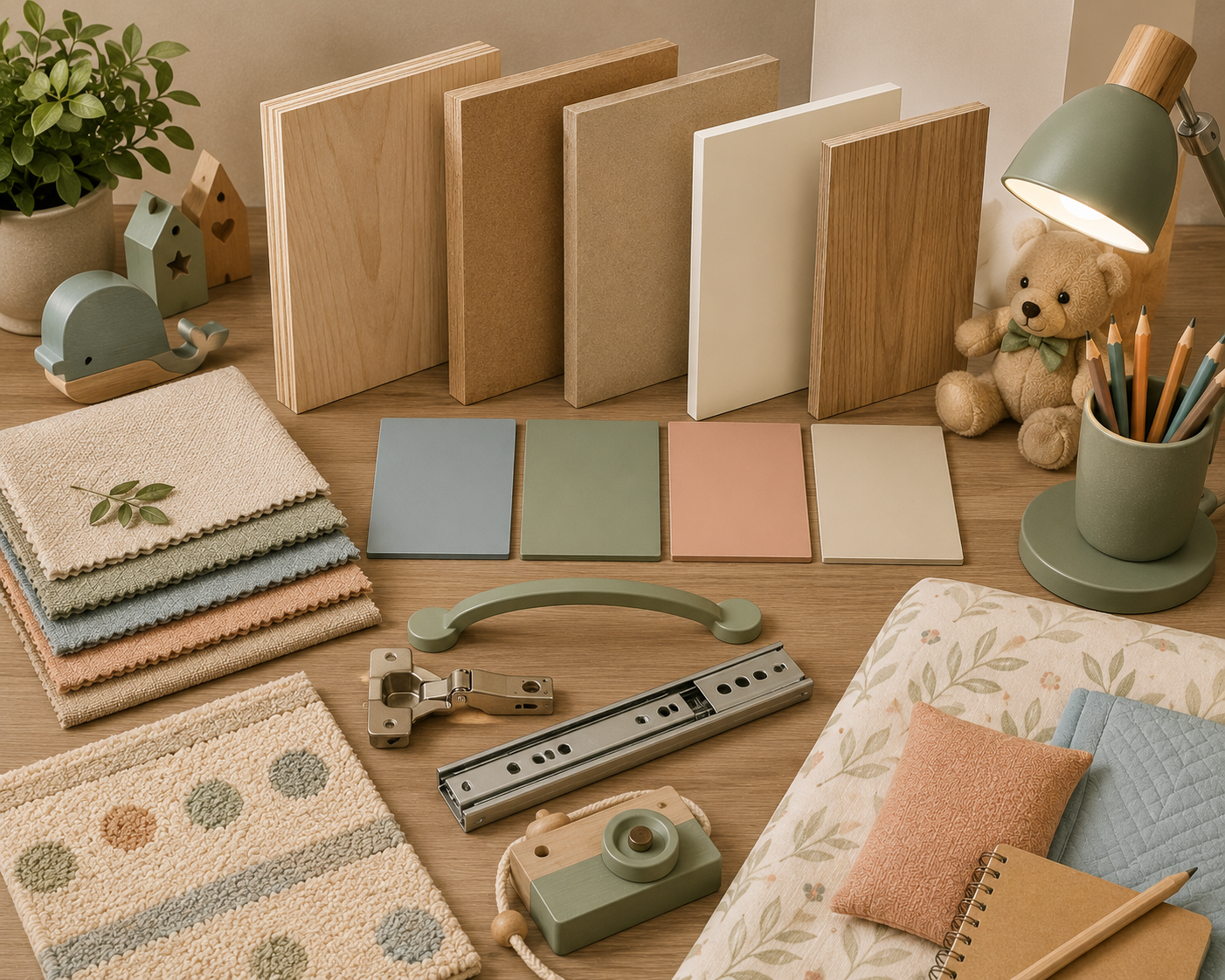
Kids room materials should be durable, easy to clean, safe, and suitable for daily use. Avoid delicate finishes that scratch easily or need very careful maintenance.
| Material / Finish | Best Use | Why It Works |
|---|---|---|
| Plywood with Laminate | Bed, wardrobe, study unit, shelves | Durable, practical, easy to clean |
| HDHMR Board | Shutters and panels | Smooth finish and better resistance than regular MDF |
| MDF | Wall panels, decorative elements, shaped designs | Good for creative designs and painted finishes |
| Laminate Finish | Daily-use furniture | Budget-friendly and easy maintenance |
| Fabric Panels | Soft headboard or acoustic wall | Adds comfort but needs cleaning care |
| Acrylic / PU Finish | Selected premium shutters | Use selectively because it costs more |
Material Tip: For kids rooms, practicality matters more than luxury. Choose durable laminate finishes, rounded edges, safe hardware, and easy-clean surfaces.
Safety Checklist for Kids Room Design
Safety should be a priority in every kids room interior. Good design is not just about looks; it should reduce risk and make daily use comfortable.
- Use rounded edges for desks, beds, and shelves.
- Avoid sharp handles at child height.
- Use soft-close hinges and channels where possible.
- Secure tall wardrobes and bookshelves properly.
- Plan safe electrical points away from easy child access.
- Avoid heavy open shelves above the bed.
- Use non-slippery rugs or secure rugs with anti-skid backing.
- Keep bunk bed railings high and strong.
- Avoid glass-heavy furniture for younger children.
- Keep enough space for movement and play.
Kids Room Interior Cost in India
Kids room interior cost depends on room size, bed design, wardrobe, study unit, storage, material, finish, lighting, wall treatment, and customisation level.
| Kids Room Interior Type | Approx Cost Range | Best For |
|---|---|---|
| Basic Kids Room Setup | ₹1L – ₹2.5L | Bed, wardrobe, simple study table |
| Standard Kids Room Interior | ₹2.5L – ₹5L | Storage bed, wardrobe, study unit, shelves, lighting |
| Bunk Bed Room Design | ₹3L – ₹7L | Two kids sharing one room |
| Premium Kids Room | ₹5L – ₹10L+ | Custom bed, wardrobe, study zone, wall panels, premium finishes |
| Teen Room Design | ₹3L – ₹8L+ | Study desk, wardrobe, bed, shelves, mature theme |
These are planning ranges. Final cost depends on city, material, size, finish, furniture dimensions, storage requirements, hardware, lighting, and site condition.
Estimate Your Kids Room Interior Budget
Planning a kids room, study unit, wardrobe, modular kitchen, living room, or full home interiors? Get a quick budget idea before finalising your designer.
Calculate Interior CostAge-wise Kids Room Planning
A kids room should grow with the child. Instead of designing only for the current age, plan furniture that can stay useful for many years.
| Age Group | Design Focus | Best Interior Idea |
|---|---|---|
| 0 – 5 Years | Safety, open play area, soft colours | Low storage, rounded furniture, washable surfaces |
| 6 – 10 Years | Study, toys, books, activities | Study table, toy storage, bookshelf, cheerful accents |
| 11 – 15 Years | Study, hobbies, privacy, storage | Better desk, wardrobe planning, display shelves |
| 16+ Years | Focused study, mature look, personal space | Teen room with calm colours, larger desk, wardrobe, bookshelves |
Keep the base furniture neutral and upgrade soft furnishings, wall decor, study accessories, and colours as the child grows.
Common Kids Room Design Mistakes to Avoid
- Using too many bright colours on walls and furniture.
- Ignoring study table lighting.
- Designing furniture without storage for toys and school items.
- Choosing sharp handles and corners.
- Making a theme too permanent and expensive.
- Not planning plug points near the study table.
- Using delicate finishes that scratch easily.
- Not keeping enough open space for play.
- Making bunk beds without proper safety railing.
- Ignoring future needs as the child grows.
Kids Room Interior Checklist
Use this checklist before finalising your kids room design.
| Checklist Point | Status |
|---|---|
| Bed size and storage planned | Check before execution |
| Study table height and lighting checked | Check before finalising layout |
| Wardrobe internal storage planned | Check before production |
| Toy and book storage added | Check before quotation approval |
| Rounded edges and safe handles selected | Check before furniture detailing |
| Plug points planned safely | Check during electrical planning |
| Open play space kept | Check in layout |
| Material and finish selected | Check with sample |
| Theme kept flexible | Check before final design |
| Budget and timeline confirmed | Check before execution |
How WallsToWonder Helps You Plan Kids Room Interiors
WallsToWonder helps homeowners explore interior design ideas, estimate cost, compare designers, and plan different areas of the home including kids rooms, bedrooms, living rooms, kitchens, wardrobes, and study units.
- Explore kids room and children’s bedroom design ideas
- Estimate kids room and full home interior budget
- Compare interior designers and companies
- Understand material, lighting, storage, and layout options
- Plan your home interiors before finalising quotations
Useful Internal Links
FAQs on Kids Room Interior Ideas
What is the best kids room design for small rooms?
A storage bed, compact study table, sliding wardrobe, wall shelves, and low-height toy storage are best for small kids rooms. Keep the centre space open for movement.
How much does kids room interior design cost in India?
A basic kids room setup may start from around ₹1 lakh to ₹2.5 lakh. Standard kids room interiors may range from ₹2.5 lakh to ₹5 lakh, while premium custom kids rooms can go above ₹5 lakh.
Which material is best for kids room furniture?
Plywood with laminate is practical for kids room furniture because it is durable and easy to clean. HDHMR and MDF can be used for selected shutters, panels, and decorative elements.
Is bunk bed safe for kids?
Bunk beds can be safe if they are designed with strong railings, stable ladder, proper mattress fit, safe height, and good-quality material. Younger children may need extra supervision.
Which colour is best for kids room?
Soft colours like ivory, sage green, pastel blue, beige, light wood, muted pink, and neutral shades work well. Use bright colours as accents instead of applying them everywhere.
How do I make a kids room easy to maintain?
Use durable laminate finishes, closed storage, washable surfaces, simple furniture, fewer dust-collecting elements, and easy-access toy storage.
Should kids room have a separate study area?
Yes, a dedicated study area helps children focus better. It should include a comfortable desk, chair, task light, storage, and plug point if digital learning is needed.
Final Thoughts
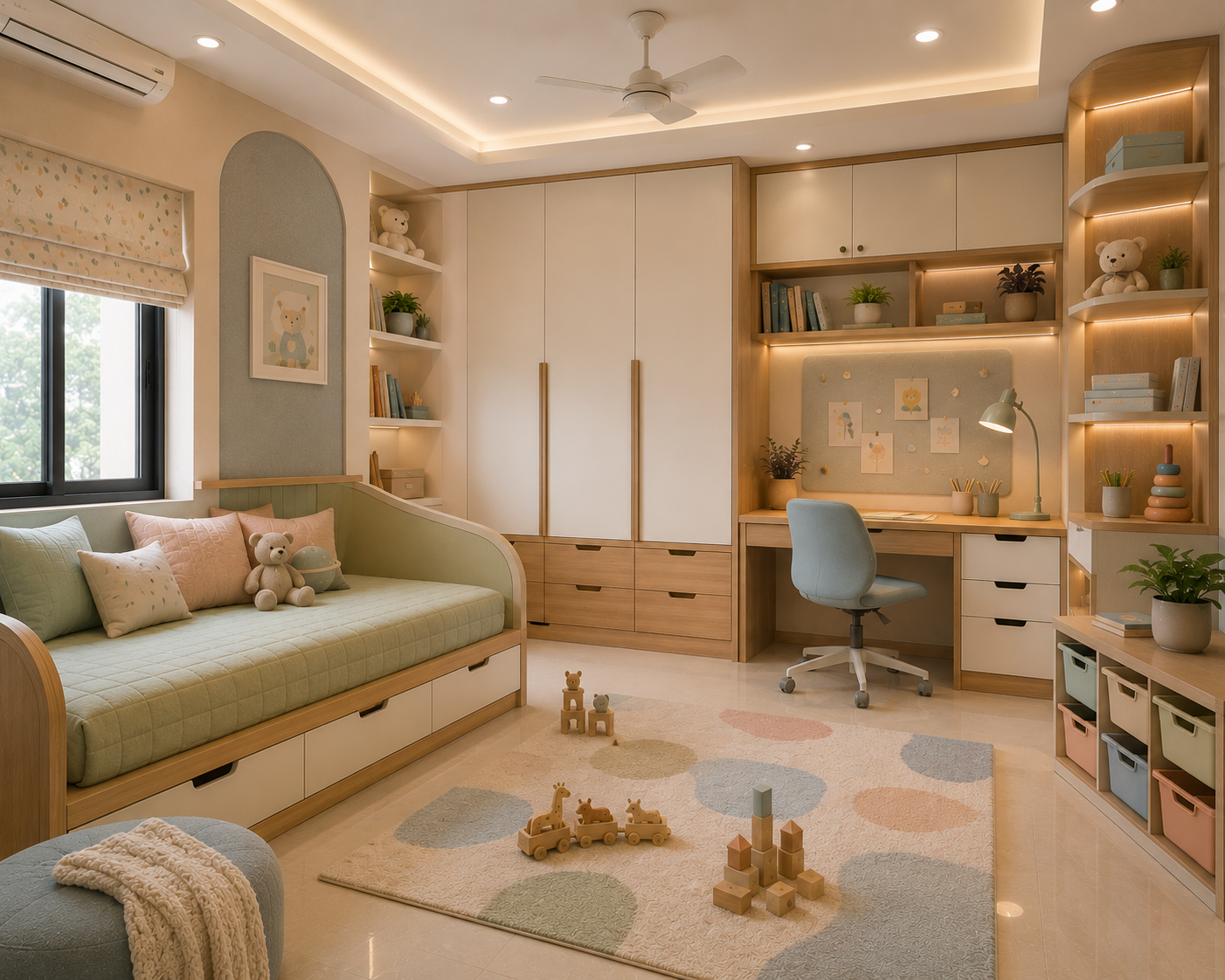
A good kids room should feel cheerful, safe, organised, and comfortable. It should support sleep, study, play, storage, creativity, and future growth without making the room feel crowded.
Focus on practical storage, safe furniture, soft colours, good lighting, durable materials, and flexible themes. With smart planning, even a compact kids room can become a beautiful and functional space your child enjoys every day.