
How Colors and Textures Shape the Interior of a Home
How Colors and Textures Shape the Interior of a Home
When we think about beautiful interiors, we often notice the furniture, lighting, or layout first. But two of the most powerful design elements in any home are colors and textures. They influence how a space feels, how large or cozy it appears, and even how comfortable and inviting it becomes. A well-designed home is not only about placing the right furniture in the right corners — it is also about creating the right mood, balance, and personality through thoughtful use of color and texture.
In interior design, colors and textures work together to give life to a space. While color creates visual mood and emotional impact, texture adds depth, warmth, contrast, and character. Together, they can transform a plain room into one that feels elegant, relaxing, energetic, luxurious, or welcoming.
Why Colors Matter in Home Interiors
Color is one of the first things people notice when entering a room. It sets the overall tone and strongly affects how the space is experienced. Different colors create different emotions, which is why choosing the right palette is an important part of interior design.
Soft neutral shades like white, beige, cream, and light grey often make a room feel calm, spacious, and timeless. These colors are commonly used in modern homes because they create a clean base and allow furniture and decor to stand out. On the other hand, deeper tones like navy blue, forest green, charcoal, or burgundy can make a room feel rich, dramatic, and sophisticated.
Warm colors such as yellow, terracotta, peach, and muted orange can bring energy and comfort to a room. Cool tones like blue, green, and lavender often create a peaceful and refreshing atmosphere. That is why bedrooms may benefit from soothing colors, while living rooms and dining spaces can handle slightly warmer and more expressive shades.
The right colors can also influence how large or small a room feels. Lighter shades tend to make spaces look bigger and brighter, while darker colors can create a more intimate and cozy feel.
The Emotional Impact of Color
Every color carries a certain emotional quality. This is why color selection in interiors should go beyond trend and focus on how you want each room to feel.
For example, a living room designed in soft beige and warm brown tones may feel grounded and welcoming. A bedroom with muted blues and off-whites may feel peaceful and restful. A kitchen with white and sage green may feel fresh and clean. A home office with earthy neutrals and subtle green accents may encourage focus and calmness.
The emotional role of color becomes even more important in homes where comfort and personal expression matter. Choosing the right shades can make your interiors feel more aligned with your lifestyle and personality.
Why Texture Is Just as Important
While color catches the eye, texture creates the feeling of depth and richness in a room. Without texture, even a well-colored room can feel flat or unfinished. Texture adds dimension and makes interiors more visually engaging.
In simple terms, texture refers to the surface quality of materials and finishes. It can be smooth, rough, soft, glossy, matte, natural, polished, woven, or layered. Examples of texture in home interiors include wooden furniture, linen curtains, velvet cushions, stone walls, jute rugs, leather chairs, matte paint finishes, and metallic accents.
Texture plays a major role in making a home feel warm and lived-in. A room with only smooth surfaces like glass, marble, and polished tiles may look elegant, but it can also feel cold if there is no softness added through fabrics, rugs, or wood. Similarly, a neutral room becomes much more inviting when different textures are introduced through upholstery, wall finishes, cushions, throws, and decor.
How Colors and Textures Work Together
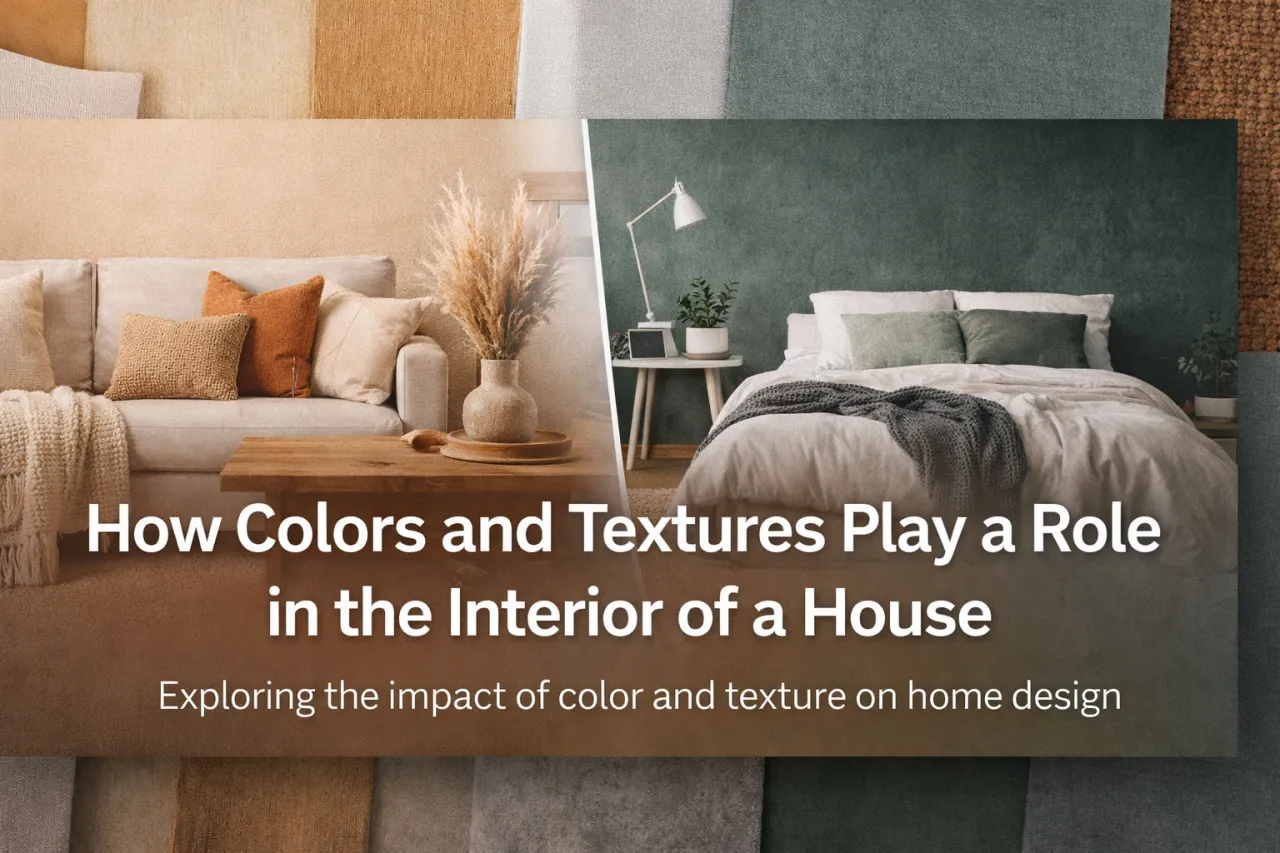
The real beauty of interior design appears when colors and textures are used together thoughtfully. A neutral color palette can become much more interesting when layered with rich textures. For example, a beige living room can look far more luxurious when combined with a textured rug, soft curtains, wooden furniture, and woven decor pieces.
Similarly, bold colors can feel more balanced when paired with the right textures. A dark green wall may look stunning when softened with linen upholstery, natural wood, and warm lighting. A white bedroom can avoid looking too plain by adding textured bedding, upholstered headboards, knitted throws, and a soft area rug.
Colors bring mood, and textures bring life to that mood. One without the other can sometimes feel incomplete. Together, they create spaces that feel balanced, comfortable, and visually appealing.
Using Colors and Textures in Different Rooms
Living Room
The living room is often the most expressive part of the house, so it benefits greatly from a thoughtful blend of color and texture. Neutral sofas can be enhanced with textured cushions, layered rugs, wooden tables, and curtains in soft fabrics. Accent walls in muted earthy tones or deep shades can add personality without overwhelming the space.
Bedroom
Bedrooms should feel restful and comfortable. Soft color palettes such as off-white, beige, pastel grey, muted blue, or warm taupe work well here. Texture can be introduced through bedding, upholstered furniture, curtains, rugs, and soft lighting. This creates a layered and cozy feel that supports relaxation.
Kitchen
In kitchens, color and texture influence both style and practicality. Cabinet finishes, backsplash materials, countertop surfaces, and flooring all contribute to the visual tone of the space. Matte finishes, wood grains, stone textures, and subtle colors can create a kitchen that feels elegant and functional at the same time.
Bathroom
Bathrooms also benefit from texture, especially through tiles, stone finishes, mirrors, and fittings. Light colors can make smaller bathrooms feel larger, while textures in tiles or vanity finishes add depth and sophistication.
Dining Area
Dining spaces often look more inviting with warm colors and natural textures. Wooden dining tables, fabric-upholstered chairs, textured wall paint, and statement lighting can turn a basic dining area into a warm gathering spot.
The Importance of Balance
One of the key principles in using colors and textures is balance. Too many bold colors can make a space feel busy, while too many textures can make it feel cluttered. At the same time, using only flat colors and smooth surfaces can make a room feel dull.
A balanced approach often works best. Start with a base color palette, then build layers using different textures. For example, if your walls and furniture are in neutral shades, you can introduce warmth through wood, softness through fabric, and contrast through metal or stone accents. If your room already has strong colors, textures can help soften and balance the visual impact.
The goal is not to overfill a room but to create enough variation that the space feels interesting, comfortable, and complete.
Natural Textures Bring Warmth
Natural materials are especially effective in home interiors because they add timeless texture and warmth. Wood, cane, linen, cotton, stone, clay, and jute are widely used because they make spaces feel more grounded and welcoming. These materials also work beautifully with both modern and traditional interiors.
Even a simple room can feel elevated when natural textures are included thoughtfully. A wooden console, woven chair, textured cushions, or natural-fiber rug can instantly make a home feel more inviting.
Final Thoughts
Colors and textures are not just decorative details — they are essential elements that shape the entire feel of a home. Colors influence mood, perception, and atmosphere, while textures add depth, comfort, and personality. When used together well, they create interiors that are not only beautiful to look at but also pleasant to live in.
Whether you prefer a calm neutral home, a bold modern interior, or a warm earthy space, the right combination of colors and textures can bring your vision to life. Good interior design is not only about what you see, but also about what you feel when you enter a room. That feeling is often created by the perfect balance of color, texture, and thoughtful design.
Turn this idea into a plan for your home
Visualise your space, understand the likely budget, or find a professional who can bring the idea to life.