
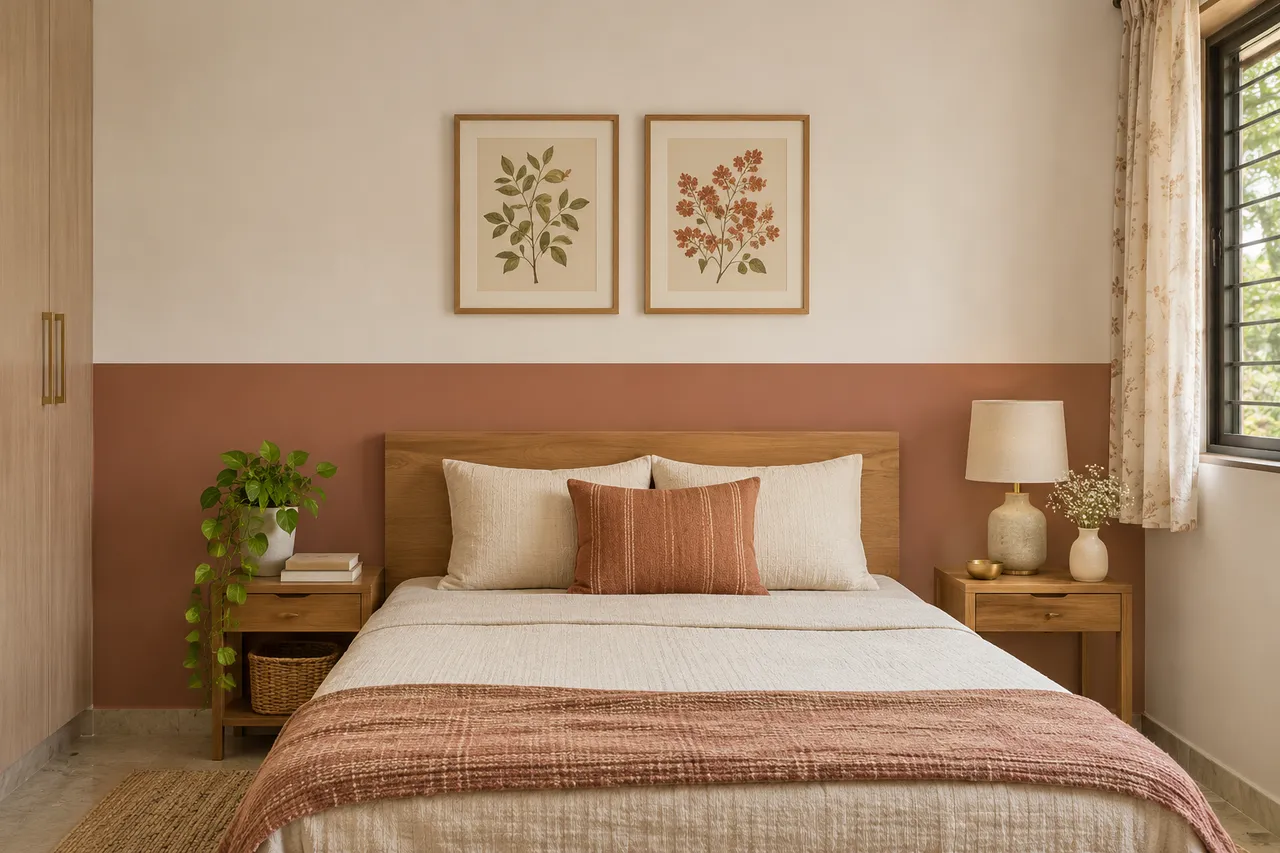
Half-Painted Bedroom Wall Ideas Behind the Bed
A half-painted bedroom wall uses a horizontal colour division to frame the bed without repainting every surface. Choose the line from the actual headboard, furniture and wall proportions, then test large samples under normal lighting. Confirm the paint system and preparation before work; the reference height in a photograph is only a starting point.
What to prepare
Tape measure, paper templates or suitable removable marking tape for a trial, labelled paint samples, photographs of the bed and adjacent walls, and the paint manufacturer’s preparation and application guidance.
Decide what the colour division should do
Use the line to connect the bed with the wall, create a backdrop for existing furniture or introduce a colour without carrying it around the whole room. Write that aim before selecting a shade. If you only want a small accent, a textile or artwork may achieve it with less work.
Include the entire headboard wall in the decision. Doors, switches, wall lights and nearby wardrobe edges can affect the composition. A line that looks balanced behind an isolated bed may appear arbitrary when it runs into other features.
Measure from the actual furniture
Record the bed and headboard position, bedside surfaces and any existing wall-mounted fittings. Create a temporary line on the wall and photograph it from the doorway. Compare a few positions rather than assuming that exactly half the wall height is required.
Check the view while seated in bed as well as standing. Keep access and functional controls in their intended positions; moving electrical fittings merely to suit a decorative line introduces a different scope. Discuss such changes separately with a suitable professional if they are genuinely needed.
Choose two colours as a pair
Compare the lower and upper colour together, not as independent catalogue favourites. Add the retained floor, headboard and bedding to the sample group. A warm white can read differently beside clay, blue or green, and a screen may hide those relationships.
Apply or obtain samples using the product’s recommended sampling method. View them vertically and under the lights you normally use. Record exact product names and finish references so the approved sample can be related to the paint order rather than remembered as “the warmer one.”
Test the division with adjacent walls
Decide where the colour stops at corners and openings. A single-wall treatment, a return into a niche and a line carried around the room have different effects and quantities. Draw the intended extent clearly before asking for a quotation.
Look at the wall next to the wardrobe and window. If the division creates a small awkward strip, review the composition before painting. You may choose a single feature wall instead of wrapping the colour everywhere. The simplest boundary is often easier to understand, price and maintain.
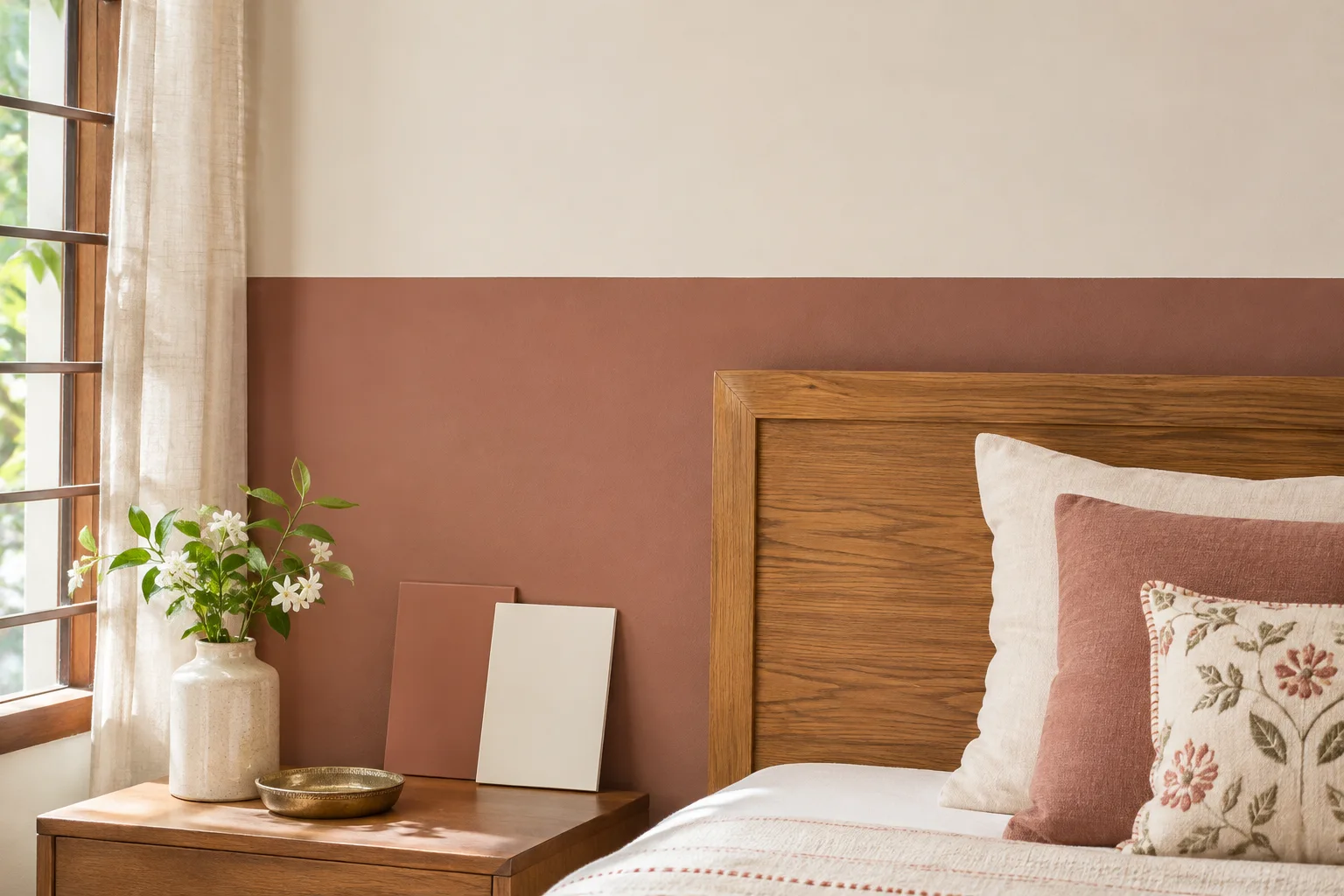
Resolve the surface before decorating
Inspect the wall condition and discuss repairs, damp concerns or unstable coatings with the appropriate professional. Paint colour does not correct an underlying problem. Ask which preparation and compatible coating system is required for the actual surface.
Avoid treating the clean edge in an image as instructions for every wall. Product guidance determines preparation, application conditions and drying or recoating intervals. If using a painter, include those responsibilities and protection of furniture in the written scope rather than assuming they are part of a colour-selection price.
Specify a clean, agreed finish
Record the line position, which colour is above and below it, the extent of work and the finish level expected. Ask how the painter will establish the line and protect adjacent surfaces. Choose an appropriate method with them instead of prescribing improvised materials from a general article.
Approve a representative area before the whole wall is completed if the scope allows. Review the result under ordinary room lighting. Small marks and a poorly planned boundary can be more noticeable than the shade difference you spent the most time comparing.
Coordinate bedding without buying a complete set
Start with existing bedding and one sample of any proposed textile. A plain bed can let the wall division provide the detail. If you want pattern, choose a limited addition and compare it in the room before ordering several pieces.
The wall line does not have to match every bedside object. Keep useful lamps and storage if they work. A deliberate relationship between a few large elements is more practical than replacing all accessories to repeat the new colour exactly.
Keep a maintenance record
Save paint product references, the approved line measurement and photographs of the finished wall. Ask the product supplier about cleaning and future touch-ups. Retain material only as advised and identify it clearly rather than storing an unlabelled container.
After using the room, review whether the single-wall change is enough. A half-painted wall can be a complete refresh by itself. You do not need to extend the scheme into doors, ceilings or wardrobes unless those changes serve your original aim and have a clear scope and budget.
Compare the practical options
| Option | What to check |
|---|---|
| One headboard wall | Limited scope; define corner and opening stops |
| Colour carried around the room | Check every junction and furniture relationship |
| Textile trial first | Compare the palette before commissioning paint work |
Build a useful budget
Budget for sampling, preparation, protection, the specified paint system and labour if required. Ask whether repairs and cleanup are included. Measure the actual surfaces rather than estimating the work from bedroom floor area alone. Separate optional bedding or decor purchases from the painting allowance so you can decide whether the wall change is sufficient.
Planning time and supplier schedule
Allow an hour for a line-position trial and sample review, then check the preferred pair in another light condition. The painting programme depends on preparation, product instructions and site conditions. Obtain those details from the responsible supplier or painter instead of assuming one universal weekend completion time.
Frequently asked questions
Must the dividing line be at half the wall height?
No. Test it against the actual headboard, fittings and surrounding walls. The term describes a two-part treatment, not a mandatory measurement.
Can paint cover a damp problem?
A decorative coating is not a diagnosis or repair. Resolve underlying concerns with appropriate professional advice before painting.
Do both colours need the same finish?
Ask the supplier about the chosen products and desired result. Coordinate appearance, compatibility and care rather than choosing by colour name alone.
Plan the next step with WallsToWonder
Read 10 Colour Pairings for Indian Homes: Where to Use and Test Them for the related planning checks. Explore the overall look with Design My Room, keeping your retained furniture and measured requirements in the brief. Use physical samples and product information for final choices.
Turn this idea into a plan for your home
Visualise your space, understand the likely budget, or find a professional who can bring the idea to life.