
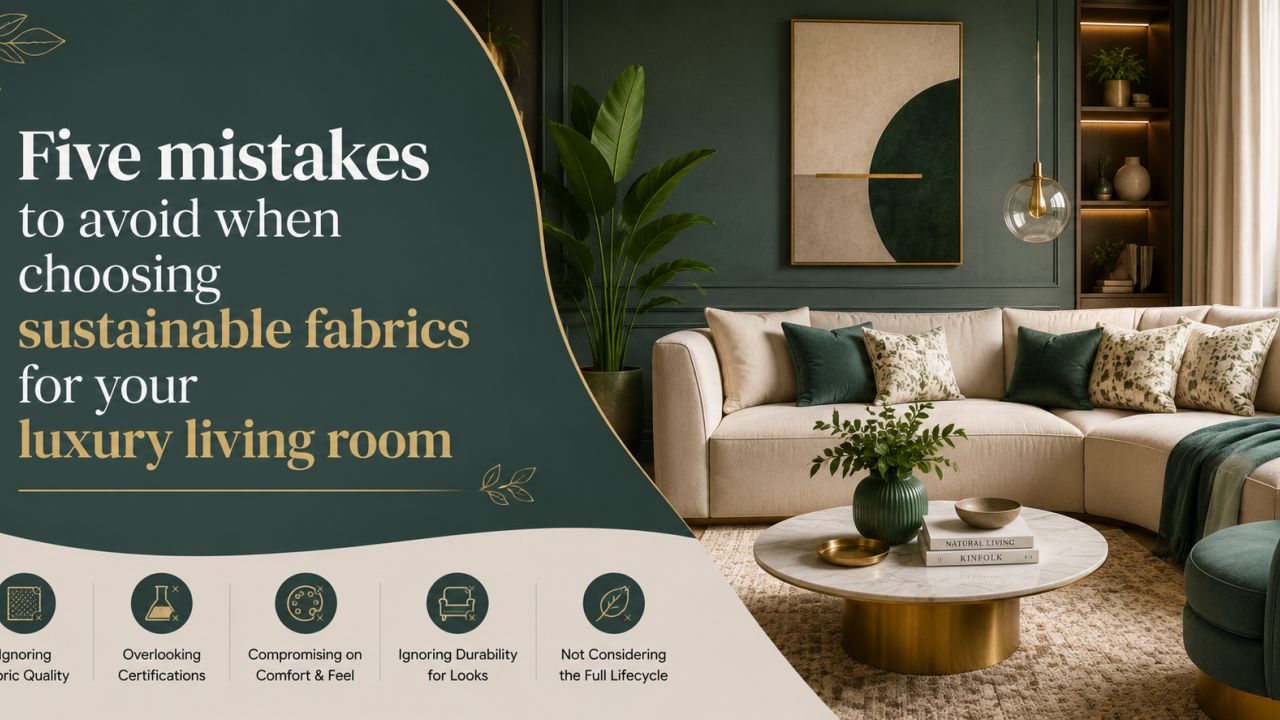
Five Sustainable Fabric Mistakes to Avoid in a Luxury Living Room
A luxury living room is judged by more than its silhouette. Upholstery that pills early, curtains that fade unevenly or cushions that cannot be cleaned will undermine an otherwise considered interior. Sustainable fabrics can reduce environmental impact, but the label alone does not guarantee a sensible choice.
If you are comparing designers and companies serving your area, start with the living room design ideas section and save examples that show how fabric is used in real schemes. Then take the five cautions below into your designer meetings.
First, understand what sustainable means for your project
Sustainability can refer to the fibre, farming or manufacturing process, recycled content, responsible sourcing, product lifespan, repairability, or the way a fabric is disposed of. These are different claims. Organic cotton, recycled polyester, linen, hemp, wool and fabrics made from regenerated fibres each have different performance and care requirements.
For an Indian home, also consider dust, humidity, strong sunlight, children, pets, occasional entertaining and the availability of local cleaning or reupholstery services. A fabric that looks responsible on a sample card may be a poor choice if it needs replacement after two years.
Five mistakes to avoid when choosing sustainable fabrics
1. Treating a sustainability label as a performance certificate
Certification or recycled content can be useful evidence, but it does not tell you whether a fabric will withstand a frequently used sofa. Check the technical information: abrasion or rub performance, colourfastness, seam behaviour, pilling resistance, cleanability and suitability for upholstery. The exact test and rating conventions may differ between suppliers, so ask what the figure means rather than comparing numbers blindly.
For occasional accent chairs, a delicate weave may be reasonable. For a family sofa, dining-adjacent seating or a window seat, durability should be a first filter. Sustainable design is not sustainable if the whole cover must be discarded prematurely.
2. Choosing the same fabric for every application
Luxury rooms often coordinate the sofa, curtains, cushions and occasional chairs. Coordinating is not the same as using one fabric everywhere. Upholstery needs resistance to friction; curtains need drape, light control and colour stability; cushions may benefit from removable covers and a softer hand.
Use a material palette instead: perhaps a robust woven upholstery, a lighter curtain textile and a small quantity of textured trim. This reduces waste from over-specifying an expensive fabric and makes repairs easier. Ask for the fabric width and pattern repeat because they affect both quantity and cutting waste.
3. Ignoring care, cleaning and indoor conditions
A fabric can be responsibly produced and still be impractical in a home with open windows, frequent dust or direct afternoon sun. Dark colours may show lint; loose weaves can catch on jewellery; natural fibres can respond to moisture and sunlight. None of these traits is automatically a problem, but they must match the room.
Before approving a fabric, request the care code, recommended cleaning method, shrinkage guidance and sunlight advice. Ask who will clean the finished covers and whether removable covers can actually be taken off without damaging the construction. Never assume that a removable-looking cushion has a washable cover.
4. Focusing on fibre origin while overlooking construction and longevity
A natural fibre is not always the better choice, and a synthetic fibre is not always the worse one. A durable recycled textile that remains in service for many years may be a more practical decision than a fragile natural fabric that needs frequent replacement. Blends can improve stability, cleanability or comfort, though they may complicate recycling at end of life.
Look closely at the weave, backing, finish and stitching. Request a larger sample and place it near the proposed window, flooring and lighting. Rub it lightly, inspect the reverse, and check how the colour changes in daylight and warm artificial light. Material quality is part of sustainability.
5. Accepting an unclear fabric quotation
A quotation that says premium sustainable fabric without a supplier, collection, composition, width or quantity is not a useful specification. It can make two designers appear to offer similar value when they are pricing entirely different materials.
Ask for a room-by-room schedule covering fabric name or code, composition, width, pattern repeat, quantity, unit basis, stitching, lining, installation, taxes if applicable, wastage assumptions and replacement terms. Confirm whether the quote includes testing, sample approval and alterations. This is especially important when the designer is coordinating upholstery, curtains and loose furnishings through different vendors.
How to compare designers before you shortlist fabrics
Ask each designer to explain the reasoning behind the material palette, not just present attractive images. A strong comparison includes relevant experience with apartments, independent homes, villas, rental upgrades or renovation projects similar to yours. It should also distinguish between design consultation, space planning, sourcing, custom furniture, upholstery, soft furnishings, site coordination and installation.
Questions for the first meeting
- Which fabrics are suitable for the room's use, sunlight and cleaning routine?
- Can you provide technical sheets and physical samples before ordering?
- Who measures, orders, inspects and installs the soft furnishings?
- How are substitutions approved if a selected fabric becomes unavailable?
Red flags in the proposal
- Only mood images, with no material schedule or scope boundaries.
- Environmental claims without composition, source or supporting documentation.
- A large advance requested before samples, measurements and deliverables are clear.
- Pressure to approve a substitute without showing it in the room's lighting.
Use the designer directory to build a comparison list, then ask for a written scope. Services and fees vary: some professionals charge for design alone, while others manage procurement and execution. Do not compare a sourcing-only proposal with a full-service execution proposal as if they were equivalent.
Set the budget before the fabric shortlist
Fabric cost is only one part of the soft-furnishing budget. The final figure can change with fibre and finish, width, pattern repeat, required metreage, lining, tailoring, upholstery labour, foam or cushion changes, transport, installation, taxes and the number of windows or seating pieces. A large repeat can increase cutting waste, while a complex curtain heading or curved sofa can increase labour.
For a clearer conversation, separate the allowance for upholstery, window treatments, cushions and installation. If you are renovating a full apartment, villa or independent home, keep a contingency for measurement changes and approved substitutions. The interior cost estimator can help you organise an early scope, but treat any result as a planning aid rather than a final quotation.

Cost planning card
Use the estimator to list room scope and test how changes in furnishings or execution affect your working allowance.
Plan an interior budget
Quotation review card
Use the checker to spot missing descriptions or unclear line items before you discuss the proposal with a designer.
Review an interior quotationInspect the material before paying an advance
Request samples large enough to judge scale and texture. A small swatch can hide slubs, directional shading, pattern repeats and the way a fabric gathers. View it in daylight, evening light and beside the finishes already approved. If the home is still under construction, repeat the check when the final lighting is installed.
| Check | What to ask | Why it matters |
|---|---|---|
| Composition | What are the fibres, blend percentages and backing materials? | Helps assess feel, care, durability and future disposal options. |
| Performance | Is it suitable for upholstery or curtains, and what testing supports that? | Prevents a decorative textile being used in a high-friction location. |
| Care | Can covers be removed, and who can clean them? | Maintenance is part of the fabric's useful life. |
| Supply | Is the same batch available, and what is the lead time? | Reduces colour mismatch and programme delays. |
| Quotation | Are quantity, wastage, tailoring and installation listed separately? | Makes designer proposals genuinely comparable. |
Before paying an advance, confirm the cancellation or substitution process, sample approval, delivery responsibility, damage inspection and what happens if measurements change. Keep the approved code and sample with the quotation. If the agreement is unclear, pause and ask for a revised document rather than relying on a verbal promise.
Make the final decision with a simple trade-off
Score each shortlisted option against durability, care, appearance, comfort, evidence of sourcing, repairability, lead time and total installed cost. You do not need the most expensive or the most natural fabric in every category. The better decision is the one that fits the room's use and stays attractive long enough to avoid unnecessary replacement.
If you are still defining the visual direction, use Find my style to clarify preferences, or explore Design my room before asking a designer to develop a detailed palette. These tools can support the brief; physical samples and professional technical advice should make the final call.
Browse more ideas through all WallsToWonder posts, then return to the living room collection when you are ready to compare layouts, materials and furnishing approaches. A clear brief gives every designer a fairer basis for quotation.
Frequently Asked Questions
What is the most sustainable fabric for a luxury sofa?
There is no single best option. Choose a well-documented, durable fabric that suits the room's use, can be maintained locally and is likely to remain in service for many years.
Are natural fabrics always more sustainable than synthetic fabrics?
No. Fibre origin is only one factor. Durability, manufacturing, finishes, cleaning needs, blend composition and product lifespan all affect the decision.
What should a sustainable fabric quotation include?
It should identify the supplier or collection, composition, width, quantity, pattern repeat, wastage, tailoring, lining, installation, taxes where applicable and substitution terms.
How can I test a fabric before ordering living-room upholstery?
Request a large sample, view it in changing light, inspect the weave and reverse, ask for performance data, and confirm cleaning and repair arrangements.
What should I ask an interior designer before paying an advance?
Ask for the detailed scope, material schedule, milestones, payment terms, sample approval process, procurement responsibility, substitution policy and cancellation or refund conditions.