
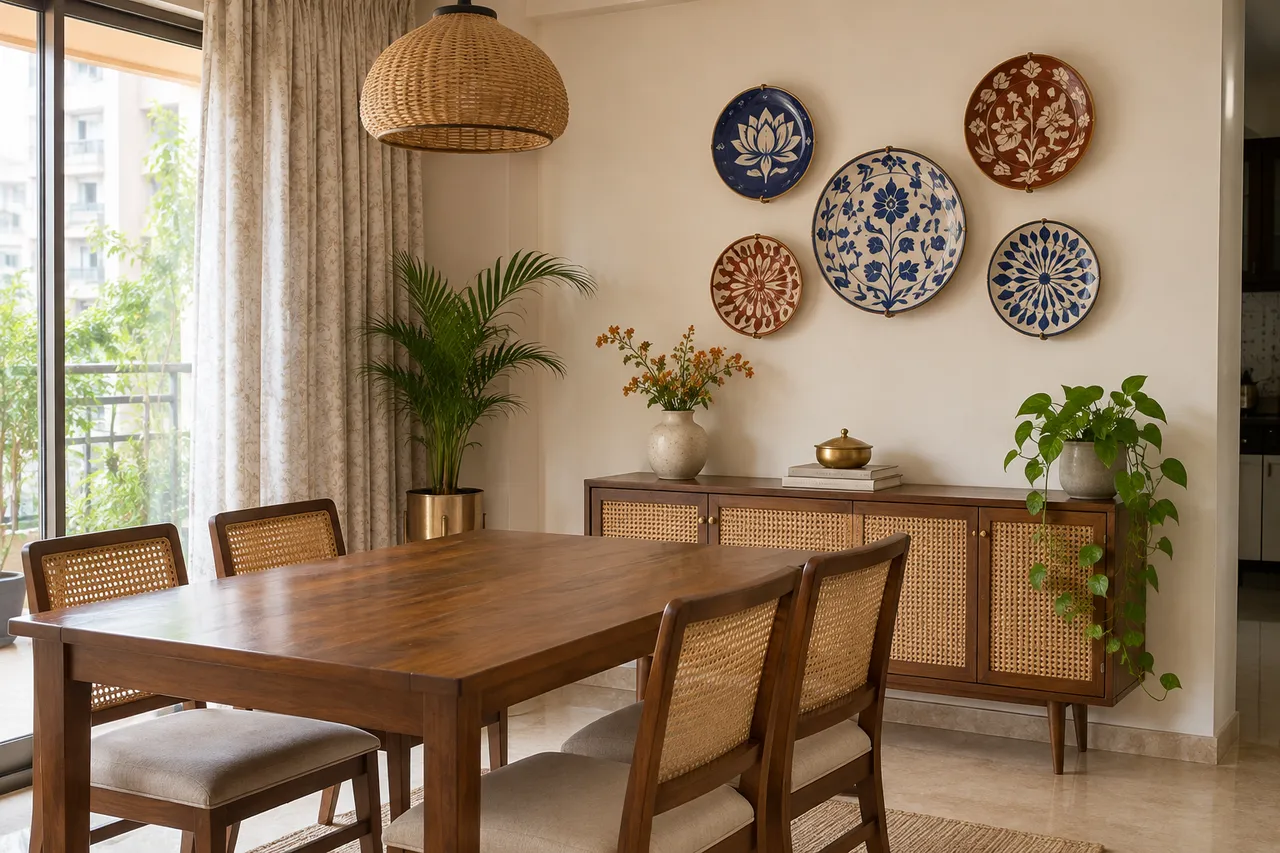
Dining Room Plate Display Ideas With a Clear Layout
Plan a dining-room plate display by choosing the wall, testing paper outlines and checking suitable support for each object. Use plates selected for display, keep the dining routine clear and avoid placing fragile items where they are likely to be knocked. A collected arrangement should be understandable before any holes are made.
What to prepare
Plate dimensions and condition notes, paper circles, removable tape, a pencil, photographs of the wall and furniture, and product details for display hardware. Ask an appropriate installer to assess wall and fixing requirements.
Choose the wall before the collection grows
Look at the dining area with chairs pulled out and the sideboard in use. Choose a wall where the display can be seen without crowding a daily route or placing fragile objects in a likely impact area. Review nearby switches, doors and other artwork.
A smaller collection beside the table may be more useful than a large installation over occupied seats. There is no obligation to fill the entire wall. Start with the objects you genuinely want to display and decide whether that wall provides an appropriate setting for them.
Select plates by condition and meaning
Use a small group with a relationship you can explain: a shared colour, a repeated motif, similar shapes or pieces collected over time. Inspect each object and record its dimensions and weight. A decorative plate is not automatically appropriate for hanging merely because it has a flat back.
Keep fragile, valuable or uncertain-condition items in the discussion with a suitable specialist. Do not improvise holes, adhesives or repairs on ceramics from a styling guide. If a piece cannot be supported appropriately, display it another way or leave it out.
Build a full-size paper arrangement
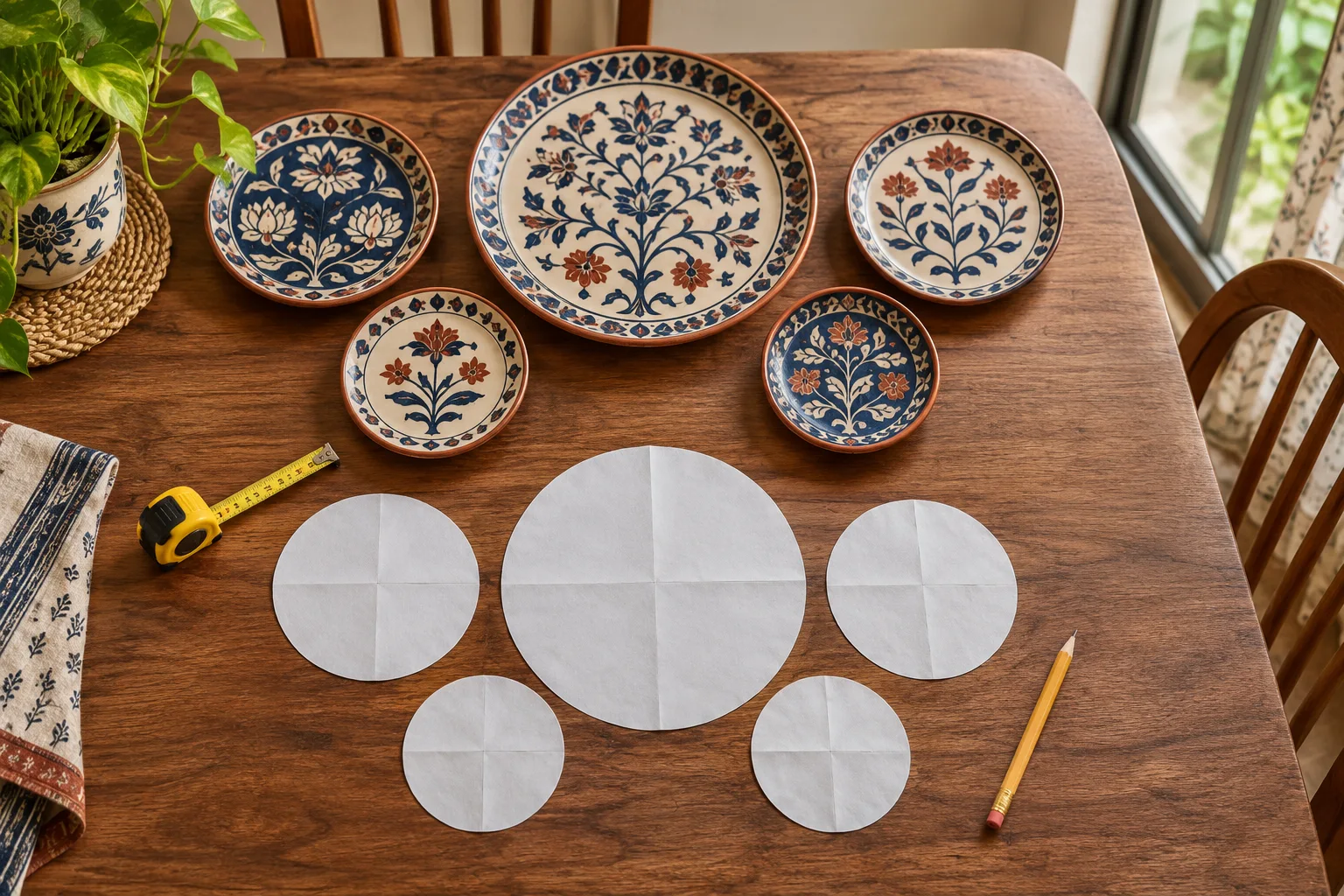
Cut or draw paper circles matching the actual plate outlines. Mark their centres and use removable tape compatible with the wall finish for a temporary layout trial. Compare a simple row, a restrained cluster or an arrangement around one larger piece.
View the templates from the room entrance and seated positions. Include the sideboard or table beneath them rather than looking at the wall alone. Record the chosen arrangement in a photograph and a dimensioned sketch before removing templates or handing the plan to an installer.
Balance pattern rather than forcing symmetry
A repeated colour can connect plates of different sizes, while similar shapes can link varied patterns. Try one larger or more detailed piece as the anchor and arrange quieter pieces around it. Exact symmetry is optional, but the relationship should be deliberate.
Look at the spaces between outlines as well as the objects. If one part appears crowded, remove a plate before enlarging the whole display. The aim is a group that reads clearly at normal viewing distance, not the maximum number of pieces that can fit inside a rectangle.
Review support for the actual objects
Ask the supplier or installer which supports suit each plate’s shape, weight and surface. Review how the object is retained and removed for care. Product instructions, wall conditions and installation determine suitability; a neat-looking hook in a photograph is not enough.
Avoid assuming one adhesive or hanger works on every ceramic and wall finish. Confirm who is responsible for selecting and installing the fixings. Keep plate identification and support details in the record, particularly where different pieces require different arrangements.
Keep dining and cleaning convenient
Check chairs, serving surfaces and the route around the table once the templates are in place. A display should not require diners to avoid a normal movement or make the sideboard awkward to use. Keep essential storage accessible.
Plan how the plates will be dusted and, if appropriate, removed without awkward reaching. Follow care advice for decorated or older objects. Do not assume that a plate displayed on a wall should be routinely washed in the same way as everyday tableware, especially when its materials or decoration are uncertain.
Connect the display with the room simply
Choose one or two colours from the plates for existing textiles or a small tabletop object if you want continuity. You do not need a matching table setting. Keep the dining table available for meals and let the wall provide most of the decorative detail.
Compare the arrangement under the room’s actual lights. Reflective glaze may create bright spots from some positions. Review the viewing angle and lighting with the templates and sample pieces before adding new fittings solely for the display.
Make future changes manageable
Retain a photograph of the approved layout and the dimensions between centres. If a plate is replaced later, review the support and balance again; a similar diameter does not establish the same weight or suitability. Keep spare or removed supports identified.
You can also begin with fewer plates and leave room to expand after using the dining area. A slower collection can be more personal than buying a full matching set just to occupy a wall. Each addition should earn its place through fit, meaning and a support arrangement you can maintain.
Compare the practical options
| Option | What to check |
|---|---|
| Simple row | Clear relationship above suitable furniture |
| Small cluster | Mix sizes around one anchor piece |
| Sideboard display instead | Compare when wall mounting is unsuitable |
Build a useful budget
Price the objects, any condition assessment, suitable supports and installation separately. If you already own the plates, retaining them does not eliminate the cost of appropriate display hardware. Avoid spending the entire allowance on objects before checking support. A paper-template trial is a low-cost way to revise the composition before installation.
Planning time and supplier schedule
Allow 45–60 minutes to measure the plates and test two paper layouts. Leave the preferred version visible through one ordinary meal to review seated views and movement. Specialist assessment and installation require their own schedule; confirm them after the actual objects and wall are reviewed.
Frequently asked questions
Do all plates use the same hanger?
No. Shape, weight, surface and the support system matter. Obtain guidance for the actual objects and wall.
Must a plate display be symmetrical?
No. A shared colour, motif or anchor piece can connect an informal group. Test full-size outlines before fixing.
Can I drill a valuable old plate myself?
Do not use this styling guide as repair or alteration instructions. Seek appropriate specialist advice for fragile or valuable objects.
Plan the next step with WallsToWonder
Read Wall Hanging Ideas: How to Choose Size, Position and Fixings for the related planning checks. Explore the overall look with Design My Room, keeping your retained furniture and measured requirements in the brief. Use physical samples and product information for final choices.
Turn this idea into a plan for your home
Visualise your space, understand the likely budget, or find a professional who can bring the idea to life.