
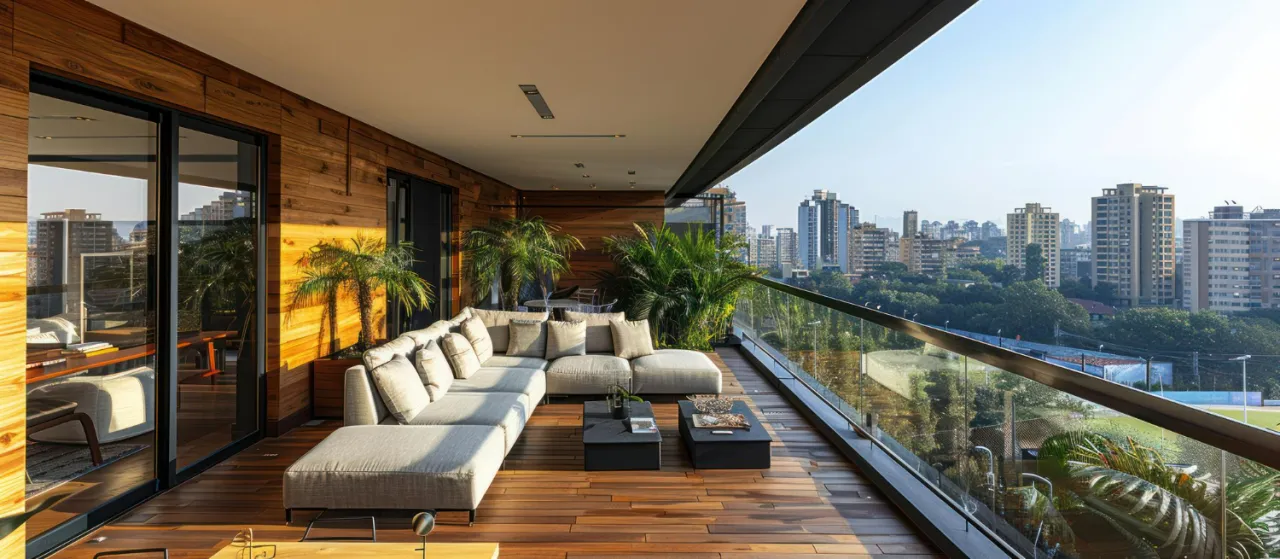
Balcony Design: Seating, Plants, Access and Care
A usable balcony starts with clear access, working drainage and furniture suited to the actual exposure. Measure the space, test seating and plan plant care before adding finishes. Keep existing guards and essential access intact. Fixed, suspended or heavy additions require appropriate review rather than an assumption that a reference image fits your balcony.
Understand the existing balcony
Measure the clear floor area and record the door movement, drain locations, service points and existing guard. Observe rain exposure, direct sun and wind at different times. An enclosed sheltered balcony and an exposed one need different product discussions.
Photograph existing damage or water problems and seek appropriate assessment before covering surfaces. Check building rules and relevant permissions for alterations. Do not modify guards, enclose the balcony or conceal access to solve a styling problem without the necessary review.
Try seating before buying
Mark the full furniture footprint and sit in a temporary chair in the intended position. Check whether the door opens and another person can pass. Include the space needed to pull out a chair or fold a table.
Choose the amount of seating the balcony comfortably supports rather than copying a lounge arrangement. A single chair and a small surface may serve daily use better than a bulky set. Check storage and handling requirements for furniture that needs to be moved during poor weather.
Select products for the actual exposure
Ask the manufacturer or supplier whether the specific furniture, fabric and finish suit the intended outdoor conditions. “Outdoor look” is not a performance specification. Review cleaning, drying, cover and storage guidance.
Check cushions and metal fittings as well as the main frame. Ask which conditions affect warranty cover. For lighting or powered accessories, have a suitable professional assess the location and product requirements; do not extend an indoor setup into a wet or exposed area casually.
Plan plants around care and placement
Choose plants for the available light and the time you can give to watering and upkeep. Use stable containers and plan where excess water will go without obstructing drainage. Keep the walking area usable after placing pots.
Do not assume a railing can support hanging or heavy planters. Review any fixed, suspended or substantial addition with the appropriate professional and obtain permissions where needed. Avoid projecting items into shared space or creating unstable arrangements.
Keep drainage accessible
Locate drains and leave access for inspection and cleaning. Before adding deck tiles, mats or another floor layer, ask how the product affects drainage, door clearance and maintenance. An attractive surface can conceal debris or water problems.
Artificial grass is not automatically the best low-maintenance or lowest-cost option. Ask about the actual backing, cleaning method, drying and replacement. Compare it with retaining and cleaning the existing floor before committing.
Treat swings and fixed additions as a separate project
A swing or suspended seat introduces support and fixing requirements. Do not infer load capacity from a photograph or attach it to an unverified ceiling or railing. Seek assessment from the appropriate qualified professional and follow the product instructions.
Similarly, fixed screens, built-in seating and heavy planters need review in the context of the balcony and building requirements. Keep their cost and approval steps separate from movable decor so the simpler refresh can be considered on its own merits.
Create a practical budget and care plan
List furniture, plants, containers, delivery, fitting and any professional review. Add ongoing care items and storage where needed. Obtain actual quotations; a generic budget cannot account for unknown alterations or exposure requirements.
Allow time to observe the balcony and trial a layout before ordering. Ask suppliers for their own delivery and installation commitments. Explore WallsToWonder design ideas for visual references, then record a simple weekly routine for cleaning, watering and checking drains. The result should remain usable after rain and ordinary household use, not just when newly styled.
Frequently asked questions
Can I hang a swing from any balcony ceiling?
No. The support, fixing, product and building requirements need appropriate professional assessment.
Should I cover the floor immediately?
Inspect the existing floor and drainage first. Ask how any added layer will be cleaned and whether access remains available.
Are railing planters always suitable?
No. Do not assume the guard can support them. Review support, stability, projection and applicable permissions before use.
Turn this idea into a plan for your home
Visualise your space, understand the likely budget, or find a professional who can bring the idea to life.