
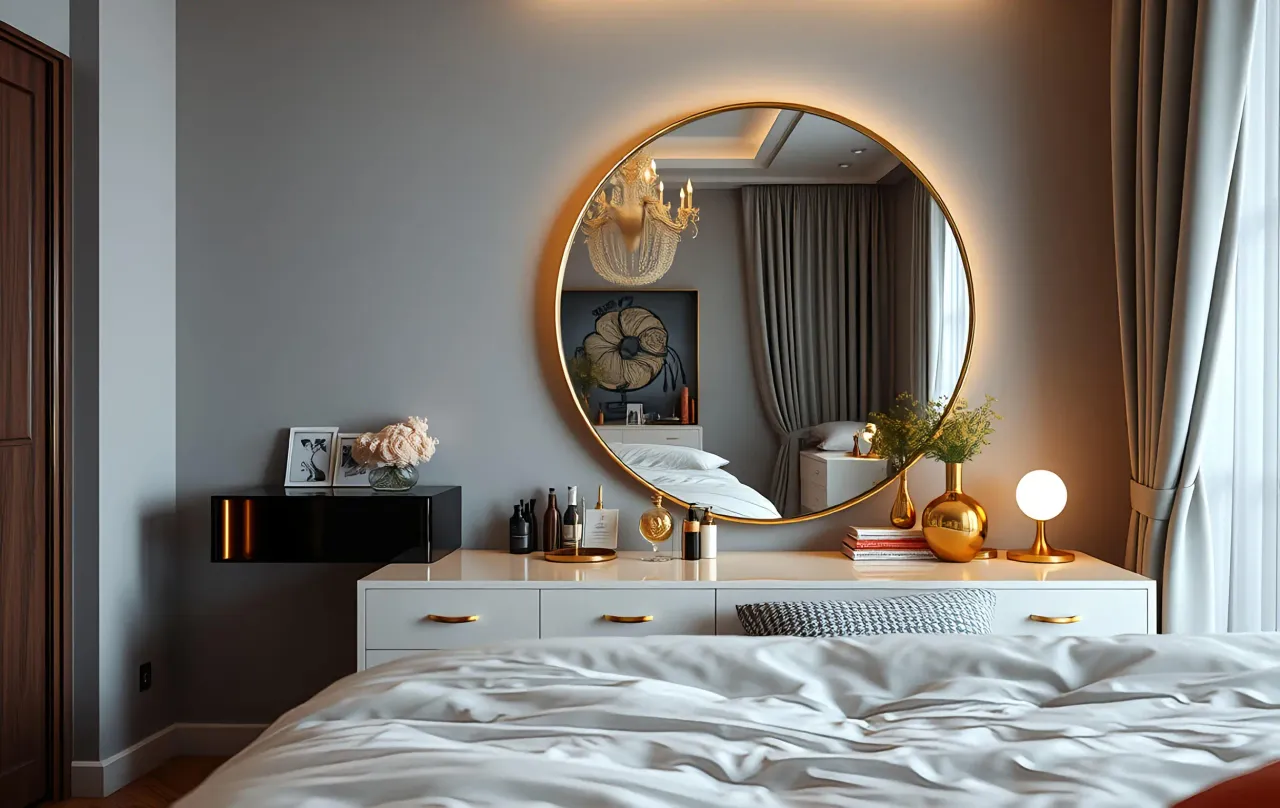
3 Small-Room Layout Tests Before Buying Furniture
A small room works better when furniture fits both the floor and the way you use it. Before buying, test the walking route, check the actual view and light, and open every moving part. These three trials reveal problems a styled photograph can hide, including blocked drawers, glare and unusable folding furniture.
Prepare a measured starting point
Measure the room at floor level and note projections such as skirting, columns and radiators where present. Record door swings, window openings, sockets and existing furniture you plan to keep. Photograph the room from each corner. Use a notebook, tape measure and removable masking tape that will not damage the finish.
Make a purchase list in priority order. A usable bed, desk or main seat comes before an extra accent table. Write the full product dimensions beside each candidate, including arms, handles and any clearance specified by the maker. Overall width alone is rarely enough.
Test 1: Walk the daily route
Mark the proposed furniture footprint on the floor. Walk from the entrance to the window, wardrobe, bed or desk while carrying what you normally carry. Repeat with the door fully open. Check that an occupied chair does not block another person.
Try the route at the busiest time of day. A room shared for working and sleeping needs to function during changeovers, not only when everything is neatly tucked away. Move or remove the least useful item if a route feels awkward. Do not assume a smaller sofa fixes a room when the main obstruction is a poorly placed cabinet.
Test 2: Check what the eye actually sees
Sit where you will spend time and look toward the window, television and mirror. A mirror may reflect a useful view, but it can also reflect clutter or a bright light source. Trial its position using a safely supported lightweight substitute or a marked outline before fixing it.
Compare paint and fabric samples next to the retained floor and large furniture. Observe them in daylight and with your normal lamps. A pale scheme is one option; the more useful aim is a coherent room with appropriate contrast for the tasks and occupants. Avoid buying an entire palette from a phone image.
Test 3: Open and operate everything
Mark not just the closed footprint but also the area occupied by an open drawer, wardrobe door, pull-out bed or folding desk. Put a chair at the desk and sit down. Check whether knees, cables and nearby furniture interfere.
For a storage bed, confirm how the mechanism opens and whether the manufacturer requires space beside or above it. For wall-mounted or fold-down furniture, obtain fixing requirements and professional advice where needed. A compact product only saves usable space if it operates safely in its installed position.
Turn the test into a buying brief
Keep a short table with item, closed size, operating size, route affected and decision. Photograph the taped layout with measurements visible. Share this evidence with the retailer or designer and request the relevant product drawing before payment.
If two products perform the same job, compare care, repair access and delivery as well as dimensions. Measure the lift, stairway and entrance route before buying large furniture. Ask whether assembly takes place inside the room and what access the installer needs.
Plan spending and time
Allow roughly an hour for an initial household layout trial; complicated rooms may need more. That is a planning allowance, not an installation commitment. Retest after changing a major item rather than assuming the original plan still works.
Set the budget by item, including delivery, assembly, fixing and disposal of replaced furniture. Spend first on the piece that solves the main functional problem. Explore WallsToWonder design ideas for options, and use WallsToWonder interior cost estimator if the project extends into built-in storage or a wider interior scope.
Frequently asked questions
Do mirrors always make a small room better?
No. Their value depends on the reflection, glare, privacy and placement. Test the proposed location before installing one.
Is multifunctional furniture always worth buying?
Only if it fits, operates conveniently and serves tasks you actually need. Check its full operating footprint.
What should I measure before ordering?
Record the room, door and window movements, product dimensions, operating clearances and the delivery route.
Turn this idea into a plan for your home
Visualise your space, understand the likely budget, or find a professional who can bring the idea to life.