
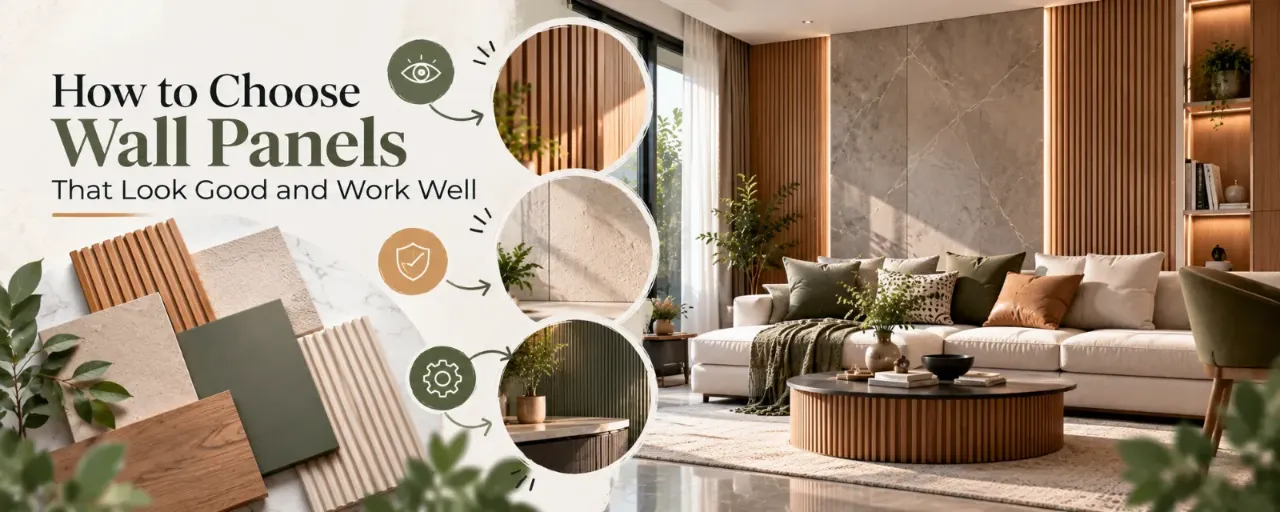
How to Choose Wall Panels That Look Good and Work Well
Wall panels can change the character of a room without requiring a complete interior makeover. They introduce texture, create visual structure and can make a plain wall feel more considered. Depending on the design, they can also conceal selected services, provide a backdrop for furniture or incorporate practical features such as shelves and storage.
However, choosing wall panels based on appearance alone can lead to problems. An elaborate design may overwhelm a small room, a delicate finish may be difficult to maintain, and poorly planned panelling can interfere with switches, lighting or furniture placement.
The right room panel design balances visual appeal with the way the space is used every day. Material selection, proportions, maintenance, installation and the room's existing features all influence whether the final result feels cohesive and remains practical over time.
Quick answer: Choose room panels according to the room's purpose, available wall space, design style, material suitability, maintenance requirements and budget. Check panel dimensions, lighting, electrical points and furniture placement before installation. The best design enhances the room without making everyday use more difficult.
1. Decide What the Wall Panels Need to Achieve
Before comparing designs, identify the purpose of the panelling. This helps determine whether you need a decorative feature, a subtle background or a solution that also provides storage or conceals selected services.
In a living room, panels behind the television or sofa can establish a focal point and bring visual structure to the space. In a bedroom, a panelled wall behind the bed can frame the headboard and help coordinate bedside lighting. In a dining area, understated panelling can distinguish the space without requiring a separate partition.
The intended function should guide the design. If you want a statement wall, you might choose a distinctive pattern or contrasting finish. If the room already contains patterned upholstery, decorative lighting or prominent furniture, a simpler panel design may create a better balance.
Also consider whether the panels need to accommodate electrical switches, sockets, television connections, concealed wiring or built-in storage. These details should be resolved before the design is finalised.
Start with a clear objective rather than choosing a pattern simply because it looks attractive in a catalogue.
2. Choose a Panel Style That Suits the Room
Room panels are available in many styles, including flat panels, decorative mouldings, vertical slats, geometric patterns, upholstered panels and wood-look finishes. Each creates a different visual effect.
Flat or simple rectangular panels can introduce structure without making a wall feel busy. Vertical slats can emphasise height and add rhythm, while horizontal divisions may create a broader visual effect. Geometric designs can become strong focal points, but they require careful proportioning to avoid competing with other elements.
Traditional mouldings may complement classic furniture and detailed interiors. Cleaner, more restrained panel designs can work well in contemporary spaces. Upholstered panels may be suitable for selected bedroom applications where a softer appearance is desired.
The best choice depends on the room's proportions, ceiling height, furniture and existing finishes. Avoid selecting a design in isolation. Consider how it will look alongside flooring, curtains, lighting and nearby walls.
A panel design should support the overall interior rather than compete with every other feature.
3. Select Materials According to Their Application
The material affects the appearance, durability, maintenance and cost of wall panelling. Before making a decision, understand the conditions in which the panels will be installed.
Depending on the product and application, options may include solid wood, engineered wood, MDF, PVC, decorative laminates, veneer finishes and upholstered systems. These materials are not interchangeable, and their suitability depends on factors such as moisture exposure, surface preparation, fixing methods and product specifications.
Wood and wood-look finishes can add warmth and texture. Painted panels can create a more uniform appearance and allow greater control over colour. PVC products may be appropriate in certain applications where their specifications meet the requirements, while upholstered panels offer a softer visual and tactile effect.
Ask the supplier or installer for the material specification, recommended installation method, cleaning instructions and relevant warranty details. If the wall is exposed to moisture, heat or frequent contact, confirm that the selected system is suitable for those conditions.
Do not assume that a material is waterproof, scratch-resistant or maintenance-free simply because it is marketed as durable. Verify the properties of the actual product before committing.
4. Balance Panel Proportions With the Room's Size
Panel design can influence how a room's proportions are perceived. However, the result depends on the pattern, spacing, colour, lighting and the surrounding furniture.
A heavily detailed design across every wall may feel overwhelming in a compact room. A more restrained treatment on one wall can introduce character while preserving visual breathing room.
In a bedroom, consider how the panelling relates to the width and height of the bed. In a living room, align the panel composition with the television, sofa or another focal point where appropriate. Avoid arbitrary divisions that leave awkward narrow sections near corners, doors or windows.
Measure the wall carefully and consider the placement of skirting boards, cornices, switches and sockets. If the panels extend across multiple walls, review how the pattern continues around corners and meets adjoining surfaces.
It is also important to consider the room's existing visual weight. Dark finishes, strong patterns and deep projections may create a more prominent feature than pale colours and shallow profiles.
Before installation, review the proposed arrangement using dimensioned drawings or a layout marked against the actual wall. This helps reveal proportion issues before materials are cut.
5. Consider Maintenance and Everyday Wear
Decorative panelling should be suitable for the people and activities in the room. A finish that looks immaculate in a showroom may require more care than expected once it is exposed to fingerprints, dust, furniture contact or regular cleaning.
In busy living areas, consider how easily the surface can be cleaned and whether its finish is likely to show marks. Deep grooves and elaborate profiles can collect dust, while delicate surfaces may need gentler cleaning methods.
For bedrooms, think about contact around the headboard and bedside areas. In corridors or other high-traffic locations, consider the possibility of scuffs and accidental impacts. In households with children or pets, the practicality of the finish and the accessibility of the panelling deserve additional attention.
Ask for care instructions specific to the selected material and finish. Confirm which cleaning products are appropriate and whether the surface needs periodic repainting, refinishing or other maintenance.
A simpler panel design may be the better choice if it provides the intended appearance with less upkeep. The goal is not to avoid decorative detail altogether, but to choose a level of detail you can comfortably maintain.
6. Coordinate Panels With Lighting, Switches and Furniture
Wall panelling should be planned alongside the other elements of the room, rather than added after all the furniture and electrical decisions have been made.
Lighting can emphasise panel texture, highlight vertical lines or create subtle shadows. Wall lights, concealed lighting and other fixtures may need specific positions or clearances, depending on the chosen system.
Electrical switches, sockets and television connections also need careful coordination. Panel thickness and the proposed fixing method can affect how these elements are positioned and accessed. Any electrical changes should be planned with an appropriately qualified professional.
Furniture placement is equally important. A decorative feature behind a sofa should relate to the furniture's dimensions, while bedroom panelling should work with the headboard and bedside tables. Avoid creating an attractive composition that becomes mostly hidden once the room is furnished.
If panels incorporate shelving, concealed storage or television mounting, confirm the relevant fixing and support requirements before installation.
Coordinating these decisions early can reduce rework and help the finished room feel intentional.
7. Compare the Full Cost Before Finalising the Design
The cost of wall panelling is not determined by the visible material alone. The final price can depend on the wall's dimensions, the panel system, pattern complexity, surface preparation, finishing, labour and installation requirements.
A straightforward design may require fewer cuts and simpler detailing, while intricate patterns or built-in features may involve more labour and coordination.
Ask for a written quotation that identifies the material, finish, measured area, installation scope and any additional components. Clarify whether the price includes surface preparation, framing or battens, adhesives or fixings, electrical adjustments, painting, finishing and cleanup.
Confirm how corners, edges, skirting boards and transitions around doors or windows will be handled. These details can affect both the final appearance and the overall cost.
Compare quotations based on equivalent materials and specifications. A lower initial price may not represent better value if important preparation or finishing work is excluded.
It is also useful to consider the cost of future maintenance. The most suitable option is one that fits the budget while meeting the room's functional and aesthetic requirements.
8. Check Installation Quality and Long-Term Practicality
Even a well-chosen panel design can disappoint if it is poorly installed. Uneven spacing, visible gaps, misaligned patterns and untidy edges can affect the entire appearance of the wall.
Before work begins, ensure the wall surface is assessed and prepared according to the panel system's requirements. Moisture issues, loose plaster or uneven surfaces should be addressed where necessary before installation.
Ask how the panels will be fixed, how joints and corners will be finished and whether the installation method is appropriate for the wall and material. For heavier systems or panels carrying mounted equipment, confirm the required support and fixing details.
Review the final layout against the wall measurements and the positions of switches, sockets and furniture. Where panels conceal wiring or services, make sure access and maintenance requirements are considered.
After installation, inspect the alignment, spacing, surface finish, edges and any integrated features. Obtain care instructions and clarify how defects or installation issues will be handled.
Good installation is an essential part of the finished design, not simply the final step after material selection.
A Practical Checklist Before Choosing Room Panels
Use this checklist before approving your room panel design:
- Define whether the panels are decorative, functional or both.
- Select a style that complements the room's furniture and existing finishes.
- Verify the material's suitability for the intended location.
- Check the dimensions, spacing and proportions of the panel layout.
- Consider cleaning, dust collection and everyday wear.
- Coordinate lighting, switches, sockets and furniture placement.
- Obtain a written quotation covering materials, preparation and installation.
- Confirm the fixing method, finishing details and installation responsibilities.
- Review maintenance instructions and relevant warranty terms.
Planning Your Room Panel Design?
Before finalising a panel style, consider how it will work with the room's proportions, furniture, lighting and daily requirements. Choosing the right materials and planning installation carefully can help you achieve a finish that remains practical as well as visually appealing.
At Walls to Wonder, thoughtful interior design is about creating spaces where visual appeal and everyday function work together.
A Final Thought
Room panels can add depth, structure and character to an interior, but their success depends on more than the pattern or finish. The material must suit its application, the proportions must work with the room, and the installation must account for lighting, furniture and everyday use.
Before finalising a design, look beyond the initial visual impression. Consider how the panels will be cleaned, how they will interact with the rest of the interior and whether their cost and maintenance requirements suit your needs.
When these factors are considered together, wall panelling can become a lasting part of the design rather than a decorative feature that compromises the room's practicality.
At Walls to Wonder, thoughtful interior design is about creating spaces where visual appeal and everyday function work together.
Frequently Asked Questions
1. Which room panel design is best for a modern home?
The best design depends on the room's proportions, furniture and overall style. Simple flat panels, restrained geometric patterns and vertical slats can work well in contemporary interiors when their scale and finish suit the surrounding space.
2. Which material should I choose for wall panelling?
Choose according to the intended location, moisture exposure, expected wear, appearance and maintenance requirements. Compare the specifications and installation recommendations of the actual products before deciding.
3. Are wall panels difficult to maintain?
Maintenance varies by material, finish and panel profile. Smooth surfaces may be easier to clean, while deep grooves and elaborate detailing can collect dust. Follow the manufacturer's care instructions for the selected product.
4. Can wall panels make a small room look smaller?
They can make a room feel visually busier if the design is oversized, heavily patterned or too dark for the surrounding scheme. A restrained layout, suitable proportions and balanced lighting can help the panels integrate more comfortably.
5. What should I check before installing wall panels?
Confirm wall measurements, surface condition, material specifications, fixing methods, electrical points, lighting, furniture placement, finishing details and the complete installation cost before approving the work.
6. Are wall panels worth the investment?
They can be worthwhile when they improve the room's appearance or provide useful features and are appropriately specified and installed. Compare the initial cost, maintenance requirements and expected use rather than choosing solely on visual appeal.
Turn this idea into a plan for your home
Visualise your space, understand the likely budget, or find a professional who can bring the idea to life.