
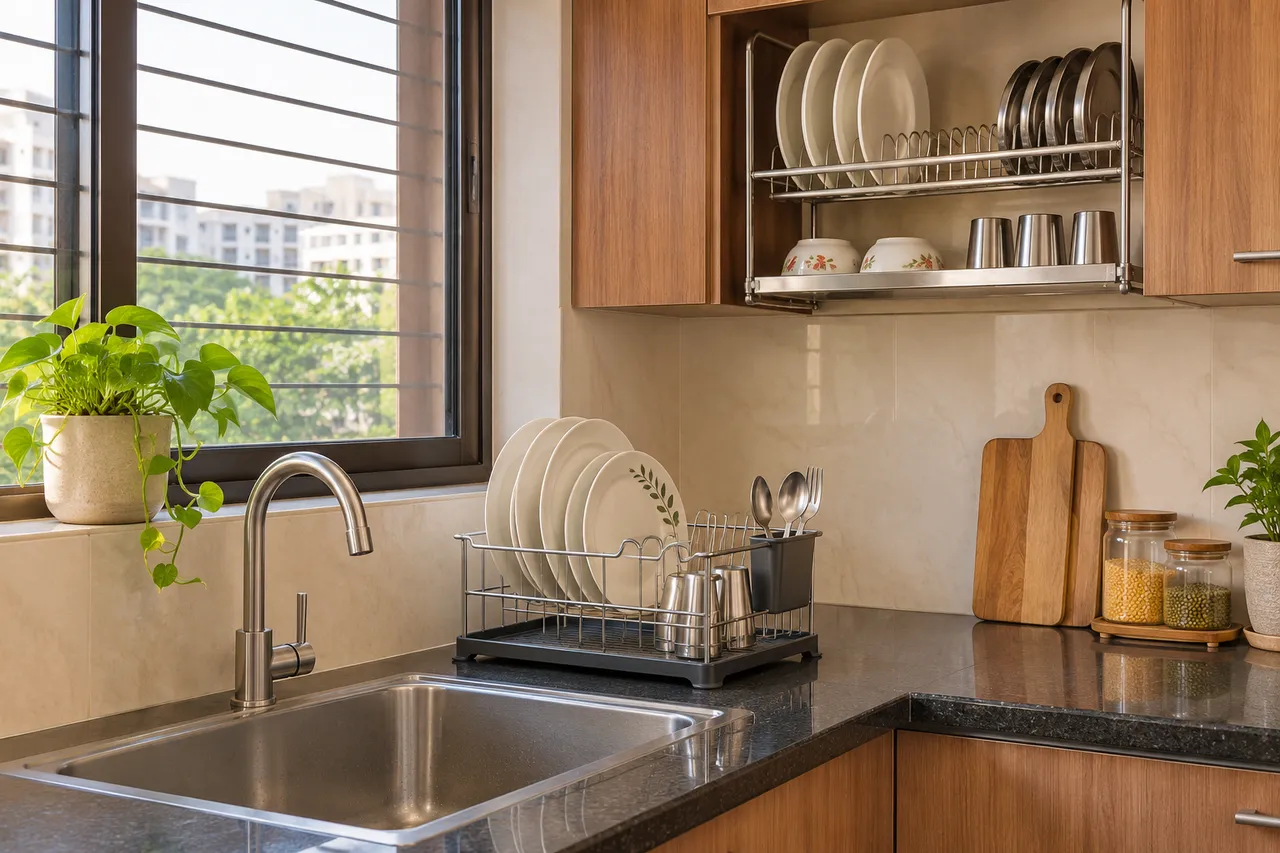
Dish-Drying Racks in Nallagandla Kitchens: Plan Drainage, Reach and Counter Space
Choose dish-drying storage around drainage, loaded access and the utensils used every day. In a Nallagandla kitchen, compare a countertop rack with a suitable fitted arrangement using the actual sink, tap and counter. Check how water is managed and how components are cleaned before sacrificing preparation space or commissioning new cabinetry.
Start with your Nallagandla property
For a Nallagandla home, begin with the existing sink and dishwashing routine. Note which utensils are washed by hand, how many people use the kitchen and what is put away immediately. The same rack does not suit every household. Record retained surfaces and fittings so a new organiser is assessed against the real kitchen, not a showroom counter with no daily preparation taking place.
Inventory the loaded rack
List plates, bowls, glasses and large utensils that normally wait to dry. Check the selected rack’s intended use, capacity and care information rather than loading it according to appearance. A compact product can be useful if it handles the actual routine, while a large rack may encourage objects to remain on the counter indefinitely. Decide where dry items will be stored and whether the household needs a temporary draining position or permanent open storage.
Review where water goes
Have the supplier explain the rack’s drainage arrangement and how it fits the selected sink and counter. Check for water reaching edges, joints or nearby finishes. A photograph of a rack over a sink does not prove that it is compatible with your tap, basin or support. Avoid locating water-handling accessories near electrical items without appropriate assessment of the complete arrangement. Discuss any fixed plumbing or electrical changes with the relevant professional rather than improvising around the rack.
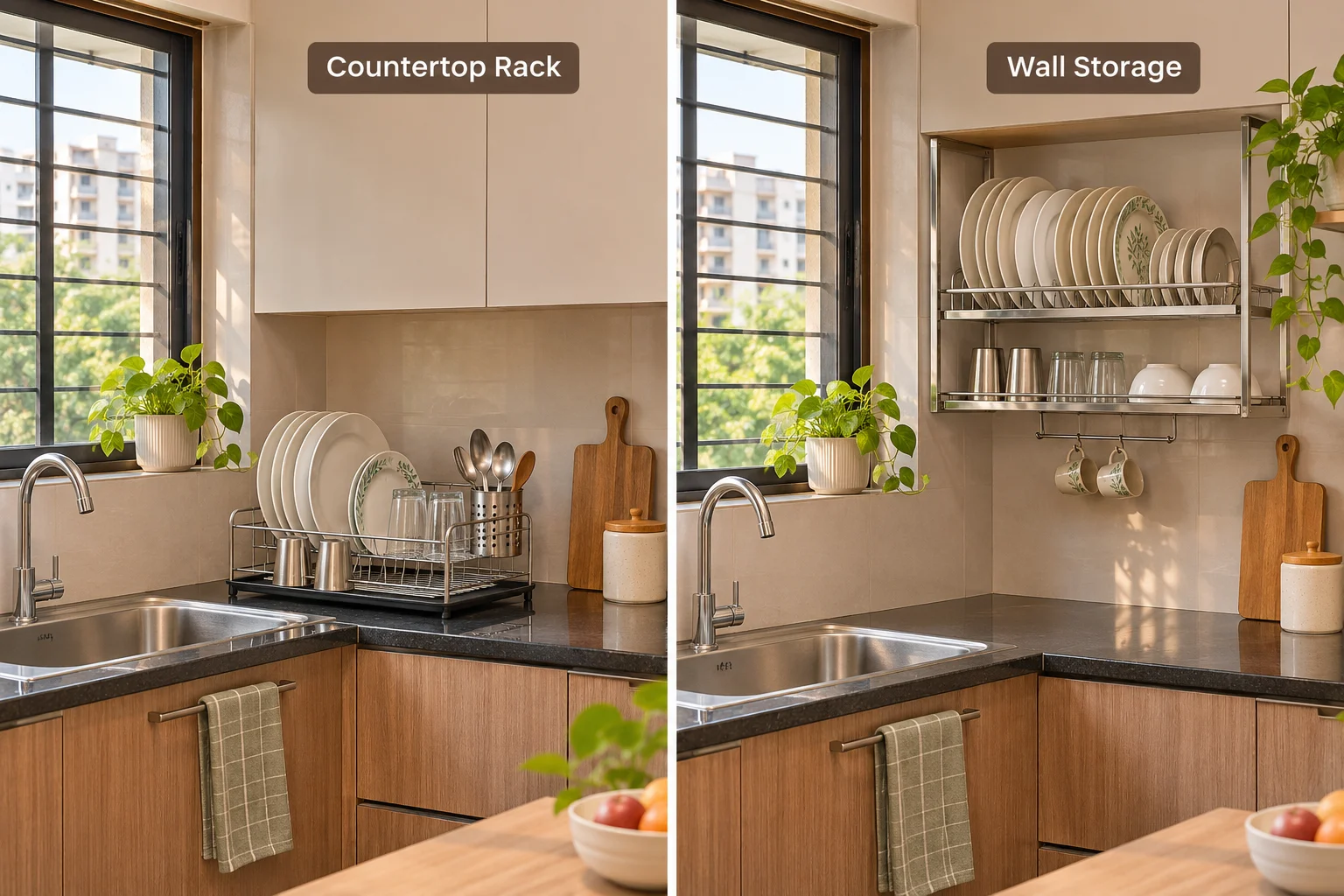
Compare counter and wall storage
A countertop rack is often easier to trial and replace, but it uses working surface. A fitted or wall-mounted arrangement changes reach, support and cleaning responsibilities. Have the mounting substrate and product requirements assessed before fixing it. Test lifting ordinary clean utensils without stretching or reaching across an awkward obstruction. Do not select high storage simply to clear the counter if the main user cannot comfortably use it in the intended way.
Make cleaning and putting away practical
Choose an arrangement whose trays, supports or other components can be cleaned according to the product instructions. Check the space needed to remove them. Keep access to the tap and sink useful and avoid filling the only preparation zone with drying storage. Trial a normal meal’s washing and put-away cycle before committing to permanent work. The arrangement should reduce transfers and clutter rather than create an extra shelf that is difficult to clean.
A practical example to test the decision
A household buys a large drying rack to reduce clutter, but it occupies the counter used for preparation and does not drain as intended beside the retained sink. They trial a smaller compatible rack and put away dry utensils more consistently. A fitted alternative remains an option only after reach, support and cleaning have been checked.
Step-by-step planning checklist
- List normal utensils and the dishwashing routine.
- Check product compatibility with the actual sink, tap and counter.
- Trial drainage and the working surface retained for food preparation.
- Assess reach and support before wall-mounted work.
- Test cleaning and putting away with a representative clean load.
What to put in the quotation
- Exact rack or fitted assembly and intended use.
- Drainage components and compatible mounting where relevant.
- Any cabinet or service alterations listed separately.
- Installation, cleaning access and product care information.
Planning budget and scope
| Scope | Planning allowance or pricing method |
|---|---|
| Countertop drying organiser | ₹1,000–₹5,000 initial allowance |
| Specified fitted rack | Price product and compatible installation |
| Cabinet or service changes | Separate measured quotation |
The initial allowance is editorial, not a live Nallagandla retail survey. Product construction, size and mounting affect the price. Do not compare a loose rack with a fitted system unless installation, cleaning access and any service work are included consistently.
Preparation and project timing
Trial a loose arrangement before permanent changes where practical. Confirm dimensions and compatible products before fabrication. At installation, check the rack loaded as intended and verify the drainage and cleaning arrangement rather than accepting the empty display alone.
Before you approve the proposal
Keep a photograph of the trial with ordinary clean utensils rather than relying on a styled product image. Note what remains on the counter after everything dry has been put away. If the rack still blocks preparation, reconsider its location or scale before asking for more fixed storage. A successful choice has an understood purpose and a cleaning routine, not simply a large nominal capacity.
Prepare a clearer brief with WallsToWonder
Collect photographs, measurements and the choices you want to compare. Use Design My Room to explore a visual direction, then have the relevant professional check the measured layout, product requirements and work scope. Account access and current tool allowances apply; a visual concept is not a costed construction drawing.
Organise the scope with the interior cost planning tool and explore interior companies serving Hyderabad. Confirm service availability for Nallagandla directly and ask the firm to explain deliverables, site involvement and exclusions.
For related planning, read Modular Kitchen Planning in Kondapur: A Checklist for Appliances, Storage and Services.
Frequently asked questions
Is over-sink storage always better?
No. Check compatibility, support, reach and the selected product’s requirements.
Should the rack hold every utensil?
Plan the normal washing and put-away cycle rather than assuming all kitchen storage belongs in a drying area.
Can I mount it on any wall?
Have the product, wall and fixing method assessed before installation.
How do I preserve counter space?
Trial the rack alongside actual food preparation and compare size, location and put-away routines.
What should be checked after fitting?
Loaded use, drainage, sink access and removal of components for cleaning.
Turn this idea into a plan for your home
Visualise your space, understand the likely budget, or find a professional who can bring the idea to life.