
Buying a Sectional Sofa in Kandivali? Check Delivery Access Before Choosing the Layout
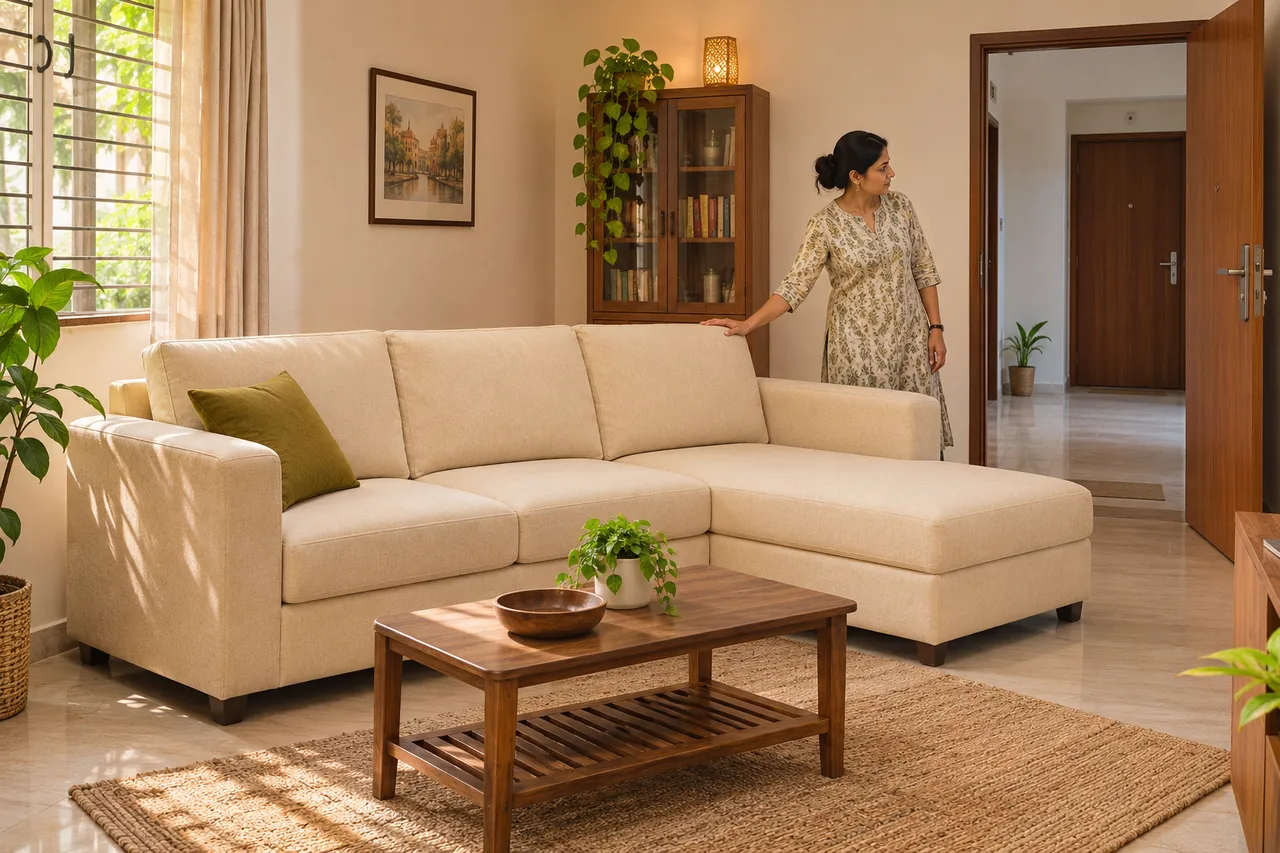
Check the delivery route and the sofa’s packaged modules before committing to a sectional. In a Kandivali apartment, the assembled layout is only half the decision: lift doors, landings, turns and room access can determine what arrives successfully. Confirm the supplier’s delivery conditions and trial the seating footprint before paying an advance.
Start with your Kandivali property
For a Kandivali home, ask building management about furniture deliveries, lift use, protection and permitted scheduling. These arrangements differ between properties; do not assume a showroom promise of home delivery includes every access condition. Identify the precise building entrance and apartment route, then share reliable measurements and photographs with the supplier. Keep the room plan separate from the access survey so both can be checked.
Measure modules in the form they will arrive
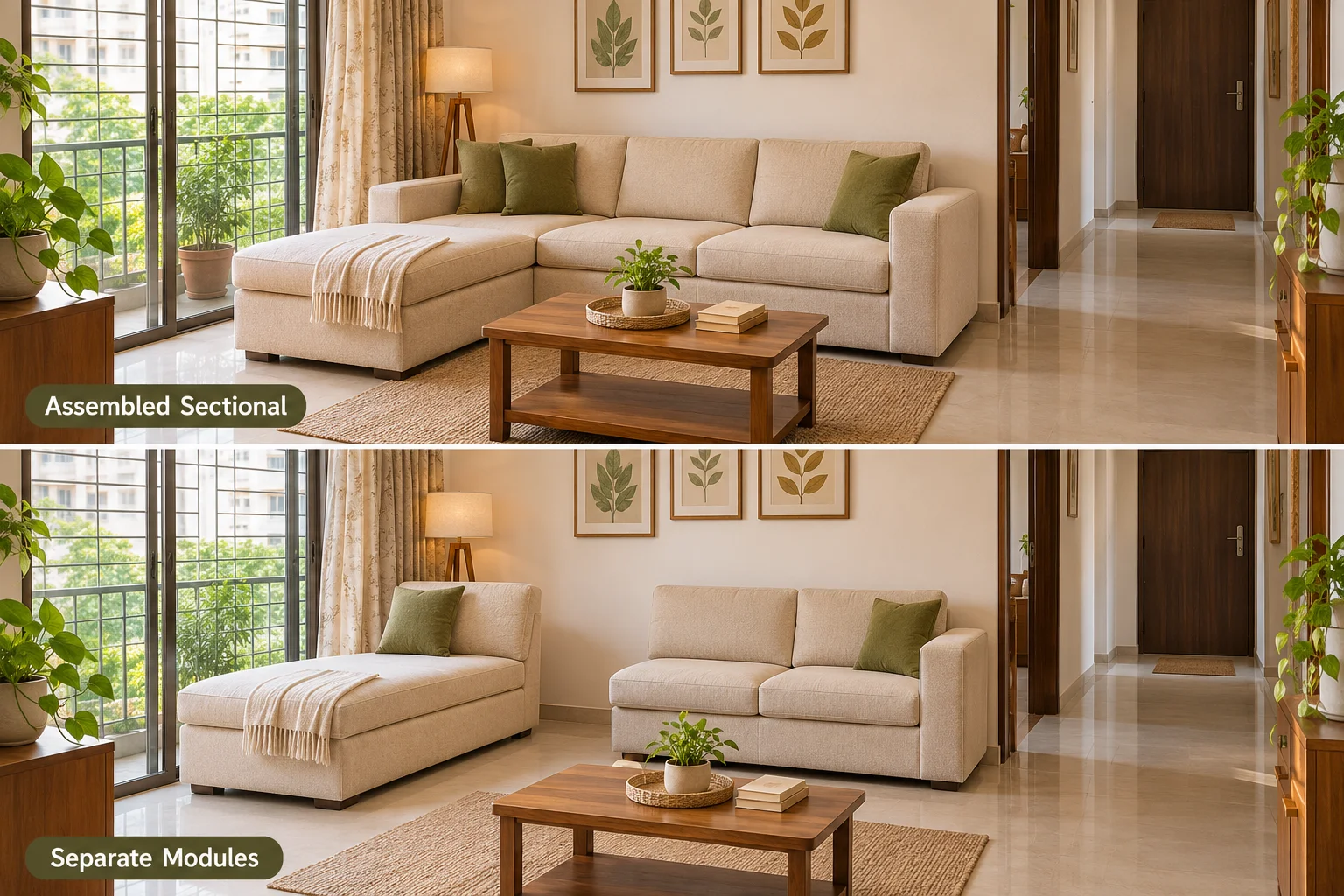
Ask for the packaged dimensions and weight of each component, not just the assembled sofa dimensions. Confirm whether legs or other parts can be removed by the authorised delivery team and whether assembly occurs inside the room. Do not assume a product described as modular arrives in small flat packages. Include packaging in the access discussion unless the supplier explicitly confirms another approved handling arrangement. Record the largest component and the point on the route most likely to restrict it.
Review the whole route with the delivery team
Measure door openings, lift entrances and any relevant changes of direction. Photographs help explain a landing but cannot replace the supplier’s access assessment. Ask who assesses difficult turns, whether an access visit is available and what happens if delivery is refused. Do not arrange improvised lifting or removal of building elements as an assumed fallback. Any special handling needs separate professional assessment and permissions. A room that easily fits the assembled sofa may still be inaccessible to one large component.
Trial seating with everyday movement
Mark the full sofa outline on the floor, including the chaise, projecting arms and any moving features. Test the route to doors, curtains and retained furniture. Decide whether the chaise orientation is fixed or genuinely reversible in the selected product. Compare the sectional with a straight sofa and loose chair if flexible seating matters. Count useful seats for the household rather than relying only on the product name or a photograph taken with a wide-angle lens.
Make access part of the purchase record
Keep the model, component schedule, approved layout and delivery terms together. Clarify assembly, packing removal, damage reporting and the policy if the product cannot be brought inside. Confirm whether a paid access assessment changes any responsibility or simply provides advice. At delivery, inspect and record condition in accordance with the supplier’s process. Allow space for assembly without blocking the household’s essential access, and keep the finish and care instructions for later maintenance.
A practical example to test the decision
A homeowner selects a generous corner sofa based on the living-room dimensions. The supplier’s module schedule reveals one large piece requiring closer review at a landing. Before ordering, the family compares a different modular configuration and a straight sofa with a chair. The chosen option follows both usable seating and confirmed access, rather than hoping the delivery team can solve the problem on arrival.
Step-by-step planning checklist
- Confirm the room layout and the largest individual component.
- Record packaging, doorway and route information requested by the supplier.
- Ask the delivery team to assess uncertain turns before purchase.
- Trial the assembled footprint with retained furniture and doors.
- Keep delivery conditions, assembly scope and the inspection procedure in writing.
What to put in the quotation
- Exact model, module orientation and packaged dimensions.
- Delivery level, assembly and access-assessment responsibilities.
- Any approved additional handling and its exclusions.
- Protection, packing removal and the procedure for failed access or damage.
Planning budget and scope
| Scope | Planning allowance or pricing method |
|---|---|
| Measure and compare configurations | Agree any supplier assessment fee |
| Standard delivery and assembly | Confirm inclusions in the furniture quotation |
| Special access arrangements | Separate professionally assessed quotation |
Do not compare sofa prices without delivery and assembly scope. A low ticket price can exclude access assessment, upper-floor handling or other services. These costs are supplier- and property-specific, so this guide does not present a generic Kandivali delivery tariff.
Preparation and project timing
Complete the access review before paying an order deposit, particularly for made-to-order furniture. Coordinate the delivery slot with the building and supplier. Allow time to protect the route, assemble the product and inspect it before scheduling other major deliveries into the same room.
Before you approve the proposal
Keep a simple decision sheet with two separate approvals: the seating arrangement works in the room, and the selected components have a confirmed delivery route. If either changes, revisit the other before accepting a substitute. A different module can alter the chaise position or assembly sequence. This avoids treating access as an administrative detail after the furniture decision has already become difficult to reverse.
Prepare a clearer brief with WallsToWonder
Collect photographs, measurements and the choices you want to compare. Use Design My Room to explore a visual direction, then have the relevant professional check the measured layout, product requirements and work scope. Account access and current tool allowances apply; a visual concept is not a costed construction drawing.
Organise the scope with the interior cost planning tool and explore interior companies serving Mumbai. Confirm service availability for Kandivali directly and ask the firm to explain deliverables, site involvement and exclusions.
For related planning, read Small Living Room Layouts for Andheri West Flats: Seating, Storage and Clear Walkways.
Frequently asked questions
Does modular mean easy to deliver?
Not necessarily. Check the actual packaged components and the supplier’s handling arrangements.
Should I measure the lift cabin only?
Include its entrance, the route to it, landings and apartment access as requested by the delivery team.
Can the chaise change sides?
Confirm this for the exact model; appearance does not establish reversibility.
What if the sofa will not fit?
Review the supplier’s access and return terms before purchase and resolve uncertainty early.
Who should assess unusual lifting?
Use an appropriately qualified handling provider with the necessary building permissions; do not assume ordinary delivery includes it.
Further reference: IKEA India delivery requirements and restrictions.
Turn this idea into a plan for your home
Visualise your space, understand the likely budget, or find a professional who can bring the idea to life.