
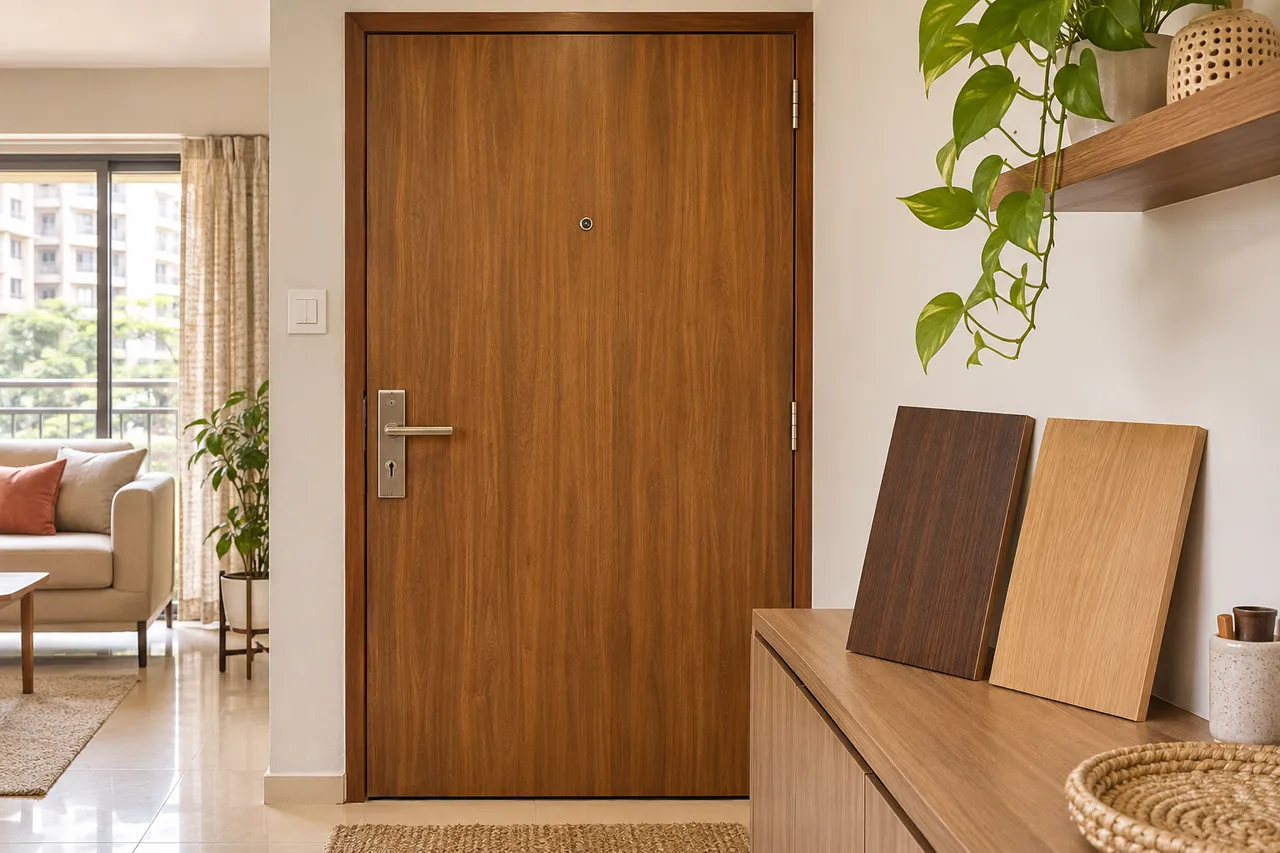
Refreshing an Apartment Entrance Door in Vikhroli: What to Check Before Changing the Finish
Inspect the existing entrance door and confirm building requirements before changing its finish. For a Vikhroli apartment, separate a cosmetic refresh from changes to hardware, construction or door performance. Choose a compatible treatment that keeps the opening, controls and maintenance practical rather than covering an unresolved defect with a new decorative layer.
Start with your Vikhroli property
Begin with the boundary between the private interior face and any appearance or performance controlled by the building. Ask management what information and permission are required for the proposed scope. Do not assume the apartment owner can change every part of the entrance assembly freely. Record any label, maker information and known specification before selecting a contractor or finish.
Identify the assembly and its condition
Have a competent professional inspect the door, frame, hinges, closing action, seals and locking components as relevant. Record rubbing, loose fittings or damaged edges separately from surface wear. Do not infer a fire or security rating from the door’s appearance. Where a specified performance or certification applies, consult the appropriate supplier or professional before any alteration. A new veneer or paint layer is not a repair for movement, an unsuitable frame or a failing component.
Compare finish treatments with the substrate
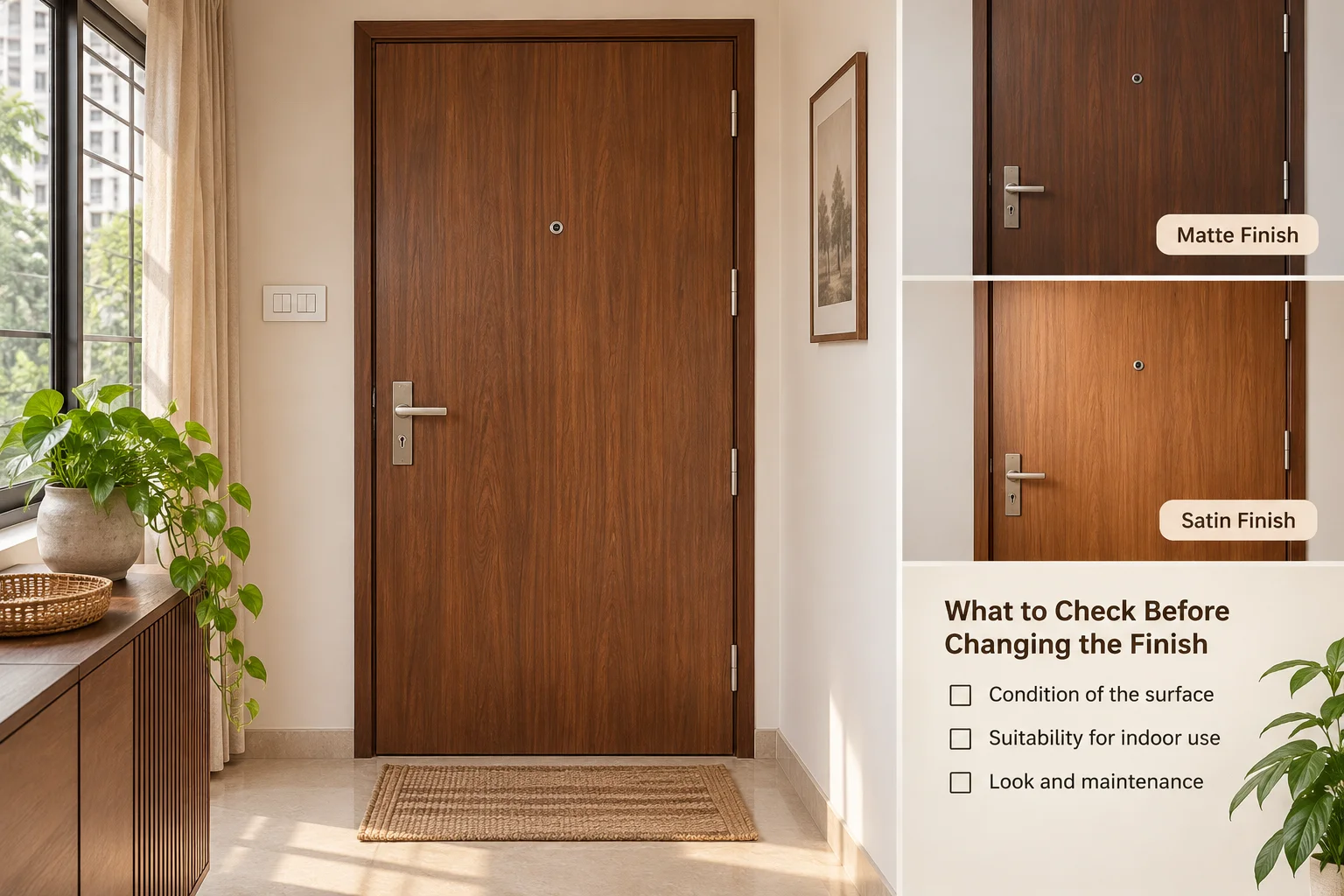
Request a proposal suited to the actual material and existing coating. Paint, veneer and applied decorative surfaces have different preparation and edge requirements. Ask what can be retained, how adhesion or compatibility will be assessed and what finish variation is expected. Avoid indiscriminate sanding, trimming or drilling as a routine decorative step. Obtain suitable advice before altering any assembly with a specified performance requirement, and retain its product information rather than concealing or discarding it.
Keep daily operation in the design
Test the handle, lock, peephole and any other retained controls with the proposed treatment in mind. Check the effect of added thickness at edges and around hardware. The entrance should remain comfortable for the intended users and should not strike a nearby cabinet after changes. Discuss how delivery access and future repairs work if panels or decorative trims are added. An elegant interior face is useful only when the complete door still performs its agreed function.
Plan work and handover
Agree how the home remains secure during work and who removes and reinstalls hardware. Identify affected frame and wall finishes and the cleaning or curing period before normal use. At completion, review operation and the agreed repairs with the relevant professional, and obtain product care information. Keep the contractor’s scope clear about decoration versus assessment of rated performance; do not accept a cosmetic completion photograph as verification of a technical property that was never tested.
A practical example to test the decision
A homeowner asks for a thicker decorative panel on an entrance door. Inspection identifies a closing problem and uncertain information about the assembly. Instead of applying the panel immediately, the household confirms requirements with management and the relevant supplier, resolves the operating issue and selects a compatible finish scope. The appearance decision follows the assembly’s constraints.
Step-by-step planning checklist
- Document the existing door and any reliable product information.
- Confirm building requirements for the intended changes.
- Obtain condition and compatibility assessment before selecting a finish.
- Agree hardware handling, temporary security and making good.
- Review operation and the completed scope before final acceptance.
What to put in the quotation
- Existing assembly and condition assumptions.
- Preparation, compatible treatment and approved sample.
- Hardware removal, reinstatement and any assessed repair.
- Protection, access arrangements, curing and making good.
Planning budget and scope
| Scope | Planning allowance or pricing method |
|---|---|
| Inspection and limited adjustment | Agree a defined assessment or repair quotation |
| Cosmetic finish refresh | Itemise preparation and the selected finish |
| Assembly or performance-related changes | Specialist proposal and required permissions |
Use an itemised quotation rather than a generic polishing rate. Door construction, condition and compatibility determine the work. Technical assessment, replacement hardware and any required permissions should not be assumed to be included in a surface-finishing price.
Preparation and project timing
Confirm the allowed scope and inspection findings before ordering decorative material. Coordinate any hardware or repair work first. Ask when the coating can be handled and when normal use resumes, and plan how the entrance is managed throughout the work.
Before you approve the proposal
Keep a condition photograph and the approved sample with the scope. If the contractor encounters a different substrate or an assembly label during preparation, pause and resolve the finding before proceeding. Changes should be recorded rather than agreed casually after dismantling. This makes it easier to distinguish a necessary repair from a decorative preference and helps preserve the information needed for future maintenance.
Prepare a clearer brief with WallsToWonder
Collect photographs, measurements and the choices you want to compare. Use Design My Room to explore a visual direction, then have the relevant professional check the measured layout, product requirements and work scope. Account access and current tool allowances apply; a visual concept is not a costed construction drawing.
Organise the scope with the interior cost planning tool and explore interior companies serving Mumbai. Confirm service availability for Vikhroli directly and ask the firm to explain deliverables, site involvement and exclusions.
For related planning, read Replacing Door Shutters in Kothrud: When Can You Keep the Existing Frames?.
Frequently asked questions
Can I change the interior finish without checking?
Confirm building requirements and the existing assembly’s constraints before work.
Does a new finish improve security or fire performance?
Do not assume so. Such properties require appropriate product information and professional assessment.
Can decorative panels affect operation?
They can alter thickness, weight and access to hardware. Have compatibility reviewed.
Should a rubbing door be refinished immediately?
Identify and address the cause with the relevant professional before using decoration to conceal it.
What should the quotation distinguish?
Surface preparation and finishing, assessed repairs, hardware work and any separate technical or permissions-related scope.
Turn this idea into a plan for your home
Visualise your space, understand the likely budget, or find a professional who can bring the idea to life.