
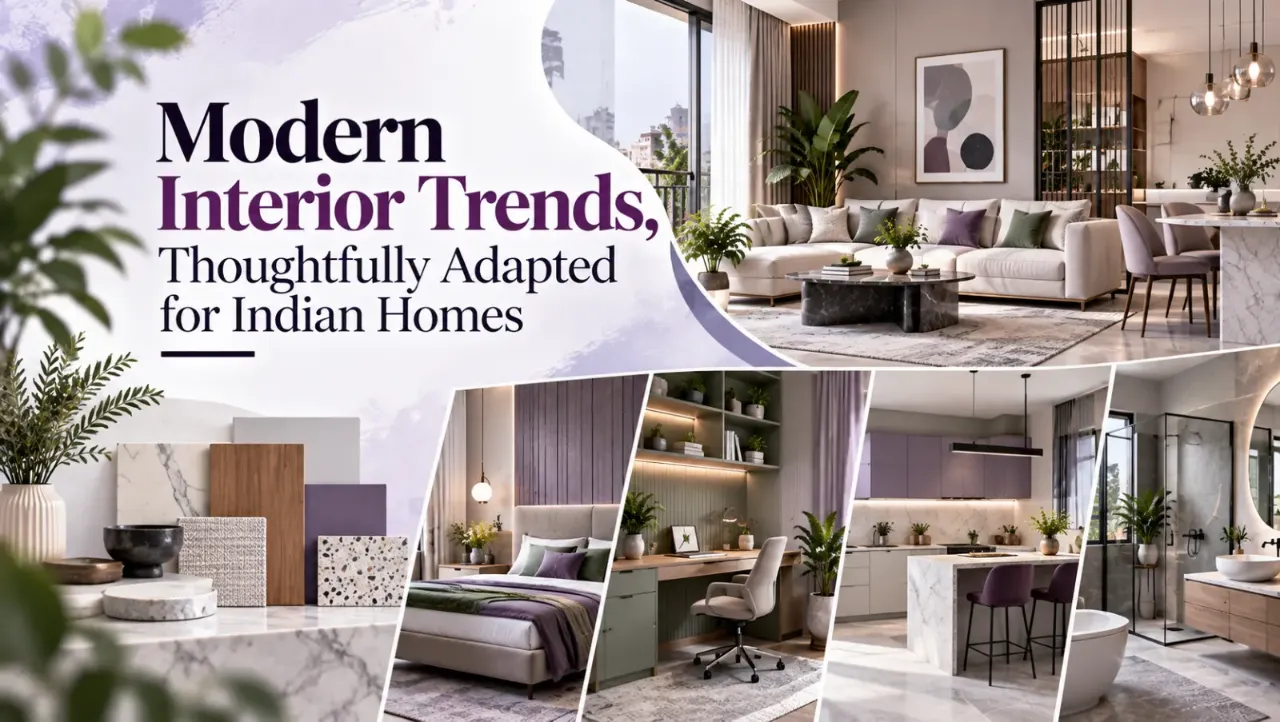
Modern Interior Trends, Thoughtfully Adapted for Indian Homes
Interior design trends offer plenty of inspiration. From warm minimalism and natural materials to statement lighting, curved furniture and thoughtfully styled spaces, there are many ways to make a home feel contemporary. But a design that looks beautiful in a photograph does not automatically work for every household.
Indian homes have their own considerations. The space may need to accommodate extended family, frequent guests, everyday cooking, seasonal weather, prayer routines, generous storage or a combination of different activities. A successful interior should reflect these realities rather than follow a trend simply because it is popular.
The goal is not to avoid modern design. It is to adapt it thoughtfully. With the right colours, materials, furniture, lighting and layout, you can create a home that feels current while remaining comfortable, personal and practical.
Quick answer: Choose an interior design trend that suits your lifestyle, then adapt its colours, materials and furniture to your home's size, climate, maintenance needs and budget. Keep the elements that improve your space, modify those that do not, and introduce trends through details you can update over time.
1. Start With Your Lifestyle, Not the Trend
Before choosing a design style, consider how your home is used throughout the day. A household that regularly hosts guests may need flexible seating and a welcoming living room. A compact apartment may benefit more from concealed storage, multifunctional furniture and an uncluttered layout.
Think about the routines that matter to you. Do you need a dining area that doubles as a work surface? Is there enough storage for seasonal clothes, household supplies or extra bedding? Do children or older family members need clear walking routes? Would a quiet corner for reading, prayer or relaxation improve the way the home functions?
These questions help you distinguish between inspiration and practical requirements. A trend should solve a problem, support a routine or improve how the room feels. It should not make everyday activities more difficult.
Make a short list of your essential requirements before selecting furniture, finishes or decorative features. This gives your design decisions a clear purpose.
2. Bring Contemporary Style Together With Indian Character
Modern interiors do not have to feel generic or disconnected from the people who live in them. You can combine clean-lined furniture and a restrained layout with details that reflect Indian craftsmanship, culture and personal taste.
Think of carved wood, handcrafted ceramics, woven textiles, patterned cushions, brass accents or artwork from local makers. These elements can add warmth and individuality without making the room feel visually crowded.
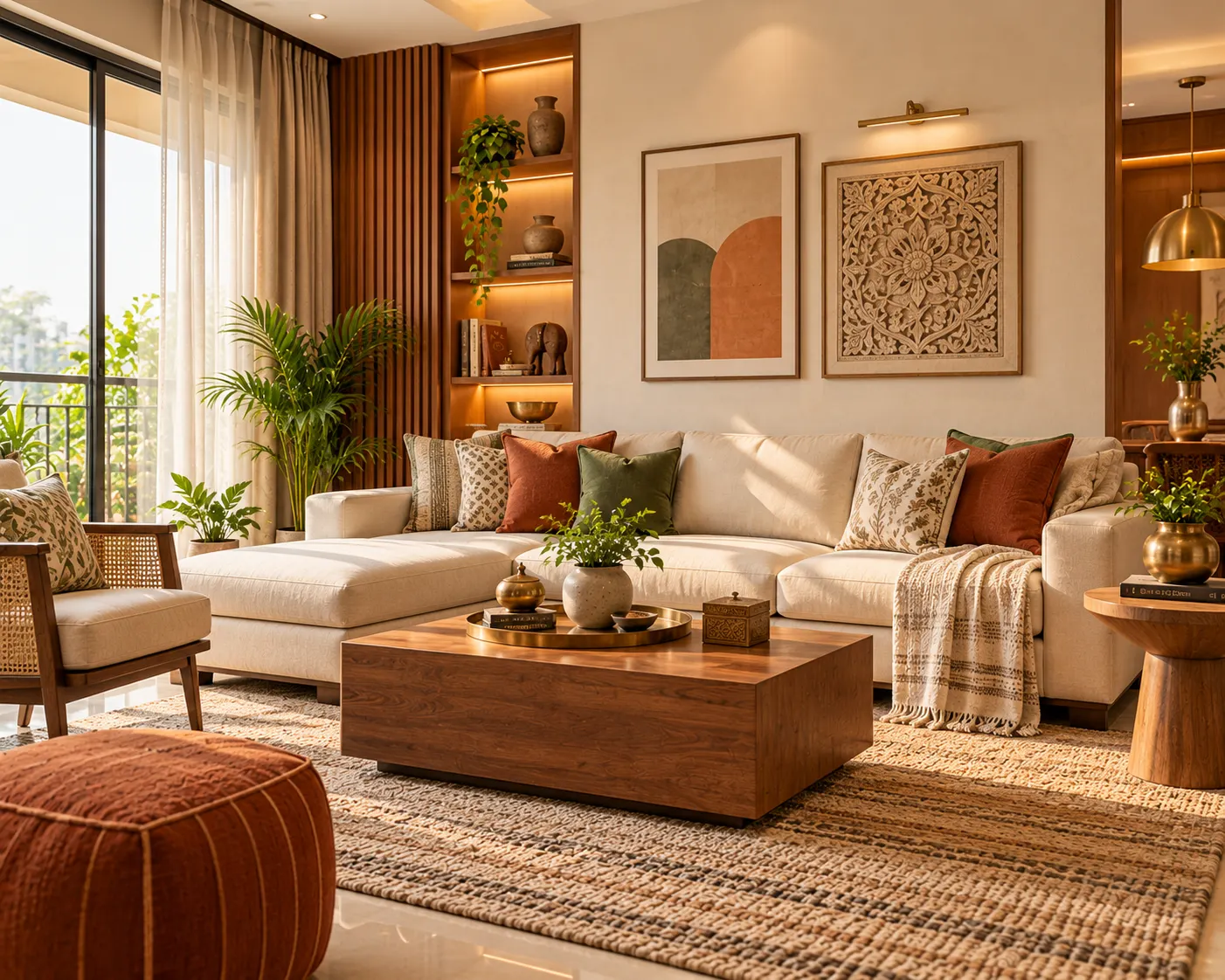
The key is balance. A contemporary sofa can sit comfortably alongside a traditional wooden accent piece. A simple dining area can be enriched with handcrafted objects, while a modern bedroom can incorporate textiles that add colour and texture.
You do not need to use every traditional element at once. Select a few pieces that have meaning or complement the room, then give them enough visual space to stand out.
The result is a home that feels modern without losing its sense of identity.
3. Adapt Popular Colour Trends to Your Home
Colour trends are easy to notice and relatively easy to introduce, but they should be considered in the context of the whole room. Natural light, flooring, existing furniture and the size of the space all influence how a colour appears.
Warm neutrals, earthy browns, muted greens and terracotta-inspired accents can work well in many contemporary Indian interiors. Deeper colours may create a striking focal point, while lighter shades can help a small room feel more open. These are starting points rather than fixed rules.
Instead of painting every wall in a fashionable colour, consider using it on one wall, in upholstery, through curtains or in smaller accessories. This creates room to experiment without committing the entire space to a look that may become less appealing over time.
Test paint and material samples in the room under daylight and artificial lighting. A shade that appears soft in a showroom may look much stronger under warm evening lights or in a room with limited natural light.
Choose a palette that works with your home rather than trying to reproduce a colour scheme from an image exactly.
4. Use Natural Materials and Texture With Care
Natural-looking materials can make contemporary interiors feel warmer and less formal. Wood, stone, textured fabrics, cane-inspired details and handmade finishes can introduce variation without relying on bold patterns or excessive decoration.
The practical question is where to use them. A textured feature wall may be suitable in a living room, while a durable, easy-to-clean finish may be more appropriate in a busy passage or dining area. Materials used near cooking zones, windows or damp-prone walls need particular attention to cleaning and exposure.
Consider both appearance and upkeep before selecting a finish. Some materials need regular treatment, careful cleaning or specialist installation. Others may be easier to maintain but offer a different look or feel.
A useful approach is to combine a few tactile elements with simpler surfaces. For example, a wood-finish cabinet can complement plain walls and textured upholstery without requiring every surface to have a decorative finish.
Use material samples to judge how different textures and colours work together in the actual room.
5. Adapt the Design to Your Home's Size and Layout
A trend should work with the available floor space, not compete with it. A spacious open-plan home may accommodate a large sectional sofa, an accent chair and a statement light. A smaller apartment may need a compact sofa, a nesting table and well-planned wall storage instead.
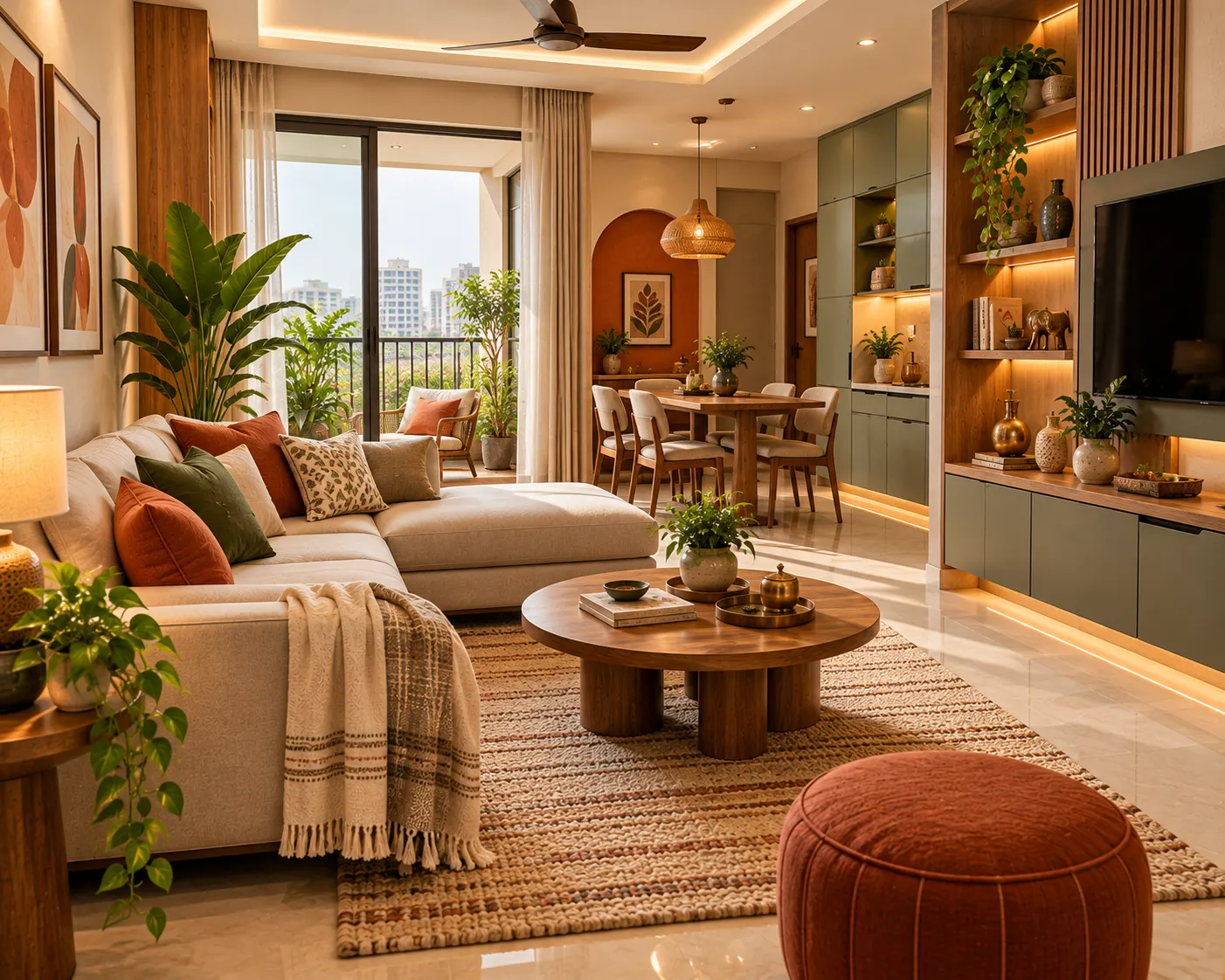
Look at the room as a whole. Check door openings, walking routes, access to windows, furniture depth and the space needed to pull out chairs or drawers. Do not select pieces solely because they appear proportionate in an inspiration photograph.
In compact homes, multifunctional furniture and storage that uses vertical space can help keep floors clear. In larger rooms, zoning can help distinguish living, dining and work areas without necessarily building permanent partitions.
If you are adapting a trend from a large luxury home to a smaller apartment, retain the design idea rather than copying every element. You might reproduce the warm colour palette and layered lighting while choosing smaller furniture and fewer decorative features.
Good design is not about fitting more into a room. It is about making the available space work better.
6. Prioritise Storage Without Losing the Visual Appeal
Minimalist interiors often appear calm because everyday objects are kept out of sight or arranged deliberately. That does not mean a home needs less storage. It may need storage that is better planned.
Consider wardrobes, kitchen cabinets, shoe storage, bedside drawers, utility cupboards and closed living-room units according to your household's needs. Use open shelves for items you genuinely want to display, and closed storage for everyday belongings that would otherwise make the room feel cluttered.
Plan storage before finalising the decorative design. A beautiful living room can become inconvenient if there is nowhere for remotes, books, children's belongings or frequently used household items. Similarly, a streamlined kitchen needs enough room for the appliances and supplies you actually use.
Keep frequently accessed items within comfortable reach and reserve less accessible storage for seasonal belongings. This can help the home remain visually calm without sacrificing convenience.
A well-organised room often feels more considered than one filled with decorative objects but lacking practical storage.
7. Choose Materials for Indian Weather and Maintenance
A design should remain suitable beyond the day it is completed. Depending on where you live, heat, strong sunlight, humidity, monsoon moisture and dust may influence the performance of furniture, finishes and fabrics.
Consider how much direct sun reaches a sofa or wardrobe, whether moisture affects a wall and how easily surfaces can be cleaned. Ask suppliers about material suitability, care requirements, finish durability and any product-specific limitations before you commit.
For example, fabric selection should account for everyday cleaning and sunlight exposure. Wood-based furniture needs appropriate material and edge protection for its intended location. Areas exposed to moisture require suitable finishes and proper ventilation, while any existing seepage should be resolved before new finishes are installed.
Do not assume that a material is suitable simply because it appears in a design trend or showroom display. Ask how it will perform in your actual room and what maintenance it requires.
A practical material choice can protect the appearance of the interior and help avoid unnecessary repair or replacement.
8. Layer Lighting Instead of Relying on One Statement Fixture
Lighting can transform a contemporary interior, but it should do more than create a dramatic photograph. A comfortable room often needs a combination of general illumination, task lighting and softer accent lighting.
Use appropriate general lighting for everyday activity. Add task lighting where you read, work, cook or perform detailed tasks. Accent lighting can draw attention to artwork, shelves or architectural features without needing to illuminate every surface equally.
The layout should determine the lighting plan. A decorative pendant might work over a dining table, while a reading corner may need a focused floor or table lamp. Concealed lighting can create a gentle atmosphere, provided it is installed and maintained appropriately.
Consider glare, shadows, access to fittings and the cost of running and replacing the lighting. Plan electrical points before finishing walls or ceilings so that decorative decisions do not result in avoidable rework.
The aim is a home that looks good in the evening and remains comfortable to use every day.
9. Introduce Trends Gradually and Stay Within Budget
Not every design trend requires a renovation. Often, a few carefully selected elements can refresh a room without replacing furniture or changing permanent finishes.
Start with reversible choices such as cushion covers, rugs, lamps, artwork, planters or smaller decorative pieces. If a trend involves a larger investment—such as new cabinetry, flooring or a false ceiling—consider how long you expect to enjoy it and how well it will work with future changes.
Before spending, separate essential improvements from optional upgrades. Prioritise layout problems, storage shortages, lighting needs and materials that are no longer suitable. Add decorative elements after these practical requirements are accounted for.
Compare the full cost of installation, labour, electrical changes, finishing and future maintenance. A feature that appears inexpensive at first may require extra work to fit into the existing room.
A measured approach allows you to experiment with new styles while preserving money for the parts of your home that matter most.
10. Make the Final Design Feel Cohesive
When several trends are introduced at once, a room can feel busy or inconsistent. Different colours, materials and furniture styles may compete for attention if there is no common thread connecting them.
Choose a small group of colours, repeat selected materials and maintain a consistent approach to shapes and finishes. You can mix modern and traditional pieces, but give the combination a clear direction. For example, clean-lined furniture might provide the foundation, while handmade accessories and warm textiles introduce character.
Review the home from different viewpoints, including the entrance and the transitions between rooms. Check whether the lighting, furniture scale and colour palette work together.
Leave some visual breathing room. An empty wall or uncluttered surface is not necessarily wasted space; it can help the pieces you do choose stand out.
The final result should feel like a home designed around its occupants, not a collection of trends assembled from separate photographs.
A Simple Checklist Before Adapting an Interior Design Trend
- Identify your household's everyday requirements and non-negotiables.
- Measure the room and plan furniture around walking routes and access.
- Test colours and materials in the actual lighting conditions.
- Incorporate Indian craftsmanship or personal details where they feel meaningful.
- Provide adequate storage before adding decorative features.
- Check material suitability for sunlight, humidity, cleaning and maintenance.
- Set a budget that covers installation, finishing and future upkeep.
- Introduce expensive or permanent trends only after considering their long-term value.
Ready to Explore a New Look for Your Home?
Start with your existing room, identify what needs to improve and select a design direction that suits your lifestyle. Walls to Wonder's Design My Room tool can help you explore visual possibilities for your space. Treat the result as inspiration, then confirm dimensions, material suitability, storage and installation details before making changes.
A Final Thought
Interior design trends can provide useful inspiration, but your home does not need to follow every new style. The best results come from choosing ideas that complement your routines, suit your space and feel personal to you.
Combine contemporary elements with practical storage, thoughtful lighting, suitable materials and details that reflect your taste. When these choices work together, you can create an Indian home that feels current today and remains comfortable long after the trend has changed.
Frequently Asked Questions
1. How can I adapt modern interior design trends to an Indian home?
Start with your household's needs, room size and climate. Then adapt the trend through suitable colours, materials, storage and furniture, while retaining details that reflect your personal taste or Indian craftsmanship.
2. Which colours work well in modern Indian interiors?
Warm neutrals, earthy browns, muted greens and terracotta accents can be useful starting points. The best palette depends on natural light, room size, flooring and existing furniture, so test samples before making a final decision.
3. How can I make a small Indian home look modern without overcrowding it?
Use proportionate furniture, multifunctional pieces, well-planned closed storage and a consistent colour palette. Keep walking routes clear and introduce decorative elements selectively instead of filling every surface.
4. What should I consider when choosing materials for an Indian home?
Consider sunlight, heat, humidity, dust, cleaning requirements and the material's suitability for its location. Ask suppliers about care instructions and resolve existing seepage or dampness before installing new finishes.
5. How can I follow interior trends without overspending?
Begin with reversible changes such as lighting, textiles, artwork and accessories. Prioritise practical improvements first, and evaluate the full installation and maintenance costs before investing in permanent changes.
Turn this idea into a plan for your home
Visualise your space, understand the likely budget, or find a professional who can bring the idea to life.