
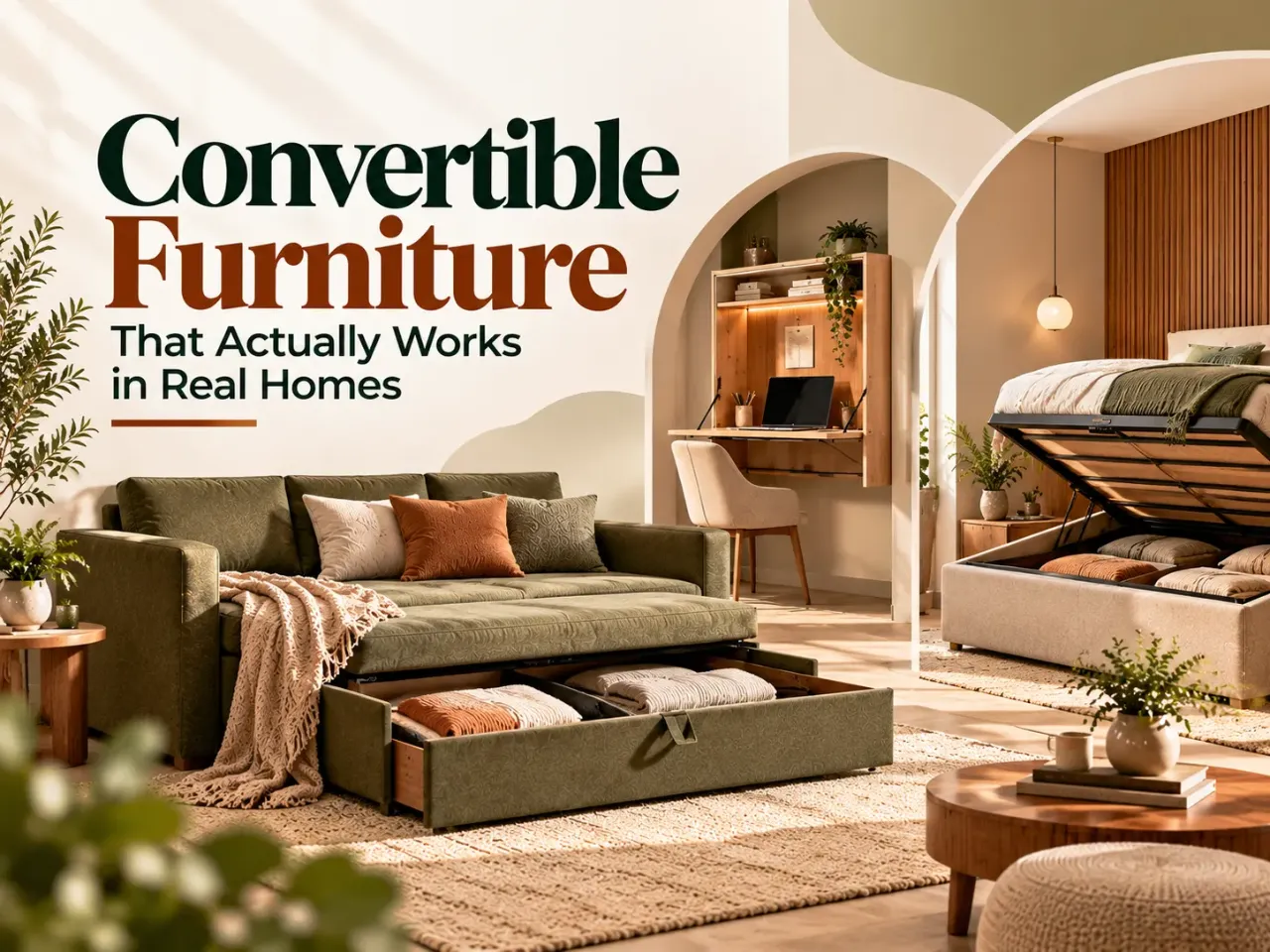
Convertible Furniture That Actually Works in Real Homes
In a compact home, one room may need to serve several purposes. The living room becomes a guest sleeping area, the dining table doubles as a work surface, and a spare corner turns into a home office. The challenge is fitting these activities into the same space without making everyday life feel cramped.
Convertible furniture can help. A sofa bed, an extendable dining table, a fold-down desk or a storage ottoman can serve more than one purpose without requiring separate pieces for every activity.
But not every multifunctional product is worth buying. Some are uncomfortable in one of their configurations, require too much effort to transform or take up more room than expected when fully opened.
The best convertible furniture is not simply clever. It is comfortable, sturdy, easy to operate and suited to the way you actually live.
Here is what works, what to check before buying and how to make multifunctional furniture a practical part of your home.
1. Start With the Problem You Need to Solve
Before shopping for convertible furniture, identify what is making your room difficult to use.
Is the living room occasionally needed for overnight guests? Does the dining table occupy too much floor space between meals? Do you need a work surface but cannot dedicate an entire room to a home office? Or is clutter building up because you have nowhere convenient to store everyday items?
Each problem calls for a different solution.
A sofa bed makes sense when a room needs to function as both a lounge and an occasional sleeping area. An extendable dining table is useful when a household needs extra seating only sometimes. A fold-down desk may suit someone who works from home but wants the room to return to its original purpose afterwards.
Start with the activity that matters most, then select furniture that supports the secondary use without compromising the primary one.
The objective is not to make every piece of furniture multifunctional. It is to remove a genuine space constraint.
2. Sofa Beds: Useful When Guests Need a Place to Sleep
A sofa bed is one of the most familiar examples of convertible furniture. During the day, it serves as seating; when needed, it becomes a sleeping surface.
It can be particularly practical in studio apartments, small living rooms and homes without a dedicated guest bedroom.

Before choosing one, check how it works in both configurations. The sofa should be comfortable enough for regular sitting, while the bed should provide a suitable sleeping surface for the people who will use it.
Pay attention to the opening mechanism, mattress or sleeping surface, frame support and the space required when fully extended. A sofa bed that blocks the room entrance or leaves no path to the bathroom may be impractical even if it fits neatly when folded.
Also consider how often it will be used. An occasional guest bed may have different comfort requirements from a sofa bed used every night. If it is intended for daily sleeping, evaluate it as carefully as you would a conventional bed.
3. Fold-Down Desks: Create a Workstation Without Giving Up a Room
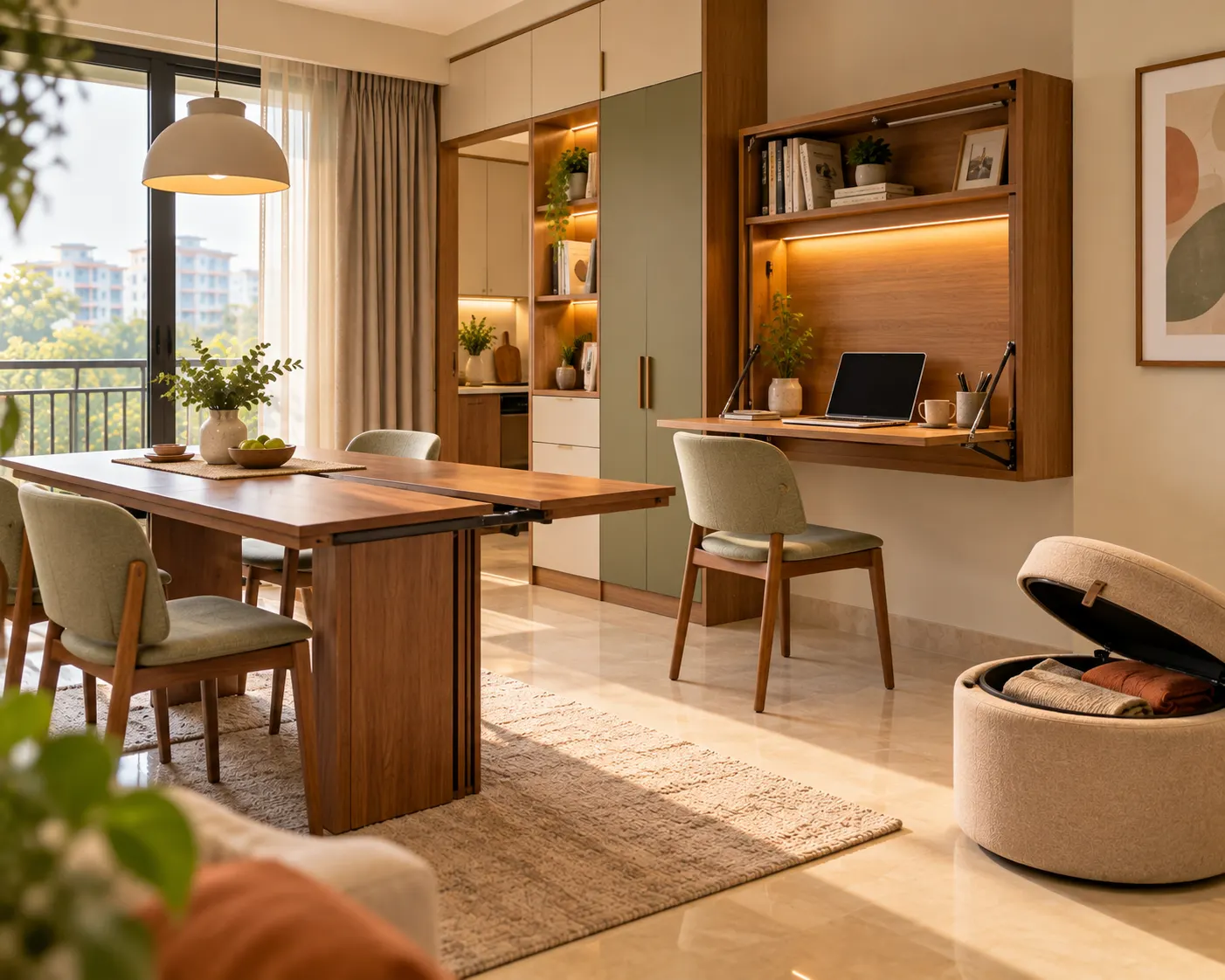
A fold-down desk can be a useful solution for people who need a work surface but cannot dedicate an entire room to a home office.
When open, it provides a place for a laptop, notebook and other essentials. When closed, it can return some of the wall or floor space to the room, depending on the design.
Some versions are wall-mounted, while others combine a desk with shelving or concealed storage. The right choice depends on your working style and how much equipment you need.
Check the desk's working depth, load capacity, stability and mounting requirements. It should have enough space for your everyday setup without forcing you into an uncomfortable posture. If you use an external monitor, keyboard or several accessories, confirm that the surface can accommodate them.
Plan for power sockets, cable routing and suitable task lighting before installation. A fold-down desk is less useful if cables hang awkwardly or the opened surface blocks a doorway.
Wall-mounted models must be fixed to a suitable structure using the correct hardware. If the wall construction or load capacity is uncertain, get appropriate installation advice.
4. Extendable Dining Tables: Everyday Size, Extra Space When Needed
An extendable dining table can solve a common problem: a household needs seating for a few people most days but occasionally hosts a larger group.
Instead of keeping a large table permanently in the room, an extendable design allows the surface to grow when additional seating is needed.
There are different mechanisms, including pull-out extensions and separate leaves. Before buying, check how the table expands, whether the extension pieces can be stored conveniently and whether one person can operate the mechanism easily.
Measure the table in both its everyday and extended configurations. Include the chairs, the space needed to pull them out and the walking routes around the dining area. A table that fits when closed may obstruct circulation when fully extended.
Nesting tables can offer similar flexibility in living rooms. Smaller tables can be tucked together when not needed and separated when extra surfaces are useful. They are particularly helpful when entertaining or when different household members use the same room for different activities.
The best design is one that genuinely adapts to changing needs without making the expanded arrangement difficult to use.
5. Storage Ottomans, Benches and Beds: Combine Functions Naturally
Not every convertible furniture piece needs a complicated mechanism.
A storage ottoman can provide a footrest, extra seating and a place for blankets or small everyday items. A storage bench may work near an entryway or at the end of a bed. A bed with drawers or a lift-up base can provide concealed storage without adding another cabinet.
These options are useful when a household needs more than one function from the same furniture footprint.
However, check how the storage is accessed. A bench with a lid may be inconvenient if it sits underneath a shelf or beside a piece of furniture that prevents the lid from opening fully. Under-bed drawers need sufficient room to slide out. Storage compartments should also remain dry and accessible enough to be maintained.
Think about what belongs inside each piece. Frequently used items should not be hidden beneath heavy cushions or stored in a compartment that must be emptied every time you need something.
Choose furniture where the additional function feels natural rather than like an awkward feature added merely to increase the product's selling appeal.
6. Wall Beds and Other Space-Saving Sleeping Solutions
In some homes, the greatest challenge is finding space for a bed without permanently dedicating the entire floor area to it.
A wall bed, sometimes called a fold-away bed, can be designed to fold into a cabinet when not in use. This may free floor space during the day in a multipurpose room.
However, wall beds need more careful planning than many smaller convertible pieces. The bed must be properly installed, and its open position needs enough space for the mattress, movement and safe access.
Check the mechanism, frame, mattress compatibility, anchoring requirements and maintenance guidance. Confirm that shelves, lights, doors or other nearby furniture will not interfere with opening and closing it.
Wall beds are not automatically the best choice for every small home. If the room is used for sleeping every night, a conventional bed may be more convenient. If the space must regularly switch between sleeping and another activity, the extra planning may be worthwhile.
7. Plan the Room in Both Configurations
One of the most common mistakes with convertible furniture is planning only for how it looks when folded away.
A piece that appears compact in a showroom may occupy much more space when it is extended. A sofa bed requires room to unfold; a dining table needs space for chairs; and a fold-down desk needs enough clearance for the user to sit comfortably.
Before purchasing, measure the room and mark both configurations on a simple floor plan. Include the furniture's full dimensions, openings, chair positions and the routes people need to move through the room.
Check that the converted arrangement does not block the main doorway, windows, cupboards or access to essential areas. Think about where movable cushions, table extensions or other parts will be kept when they are not being used.
Where possible, try the mechanism in person. Open and close the furniture, sit on it, test the table at the intended height or check the desk with your usual work equipment.
A convertible piece succeeds when both configurations work—not simply when one looks good.
8. Check Comfort, Durability and Ease of Use
Convertible furniture has moving parts, joints or components that may experience repeated use. The quality of those parts can make a substantial difference to how useful the furniture remains over time.
Check the frame, hinges, runners, supports, locking features and opening mechanism. Ask about the materials, stated load limits, maintenance requirements, spare parts and warranty. For wall-mounted or mechanically assisted products, confirm the installation requirements and use the furniture only as directed.
Comfort also deserves attention. Sit on a sofa bed in its seating configuration and, where possible, assess its sleeping surface. Test a desk at the height you will use, and sit at an extendable table with the intended chairs.
Pay attention to the effort involved in transforming the furniture. If it requires several awkward movements or is too heavy to operate comfortably, you may stop using the feature altogether.
A simpler product that is easy to operate every day can be more useful than a complicated design with several functions that rarely get used.
9. Compare the Total Cost With Separate Furniture
Convertible furniture is often marketed as a way to save money and space, but the purchase price alone does not tell the whole story.
Compare the total cost of the multifunctional piece with the cost of the separate furniture it replaces. Include delivery, installation, any required wall reinforcement, compatible mattresses, accessories and maintenance where relevant.
A sofa bed may be a sensible purchase if it replaces a sofa and provides occasional guest sleeping space. A more expensive wall bed may only be justified if the room genuinely benefits from having its floor area available during the day.
Also consider the quality of each function. A low-cost convertible table that feels unstable when extended may be less useful than a simple table that meets your needs. Likewise, a sofa bed that is uncomfortable for frequent sleeping may eventually require a separate bed.
The goal is to compare value over time, not simply the number of functions printed on the label.
Common Convertible Furniture Mistakes to Avoid
Before buying, watch out for these common problems:
- Choosing a piece because it has multiple functions without checking whether each function works well.
- Ignoring the amount of room required when the furniture is fully opened.
- Overlooking comfort for everyday sitting, dining, working or sleeping.
- Forgetting where removable cushions, extension leaves or accessories will be stored.
- Buying a wall-mounted product without checking the fixing requirements.
- Failing to check the quality of hinges, runners, supports and other moving parts.
- Paying for features your household is unlikely to use.
- Assuming convertible furniture will always be cheaper than buying separate pieces.
Space-saving furniture works best when the design responds to a real need and is easy to use consistently.
A Practical Checklist Before You Buy
Before committing to a convertible furniture piece, confirm that you have:
- Identified the main space problem it needs to solve.
- Measured the room in both the folded and expanded configurations.
- Checked comfort and usability for each intended function.
- Confirmed that doorways, windows, cupboards and walking routes remain accessible.
- Tested the mechanism, frame and moving components wherever possible.
- Reviewed load limits, installation requirements and maintenance guidance.
- Compared the total cost with suitable separate furniture.
- Confirmed where accessories or removable components will be stored.
These checks help you avoid buying furniture that looks clever but becomes inconvenient in everyday use.
Plan a More Flexible Home With Walls to Wonder
A well-planned home does not necessarily need more furniture. Sometimes, it needs furniture that supports different activities without making the room feel crowded.
Explore Walls to Wonder design ideas for interior inspiration, or use the Interior Design Cost Estimator when planning a broader home-improvement budget.
Start with the activities you need to accommodate, measure the room and compare practical layouts before investing in a convertible piece.
Final Thought
Convertible furniture can be genuinely useful, but its value depends on more than how many ways it can be configured. It should save meaningful space, remain comfortable, operate reliably and suit the routine of your household.
Choose a sofa bed for a real guest-sleeping need, an extendable table for changing group sizes or a fold-down desk for work that does not require a permanent office. Avoid paying for mechanisms and features that add complexity without improving daily life.
The best convertible furniture makes a home more flexible without making everyday living more complicated.
Frequently Asked Questions
1. Is convertible furniture worth buying for a small home?
It can be, especially when one room needs to support several activities. Its value depends on whether the second function solves a genuine space problem, remains comfortable and is easy to operate.
2. Which convertible furniture is most useful for small apartments?
Sofa beds, extendable dining tables, fold-down desks, nesting tables and storage ottomans can be useful options. The best choice depends on the room layout, household routine and activity that needs additional space.
3. Are sofa beds comfortable enough for everyday sleeping?
Comfort varies by design, mattress or sleeping surface, support and construction. If the sofa bed will be used every night, evaluate it as carefully as a regular bed and test it in person where possible.
4. What should I check before buying a fold-down desk or wall bed?
Check the working dimensions, load limits, mechanism, stability, wall-fixing requirements, clearance when open and access to nearby furniture. Ensure installation follows the manufacturer's instructions and is suitable for the wall and structure.
5. Is convertible furniture cheaper than buying separate pieces?
Not always. Compare purchase, delivery, installation, accessories and maintenance costs with the separate furniture you would otherwise buy. A higher-priced convertible piece may be worthwhile when both functions are genuinely needed.
6. How can I tell whether a convertible furniture piece will fit my room?
Measure its full dimensions in both configurations and mark them on a floor plan. Include chair or bed clearance, door openings, walking routes and the storage space needed for removable parts. Where possible, test the product before purchasing.
Turn this idea into a plan for your home
Visualise your space, understand the likely budget, or find a professional who can bring the idea to life.