
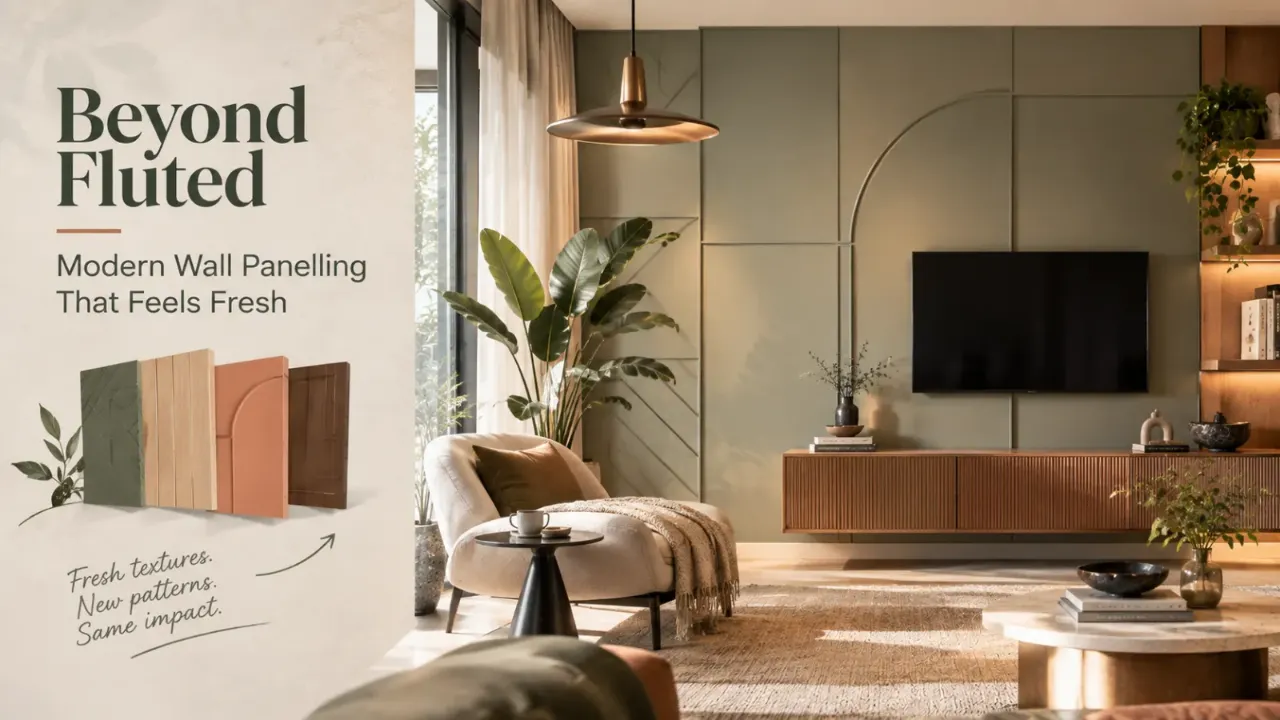
Beyond Fluted: Modern Wall Panelling That Feels Fresh
There was a time when wall panelling instantly made a room feel more traditional. Then fluted panels arrived. Suddenly, vertical grooves appeared behind televisions, on bedroom walls, around dining areas, inside entryways and even on ceilings. The look was elegant, contemporary and relatively easy to recognise. The problem is not that fluted panelling looks bad. It is that when one treatment becomes too familiar, it can stop making a space feel personal.
Modern wall panelling has never been limited to vertical grooves. There are dozens of ways to add depth, texture, structure and character to a wall without repeating the same design everywhere.
What Wall Panelling Is Really Doing
Before choosing a finish, understand the reason you are panelling the wall in the first place.
Sometimes the wall needs texture. Sometimes it needs visual height. Sometimes it needs to frame a television or bed. Sometimes it is simply too plain and needs a little architectural definition.
And sometimes panelling is being used to hide something — an uneven surface, concealed wiring, a service door or a transition between different materials.
Once you know the job, your options become much wider.
Start With Flat Panels and Recessed Geometry
One of the simplest alternatives to fluting is also one of the most timeless: flat panel detailing.
Think of rectangular or square sections created through shallow recesses, moulding, shadow gaps or narrow framing strips.
The result can feel sophisticated without becoming visually noisy.
This works particularly well in bedrooms, dining areas and living rooms where you want the wall to have structure but still allow artwork, furniture or lighting to remain the focus.
The geometry does not need to be complicated. In fact, simpler proportions usually age better.
Try Slatted Panelling Without Making It Fluted
There is a difference between a fluted surface and a slatted composition.
Instead of continuous grooves formed into one panel, individual timber or wood-finish slats can be spaced apart to create stronger lines and more visible negative space.
The effect can feel lighter and more architectural.
Slatted designs can also be used selectively rather than across the entire wall. They can frame a television, define one side of a dining niche or create a vertical transition between two zones.
Go Geometric
Modern interiors do not always have to rely on vertical lines.
Geometric panelling can introduce angled lines, grids, asymmetrical divisions or intersecting forms.
Used carefully, this can make a feature wall feel designed specifically for the room rather than selected from a catalogue.
Geometric treatments are especially effective when they relate to something already present in the space. The lines can echo the shape of furniture, align with lighting, respond to a large artwork or connect visually with architectural elements.
The goal is not to create a puzzle on the wall. It is to create rhythm.
Consider Micro-Texture Instead of Deep Texture
Texture does not have to mean something you can dramatically see from across the room.
A subtle plaster-like surface, limewash-inspired finish, concrete effect or softly textured panel can create depth without introducing heavy geometry.
This approach works particularly well in spaces where you want a warm, quiet or sophisticated atmosphere.
Think of texture as something that catches light differently throughout the day. Morning light may reveal one quality. Evening lighting may reveal another.
That is often more interesting than a wall that looks exactly the same from every angle.
Bring in Material Instead of Pattern
Sometimes the strongest alternative to fluted panelling is no decorative pattern at all.
Use the material itself.
Wood
Wood veneer and timber finishes can add warmth and visual depth without relying on repetitive geometry.
Stone
Natural or engineered stone can bring a stronger, more grounded character to selected feature walls.
Fabric
Fabric panels can add softness and a different tactile quality, particularly in bedrooms and quieter spaces.
Metal & Glass
Metal detailing and glass can create a lighter, sharper contemporary layer when used selectively.
The material should respond to the room. A bedroom may benefit from softness. A living room may suit warmth and texture. A study may work well with richer wood tones.
There is no universal “modern” material. Modernity comes from how the material is detailed and combined.
Colour Blocking Can Become a Wall Treatment
Wall panelling is not always about adding something onto the wall. Sometimes the design can come entirely from colour.
A strong painted block behind a sofa, a contrasting vertical section beside a doorway or a colour change that frames a niche can create a powerful visual boundary.
This is particularly useful when you want the effect of a feature wall without the added depth, carpentry or material cost of a constructed panel.
The technique can also work beautifully in smaller rooms because it creates visual definition without physically consuming much space.
Combine Two Treatments Instead of Covering Everything
One of the more interesting modern approaches is to stop thinking of the wall as one continuous surface.
Instead, divide it into zones.
- A television can sit against a restrained textured wall while one side uses timber slats.
- A bed wall can combine upholstery with painted panels.
- A dining wall can use a framed artwork above a lower textured section.
- An entryway can combine storage with one decorative panel and leave the rest of the wall quiet.
This gives the room layers. It also prevents the common mistake of treating every square inch of a feature wall as something that must be decorated.
Sometimes the empty space is what makes the detailed section work.
Don't Ignore the Ceiling Height
The direction of your wall treatment should respond to the room's proportions.
Vertical lines can emphasise height. Horizontal divisions can visually widen a wall. Large rectangular panels can make a broad wall feel more organised. Small repeated patterns can make a large room feel busier.
This is why copying a panelling design from an image rarely produces exactly the same result at home.
The original room may have completely different ceiling heights, wall proportions, windows and furniture.
Good panelling is designed around the wall you actually have.
TV Walls Need More Than a Pretty Background
Television walls are where panelling is often used most heavily.
But the wall is doing more than providing a background. It may also need to conceal wiring, accommodate a unit, provide access to electrical points and coordinate with the television's size.
A beautifully designed panel can still fail if the television looks awkwardly positioned within it.
Start with the screen, furniture and electrical requirements. Then design the decorative treatment around them.
The panel should frame the technology rather than compete with it.
Bedroom Walls Need Different Thinking
The wall behind a bed is another popular place for panelling, but it should not automatically be treated like a television wall.
The bedroom usually benefits from greater softness and visual calm.
Upholstered panels, warm timber, subtle moulding, textured finishes or a restrained colour treatment may work better than highly repetitive geometry.
Lighting is equally important. A wall treatment can change completely once bedside lights or concealed lighting are added.
The best bedroom panelling often feels integrated with the bed, side tables and lighting rather than existing as a separate decorative feature.
Panelling Does Not Have to Cover the Whole Wall
This is one of the simplest ways to make a modern wall treatment feel less predictable.
You can panel only the central section. You can stop below the ceiling. You can wrap the treatment around one corner. You can create a framed composition around artwork. You can use panelling only behind a piece of furniture.
Partial treatment often creates more sophistication because it shows that the designer made a deliberate decision about where the treatment should begin and end.
A wall does not become more interesting simply because more of it is covered.
Think About the Edges
This is where many wall-panelling designs lose their polish.
What happens where the panel ends? Does it meet another wall cleanly? Does it stop at a door frame? Does it align with furniture? What happens around switches, sockets and electrical boxes? Where does the skirting meet the panel?
These small details determine whether the wall feels custom-designed or simply decorated.
A beautiful material cannot compensate for poor transitions.
Avoid Mixing Too Many Wall Treatments
Once you realise how many alternatives exist, it becomes tempting to use all of them.
That usually makes the room harder to read.
A home can have several types of wall treatment, but they should belong to the same design language.
For example, a warm timber treatment in the living room can be paired with subtle moulding in the bedroom and textured paint in the dining area.
The rooms do not have to match. They simply need to feel related.
What Makes Panelling Look Expensive?
It is rarely the number of grooves, the complexity of the pattern or the material price alone.
It is proportion. It is alignment. It is restraint. It is the quality of the edges. It is how the treatment meets doors, windows, furniture, flooring and lighting.
A simple panel with excellent detailing can feel far more refined than an elaborate wall with awkward proportions.
This is why “luxury” and “expensive” are not the same thing.
Ask These Questions Before You Panel
What is this wall supposed to do?
Is it a backdrop, a focal point, storage, a divider or a way to conceal services?
What is already competing for attention?
Artwork, television, windows, furniture and lighting all contribute to the visual weight.
How will the wall look at night?
A finish that looks subtle in daylight can become extremely strong under artificial lighting.
How much maintenance will it need?
Deep grooves, open slats and textured surfaces can collect dust differently from a smooth wall.
Will the treatment still feel right in a few years?
A timeless composition generally depends more on proportion and material balance than on following a short-lived trend.
The New Rule for Modern Wall Panelling
Fluted panelling became popular because it solved several design problems at once. It added texture, created vertical rhythm, looked contemporary and worked with wood finishes.
But modern interiors do not need to stop there.
The next generation of wall design is less about one signature pattern and more about combining material, texture, geometry, colour and architecture intelligently.
Sometimes the best wall is fluted. Sometimes it is timber slatted. Sometimes it is a quiet textured plaster finish. Sometimes it is just paint and a perfectly placed piece of art.
And sometimes the smartest decision is to leave the wall alone.
Because the goal of wall panelling is not to prove that you decorated the wall. It is to make the room feel more considered.
Final Thought
Modern wall panelling should not be about following the same visual formula from one home to another.
Look at the architecture first. Understand what the wall needs to accomplish. Then choose the material, texture, geometry and level of detailing that supports the room.
The most contemporary wall may not be the most elaborate one. It may simply be the one that feels like it belongs there.
Ready to Visualise Your Wall?
Before committing to a panel design, try seeing how different textures, colours and treatments could work with your existing room.
Walls to Wonder's Design My Room tool lets you upload a room photo and explore AI-generated interior concepts around your existing space. When you are ready to move from visual inspiration to professional planning, you can also explore designers through the Walls to Wonder designer directory.
Frequently Asked Questions
1. Are fluted wall panels still modern?
Yes. Fluted panels can still look contemporary when they are proportioned well and used selectively. The issue is not whether they are modern, but whether they suit the particular space.
2. What are the best alternatives to fluted wall panelling?
Popular alternatives include flat recessed panels, timber slats, geometric detailing, textured finishes, wood veneer, stone, fabric panels and colour-blocked walls.
3. Is wall panelling suitable for a small room?
It can be, but the design should be proportionate to the room. Heavy patterns or overly deep treatments can make a compact space feel visually busy.
4. Should I panel an entire feature wall?
Not necessarily. Partial panelling can often create a cleaner result by focusing attention on a specific area such as a bed, television, console or artwork.
5. How do I make modern wall panelling look less repetitive?
Use different treatments in different rooms while keeping a consistent overall design language. Varying texture, colour and material can create interest without making the home feel disconnected.
6. Is wall panelling high maintenance?
Maintenance depends on the material and detailing. Open grooves, deep textures and slatted surfaces may require more regular dusting than smooth painted walls, so practicality should be considered before selection.
Turn this idea into a plan for your home
Visualise your space, understand the likely budget, or find a professional who can bring the idea to life.