
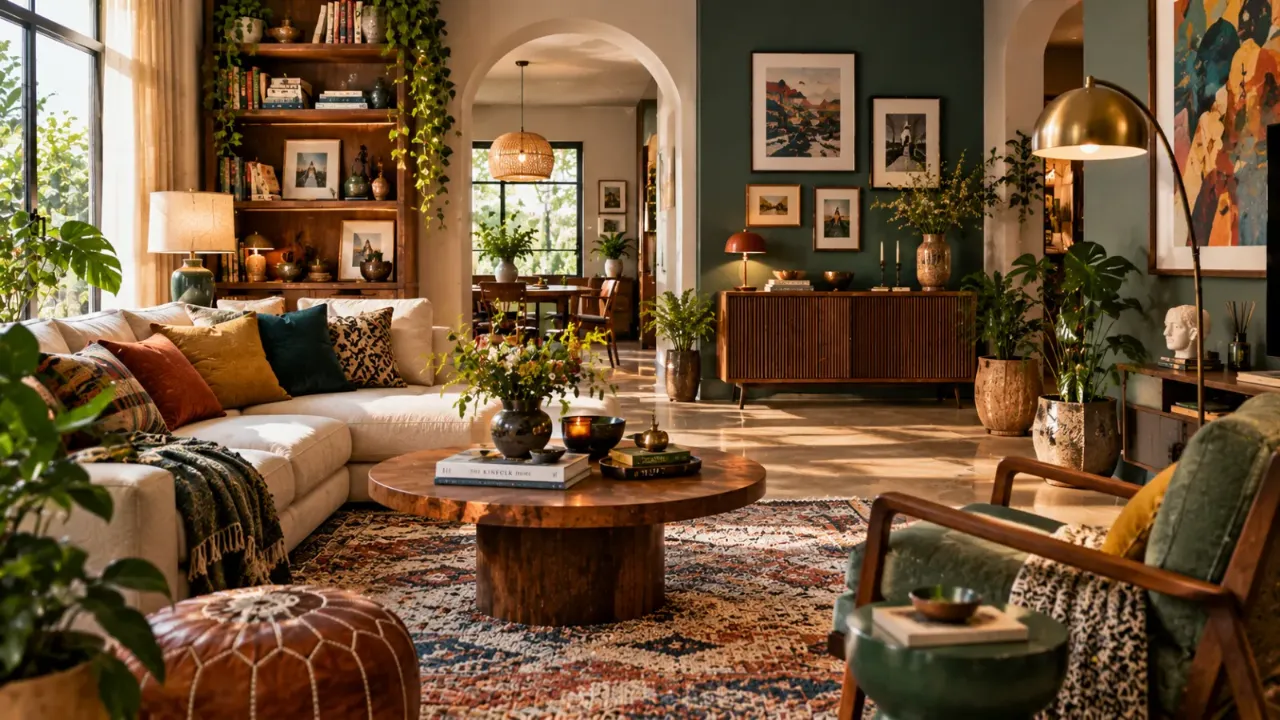
Your Home Already Has More Style Than You Think
Refreshing your home usually starts with the same thought: “What should I buy?” A new sofa, new cushions, a new rug, new artwork or new décor.
But sometimes the better question is: “What do I already have?”
Most homes already contain far more styling potential than their owners realise. Furniture can move, artwork can change walls, cushions can move between rooms and objects can be grouped differently.
- Styling Is Not the Same as Shopping
- Start by Removing Everything Unnecessary
- Create Three Groups Before Rearranging
- Rearranging Furniture Can Change an Entire Room
- Change the Focal Point
- Move Artwork Before Buying New Artwork
- Restyle Shelves Instead of Filling Them
- Create Groups Instead of Scattering Objects
- Use Height to Create Hierarchy
- Move Textiles Between Rooms
- Try a One-Room Swap
- Give Forgotten Furniture a Second Job
- Change the Spacing Around Furniture
- Restyle the Coffee Table
- Style the Dining Table
- Give the Entryway Another Look
- Restyle the Bedroom Through Layering
- Use Books as Styling Objects
- Move Plants Too
- Use Colour Repetition
- Repeat Materials
- Style Around One Statement Piece
- Remove One Thing From Every Surface
- Change the Lighting Before the Décor
- Photograph the Room
- Style for the Room You Have
- Common Restyling Mistakes
- A Useful No-Buy Styling Process
- A Room-by-Room No-Buy Refresh
- The “Shop Your Home” Idea
- What to Do When You Still Want Something New
- Build a Wishlist After Restyling
- The Best Refresh May Be an Edit
- A Final Styling Test
- FAQ
Styling Is Not the Same as Shopping
Shopping adds things. Styling changes relationships between things.
You can own beautiful furniture and still have a room that feels flat because the furniture is arranged poorly. You can own plenty of décor and still feel that the room looks cluttered because too many objects are competing.
Good styling is often less about what you own and more about how you use what you own.
Start by Removing Everything Unnecessary
Take things away. Remove decorative objects from shelves, clear the coffee table, remove extra cushions and take accessories off the console.
Do not throw anything away. Just create a temporary blank slate.
This helps you see the room's architecture and furniture more clearly and makes it easier to identify what is actually adding value.
Create Three Groups Before Rearranging
Pieces that work well in their current room and still support the space.
Items that could work better in another room or in a different position.
Pieces that are useful or meaningful but currently add visual clutter.
Objects that may work again after cleaning, repairing, changing placement or updating their presentation.
1. Rearranging Furniture Can Change an Entire Room
Furniture is often left in the position where it was first placed. That does not mean it is the best position.
- Sofa orientation
- Chair positions
- Coffee-table placement
- Bed direction
- Dining table orientation
- Side-table locations
- Console placement
Even rotating a furniture arrangement can change how the room feels. Think about circulation, natural light, focal points and where people naturally sit.
2. Change the Focal Point
Sometimes a room feels boring because everything is arranged around the same visual feature.
The television may be the automatic focal point. Try changing that. A large artwork, window, beautiful piece of furniture or console composition can become the new focal point.
3. Move Artwork Before Buying New Artwork
Wall art has enormous styling power, but many homes keep the same artwork in the same place for years.
4. Restyle Your Shelves Instead of Filling Them
Open shelves are often treated as storage for anything that needs somewhere to go. That quickly makes them look crowded.
Remove everything and rebuild the shelves selectively. Try one larger object, a small stack of books, a plant, a framed artwork, a ceramic piece or an object with personal meaning.
Leave some empty space. The shelf does not need to look full to look finished.
5. Create Groups Instead of Scattering Objects
Three similar objects placed together often feel more intentional than the same three objects spread across the room.
- Colour
- Material
- Shape
- Height
- Function
- Personal meaning
The key is creating a relationship between the objects.
6. Use Height to Create Hierarchy
A surface becomes more interesting when everything is not at the same height.
Different heights create visual movement, but too many tall or low objects can create competition or make the composition feel flat.
7. Move Textiles Between Rooms
Textiles are among the easiest things to repurpose.
- Cushions
- Throws
- Rugs
- Curtains
- Table runners
- Bed covers
A cushion that feels too strong in the living room may become a perfect accent in the bedroom. A neutral throw can soften a reading chair.
8. Try a One-Room Swap
Choose two rooms. Take three to five small items from one room and temporarily place them in the other. Do the same in reverse.
You may discover that the items you thought belonged permanently in one room were simply familiar there.
9. Give Forgotten Furniture a Second Job
Bedside seating, plant stand, entryway perch or side table.
Can become a work surface or serve another room's storage needs.
Can move between dining, bedroom or entry areas.
Can temporarily serve as a desk or bedroom chair.
10. Change the Spacing Around Furniture
Sometimes you do not need to move the furniture to make the room feel different. You need to change the space around it.
Pull a sofa slightly away from the wall. Give a chair more breathing room. Move the coffee table closer to the seating. Create more empty space around an artwork.
Negative space is part of the design.
11. Restyle the Coffee Table
Coffee tables often become permanent storage surfaces for remote controls, books, candles, trays and random everyday items.
Start again with a small number of objects.
Or try a vase with books and a small bowl. Keep enough empty surface for the table to remain usable.
12. Your Dining Table Can Be Styled Without Staying Styled
A dining table does not need to remain covered in décor all day.
But a bowl, vase, candles, tray, small arrangement of greenery or table runner can make the room feel more finished when needed.
13. Give Your Entryway Another Look
Before buying a new console or mirror, look at what you already own.
- An existing mirror
- A small table
- A bench
- Artwork from another room
- A tray for keys
A few simple changes can make the entrance feel much more intentional.
14. Restyle the Bedroom Through Layering
Remove some cushions. Add a throw. Move artwork. Change bedside accessories. Reposition a chair. Move a rug slightly.
The goal is not to add more. It is to create a more intentional composition.
15. Use Books as Styling Objects and Functional Objects
Books are useful because they provide colour, height and texture while remaining functional.
Stack them, stand them vertically, use a small stack beneath an object or group them by colour.
16. Plants Can Move Too
A plant does not have to stay in one corner forever.
Try moving plants based on light, scale, visual balance, empty corners and furniture arrangement.
17. Use Colour Repetition From What You Already Own
Before buying new accessories, identify the colours already present.
Repeat those colours more intentionally in different rooms and through different objects. This creates continuity without adding anything new.
18. Repeat Materials Too
The same idea works with materials.
- Walnut
- Cane
- Brass
- Stone
- Linen
- Ceramic
Material repetition can create a sense of connection between rooms even when the furniture is different.
19. Restyle Around One Statement Piece
Instead of trying to make everything interesting, choose one piece you already love.
Give it more surrounding space and reduce competing wall décor.
Let the furniture piece become the visual anchor of the seating arrangement.
Use quieter objects around it so the form remains noticeable.
Use it as a focal element rather than surrounding it with too many accessories.
20. Try Removing One Thing From Every Surface
Look at the coffee table, console, dining table, bedside table, bookshelf, kitchen counter and bathroom vanity.
Remove one object from each.
Often the room immediately feels calmer.
21. Change the Lighting Before Changing the Décor
A room can feel completely different under different lighting.
Move a lamp. Change the direction of a floor lamp. Turn on a table lamp in the evening. Use a warmer accent light. Reduce reliance on one overhead source.
Sometimes what you think is a décor problem is really a lighting problem.
22. Photograph the Room
Take a photograph from the main entrance, then from the opposite corner and from the seating area.
Look at the image rather than the physical room.
- Too many objects
- Uneven visual weight
- Empty walls
- Crowded surfaces
- Poor furniture balance
- A missing focal point
23. Style for the Room You Have, Not the Room You Wish You Had
Existing furniture can sometimes make you feel that your home needs a complete makeover.
But before replacing everything, ask whether the arrangement is the real issue.
A different sofa position, artwork, rug placement, lighting setup, furniture edit or increase in empty space can sometimes create a surprisingly different result.
24. Common Mistakes When Restyling With What You Own
- Moving everything without a plan: Random movement does not automatically create a better layout.
- Keeping everything visible: Sentimental does not always mean everything has to be displayed.
- Scattering too many small objects: Grouping usually creates stronger visual relationships.
- Adding furniture simply because there is space: Available space is not the same as useful space.
- Ignoring circulation and proportion: Styling should not make everyday movement more difficult.
- Stopping after one small change: Several small improvements can work together to transform a room.
25. A Useful “No-Buy” Styling Process
Step 2: Photograph the room.
Step 3: Identify the focal point.
Step 4: Rearrange the main furniture.
Step 5: Move selected décor and textiles between rooms.
Step 6: Group objects instead of scattering them.
Step 7: Adjust height, spacing and negative space.
Step 8: Recheck lighting.
Step 9: Photograph again and edit once more.
26. A Room-by-Room No-Buy Refresh
Rearrange seating, restyle the coffee table, move artwork and reduce excess accessories.
Change textile layering, reposition artwork, simplify bedside tables and move plants or chairs.
Clear the table, change the centrepiece and reconsider the table orientation or surrounding furniture.
Reuse an existing mirror, bench, console, artwork or tray to create a stronger arrival moment.
The “Shop Your Home” Idea
Think of your home like your own private furniture and décor collection.
Walk through every room and ask:
A lamp. A cushion. A chair. A rug. A piece of artwork. A tray. A vase. A side table. A plant.
You may already have the missing piece. It is simply living in the wrong room.
What to Do When You Still Want Something New
Restyling what you own does not mean you can never buy anything.
This changes the order of decisions and makes future purchases more intentional.
Build a Wishlist After the Restyling Exercise
Once you have restyled the room, create a short list of anything you still feel is missing.
- A larger rug
- A better reading lamp
- One accent chair
- A larger artwork
- Additional closed storage
This list is much more useful than shopping without a plan because you know what the room actually needs.
The Best Refresh May Be an Edit
Sometimes the room you have been trying to improve simply has too much in it.
Removing a chair, a few decorative objects or one piece of artwork can sometimes create more change than buying several new items.
A Final Styling Test
Stand at the entrance of the room and ask:
What do I notice second?
Where does my eye stop?
If everything is competing equally, edit. If nothing stands out, create a focal point. If the eye keeps getting interrupted by small objects, simplify.
Your Home May Not Need New Things
A home can feel stale simply because you have stopped seeing it objectively.
You walk past the same chair, the same artwork, the same plant and the same console arrangement. You no longer notice them.
Rearranging interrupts that familiarity. It allows you to see your home again.
See What Your Existing Space Can Become
Before investing in new furniture or décor, explore different possibilities for the room you already have and see how layout and styling can change the experience.
Final Thought
A home refresh does not always begin at a store.
Sometimes it begins by moving one chair. Or removing three objects from a shelf. Or taking artwork from one room and giving it a new place.
Before buying something new, look at what you already have with fresh eyes.
You may discover that the problem was never a lack of things.
It was simply that those things had stopped being used creatively.
FAQ
Start by removing unnecessary décor, rearranging furniture, moving artwork and textiles between rooms, changing focal points and improving the spacing and lighting.
It means looking through the furniture, décor, textiles and objects you already own and considering whether they could work better in another room or arrangement.
Yes. Furniture arrangement affects circulation, focal points, proportions, sightlines and how much visual space the room appears to have.
Usually, it helps to remove everything first. Starting with a clearer surface makes it easier to decide what deserves to return and where it should go.
Try grouping objects by colour, material, height or meaning, moving them between rooms, changing their position and creating more negative space around them.
Edit the room, rearrange what you already own, test different layouts and identify the specific problem that remains. Buy only when you can clearly identify what is missing.
Yes. Side tables, chairs, benches, consoles and smaller cabinets can often perform different functions when moved to another room, provided their size and practical requirements suit the new space.
Get a personalised estimate for your home
Choose your rooms, materials and preferences to understand a practical interior budget before you commit.