
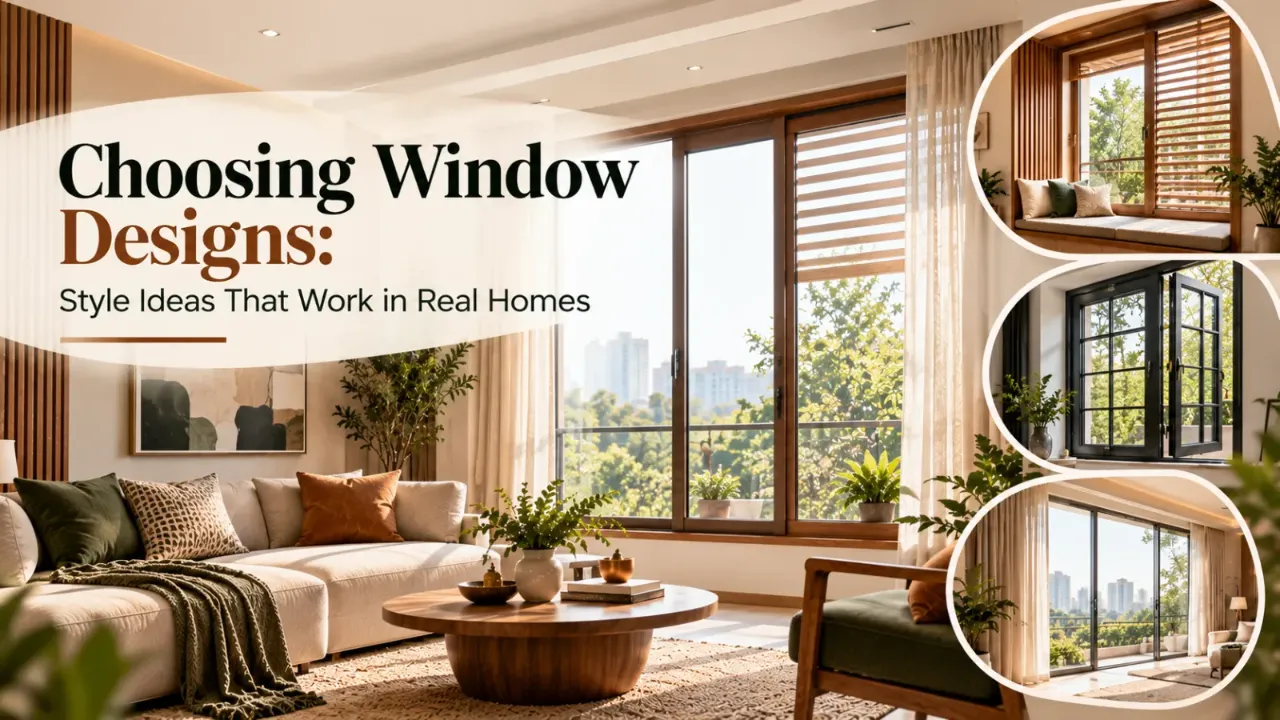
Choosing Window Designs: Style Ideas That Work in Real Homes
Windows do much more than frame a view. They influence how daylight enters a home, how air circulates, how private a room feels and how the exterior of a house looks. The right design can make a room feel brighter and more open, while the wrong choice can create problems with glare, ventilation, cleaning or furniture placement.
With so many options available—from sliding and casement windows to large picture windows and traditional wooden frames—it is easy to choose a style based on appearance alone. A successful window design, however, needs to work with the room, the building and the way you use the space.
Quick answer: Choose window designs by considering the room's purpose, daylight, ventilation, privacy, available space, frame material, glass specification and maintenance needs. Finalise the dimensions and opening direction after checking furniture placement and site conditions, and have a qualified professional verify structural requirements, safety and installation details before execution.
1. Start With the Room, Not the Window Trend
A window that works beautifully in a living room may not be the best choice for a compact bathroom or a bedroom facing a busy road. Begin by understanding what each room needs.
For a living room, you might prioritise daylight, an attractive view and a strong visual connection with the outdoors. A bedroom may need privacy, ventilation and effective control of morning light. A kitchen window should be easy to access and clean, while a bathroom needs suitable privacy and moisture-resistant detailing.
Before choosing a style, consider:
- What the room is used for throughout the day
- Which direction the window faces and how sunlight enters
- Whether the room needs more ventilation or better glare control
- How much privacy is required
- Whether furniture, curtains or built-in storage will obstruct the window
- How easily the window can be cleaned and maintained
A little planning at this stage helps you avoid selecting a design that looks appealing in a photograph but feels inconvenient in daily use.
2. Choose a Window Style That Suits the Space
Different window types have different strengths. The best option depends on the room's dimensions, ventilation requirements, available clearance and the way you want to use the opening.
Sliding windows: These move along tracks and do not need extra swing space. They can be useful where furniture, walkways or balconies limit the room available for an opening sash. Their tracks should be designed for drainage and kept clean to maintain smooth operation.
Casement windows: These open on hinges and can provide a wide opening for ventilation. However, the sash needs sufficient clearance, and the opening direction should be checked against balconies, walkways, curtains and nearby fixtures.
Fixed or picture windows: These provide an uninterrupted view and allow daylight into a room, but they do not open for ventilation. They are often considered alongside other opening windows rather than used as the only source of fresh air.
Awning or top-hung windows: These can be useful in selected locations where the opening needs to be positioned differently from a conventional casement. Suitability depends on the size, weather exposure, hardware and installation details.
Louvred windows: These allow adjustable airflow through angled blades, but the level of weather protection, security and privacy depends on the design and its location.
Do not select a window solely because it is fashionable. Compare how it opens, how much clear opening it provides, how it performs in local weather and how it fits into the room.
3. Make Daylight and Ventilation Work Together
A larger window does not automatically make a room more comfortable. Its effectiveness depends on orientation, shading, glazing, opening area and the position of other windows or vents.
Think about the quality of daylight you want. A window receiving strong direct sun may need external shading, suitable glazing, curtains or blinds to control glare and heat. A shaded opening may need a different approach to make the most of available daylight.
Ventilation also needs deliberate planning. Consider the usable opening area, the direction of prevailing winds and whether air has a path to move through the room. Where appropriate, openings on different sides can support cross-ventilation, but the result depends on the building layout and surrounding conditions.
Before finalising the design, ask your architect or window professional to review:
- The room's orientation and sunlight exposure
- Potential glare and heat gain
- The actual opening area, not just the overall frame size
- Ventilation requirements for the room
- External shading and rain exposure
- Any relevant local building or safety requirements
The goal is to create a comfortable indoor environment, not simply to maximise the size of the glass.
4. Select the Right Frame Material
Frame material affects appearance, maintenance, durability, insulation performance and cost. Compare complete window systems rather than judging the frame material in isolation.
Aluminium frames: These offer a slim, contemporary appearance and can suit many modern homes. Thermal performance depends on the system, including whether thermal breaks and suitable glazing are incorporated.
uPVC frames: These are commonly chosen for their relatively low maintenance and range of configurations. Quality, reinforcement, hardware, installation and exposure to local conditions all influence long-term performance.
Wooden frames: These bring natural texture and can complement traditional, classic or warm contemporary interiors. They require appropriate treatment and maintenance, especially where moisture, rain or direct sunlight are concerns.
Other frame systems: These may be suitable depending on the project's architectural style, performance requirements and local availability.
When comparing options, check the frame profile, seals, hardware, finish, weather resistance, cleaning needs, warranty and availability of replacement components. A good-quality, properly installed system is more important than choosing a material based on appearance alone.
5. Choose Glass for More Than Its Looks
Glass selection can influence heat gain, glare, privacy, sound control and safety. Clear glass is not always the right answer for every location.
Depending on the situation, you may consider tinted, reflective, patterned, frosted, laminated, tempered or insulated glazing. Each has different properties, and not every type is suitable for every window or building condition.
For example, frosted or patterned glass can help provide privacy in a bathroom while allowing daylight to enter. Laminated or tempered safety glass may be required or advisable in certain locations, depending on applicable codes and the risk of impact. Double glazing may be useful where thermal or acoustic performance is a priority, but the complete system and installation determine its effectiveness.
Before selecting glass, consider:
- Privacy requirements during both daytime and nighttime
- Direct sunlight and potential heat gain
- Noise from traffic or nearby activity
- Safety risks and applicable standards
- Cleaning and visibility preferences
- Compatibility with the frame and hardware
Ask the supplier to specify the glass type and thickness in writing rather than relying on descriptions such as “premium glass” or “strong glass.”
6. Plan Privacy, Curtains and Furniture Early
Window planning should happen alongside the interior layout, not after the furniture has been purchased.
A large opening may look impressive but can become difficult to use if a wardrobe blocks it, a sofa obstructs access or curtains cannot be drawn comfortably. Similarly, a low sill may affect furniture placement, while a high or narrow opening may change how the room feels.
Consider how curtains, blinds, insect screens and other accessories will be installed. Check the available space for curtain tracks, pelmets, handles and the movement of opening sashes.
Privacy needs also vary by location. A bedroom facing a neighbouring building may need a different treatment from a living room opening onto a private garden. In bathrooms and ground-floor rooms, consider the view from outside as well as the appearance from within.
If you are exploring different interior looks, try Design My Room by Walls to Wonder to explore a visual concept before committing to the final window treatment. Then check the actual dimensions and technical requirements on site.
7. Get the Measurements and Opening Direction Right
Even an attractive window design can fail if the measurements or installation details are wrong. Window openings must be coordinated with the wall construction, lintels or other structural elements, sill height, floor level and finished wall surfaces.
Do not rely on rough measurements taken from an unfinished wall or an inspiration image. The final site measurements should be confirmed by the responsible professional or supplier at the correct stage of construction.
Before production or installation, confirm:
- Overall frame dimensions and opening dimensions
- Sill height and alignment with the finished floor
- Opening direction and sash clearance
- Handle positions and access for operation
- Provision for insect screens and window coverings
- Weatherproofing, drainage and sealing details
- Safety requirements, especially for elevated openings
Any change to a structural opening should be reviewed by the appropriate qualified professional. Do not cut or alter a load-bearing wall based solely on a preferred window style.
8. Match the Design to Your Budget
Window costs depend on more than the size of the opening. The frame system, glass specification, hardware, finish, accessories, installation complexity and site conditions can all affect the final price.
Prepare a consistent specification before comparing suppliers. If one quotation includes a different glass type, screen, locking system or installation scope, the prices may not be directly comparable.
To keep the project within budget:
- Prioritise performance and safety requirements first.
- Use standard sizes where they suit the design and site conditions.
- Compare complete specifications, including installation and finishing.
- Avoid paying for premium features that do not solve a real need.
- Check warranty coverage and service availability.
- Keep a contingency for site adjustments and associated finishing work.
It may be worth investing more in a window exposed to demanding weather or noise, while a simpler system may be appropriate in a less demanding location. The aim is to match the specification to the conditions rather than choosing the cheapest or most expensive option by default.
9. Check Installation Before Signing Off
Correct installation is essential for a window to perform as intended. Even a good frame and glass combination can develop problems if the unit is poorly aligned, inadequately sealed or installed without proper drainage and support.
During handover, inspect the finish around the frame and test the operation of every opening sash. Look for smooth movement, secure locking, consistent gaps and any visible damage.
Your checklist should include:
- Frames are aligned and securely fixed.
- Sashes open, close and lock smoothly.
- Seals and joints are continuous and properly finished.
- Drainage paths are not blocked.
- Glass and frames are free from cracks or damage.
- Screens, handles and accessories are fitted correctly.
- Water ingress and other concerns are addressed by the installer.
- Product details and warranty information are handed over.
Where practical, agree on the inspection and testing process with the installer before work begins. Any defects should be documented and resolved before final acceptance.
A Final Thought
The best window design is one that complements the architecture while meeting the needs of the people who live inside. Style matters, but daylight, ventilation, privacy, safety, maintenance and installation quality determine whether the window works well over time.
Start with the room's requirements, compare window systems carefully and confirm the technical details before ordering. When inspiration is supported by accurate measurements and professional execution, windows can become one of the most useful and distinctive features of your home.
Visualise Your Interior Before Finalising the Details
Explore a room concept to help you think through the relationship between windows, furniture, colours and finishes. Confirm all window measurements and technical details with your professional before installation.
Frequently Asked Questions
1. Which window design is best for a modern home?
Sliding, casement and fixed windows can all suit modern homes. The right choice depends on ventilation, available space, the view, weather exposure, safety and the architectural design.
2. Are sliding windows better than casement windows?
Neither is universally better. Sliding windows save swing space, while casement windows can provide a wider opening for ventilation. Compare the usable opening, sealing, hardware and maintenance needs for your specific location.
3. Which window frame material requires the least maintenance?
Maintenance varies by product quality, finish, exposure and installation. uPVC and many aluminium systems are often selected for relatively low routine maintenance, while wooden frames may need more regular care and protective treatment.
4. How can I improve privacy without making a room dark?
Depending on the room, consider frosted or patterned glass, blinds, curtains, external screening or carefully positioned landscaping. Choose a solution that meets the room's privacy needs during both daytime and nighttime.
5. What should I check before ordering windows?
Confirm the final dimensions, frame and glass specifications, opening direction, hardware, screens, installation scope, weatherproofing, safety requirements, warranty and total cost. Have the relevant professional verify the site conditions before production.
6. Can a large window make a room hotter?
It can, depending on orientation, glazing, shading and local climate. Consider solar exposure, suitable glass, external shading and ventilation when planning large openings.
Turn this idea into a plan for your home
Visualise your space, understand the likely budget, or find a professional who can bring the idea to life.