
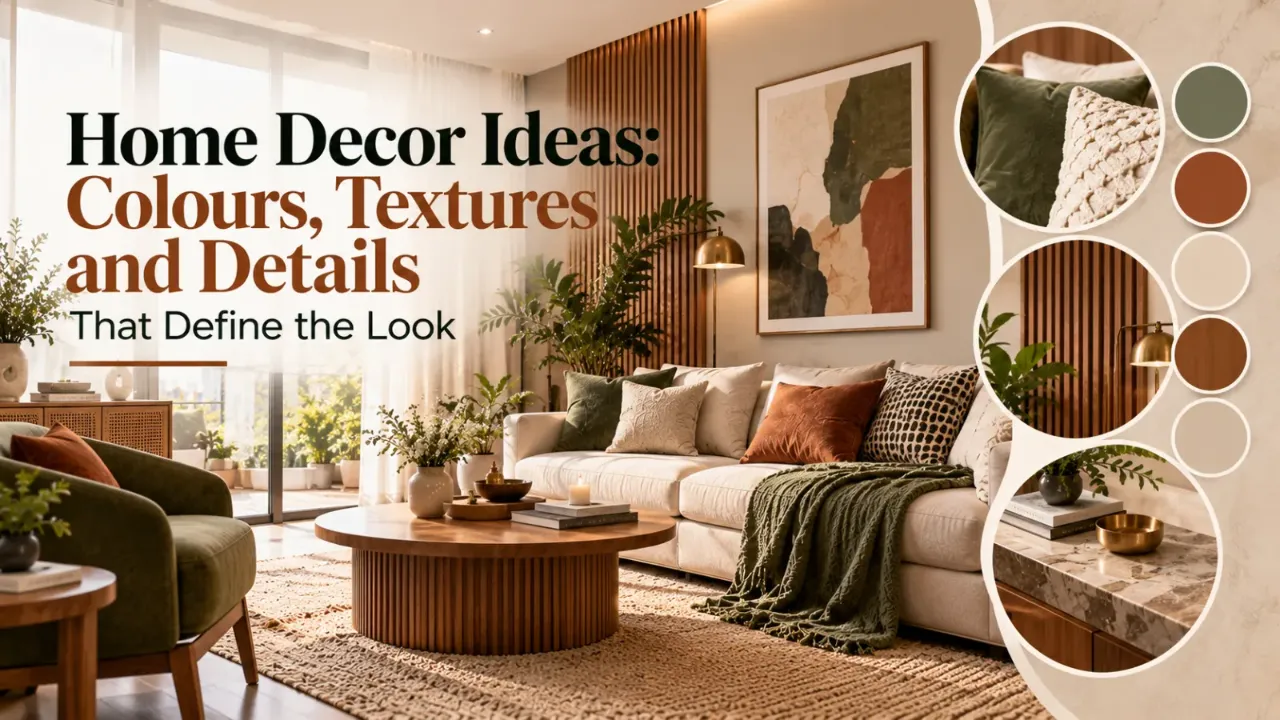
Home Decor Ideas: Colours, Textures and Details That Define the Look
A room can have beautiful furniture and still feel incomplete. Sometimes the missing element is not another decorative object but a better colour combination, a softer texture, well-planned lighting or a few carefully chosen details that bring everything together.
Home decor is about how these elements work with one another. Wall colours influence the mood, fabrics soften the space, materials add depth, and lighting changes how the room feels throughout the day. When these choices are coordinated, even a simple interior can feel considered and personal.
The challenge is knowing what to add, what to keep simple and how to prevent a room from becoming visually cluttered.
Quick answer: Start with a consistent colour palette, introduce two or three complementary textures, layer lighting according to the room's purpose and use decorative accessories selectively. Repeat a few colours or materials across the space to create cohesion, while leaving enough visual and physical breathing room.
1. Start With Colours That Set the Mood
Colour is one of the most influential elements in home decor. It affects how a room feels and how its furniture, finishes and accessories relate to one another.
Before choosing a trending shade, decide on the atmosphere you want. Soft neutrals can create a relaxed backdrop, earthy colours can add warmth, and deeper shades can introduce contrast or drama. The best palette depends on your preferences, available daylight, room dimensions and existing finishes.
A useful starting point is to choose three colour roles:
- Base colour: A dominant shade for larger surfaces such as walls or major furnishings.
- Supporting colour: A complementary shade introduced through curtains, upholstery, rugs or selected furniture.
- Accent colour: A smaller, more distinctive colour used in artwork, cushions, lampshades or decorative objects.
These roles do not need to follow a strict formula. They simply help you distribute colour thoughtfully rather than using every favourite shade at once.
Test paint samples in different lighting conditions before making a final decision. A colour that looks subtle in a showroom may appear much stronger in direct sunlight or under artificial lighting.
2. Use Texture to Add Depth
Colour creates visual direction, but texture gives a room dimension. Smooth, rough, soft, woven, reflective and matte surfaces can create contrast even when the overall palette is restrained.
For example, a neutral living room can feel more inviting when a smooth wall is paired with a textured rug, upholstered seating and a wooden coffee table. A bedroom can feel layered through linen bedding, a soft throw, a timber bedside table and a matte wall finish.
When mixing textures, consider how they relate to one another:
- Soft fabrics can balance hard surfaces such as stone or glass.
- Natural wood can bring visual warmth to a room with smooth finishes.
- Woven textiles can soften a space dominated by straight lines.
- Matte surfaces can provide contrast against selected metallic or reflective details.
You do not need many materials to create interest. Start with a few complementary textures and repeat them where appropriate. Too many unrelated finishes can make a room feel busy rather than layered.
3. Choose Fabrics That Connect the Room
Curtains, cushions, rugs, bedding and upholstery are among the easiest ways to introduce colour and texture. They also provide flexibility because many of these elements can be changed without altering the permanent finishes.
Choose fabrics according to both appearance and use. A living room used frequently by children or guests may need durable, easy-to-clean upholstery. Bedroom fabrics might prioritise comfort, softness and a suitable level of light control.
Look at the fabrics together before purchasing them. They do not need to match exactly, but their colours, patterns and textures should complement the wider scheme.
For a balanced arrangement, you could combine a plain base fabric, a subtle texture and one patterned accent. If the rug already has a strong pattern, quieter cushions and curtains may help keep the room cohesive.
Also consider maintenance. Fabric that looks beautiful but requires care you cannot realistically provide may not be the right choice for everyday living.
4. Make Lighting Part of the Decor Plan
Lighting affects how colours appear, how textures are perceived and which details attract attention. It should be considered alongside the decor rather than added at the end.
A well-planned room may use three types of lighting:
- Ambient lighting: General illumination for the room.
- Task lighting: Lighting for activities such as reading, cooking, studying or grooming.
- Accent lighting: Lighting that highlights artwork, architectural details or a textured surface.
For example, a living room might combine ceiling lighting with a floor lamp beside the seating area and a small light near a display shelf. A bedroom could use general lighting alongside bedside lamps that are convenient for reading.
Pay attention to the colour temperature and intensity of the bulbs, because these affect how paint, wood and fabric look. Plan the placement of fixtures around furniture and activities so that the lighting is useful as well as decorative.
Avoid adding multiple decorative lights without considering what each one contributes. The aim is to create a comfortable, flexible atmosphere, not simply to increase the number of fixtures.
5. Give Walls a Purpose
Walls offer opportunities to introduce colour, texture, artwork and personality. However, every wall does not need to become a feature.
Choose the treatment according to the room and the furniture around it. A single accent wall, a large artwork, a carefully arranged collection of frames or a textured finish may be enough to create a focal point.
Before committing to wall panelling, wallpaper or decorative paint, consider the scale of the room, the existing furniture and the maintenance required. A heavily patterned wall may compete with patterned upholstery, while elaborate panelling can feel overpowering in a small space if its proportions are not carefully planned.
Keep some wall areas relatively quiet. Empty space can help a feature stand out and prevent the room from feeling overdecorated.
6. Select Accessories With Intention
Decorative accessories help make a home feel personal. Books, artwork, vases, plants, lamps, ceramics and collected objects can tell a story about the people who live there.
The key is to choose pieces that contribute something to the overall composition. An accessory might introduce colour, add texture, create contrast or hold personal meaning. If it does none of these things and simply occupies space, it may not be necessary.
When styling a console, shelf or coffee table, vary the height and shape of the objects while maintaining some connection between them. For instance, a vase, a small stack of books and one personal object can create a more deliberate arrangement than a row of unrelated decorations.
Avoid filling every available surface. Leave room for everyday items and allow selected pieces to receive attention.
Personal objects are often more meaningful than generic decorative purchases. You do not need to buy something new for every corner to make a home feel finished.
7. Coordinate Materials Without Making Everything Match
A cohesive interior does not require every wood finish, metal detail or fabric to be identical. In fact, a little variation can make a room feel more natural.
Instead of matching everything exactly, establish a few recurring materials. A wood tone might appear in a coffee table and bedside tables, while a selected metal finish might be repeated in lighting and cabinet hardware.
Different materials can coexist when they have a clear relationship in colour, finish, proportion or style. For example, warm wood can complement a neutral fabric, while glass or metal can add contrast without overwhelming the scheme.
Be selective with highly distinctive finishes. If a room already includes dramatic stone, bold flooring or prominent cabinetry, keep smaller decorative elements simpler so that the major materials remain the focus.
8. Use Plants and Natural Elements Thoughtfully
Plants, flowers and natural materials can introduce variation and make an interior feel more connected to the outdoors. Wood, cane, linen, stone and ceramics can also bring subtle differences in texture and finish.
Choose plants according to the available daylight, humidity, space and the care you can provide. A plant that requires conditions your room cannot offer may become difficult to maintain.
Consider scale and placement. A larger plant can help anchor an empty corner, while a smaller plant may suit a shelf or side table. Avoid positioning plants where they obstruct circulation or create problems for furniture and cleaning.
Natural elements work best when they complement the overall decor rather than becoming another layer of visual clutter.
9. Balance Decor With Function and Budget
Decorating is easier when you distinguish between essential improvements and optional finishing touches.
Start with the elements that make the room comfortable and usable: suitable lighting, functional furniture, storage and appropriate window treatments. Then decide how much of the remaining budget to allocate to rugs, artwork, cushions, decorative objects and statement finishes.
Before buying an accessory, ask whether it fits the space, complements what you already own and will be useful or meaningful over time.
If you are working within a limited budget, change smaller elements first. Rearranging furniture, editing existing accessories, introducing a few textiles or improving lighting may make a noticeable difference without requiring a complete makeover.
Use the Walls to Wonder Interior Design Cost Estimate to explore a room-wise budget based on your home, selected spaces and finish preferences. Treat the estimate as a starting point and confirm actual costs through detailed quotations.
10. Review the Room as a Whole
Individual decor items can look appealing in isolation but may not work well together. Before finalising your choices, step back and assess the complete room.
Look at the balance of colour, the variety of textures, the placement of lighting and the distribution of decorative objects. Check whether the main focal point is clear and whether the furniture still allows comfortable movement.
Ask yourself:
- Is there a clear colour palette?
- Do the materials and textures complement one another?
- Does the lighting support the room's activities?
- Are the accessories meaningful or visually useful?
- Is there enough space to move and use the room comfortably?
- Does the overall result reflect your preferences?
If something feels excessive, remove an element before adding another. Editing is often as important as decorating.
If you are unsure which direction suits your space, try the Walls to Wonder Interior Style Finder to explore a style direction based on your preferences and budget. You can then use Design My Room to explore a visual concept. For an existing room, Rate My Room Design can provide suggestions for colour, layout, lighting and decor.
Use visual concepts as inspiration, then confirm actual dimensions, materials and costs separately.
A Final Thought
The details that define a home are not necessarily the most expensive or elaborate ones. A considered colour palette, a few complementary textures, useful lighting and meaningful accessories can make a room feel complete without filling it with decoration.
Start with the atmosphere you want to create, build a consistent foundation and introduce details with intention. When colours, materials and accessories work together, your home can feel comfortable, cohesive and distinctly yours.
Bring Your Home Decor Ideas Together
Explore your interior style, visualise colours and finishes in your space, and plan your budget before making major purchases.
Find Your Interior Style · Try Design My Room · Plan Your Interior Budget
Frequently Asked Questions
1. How do I choose colours for home decor?
Start with the room's existing finishes, natural light and the atmosphere you want to create. Select a base colour, supporting shades and a limited number of accents, then test samples in the actual room before committing.
2. How many textures should I use in one room?
There is no fixed number. Begin with a few complementary textures, such as wood, upholstery and a woven fabric, and add more only when they improve the overall composition.
3. How can I decorate a room without making it look cluttered?
Choose a clear focal point, group accessories thoughtfully and leave some surfaces and wall areas open. Prioritise objects that serve a purpose or have personal meaning instead of filling every empty space.
4. Can lighting change how home decor looks?
Yes. Light affects how colours, finishes and textures appear. Combine general lighting with task and accent lighting, and test bulb colour temperatures against the room's main materials.
5. How can I refresh my home decor on a budget?
Rearrange existing furniture, edit accessories, change cushions or curtains, introduce a rug or artwork and improve lighting where needed. Small, coordinated changes can refresh a room without replacing everything.
6. Do all rooms in a home need the same colour scheme?
No. Each room can have its own character. Repeating a few colours, materials or finishes across shared spaces can create continuity without making every room look identical.
Turn this idea into a plan for your home
Visualise your space, understand the likely budget, or find a professional who can bring the idea to life.