
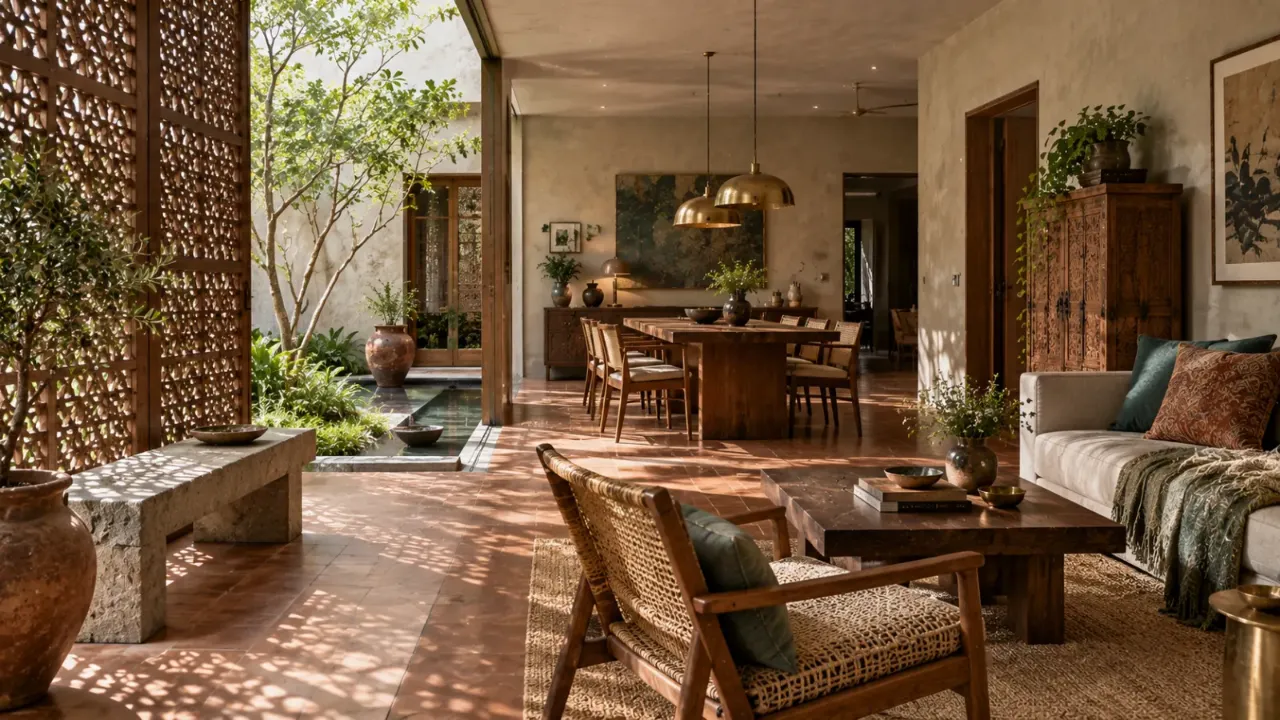
Traditional materials making a comeback in Indian interiors
Walk into a new "modern" home and a lot of it looks identical to every other new home, the same laminate finishes, the same engineered surfaces, the same factory textures. Meanwhile, materials that built Indian homes for generations, lime plaster, terracotta, natural stone, cane, are quietly reappearing.
Not as nostalgia, but because they solve real problems the newer materials don't: breathability, local climate suitability, repairability and a texture no laminate can fake.
- Lime plaster: walls that breathe
- Terracotta: tile, jaali and cladding
- Natural stone: beyond marble
- Cane and rattan: warmth against hard surfaces
- Why these materials are actually returning
- This isn't pure nostalgia, it's also practical
- How to use traditional materials well
- Questions to ask your designer or contractor
- Frequently asked questions
Lime Plaster: Walls That Breathe
Lime plaster was the standard wall finish for centuries before cement took over. It's naturally breathable, letting moisture pass through rather than trapping it, which actually helps control dampness and mould in humid climates, and it develops a soft, slightly uneven texture that reads as handmade rather than machine-perfect.
The trade-off: it needs a skilled applicator, costs more than standard cement plaster, and takes longer to cure properly.
Terracotta: Tile, Jaali and Cladding
Terracotta tiles and jaali screens are reappearing in flooring, feature walls and ventilated partitions. The material handles heat well, stays relatively cool underfoot, and the warm, earthy tone works as a counterpoint to the cool greys and whites that dominated the last decade of interior trends.
The trade-off: terracotta is porous and needs sealing to resist staining, and it's heavier than most contemporary tile options, which matters for upper-floor installations.
Natural Stone: Beyond Marble
Sandstone, kota stone and other regional natural stones are returning to flooring and cladding, partly because they're more climate-appropriate and often more affordable locally than imported marble or large-format tiles, and partly because each slab's natural variation gives a room character that uniform manufactured tiles don't.
The trade-off: natural stone needs sealing and periodic maintenance, and its texture and colour will vary slab to slab, which some buyers find unpredictable rather than characterful.
Cane and Rattan: Warmth Against Hard Surfaces
Cane furniture and panelling, once associated mainly with verandas and older homes, is back in headboards, cabinet fronts, room dividers and seating, now often paired with contemporary silhouettes rather than traditional ones. The woven texture softens a room full of hard, flat modern surfaces.
The trade-off: cane is less durable in constant high humidity without proper treatment, and quality varies significantly depending on the weave and the craftsperson.
Why These Materials Are Actually Returning
| Material | Practical reason it's back | Common modern use |
|---|---|---|
| Lime plaster | Breathable, helps manage humidity and dampness | Accent walls, heritage-style homes, moisture-prone areas |
| Terracotta | Heat-appropriate, warm tone, porous but manageable | Flooring, jaali screens, feature cladding |
| Natural stone (sandstone, kota) | Climate-suited, often locally sourced, unique character | Entry flooring, courtyards, statement floors |
| Cane and rattan | Textural warmth against hard modern surfaces | Headboards, cabinet fronts, lighting, dividers |
This Isn't Pure Nostalgia, It's Also Practical
Several of these materials genuinely perform better in Indian climates than some of the imported or synthetic alternatives that became popular over the last two decades. Lime plaster's breathability, terracotta's heat handling, and locally sourced stone's cost and climate fit are functional advantages, not just aesthetic ones. The return of these materials is as much a practical correction as a style choice.
How to Use Traditional Materials Without It Looking Like a Theme Restaurant
- Pair, don't cover everything: use one traditional material as a clear feature, lime-plastered accent wall, terracotta flooring in one zone, rather than applying it throughout
- Let the material's texture be the detail: skip heavy additional ornamentation, the material's natural character is usually enough
- Combine with contemporary furniture and lines: the contrast between an old material and a clean modern silhouette is what keeps it from feeling like a period set
- Confirm maintenance before committing: ask specifically how each material needs to be sealed, cleaned or maintained for your climate and usage
Questions to Ask Your Designer or Contractor
- Does this material need specialised application or installation skill, and is that available locally?
- What's the realistic maintenance schedule for this material in my climate?
- How does the cost compare to the equivalent-looking synthetic or manufactured alternative?
- Has this material been used successfully in homes with similar humidity and usage conditions to mine?
The Professional Judgement: Old Materials, Current Reasons
These materials aren't returning purely for a nostalgic look. Lime plaster, terracotta, natural stone and cane solve real climate and texture problems that some modern manufactured alternatives don't. Used as a feature rather than wall-to-wall, and paired with contemporary lines, they read as considered, not theatrical.
Confirm application skill and maintenance needs with a specialist before committing, since these materials behave differently from standard contemporary finishes.
Use AI Before You Meet an Interior Designer
AI tools can help you organise your ideas before meetings. They are not a replacement for professional design judgement.
Visualise Your Room
Upload a room photograph and explore a traditional material as a feature before committing to it.
Design My Room →Estimate Your Budget
Create an initial interior budget that accounts for specialist application where needed.
Estimate Interior Cost →Want to Bring a Traditional Material Into Your Home?
Take your ideas to designers serving your area, and get guidance on application, maintenance and where it fits best in your space.
Find Interior Designers Visualise Your Room Estimate Interior CostFrequently Asked Questions
Why is lime plaster becoming popular again?
It's naturally breathable, which helps manage moisture and dampness better than some sealed, non-breathable finishes, and it has a soft, handmade texture that reads as considered rather than generic.
Is terracotta flooring practical for daily use?
Yes, with proper sealing. It handles heat well and stays relatively cool, though it's porous and needs maintenance to resist staining over time.
Are traditional materials more expensive than modern alternatives?
It varies. Locally sourced natural stone can actually be more affordable than imported marble or large-format tiles, while lime plaster typically costs more due to skilled application requirements.
How do I use traditional materials without the home looking dated or themed?
Use one material as a clear feature rather than throughout the space, and pair it with contemporary furniture and clean lines so the contrast feels intentional.
Final Checklist
- Have you chosen one or two traditional materials as features, rather than using them throughout?
- Do you know the specific maintenance needs of each material for your climate?
- Is skilled application available locally for materials like lime plaster?
- Have you compared the real cost against manufactured alternatives, not assumed it's automatically pricier?
- Does the overall room still include contemporary elements to balance the traditional material?
Traditional materials aren't a throwback when they're solving a real problem in your home. Use WallsToWonder to find interior designers, visualise your room and estimate your interior cost before bringing one into your space.
Turn this idea into a plan for your home
Visualise your space, understand the likely budget, or find a professional who can bring the idea to life.