
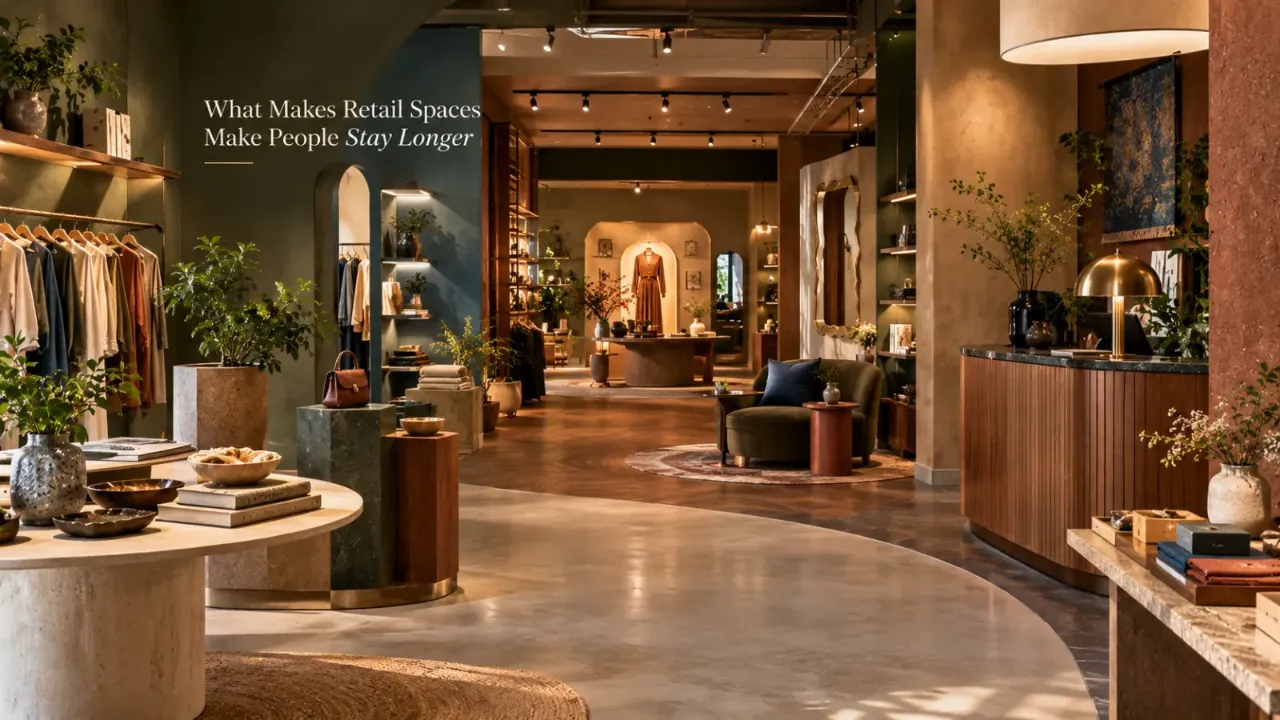
The Store Isn't Selling Yet, It's Just Buying You Time | What Makes a Retail Space Keep People Browsing
Every retail space is competing for a resource that has nothing to do with inventory: time. The longer someone comfortably stays, the more they browse, and the more they browse, the more they buy.
This isn't about tricking anyone into lingering. The best retail interiors simply remove the small frictions, the glare, the dead-end layout, the nowhere-to-pause, that quietly push people toward the exit.
- The first few seconds decide the pace
- Lighting: comfort first, drama second
- A path that doesn't feel like a maze or a racetrack
- Give people somewhere to stop
- Temperature, sound and smell
- Design elements that extend dwell time
- Where this applies beyond clothing retail
- Questions to ask your commercial designer
- Frequently asked questions
The First Few Seconds Decide the Pace
The entrance sets how fast someone moves through the rest of the store. A cramped, cluttered or poorly lit entry makes people walk briskly and defensively. A clear, well-lit threshold with breathing room slows the pace from the first step, and that slower pace tends to carry through the whole visit.
Lighting: Comfort First, Drama Second
Harsh, overly bright, or flickering lighting is physically tiring and pushes people to leave sooner than they planned. Warmer, layered lighting, ambient light for comfort, focused accent lighting for products, feels considered rather than clinical, and people stay longer in spaces that don't strain their eyes.
A Path That Doesn't Feel Like a Maze or a Racetrack
Two layout mistakes shorten visits in opposite ways. A confusing layout frustrates people into leaving. A layout that's too straightforward, one obvious path straight to the checkout, rushes them through with nothing to discover. The better layout has a clear overall flow with natural pauses: a feature display, a seating nook, a change in texture or material that signals "something different is here."
Give People Somewhere to Stop Without Buying Anything Yet
Seating, a counter to rest a bag on, a spot to wait while a companion shops, these aren't wasted square footage, they're what keeps someone, and the people they came with, from deciding to leave early. A retail space with nowhere to pause loses the customer the moment their companion gets tired or bored.
Temperature, Sound and Smell: The Senses Nobody Designs For on Paper
Temperature
Too warm or too cold cuts visits short regardless of how good the merchandising looks.
Sound
Music too loud or too jarring pushes people out faster; comfortable background sound invites lingering.
Smell
A stale or chemical smell registers subconsciously as unpleasant, even if a customer can't name why they want to leave.
These rarely show up in a mood board, but they decide how long someone actually stays.
Planning a Retail or Commercial Space?
Estimate a realistic budget that accounts for lighting, seating and acoustic comfort, not just visual merchandising.
Estimate Your Interior CostDesign Elements That Extend Dwell Time
| Element | Why it extends dwell time |
|---|---|
| Layered, warm lighting | Reduces eye strain and visual fatigue over a longer visit |
| Clear sightlines with planned pauses | Balances easy navigation with moments of discovery |
| Seating or resting spots | Lets companions and tired shoppers stay rather than leave early |
| Comfortable temperature control | Removes a basic physical reason to cut a visit short |
| Distinct zones or material changes | Signals "something new here," prompting continued exploration |
| Mirrors and fitting room comfort | A flattering, unhurried fitting experience extends decision time |
Where This Applies Beyond Clothing Retail
The same principles extend to cafes, showrooms, and any commercial space where longer visits mean more revenue, a furniture showroom benefits from seating just as much as a boutique does, and a cafe's lighting and acoustics matter as much as its menu.
Questions to Ask Your Commercial Interior Designer
- Where are the natural pause points planned into this layout?
- What's the lighting plan for fitting rooms, waiting areas and decision points specifically?
- Is there seating or a resting spot for someone who isn't actively shopping?
- Has the temperature and acoustic comfort been considered, not just the visual design?
- Does the entrance encourage a slower pace, or does it push people to move quickly?
The Professional Judgement: Comfort Extends Time, Not Just Aesthetics
A beautiful retail space that's too bright, too loud, or has nowhere to pause will still lose customers early. Dwell time is driven more by physical comfort, lighting, temperature, sound, somewhere to rest, than by how striking the displays look. Design the senses first, then layer the visual merchandising on top.
Use AI Before You Meet an Interior Designer
AI tools can help you organise your ideas before meetings. They are not a replacement for professional design judgement.
Estimate Your Budget
Create an initial interior budget for your commercial space, lighting and seating included.
Estimate Interior Cost →Visualise Your Room
Upload a photo of your space and explore a layout with better flow and pause points.
Design My Room →Designing a Space That Keeps People Browsing?
Take your layout and lighting questions to designers serving your area, and plan a space built around comfort, not just display.
Find Interior Designers Visualise Your RoomFrequently Asked Questions
Does lighting really affect how long customers stay in a store?
Yes, significantly. Harsh or overly bright lighting causes visual fatigue that shortens visits, while warmer, layered lighting feels more comfortable and supports longer browsing.
Is seating necessary in a retail space?
It helps considerably, especially for shoppers accompanying others. A place to rest keeps companions from pushing to leave early, which extends the whole group's visit.
How does layout affect dwell time?
A confusing layout frustrates customers into leaving, while an overly direct layout rushes them to checkout. A clear path with planned pauses balances ease of navigation with moments of discovery.
Do temperature and sound really matter as much as visual design?
Yes, these physical comfort factors often decide how long someone stays, even when they aren't consciously noticed, more than the visual merchandising itself.
Final Checklist
- Does the entrance encourage a slower, comfortable pace?
- Is the lighting warm and layered, especially at fitting rooms and decision points?
- Are there natural pause points built into the layout?
- Is there seating or a resting spot for non-shopping companions?
- Have temperature and acoustic comfort been planned, not just visual design?
A space people want to stay in is a space that eventually sells more. Use WallsToWonder to find interior designers, visualise your room and estimate your interior cost before planning your retail or commercial interior.
Turn this idea into a plan for your home
Visualise your space, understand the likely budget, or find a professional who can bring the idea to life.