
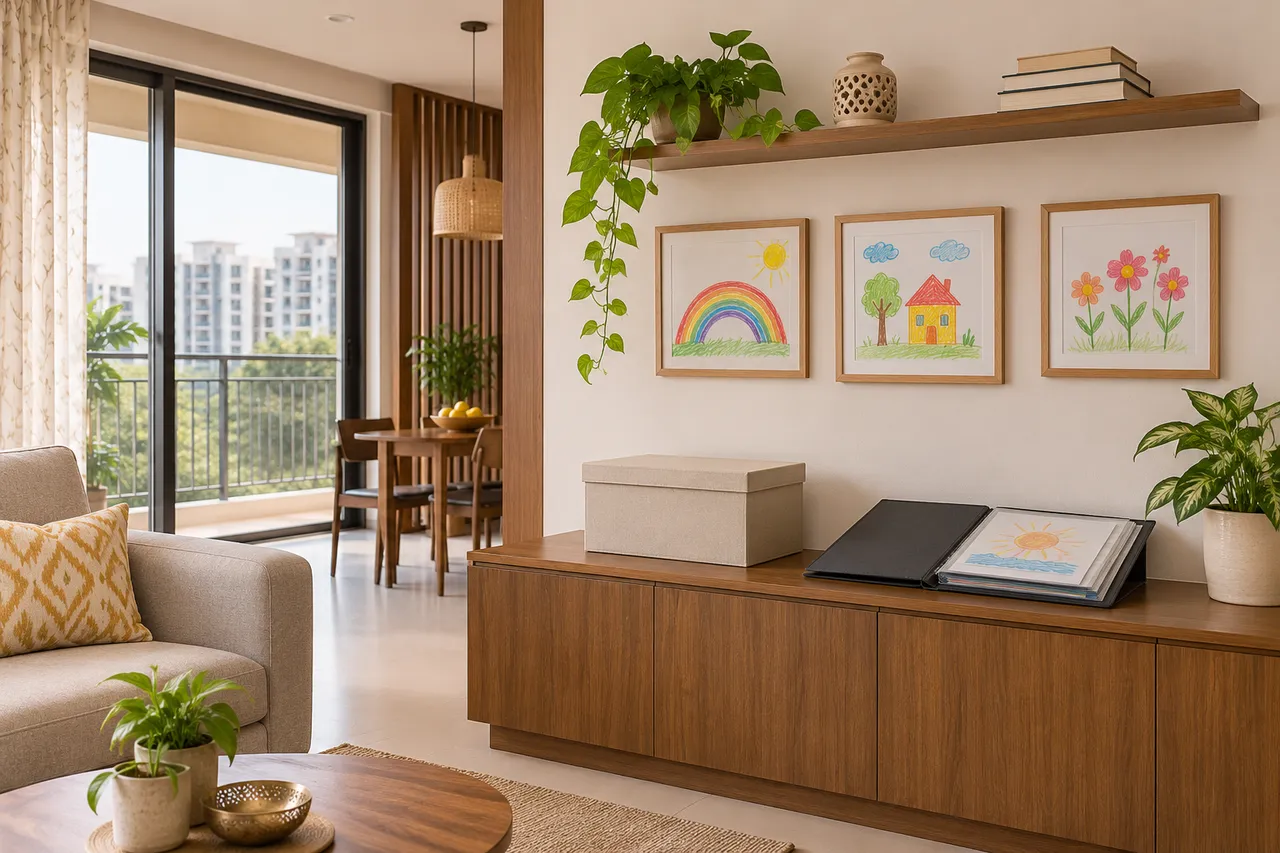
Children’s Artwork Displays in Tellapur Homes: Plan Rotation Without Filling Every Wall
Plan a small rotating display for current artwork and a separate archive for pieces you want to keep. In a Tellapur home, choose the display position, suitable fittings and storage routine before filling the wall. A clear selection and changeover process can celebrate children’s work without turning every surface into permanent overflow.
Start with your Tellapur property
For a Tellapur household, identify where artwork is made, viewed and stored. The useful arrangement depends on the family rather than a standard room size. A display in a shared living area has different requirements from a supervised activity corner. Decide who changes the work and how the fittings suit the users, wall and product instructions before buying a decorative display system.
Separate display from archive
Choose a manageable number of current pieces and decide how often they are reviewed. Keep a separate suitable folder, box or other storage for work selected for retention. A wall cannot solve an unlimited archiving brief. Involve the household in choosing what stays visible and what moves into storage, and avoid treating every new sheet as a reason to extend the display. The aim is a clear place for work to be appreciated, not a permanently expanding arrangement.
Choose fittings for the real setting
Compare suitable frames, display pockets or other products using their actual installation and use information. Assess wall support and the people who handle the display. Do not improvise a system with loose sharp items or unsuitable components simply because it appears in a reference image. Where children are involved, follow the relevant product and supervision guidance. This is a room-organisation guide, not a certification that any particular fitting or display height is appropriate for every child.
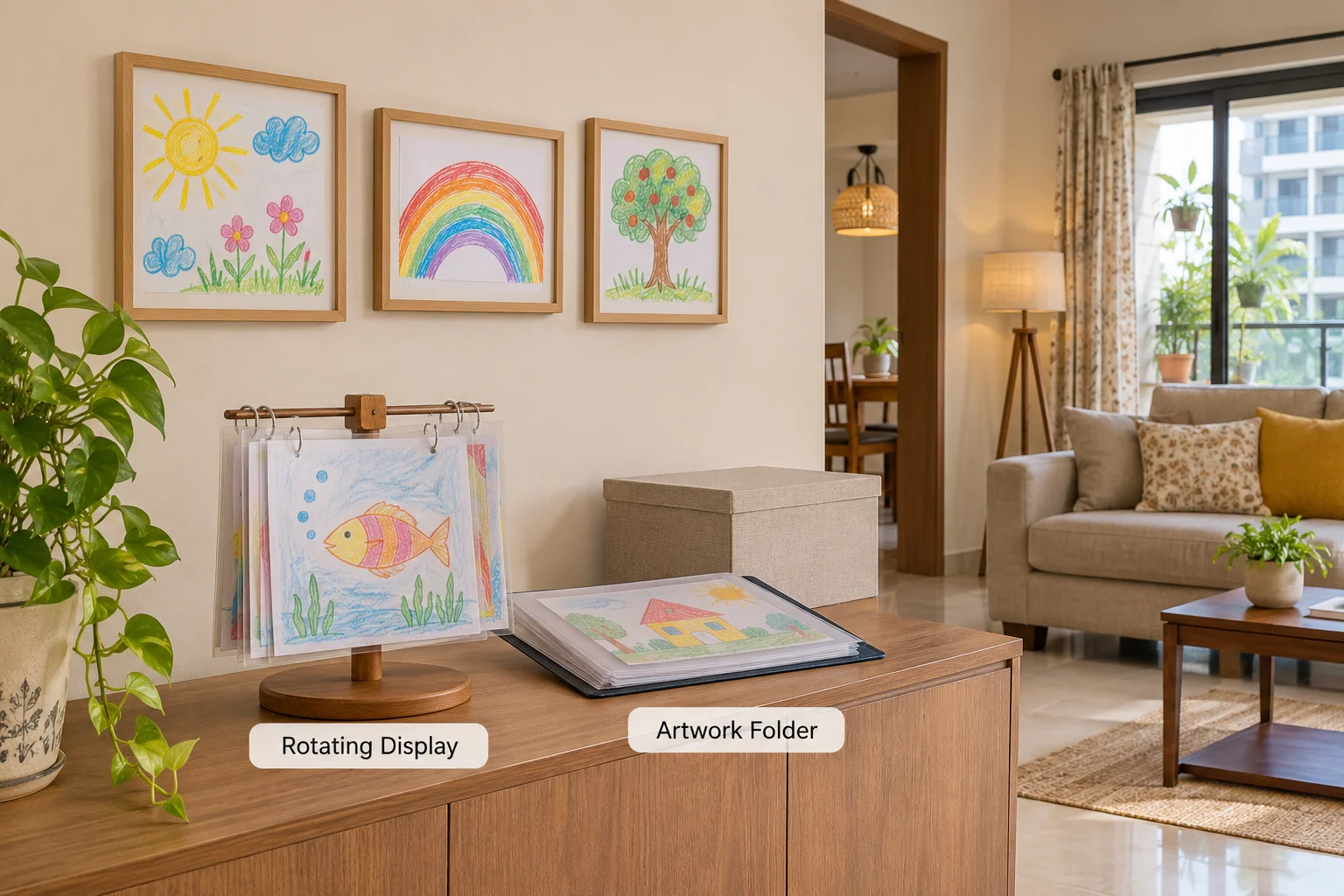
Make changeover easy
Trial opening, replacing and putting away one piece without spreading work across the room. Consider different paper sizes and whether the display method accommodates them. Keep the archive accessible to the adult or person responsible for it rather than storing it behind heavy unrelated objects. If photography is used for a family record, decide how names or personal information are handled before sharing images outside the household. A simple private archive may meet the need without posting anything publicly.
Keep the room usable
Check the display against doors, switches, furniture and ordinary cleaning. A growing row of frames can become visually busy and difficult to maintain even when each item is attractive alone. Set a clear boundary and review it after normal use. Ask whether the system helps people enjoy the work and find archived pieces, rather than only looking organised on the day it is installed. Loose archive storage can be changed more easily than a large fitted wall feature.
A practical example to test the decision
A family begins by covering a wall with every drawing. New work quickly spreads to the dining table. They choose a small current display and a defined folder for selected older pieces, with a regular changeover. The system becomes easier to use because displaying and keeping are treated as separate decisions.
Step-by-step planning checklist
- Choose the purpose and boundary of the current display.
- Define who changes the work and how archives are selected.
- Review suitable products and installation for the actual setting.
- Trial replacing one piece and finding an archived item.
- Check doors, cleaning and household information before expanding the display.
What to put in the quotation
- Display product and intended use.
- Suitable installation and wall repair scope.
- Archive containers and usable paper sizes.
- Operation, care and any replacement components.
Planning budget and scope
| Scope | Planning allowance or pricing method |
|---|---|
| Folders and a limited loose display | ₹1,000–₹4,000 initial allowance |
| Selected frames or a fitted display product | Price exact quantities and suitable installation |
| Custom wall storage | Measured quotation after the routine is tested |
These are editorial organising allowances, not current Tellapur supplier prices. Frame sizes, materials and installation change the total. Avoid commissioning a large feature wall before establishing how many pieces need to be visible.
Preparation and project timing
Trial the display-and-archive routine first. Loose products can be phased, while fixed work follows product selection and suitable installation. Review the arrangement after a normal period of new artwork rather than deciding success from the first tidy photograph.
Before you approve the proposal
Keep the archive labels simple enough to maintain. A system that depends on sorting every piece into many categories can be abandoned when the household is busy. Ask whether the selected storage lets the family find something it wants to revisit. That practical test is a better basis for expansion than adding more shelves because the current display has temporarily become full.
Prepare a clearer brief with WallsToWonder
Collect photographs, measurements and the choices you want to compare. Use Design My Room to explore a visual direction, then have the relevant professional check the measured layout, product requirements and work scope. Account access and current tool allowances apply; a visual concept is not a costed construction drawing.
Organise the scope with the interior cost planning tool and explore interior companies serving Hyderabad. Confirm service availability for Tellapur directly and ask the firm to explain deliverables, site involvement and exclusions.
For related planning, read Picture Ledge Ideas: A Flexible Wall Display for Photos and Small Prints.
Frequently asked questions
Should every drawing stay on the wall?
Separate current display from the family’s archive so the wall has a manageable purpose.
What is the best display height?
Choose for the actual setting, users and product requirements rather than a universal measurement.
Can I use a reference image as an installation guide?
No. Use suitable products and appropriate installation and supervision guidance.
How do I stop paper spreading around the room?
Define where new work waits, what is displayed and how selected pieces enter the archive.
Do I need custom cabinetry?
Not necessarily. A small display and suitable loose archive storage may meet the need.
Turn this idea into a plan for your home
Visualise your space, understand the likely budget, or find a professional who can bring the idea to life.