
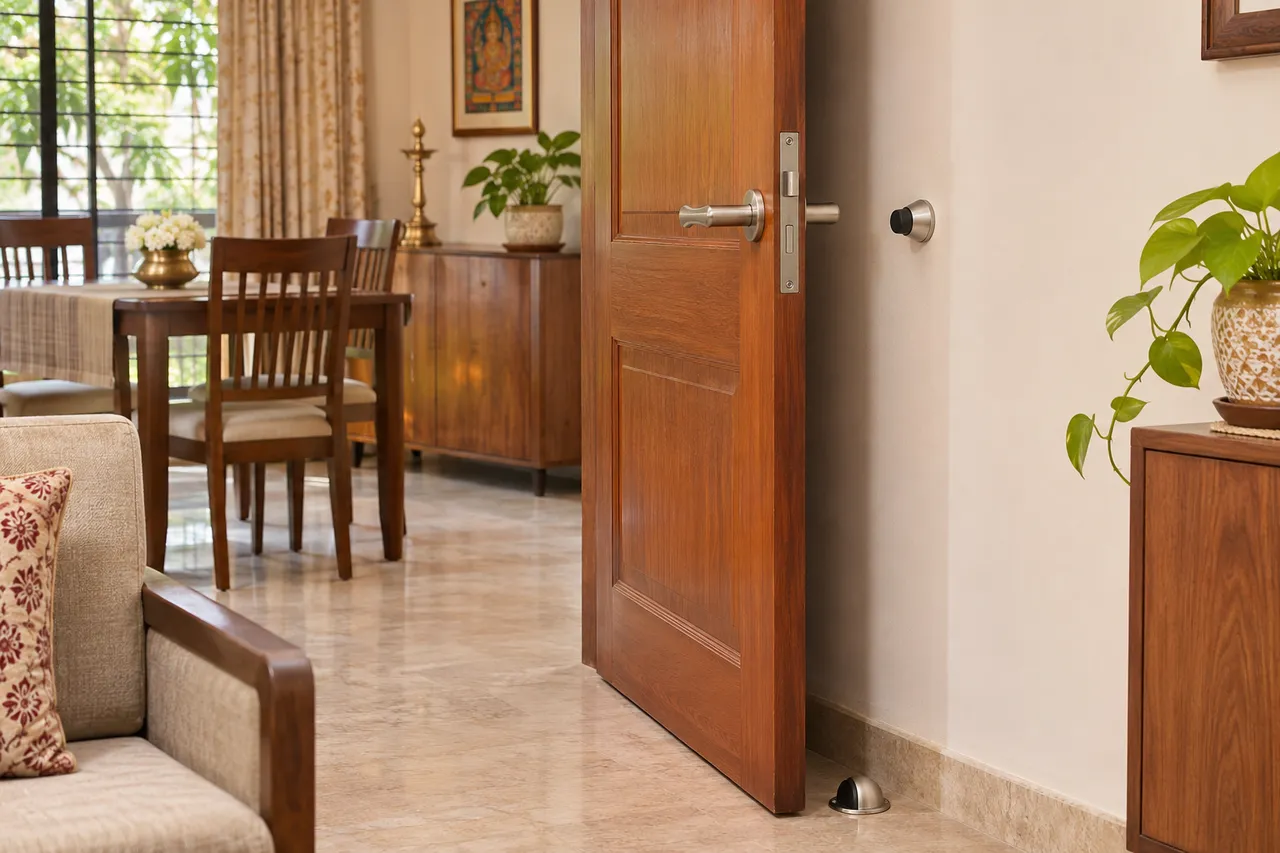
Door Stops for Kilpauk Homes: Protect Walls Without Creating New Obstructions
Choose a door stop after testing the complete door swing, handle position and ordinary movement through the room. In a Kilpauk home, compare suitable wall, floor or product-specific alternatives without creating a new obstruction. Confirm compatibility with the actual door and surface before fixing hardware or assuming that any bumper protects the whole assembly.
Start with your Kilpauk property
For a Kilpauk property, identify which door movement causes the problem and which surfaces need protection. A handle touching paint, a shutter striking furniture and a door assembly with specified performance are different situations. Record the existing hinges, closer or other relevant hardware. Do not infer construction or permissions from the locality, and have an uncertain operating problem assessed before adding a stop to conceal it.
Observe the complete movement
Open and close the door normally and note where contact occurs. Check adjacent furniture and what happens when someone passes through. A new stop should not be selected solely from a mark on the wall, because the cause may include loose hardware or changed furniture. Have appropriate repairs or adjustments assessed separately. The product’s purpose is to address an agreed movement condition, not to force a defective door into a different operating pattern.
Compare suitable product types
Wall-mounted and floor-mounted products create different fixing and access considerations. Some alternatives are designed for particular door or hardware arrangements. Use the actual product instructions and obtain suitable installer advice rather than improvising a universal detail. Discuss the intended door construction, contact point and normal forces with the supplier. Where the door has required fire, access or other performance provisions, obtain the relevant professional advice before adding anything that may affect operation.
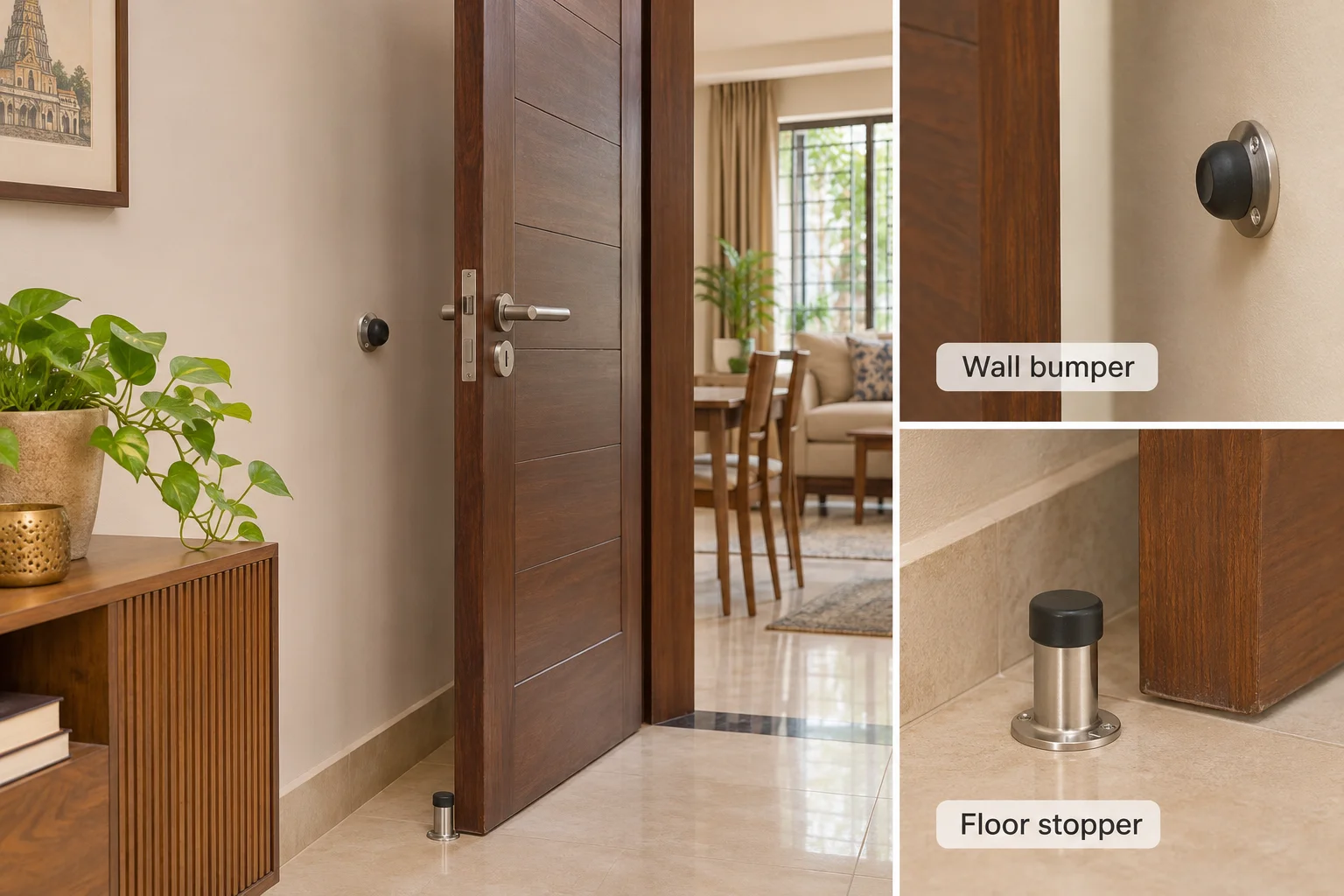
Keep circulation and cleaning practical
Trial the proposed location with the household’s normal movement, furniture and cleaning equipment. A floor fitting can become a new obstacle if placed thoughtlessly, while a wall fitting can conflict with furniture or fail to align with the intended contact. Do not choose a universal position or height from a photograph. Assess the real room and product, and avoid an arrangement whose benefit depends on people remembering an unexpected projection in a route.
Confirm fitting and maintenance
Have the substrate, concealed services and fixing method considered by the competent installer before any drilling or adhesive work. Check product care and replacement parts. At completion, test the agreed movement and inspect affected surfaces. A protective fitting is not a reason to use the door carelessly or ignore an existing closing problem. Keep the product information with other hardware records so a future replacement is selected for compatibility rather than approximate appearance.
A practical example to test the decision
A homeowner requests a floor stop where a door handle has marked the wall. A trial shows that the proposed position sits in a frequently used route. They compare a suitable wall product and have the existing movement checked. The final location addresses the contact without simply transferring the inconvenience from the wall to the floor.
Step-by-step planning checklist
- Identify the actual contact and operating condition.
- Have unresolved hardware problems assessed.
- Compare suitable product types against the door and room.
- Trial movement, access and cleaning before fixing.
- Confirm appropriate installation and test the completed arrangement.
What to put in the quotation
- Selected product and intended door compatibility.
- Substrate and installation assessment.
- Any separate hardware repairs or adjustments.
- Making good, testing and care information.
Planning budget and scope
| Scope | Planning allowance or pricing method |
|---|---|
| Suitable stop or bumper | ₹300–₹2,000 initial product allowance |
| Installation and surface repairs | Confirm the actual visit and fitting scope |
| Door-operation or specified-performance issues | Separate appropriate assessment |
The product allowance is editorial, not a live Kilpauk rate. Installer visits, wall repair and other hardware work may exceed the fitting’s retail price. Compare the complete scope and do not assume a small accessory removes the need to assess the door.
Preparation and project timing
Test the location before final decoration and fixing. Coordinate with furniture positions and any assessed hardware repairs. Keep time to check ordinary opening after installation rather than signing off only the appearance of the fitting.
Before you approve the proposal
Photograph the intended door and furniture positions before fixing. If a new cabinet or different handle is installed later, revisit the contact instead of assuming the old stop still works. A small hardware record can make this easier: which product was chosen, what it contacts and why that location was selected. This keeps maintenance tied to the room’s actual arrangement rather than to a decorative habit.
Prepare a clearer brief with WallsToWonder
Collect photographs, measurements and the choices you want to compare. Use Design My Room to explore a visual direction, then have the relevant professional check the measured layout, product requirements and work scope. Account access and current tool allowances apply; a visual concept is not a costed construction drawing.
Organise the scope with the interior cost planning tool and explore interior companies serving Chennai. Confirm service availability for Kilpauk directly and ask the firm to explain deliverables, site involvement and exclusions.
For related planning, read Replacing Door Shutters in Kothrud: When Can You Keep the Existing Frames?.
Frequently asked questions
Where should a door stop go?
Choose a position for the actual door, product and room after a movement and access trial.
Is floor-mounted always better?
No. Compare fixing, circulation, cleaning and compatibility with alternatives.
Can it solve a door that closes incorrectly?
Have the cause assessed rather than using a stop to conceal an operating defect.
Can I modify a specified door freely?
Obtain appropriate advice on any performance or building requirements before alteration.
What matters after fitting?
The agreed contact and opening movement, normal access, suitable installation and completed repairs.
Turn this idea into a plan for your home
Visualise your space, understand the likely budget, or find a professional who can bring the idea to life.