
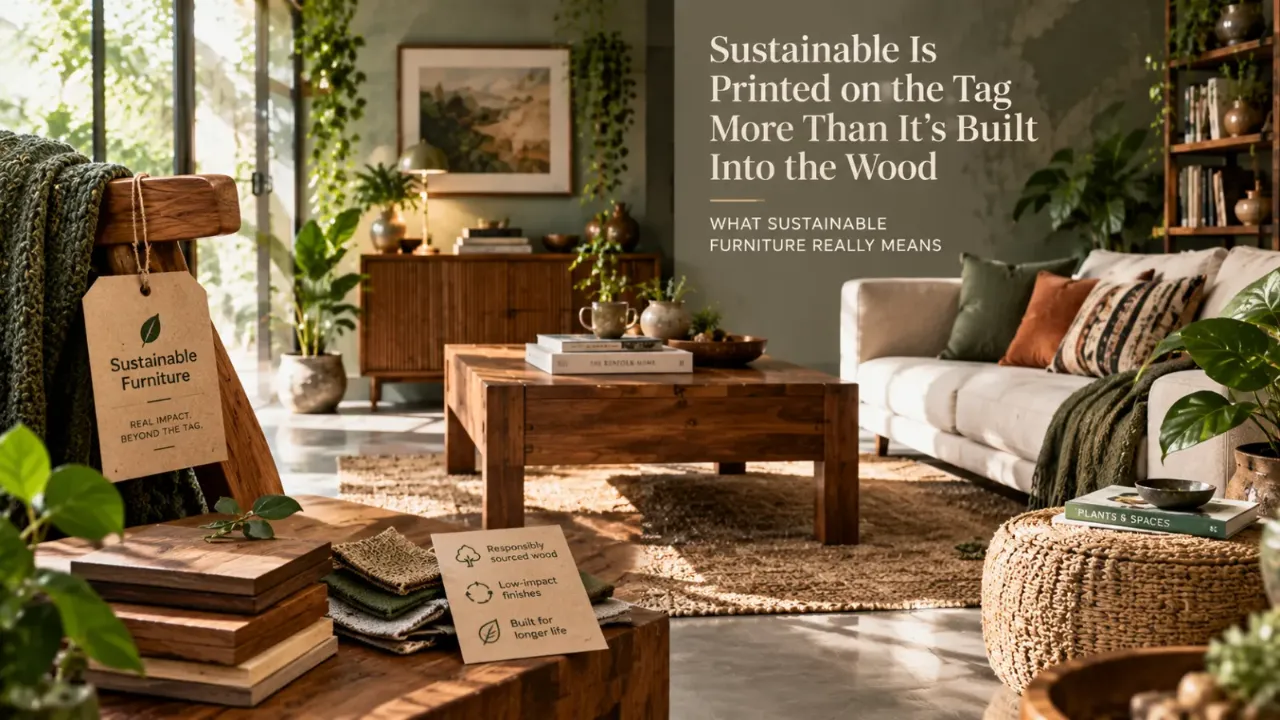
Sustainable Is Printed on the Tag More Than It's Built Into the Wood | What Sustainable Furniture Really Means
"Sustainable" has become one of the most-used, least-verified words on a furniture label. It can mean a genuinely responsibly sourced, long-lasting piece, or it can mean a single eco-friendly ingredient stamped on a product that's otherwise identical to any other.
The word alone proves nothing. What's actually behind it, the wood sourcing, the finish, the durability, the end-of-life, is what determines whether something is sustainable or just marketed that way.
- What "sustainable furniture" should actually mean
- Common marketing claims and what they actually verify
- Questions that separate real claims from marketing
- Durability is the most overlooked factor
- Materials worth understanding
- A simple way to evaluate any claim
- Questions to ask your designer or vendor
- Frequently asked questions
What "Sustainable Furniture" Should Actually Mean
Genuine sustainability spans the whole life of the piece, not one feature:
- Responsible material sourcing: wood from certified, managed forests rather than unregulated logging, or genuinely rapidly renewable materials like bamboo grown and harvested responsibly
- Low-impact manufacturing: reduced water and chemical use in processing, finishes without harmful VOCs (volatile organic compounds)
- Durability: furniture built to last decades, since a piece replaced every few years is rarely sustainable regardless of its materials
- Repairability: solid joinery and replaceable parts, rather than construction that fails once and gets discarded
- End-of-life consideration: materials that can be recycled, biodegrade, or be repurposed, instead of ending up as landfill waste
Common Marketing Claims and What They Actually Verify
| Claim on the label | What it actually tells you |
|---|---|
| "Eco-friendly" | An unregulated, undefined term, could mean anything or nothing |
| "Natural wood" | Says nothing about how responsibly it was sourced or harvested |
| "FSC certified" | A real, verifiable standard for responsible forest management, worth checking |
| "Made from reclaimed/recycled material" | Can be genuine, but ask for the specific source and percentage |
| "Low VOC" or "zero VOC" | A real, testable claim about finish chemical emissions, ask for the test certificate |
| "Sustainably made" | A vague phrase with no required standard behind it unless paired with a real certification |
The Questions That Separate Real Claims From Marketing
- Is this wood certified, FSC or an equivalent recognised standard, and can you show the certificate?
- What specifically makes the manufacturing process "low-impact," reduced water, chemical-free finishing, something else?
- What's the expected lifespan of this piece under normal use?
- Can individual parts be repaired or replaced if something breaks?
- What happens to this piece at the end of its life, can it be recycled or does it end up as waste?
Durability Is the Most Overlooked Sustainability Factor
A beautifully sourced, eco-certified piece that falls apart in three years has a worse environmental footprint than a conventional piece that lasts twenty. The most genuinely sustainable choice is often simply the one built to last, regardless of how many eco-labels are attached to it.
Materials Worth Understanding
FSC-Certified Wood
Sourced from forests independently verified as responsibly managed.
Reclaimed Wood
Genuinely reused material, though ask about the source and any treatment applied.
Bamboo
Rapidly renewable, but how it's processed and bonded, some bamboo products use significant adhesive, affects its actual impact.
Recycled Metal and Glass
Can meaningfully reduce raw material extraction, verify the recycled content percentage.
Natural Fibre Textiles
Jute, cotton and wool can be lower impact, but farming and processing methods still matter.
Planning a Room With Furniture Choices in Mind?
Estimate a realistic budget first, quality and durability often cost more upfront but less over time.
Estimate Your Interior CostA Simple Way to Evaluate Any "Sustainable" Claim
- Does the claim name a specific, verifiable certification, or is it a vague adjective?
- Can the seller provide documentation, not just a label?
- Does the piece's expected lifespan support the sustainability claim, or will it need replacing soon?
- Is there a clear answer for what happens to it at end of life?
If a claim can't survive these four questions, treat it as marketing language rather than a verified standard.
Questions to Ask Your Designer or Furniture Vendor
- Which specific certifications back this sustainability claim?
- What's the expected lifespan, and is it under warranty?
- Can this piece be repaired locally if hardware or joinery fails?
- Is the finish genuinely low-VOC, with a test certificate available?
- What's the actual recycled or reclaimed content percentage, not just "contains recycled material"?
The Professional Judgement: Verify the Claim, Not the Adjective
"Sustainable" on a label is marketing copy until it's backed by a specific, checkable standard, FSC certification, a VOC test, a documented recycled content percentage, or a genuine warranty reflecting real durability. The single most reliable sustainability factor, in practice, is whether the piece is actually built to last, since nothing is sustainable if it needs replacing in a few years.
Use AI Before You Meet an Interior Designer
AI tools can help you organise your ideas before meetings. They are not a replacement for professional design judgement.
Estimate Your Budget
Create an initial interior budget that accounts for durable, well-made furniture choices.
Estimate Interior Cost →Visualise Your Room
Upload a room photograph and explore furniture choices before committing to anything.
Design My Room →Choosing Furniture That's Actually Built to Last?
Take your questions about sourcing and durability to designers serving your area, and get guidance beyond what the label claims.
Find Interior Designers Visualise Your Room Estimate Interior CostFrequently Asked Questions
What does "sustainable furniture" actually require?
Responsible material sourcing, low-impact manufacturing, genuine durability, repairability, and a reasonable end-of-life plan, not just one eco-friendly feature or a vague label.
Is FSC certification worth checking for?
Yes, it's one of the few genuinely verifiable sustainability standards for wood, confirming the timber came from a responsibly managed forest.
Does "eco-friendly" mean anything specific?
Not on its own. It's an unregulated term with no required standard behind it, ask what specifically makes the product eco-friendly rather than accepting the label alone.
Is a cheaper, longer-lasting piece more sustainable than an expensive eco-labelled one?
Often, yes, in practical terms. Durability is one of the most overlooked sustainability factors, since a piece that needs replacing every few years has a worse footprint than one that lasts decades, regardless of its sourcing claims.
Final Checklist
- Does the sustainability claim name a specific, verifiable certification?
- Can the seller show documentation, not just a label?
- Is the piece built to last, with solid joinery and repairable parts?
- Is the finish genuinely low-VOC, with evidence available?
- Do you know what happens to this piece at the end of its life?
A sustainable choice is one you can verify, not just one you can read on a tag. Use WallsToWonder to find interior designers, visualise your room and estimate your interior cost before choosing furniture.
Turn this idea into a plan for your home
Visualise your space, understand the likely budget, or find a professional who can bring the idea to life.