
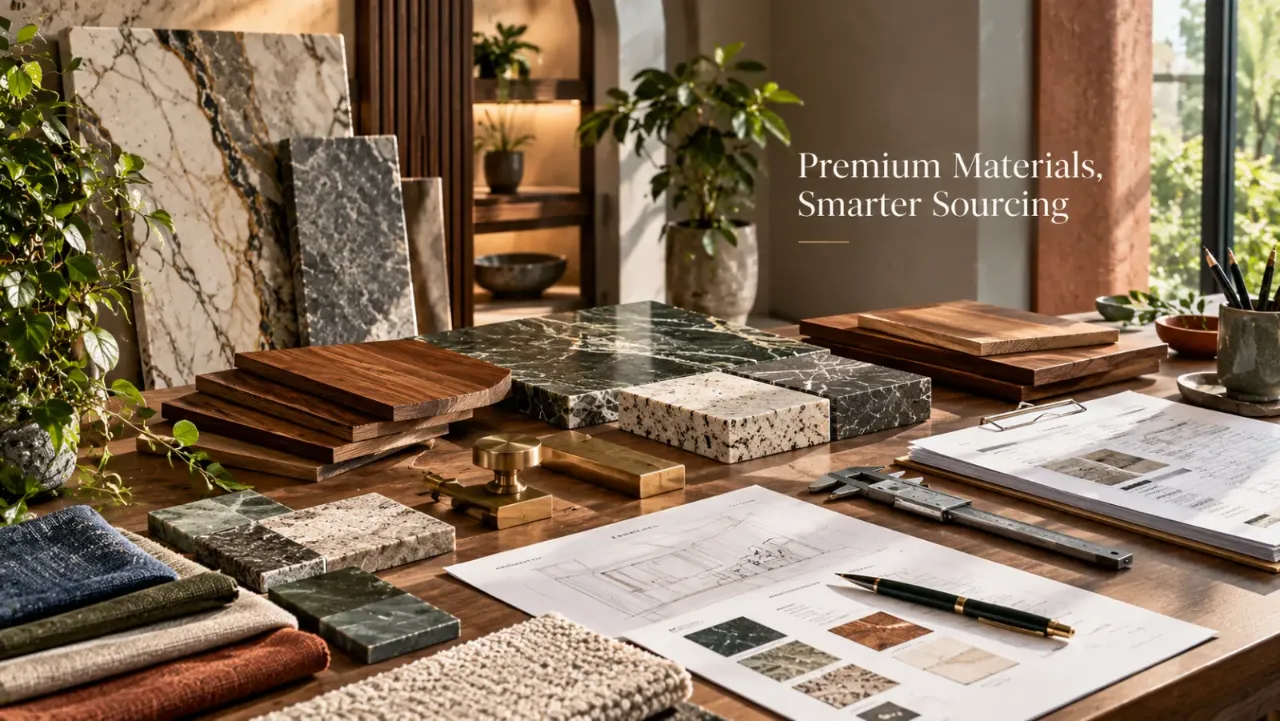
Premium Has a Price. Markup Just Borrows the Word. | How to Source Premium Materials Without Overpaying
"Premium" is a word that shows up on an invoice far more often than it shows up in the material itself. Genuinely premium materials, real marble, solid brass, high-grade hardware, do cost more, for legitimate reasons. But the word "premium" also gets attached to ordinary products simply because the market will bear it.
Sourcing well isn't about distrusting every vendor, it's about knowing what actually drives a premium price, so you can tell the difference between paying for quality and paying for a label.
What Actually Makes a Material Premium
Real premium pricing usually traces back to one or more of these:
- Material rarity or origin: a specific stone quarry, a particular wood species, a region known for a craft
- Processing and finishing quality: more refining steps, better quality control, tighter tolerances
- Skilled labour: hand-finishing, traditional techniques, craftsmanship that machines can't replicate
- Durability and performance: genuinely better wear resistance, structural strength, or longevity
- Certification and sourcing verification: documented origin, quality testing, recognised grading standards
Where Markup Hides Behind the Word "Premium"
Branding Alone
A product priced higher purely because of the showroom or label, with no different sourcing or process behind it.
Vague Grading Claims
"Premium grade" or "export quality" used without a specific, checkable standard attached.
Showroom Markup
The same material available at a lower price through a different, less showroom-heavy channel.
Bundled "Premium" Packaging
Standard materials combined with premium-sounding add-ons that don't individually justify the price jump.
How to Verify a Premium Claim
| What to check | Why it matters |
|---|---|
| Specific grading or certification | A named, checkable standard (not just "high quality") indicates real verification |
| Source transparency | A vendor who can name the quarry, forest or supplier is more credible than one who can't |
| Price comparison across channels | The same material from a different, less brand-heavy source reveals how much of the price is markup |
| Sample inspection | Seeing and touching the actual material before buying reveals finish quality directly |
| Written specification | A documented spec sheet, not just a verbal claim, holds the vendor accountable |
Comparing Quotes With Premium Pricing?
Estimate a realistic budget first, so you have a baseline to sanity-check any "premium" line item against.
Estimate Your Interior CostMaterials Worth Knowing the Real Grading For
- Marble and natural stone: grading varies by slab, veining, and porosity; ask to see the actual slab, not just a sample chip, since natural stone can vary significantly even within the same quarry
- Solid wood: species, moisture content and kiln-drying quality affect both price and durability; ask for the specific species and seasoning method
- Hardware (hinges, channels): brand and model matter more than the word "premium" alone; a named brand like Hettich, Blum or Häfele is a verifiable claim, "premium hardware" is not
- Fabric and upholstery: thread count, weave density and fibre origin are specific, checkable facts; "luxury fabric" alone is not
Questions That Separate Real Premium From Marked-Up Standard
- What specifically makes this premium, compared to your standard offering?
- Can you show me the grading certificate or specification sheet?
- Where exactly is this sourced from, and can that be verified?
- How does this price compare to the same material through a different supplier?
- Can I see and touch the actual material before committing, not just a small sample?
A Simple Way to Sanity-Check Any Premium Quote
- Ask the vendor to name the specific factor driving the premium, rarity, labour, certification, performance.
- Request documentation, not just a verbal claim.
- Compare the price against at least one other source for the same or comparable material.
- If nothing specific can be named, treat "premium" as a pricing position, not a verified fact.
The Professional Judgement: Premium Should Be Traceable, Not Just Stated
A genuine premium material has a traceable reason behind its cost, origin, labour, performance or certification. When a vendor can't name that reason specifically, "premium" is functioning as a pricing word, not a quality description. Sourcing well means asking what's actually different, requesting documentation, and comparing across channels, not assuming the highest price is automatically the best material.
Use AI Before You Meet an Interior Designer
AI tools can help you organise your ideas before meetings. They are not a replacement for professional design judgement.
Estimate Your Budget
Create an initial interior budget so you can spot a premium line item that looks out of line.
Estimate Interior Cost →Visualise Your Room
Upload a room photograph and explore material choices before committing to a premium quote.
Design My Room →Sourcing Materials for Your Project?
Take your quotes, line by line, to designers serving your area and confirm which premiums reflect real quality.
Find Interior Designers Visualise Your RoomFrequently Asked Questions
How do I know if I'm paying for real quality or just a brand markup?
Ask what specifically makes the material premium, rarity, labour, certification, performance, and request documentation. If the vendor can only point to the brand name or showroom, the premium is likely positioning rather than material fact.
Is it worth paying more for certified materials?
Often, yes, certification provides a verifiable standard rather than a vague claim. For wood, stone and hardware especially, a named certification or grading system is worth more than an unverified "premium" label.
Can the same premium material cost less elsewhere?
Frequently. Showroom overhead and brand positioning add to price without changing the material itself. Comparing the same specification across a few sources often reveals real markup.
Should I always distrust vendors who use the word "premium"?
Not automatically, many genuinely premium materials exist and deserve their price. The goal is asking for specifics rather than accepting the word alone, since a confident vendor should be able to explain exactly what justifies the cost.
Final Checklist
- Has the vendor named a specific, verifiable reason for the premium price?
- Do you have documentation, a grading certificate or spec sheet, not just a verbal claim?
- Have you compared the price for the same material across at least one other source?
- Have you seen or touched the actual material, not just a description?
- Does the premium reflect origin, labour, certification or performance, rather than branding alone?
Real premium can be explained. Marketing premium usually can't. Use WallsToWonder to find interior designers, visualise your room and estimate your interior cost before paying a premium price.
Get a personalised estimate for your home
Choose your rooms, materials and preferences to understand a practical interior budget before you commit.