
Soft-Close Kitchen Hinge Upgrades in Malad: Check Compatibility Before Replacing Hardware
Check the existing hinge system, door condition and available compatible parts before adding soft-close hardware. In a Malad kitchen, adjustment, a specified retrofit and complete hinge replacement are different scopes. Identify the actual components and test a representative door before ordering a full set or altering retained cabinetry.
Start with your Malad property
For a Malad apartment, record which fronts need attention and what the problem is. A slamming door, a rubbing edge and a loose fixing are not necessarily the same fault. Photograph the hardware and retained cabinet rather than asking for a universal soft-close fitting. The locality does not establish the hinge type or cabinet condition; the supplier needs information about the actual assembly.
Identify the existing components
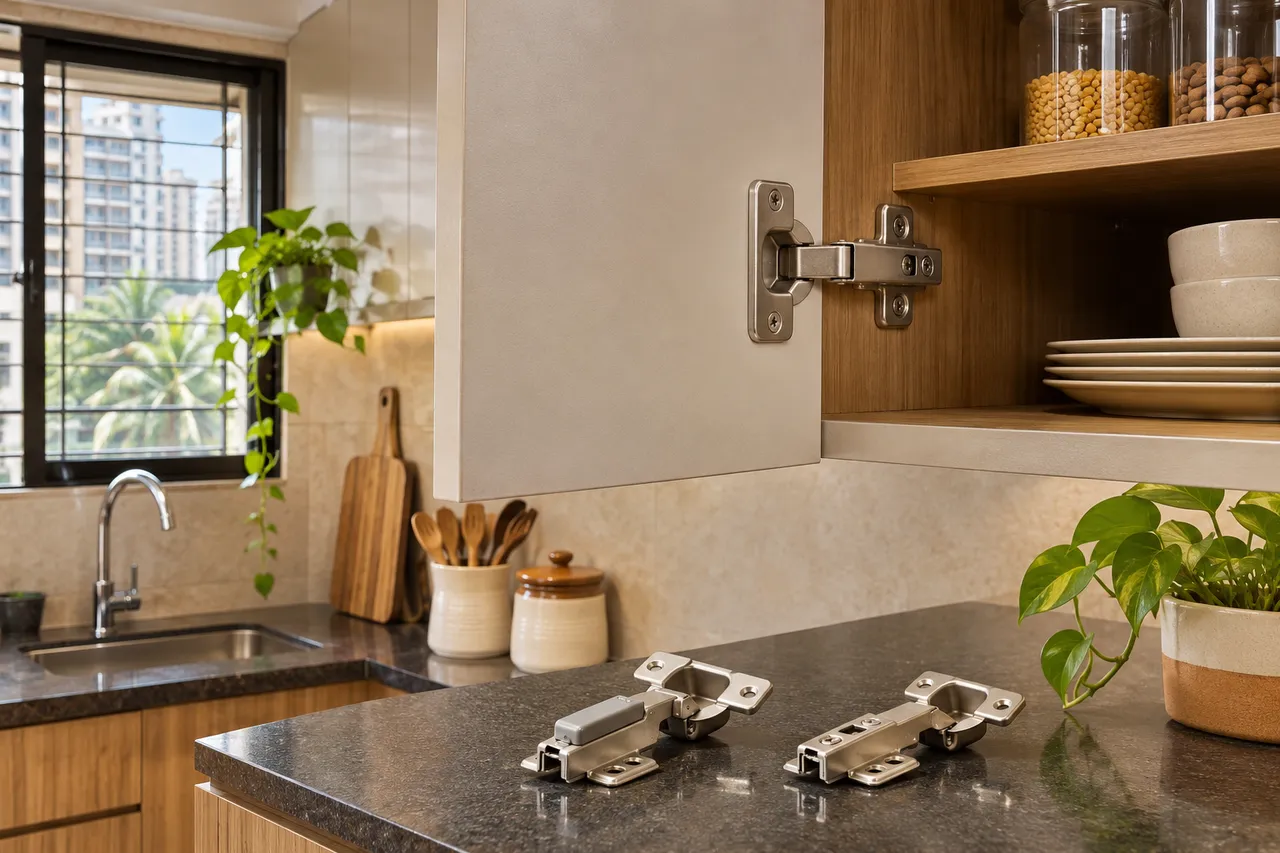
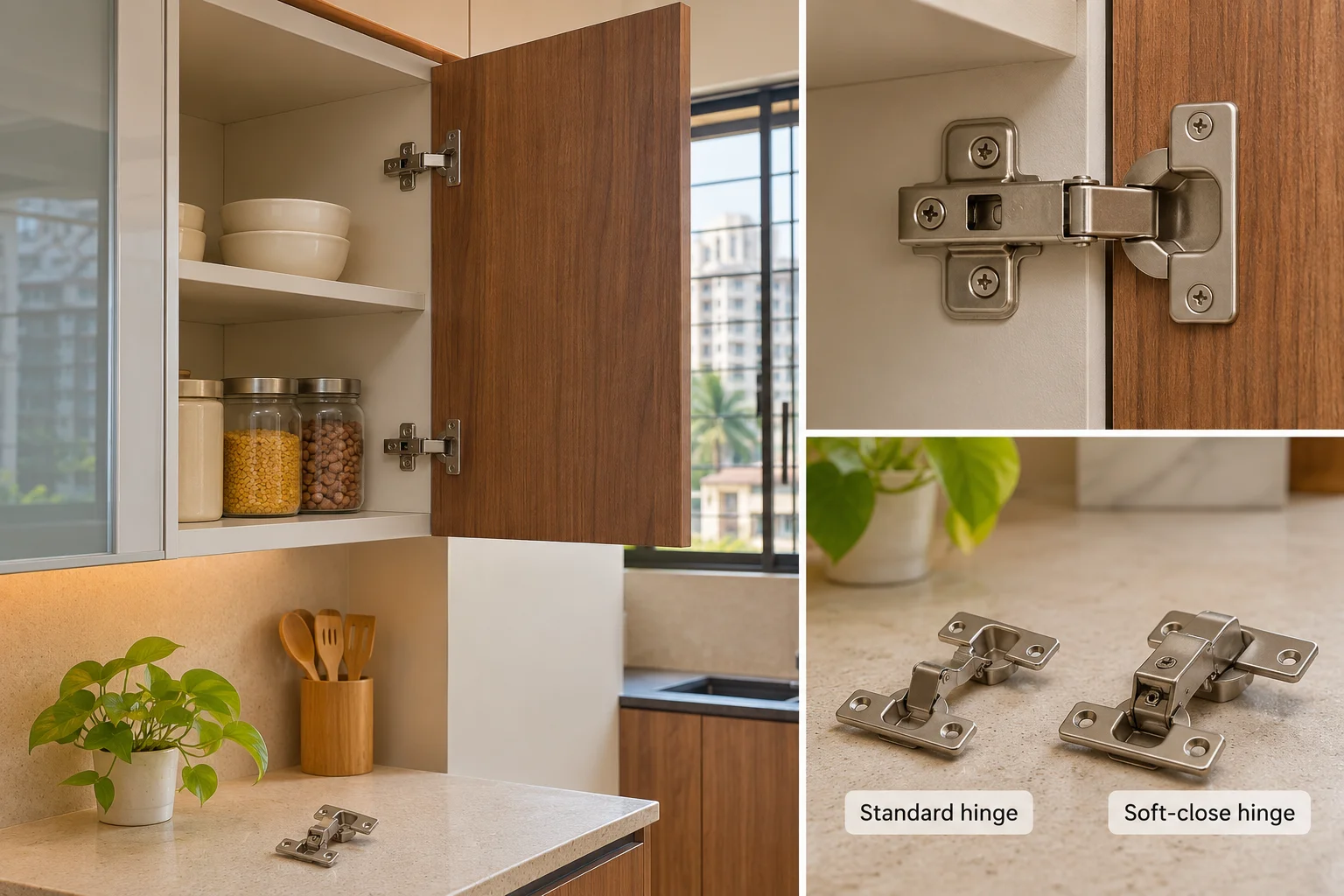
Ask the hardware supplier or competent installer to identify the hinge and mounting arrangement. Record reliable model information and any differences between ordinary doors, thick fronts and corners. Blum’s product information shows that retrofit damping exists within particular systems; it does not imply that every attachment fits every hinge. Do not order by colour or approximate appearance alone. A visually similar component can differ in geometry, intended application and the way it fixes to the front.
Separate adjustment from an upgrade
Have the cause of poor operation assessed before choosing new hardware. Loose construction, damaged fixing locations or misalignment may require a different response from adding damping. A soft-close accessory should not be used to disguise an unresolved supporting problem. Compare a defined adjustment with compatible replacement or retrofit options and record why each is proposed. The installer should explain which existing elements remain and what conditions must be suitable for the new assembly.
Trial a representative front
Use a suitable trial to check opening, closing and neighbouring movement according to the product instructions. Include intended contents and ordinary use where relevant, without treating one successful sample as proof that every kitchen door is identical. Corner fronts and other special arrangements may need their own review. Avoid approving extra drilling or structural changes casually during a fitting visit. If the selected part changes, confirm its compatibility before the installer repeats the work.
Keep the completed schedule
List the hardware and front type in the final quotation and maintenance record. Confirm adjustment, fitting, making good and replacement support. At handover, check the agreed operation and ask for the relevant product information. A useful upgrade is one that suits the retained kitchen and can be maintained, not merely one described as premium. Keep the distinction between a hardware product warranty and responsibility for existing damaged cabinetry understandable.
A practical example to test the decision
A homeowner asks for soft-close hinges throughout a kitchen. Assessment identifies mostly sound hardware, one misaligned front and a different corner arrangement. A representative compatible retrofit is tested, while the damaged location receives a separate repair proposal. The final schedule follows the actual doors rather than replacing everything with one unspecified kit.
Step-by-step planning checklist
- Record faults and photograph each distinct hinge arrangement.
- Have components and supporting conditions identified.
- Compare adjustment, compatible retrofit and replacement.
- Test representative doors before repeating the work.
- Retain the fitted hardware schedule and maintenance information.
What to put in the quotation
- Exact compatible components and quantities.
- Retained condition and separately identified repairs.
- Removal, fitting, adjustment and approved alterations.
- Making good, demonstration and product information.
Planning budget and scope
| Scope | Planning allowance or pricing method |
|---|---|
| Assessment and adjustment | Quote the defined visit and door schedule |
| Compatible retrofit | Price the actual components and fitting |
| Replacement or cabinet repairs | Separate measured scope |
Compare complete installed proposals, not a damping accessory price alone. No fixed Malad rate is assumed. Door types, component quantities, access and retained condition can change the work; ask what is excluded before interpreting a low unit price as a saving.
Preparation and project timing
Identify the hardware and resolve repairs before ordering. Trial a suitable door and confirm parts availability before a kitchen-wide installation. Leave time for final adjustment rather than assuming that fastening the new parts completes the job.
Before you approve the proposal
Keep a simple door-by-door list so a later fault can be traced to its fitted parts. If the supplier offers a substitute, ask for a compatibility review instead of accepting the same finish as equivalence. Clear records also help distinguish a new hardware issue from movement in the retained cabinet, making maintenance more concrete than a note that the kitchen was upgraded to soft-close.
Prepare a clearer brief with WallsToWonder
Collect photographs, measurements and the choices you want to compare. Use Design My Room to explore a visual direction, then have the relevant professional check the measured layout, product requirements and work scope. Account access and current tool allowances apply; a visual concept is not a costed construction drawing.
Organise the scope with the interior cost planning tool and explore interior companies serving Mumbai. Confirm service availability for Malad directly and ask the firm to explain deliverables, site involvement and exclusions.
For related planning, read Replacing Kitchen Handles in Bhandup: Check Fixing Holes, Grip and Door Clearance.
Frequently asked questions
Can every hinge take a soft-close attachment?
No. Confirm compatibility with the actual system and intended application.
Will damping fix a rubbing door?
Have the operating problem assessed; adjustment or repair may be needed separately.
Should every door use the same kit?
Not necessarily. Corners, door construction and existing hardware can differ.
Can I select parts from a photograph?
Photographs help identification, but the supplier should confirm the complete specification.
What should I keep afterwards?
The component model, quantities by front type, instructions and installer details.
Further reference: Blum CLIP top system and retrofit information.
Turn this idea into a plan for your home
Visualise your space, understand the likely budget, or find a professional who can bring the idea to life.