
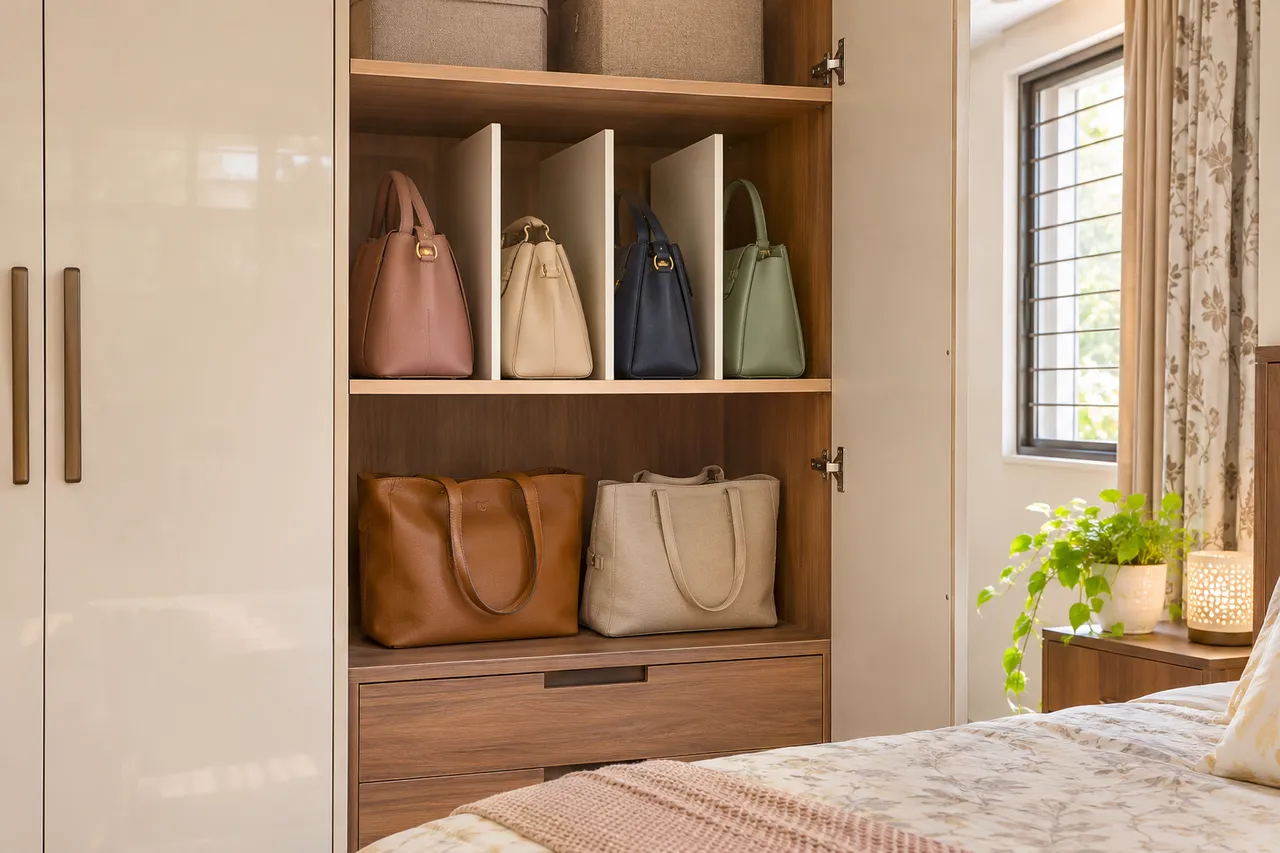
Handbag Storage in Uppal Bedrooms: Compare Shelves, Dividers and Accessible Compartments
Choose handbag storage by measuring the bags, checking their care requirements and testing retrieval from the actual wardrobe. In an Uppal bedroom, shelves, dividers and separate compartments offer different flexibility. A neat display photograph does not establish suitable support or long-term care, so compare a small trial before filling the cabinet with fixed divisions.
Start with your Uppal property
For an Uppal home, separate frequently used bags from occasional pieces and identify the furniture being retained. The locality does not determine wardrobe size or the materials in the collection. A useful storage brief can describe dimensions and handling without disclosing private purchase values. Keep specialist care or security requirements separate from an ordinary organising project rather than assuming decorative compartments provide them.
Inventory dimensions and use
Record representative bag heights, widths and shapes and note which items are used most often. Include handles or other features that affect the stored form, following the product’s care guidance. Do not force every item into an identical narrow compartment for visual symmetry. A small number of adaptable sections may serve a varied collection more effectively than a tightly fitted grid. Decide which pieces need convenient daily access before assigning the most reachable shelves.
Check the actual wardrobe opening
Measure internal dimensions and the usable front opening, including hinges, sliding overlap or drawer movement. Test removing a representative bag without pulling several others out first. A shelf can appear generous while its access is restricted by a front or neighbouring furniture. Compare a lower accessible section with a higher shelf if handling is awkward. The aim is usable retrieval, not maximum capacity calculated from the wardrobe’s external dimensions.
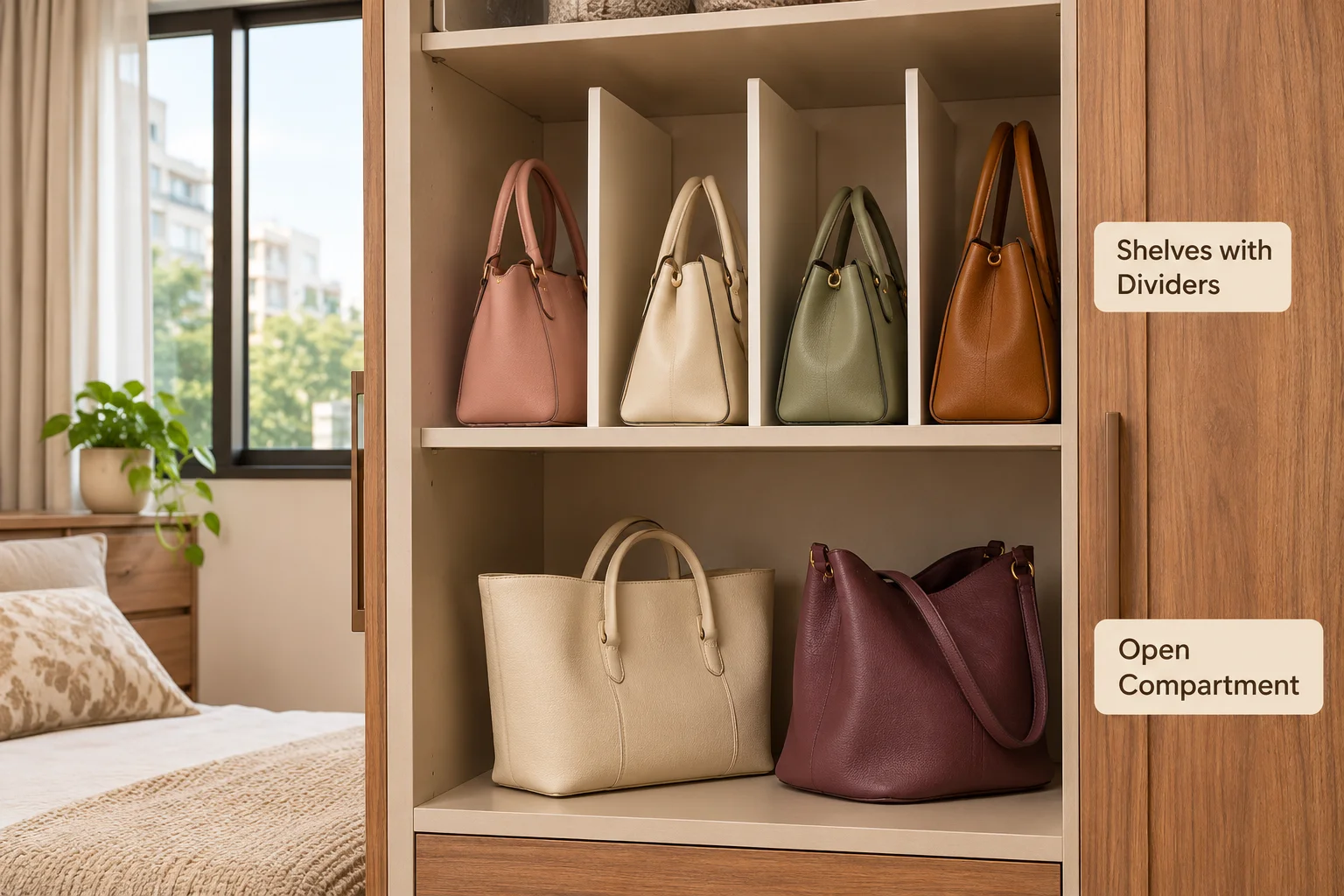
Compare dividers and open sections
Removable organisers make it easier to alter widths, while fixed divisions can suit a stable contents list. Ask how supports, surfaces and any lining suit the intended items and their relevant care instructions. Do not assume fabric, hooks or hanging arrangements are universally appropriate for every bag. Keep materials and support decisions tied to the actual products. An organiser marketed for one furniture system should not be assumed compatible with an unrelated cabinet without checking.
Plan upkeep and future changes
Ask how shelves and organisers are cleaned, removed and replaced. Have reported cabinet or building-condition issues assessed before storing sensitive items there. Trial returning the bags to their places after normal use. If the arrangement depends on complex rearranging, simplify it before commissioning fixed work. Retain the selected organiser dimensions and any product information, while keeping enough flexibility for a different item or a changed wardrobe later.
A practical example to test the decision
A homeowner requests identical vertical compartments based on a wardrobe photograph. A trial shows that several bags have different shapes and the upper shelf is inconvenient to reach. They choose adjustable sections for everyday items and suitable separate storage for occasional pieces. The layout follows retrieval and product care rather than a symmetrical display.
Step-by-step planning checklist
- List representative sizes and daily-use priorities.
- Check relevant care guidance for the stored items.
- Measure the actual interior and retrieval opening.
- Trial removable and fixed organisation with a small selection.
- Review cleaning and future flexibility before custom work.
What to put in the quotation
- Usable dimensions and intended contents.
- Organiser or shelf specification and compatible support.
- Materials, care and any approved cabinet changes.
- Installation and replacement information.
Planning budget and scope
| Scope | Planning allowance or pricing method |
|---|---|
| Loose organiser trial | ₹1,000–₹4,000 initial allowance |
| Selected shelf or divider arrangement | Price exact products and fitting |
| Custom wardrobe work | Measured quotation after the trial |
These are editorial organiser allowances, not current Uppal market rates. Cabinet alterations, materials and quantity affect the total. Valuable-item security and specialist product care are separate requirements, not benefits automatically included with a storage divider.
Preparation and project timing
Trial one section before ordering a full organiser set. Confirm dimensions and care needs before fixed fabrication. Review after ordinary use so the arrangement is judged by retrieval and return, not only the initial tidy appearance.
Before you approve the proposal
Keep the design brief focused on dimensions, care and use rather than private item values. If the cabinet or contents change, revisit the arrangement instead of assuming every similar-looking organiser remains suitable. A clear, adaptable assignment for daily items is more useful than filling all available space with divisions that are difficult to revise.
Prepare a clearer brief with WallsToWonder
Collect photographs, measurements and the choices you want to compare. Use Design My Room to explore a visual direction, then have the relevant professional check the measured layout, product requirements and work scope. Account access and current tool allowances apply; a visual concept is not a costed construction drawing.
Organise the scope with the interior cost planning tool and explore interior companies serving Hyderabad. Confirm service availability for Uppal directly and ask the firm to explain deliverables, site involvement and exclusions.
For related planning, read Wardrobe Cost in India: Price per Sq Ft, Sliding & Hinged Guide.
Frequently asked questions
Should every bag stand in an identical compartment?
Use actual dimensions and care guidance rather than a universal layout.
Can I hang every bag by its handles?
Check the item’s relevant care instructions before selecting a storage method.
Are removable dividers less useful than fitted ones?
They offer flexibility; compare them with the actual contents and cabinet.
What should I measure first?
The items, usable shelves and the clear retrieval opening.
Does a display cabinet provide security?
Do not assume that. Organisation and valuable-item security need separate consideration.
Turn this idea into a plan for your home
Visualise your space, understand the likely budget, or find a professional who can bring the idea to life.