
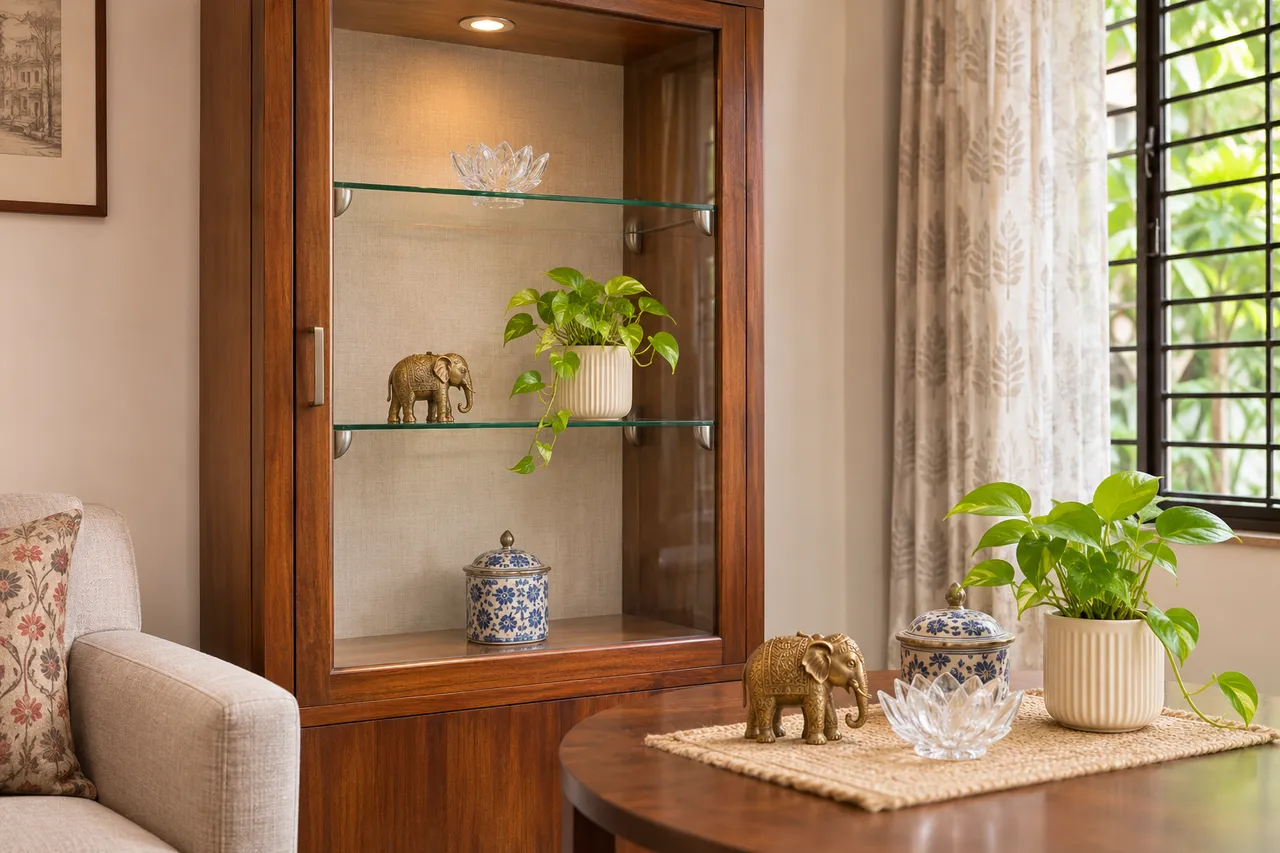
Glass Shelves in Alipore Display Cabinets: Confirm Support and Intended Contents
Plan glass cabinet shelves as a complete supported assembly for the intended contents, not a thickness chosen from appearance. In an Alipore home, have the relevant supplier assess the span, support, glass specification and retained cabinet. Keep product use and maintenance clear before replacing shelves or displaying items on an unverified assembly.
Start with your Alipore property
For an Alipore display cabinet, record whether it is new or retained and what will actually be stored. A few lightweight decorative pieces and a full collection of objects create different briefs. The locality does not establish cabinet construction or required glass specifications. Use a representative contents list and reliable furniture information rather than asking a supplier to copy a shelf from a photograph.
Define contents without guessing capacity
Describe the intended objects and how they are arranged so the relevant professional can specify a suitable assembly. Do not infer permissible use from visual thickness, cabinet width or a similar product’s rating. The actual glass, support and furniture construction must be considered together. A general planning article cannot provide a universal shelf dimension or load rule. Keep the specification explicit and avoid filling empty space merely because the cabinet has room for another display object.
Assess the retained cabinet
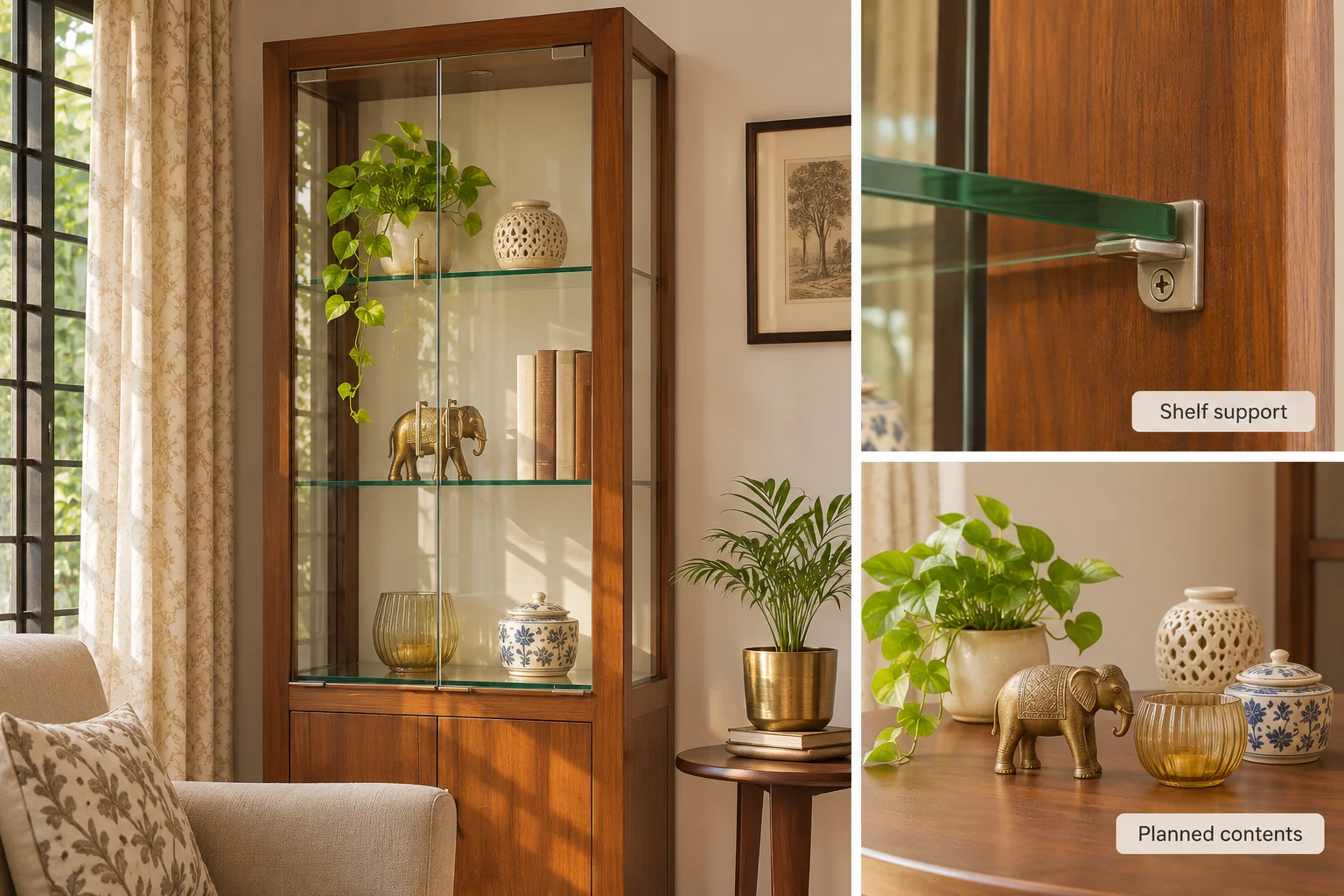
Have existing supports, fixing locations and cabinet condition reviewed before replacing material. A new shelf should not be selected to conceal loose or damaged support. Identify whether the original product has manufacturer instructions or replacement components. Do not assume any glass supplier can establish the suitability of unrelated retained cabinetry from a single external image. The right brief records the furniture and its support condition as well as the desired appearance.
Coordinate handling and access
Discuss suitable installation, edge treatment, removal and care with the relevant provider. Keep technical handling and fitting with competent people rather than treating the shelf as a simple decorative insert. Check cabinet-front movement and the ability to place and retrieve the intended objects. A display may look spacious while access through the doors is restricted. The installation scope should make responsibilities clear for both the shelf and supporting furniture, including any necessary repairs.
Keep use and maintenance understandable
Obtain the selected assembly’s product information and any applicable use limitations. Avoid modifying supports, adding another shelf or changing to substantially different contents without review. At handover, inspect the agreed work with the relevant provider and keep documentation available. A clear shelf can make objects visually prominent, but transparency does not establish performance or safety. Treat future replacements as a compatibility decision rather than simply ordering a similar-looking rectangle.
A practical example to test the decision
A homeowner wants thicker-looking glass to update a retained display cabinet. Assessment identifies an uncertain support arrangement that needs review first. The provider specifies a suitable complete scope and confirms the intended contents before replacement. The decision follows the cabinet and its use rather than assuming that appearance alone proves an upgrade.
Step-by-step planning checklist
- Record the cabinet and intended contents.
- Collect any original product or component information.
- Have glass, supports and retained condition assessed together.
- Agree suitable installation, access and care.
- Retain specifications and review later changes before altering use.
What to put in the quotation
- Specified complete shelf and supporting arrangement.
- Retained-condition assumptions and repairs.
- Professional supply, handling and fitting responsibilities.
- Use information, care and replacement records.
Planning budget and scope
| Scope | Planning allowance or pricing method |
|---|---|
| Assessment and specification | Agree the relevant professional deliverables |
| Selected shelf assembly | Quote exact compatible materials and components |
| Cabinet repairs or changes | Separate assessed scope |
No universal Alipore glass-shelf rate or load figure is assumed. Specification, supports, retained conditions and fitting affect cost. Compare the complete assembly rather than material area alone, and clarify who is responsible for confirming compatibility.
Preparation and project timing
Resolve support and intended use before fabrication. Coordinate repairs and supplier information before installation. Leave time for the agreed review and documentation rather than accepting appearance as the only completion test.
Before you approve the proposal
Keep the intended-use description with the furniture record, even if the visible cabinet stays unchanged. If a shelf breaks or is removed, a future replacement should be checked against that record and the actual supports. This makes the decision more reliable than assuming that a matching outline and similar transparency define an equivalent component.
Prepare a clearer brief with WallsToWonder
Collect photographs, measurements and the choices you want to compare. Use Design My Room to explore a visual direction, then have the relevant professional check the measured layout, product requirements and work scope. Account access and current tool allowances apply; a visual concept is not a costed construction drawing.
Organise the scope with the interior cost planning tool and explore interior companies serving Kolkata. Confirm service availability for Alipore directly and ask the firm to explain deliverables, site involvement and exclusions.
For related planning, read Glass-Front Crockery Cabinet Ideas: Display, Storage and Door Clearance.
Frequently asked questions
Can I choose glass thickness from a photo?
No. Have the complete assembly and intended contents specified appropriately.
Will a thicker-looking shelf always be suitable?
Do not infer performance from appearance. Supports and cabinet construction also matter.
Can existing supports always remain?
Have their condition and compatibility assessed.
Can I change the contents later?
Review the specified use before materially changing the display or adding loads.
What should I retain after fitting?
The assembly specification, relevant use and care information, supplier details and repair record.
Turn this idea into a plan for your home
Visualise your space, understand the likely budget, or find a professional who can bring the idea to life.